Cotton or Polyester Threading Thread? A Professional Guide
Brenda Cammo Team
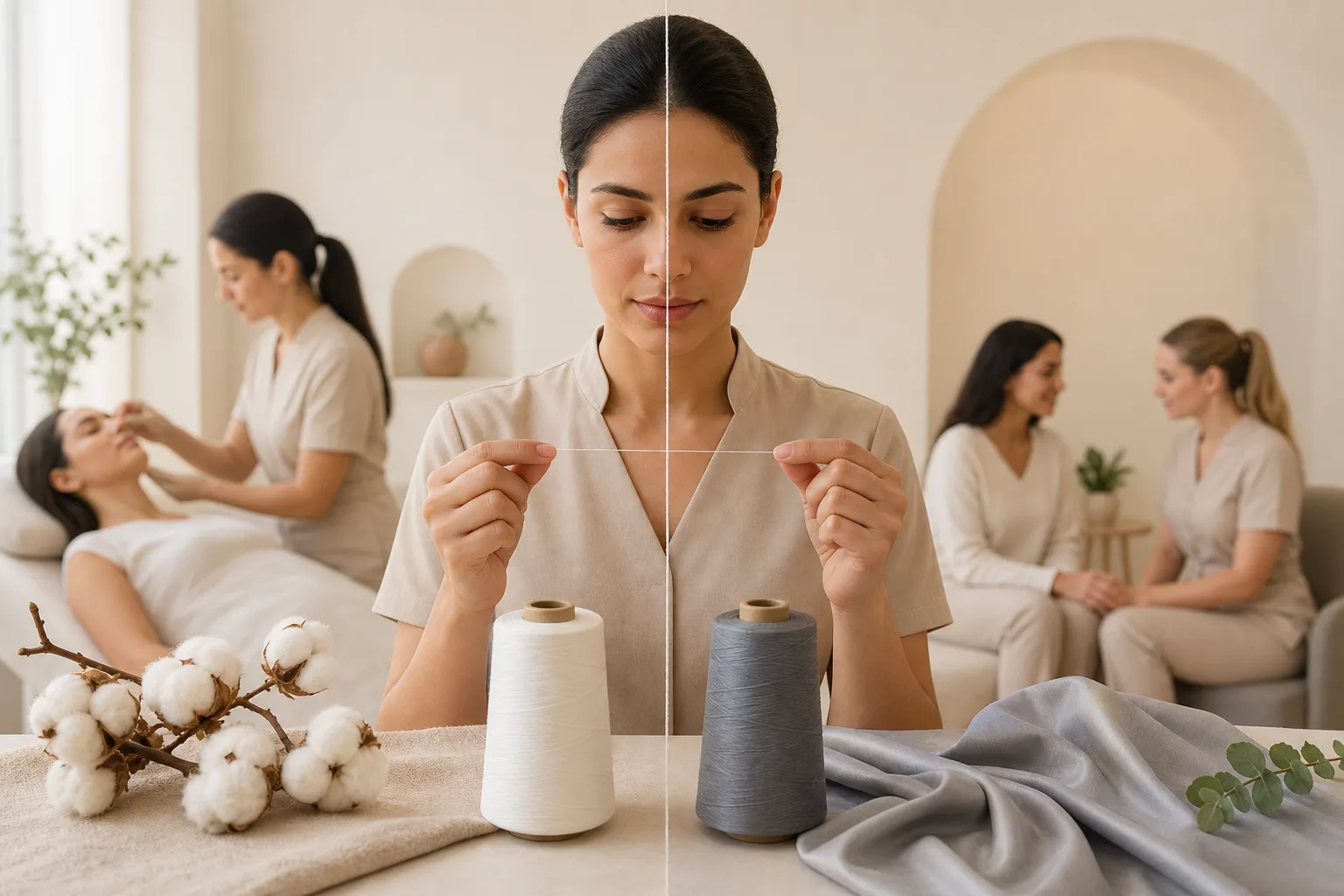
Choosing threading thread may sound like a small operational decision, but it shapes the precision of the service, the rhythm of the professional’s hands and the client’s experience from the first pass. For anyone planning to work with eyebrow threading, understanding the difference between cotton and polyester thread is part of building a careful, consistent and professional practice.
At Becammo, cotton thread is the standard material used for threading, while polyester is available for clients with allergies. Both materials can be part of a responsible setup when they are selected thoughtfully, handled with correct hygiene and discarded after a single use. The right choice is not about declaring one material universally superior; it is about understanding the technique, the client’s needs and the standards that protect comfort and confidence.
Why the thread material matters in eyebrow threading
Threading removes hair by using a twisted section of thread to catch and lift hairs from the follicle. Because the thread makes direct contact with the skin and hair, its texture, tension and movement all influence how controlled the work feels.
For a future professional, the material affects more than the final brow shape. It can influence:
- how easily the thread twists and opens during the technique;
- how reliably the professional can maintain tension;
- the speed and precision of hair removal;
- how the thread feels against the client’s skin;
- how confidently the professional can adapt a service after a client consultation.
Threading is often appreciated as an alternative to waxing or repeated use of tweezers because it allows detailed work around the brow line without applying wax. However, it should never be presented as entirely sensation-free. A client may experience brief pulling or mild discomfort, particularly in sensitive areas. Good material selection, a refined technique and clear communication can make the appointment feel more considered.
Cotton threading thread: the standard professional choice
Cotton is widely associated with traditional threading practice and is the standard thread used at Becammo. For many professionals, it offers a familiar balance of grip, control and flexibility, especially while learning how to create a stable twist and move it accurately across the skin.
What cotton can offer during the service
Cotton thread has a natural fibre feel that many threading professionals find easy to manage. When the thread is correctly twisted and held under even tension, it can help catch fine and coarser hairs with controlled movement. This matters around the eyebrow arch, tail and lower brow line, where small changes can affect the overall design.
For beginners, cotton can be useful for developing fundamental hand coordination. Threading requires the professional to open and close the twist with the fingers while keeping the skin taut and following the mapped shape. A material that feels manageable in the hands can make it easier to concentrate on posture, pressure and direction rather than fighting the thread itself.
Points to consider with cotton
Natural fibres should still be treated as professional consumables, not as reusable tools. The thread used for one client must be disposable and used only once. This is a basic part of an organised hygiene routine and helps maintain a clear standard from preparation to disposal.
It is also important not to assume that a standard cotton option suits every person. Before starting, a professional should ask relevant consultation questions, listen to any concerns about sensitivities and record information according to the studio’s process. If a client reports an allergy or a previous reaction associated with a material, this should be taken seriously rather than dismissed as a minor detail.
Polyester threading thread: an alternative for specific client needs
Polyester thread is used at Becammo as an option for clients with allergies. Its role shows why a professional kit should be designed with flexibility in mind: consistency matters, but so does the ability to adapt when a client’s needs call for a different material.
How polyester differs in practical handling
Polyester is a synthetic fibre, so it may feel different from cotton in the fingers and against the skin. Depending on the thread construction and the professional’s technique, it can feel smoother or less absorbent than cotton. This means the movement, twist and tension may need slight adjustments.
For a learner, the key lesson is not to expect identical performance from every spool. Before using a new material on a client, practise the thread movement in a training setting. Notice how easily it twists, whether it holds tension consistently and how your hand position needs to change. Developing this awareness is more valuable than memorising a fixed rule about which material is “best”.
When polyester may be the more appropriate option
Polyester may be selected when a client has disclosed an allergy that makes the alternative material more suitable. The decision should be made through a respectful consultation, not through guesswork. A future professional should avoid making medical claims or attempting to diagnose the cause of skin reactions. Instead, communicate clearly, follow the studio protocol and choose the available material that aligns with the client information provided.
If a client has active irritation, a skin concern they are worried about, or uncertainty about whether threading is appropriate on the day, pause and assess according to the business’s safety process. In some cases, postponing the appointment or asking the client to seek appropriate advice may be the most responsible choice.
Cotton vs polyester threading thread: a practical comparison
| Consideration | Cotton thread | Polyester thread |
|---|---|---|
| Role at Becammo | Standard threading material | Alternative available for clients with allergies |
| Fibre type | Natural fibre | Synthetic fibre |
| Learning focus | Developing control, twist and steady tension | Adapting hand control to a different feel and movement |
| Client consultation | Suitable when no relevant material concern is identified | Considered when the client reports an allergy |
| Hygiene standard | Single-use and disposable per client | Single-use and disposable per client |
The most important similarity is the hygiene requirement. Neither cotton nor polyester should be reused between clients. Single-use thread supports a clear, documented approach to hygiene and helps clients understand that their service is prepared with care.
Client comfort is about more than the thread
Material matters, but client comfort is created by the whole appointment. A future threading professional should see thread choice as one part of a wider service standard that includes consultation, hygiene, design and communication.
Start with a calm consultation
Ask the client what they would like to achieve and check for relevant sensitivities, recent skin concerns and previous threading experiences. Do not promise a particular result before assessing the natural brow density, growth pattern and desired shape. Eyebrows are individual, and an effective design respects facial features and personal preference rather than forcing a single trend.
Prepare the skin and workspace carefully
A clean, organised workstation contributes to professional confidence. Prepare the disposable thread only when needed, maintain hygiene throughout the appointment and dispose of the used thread immediately afterwards. The client should never be left wondering whether materials are fresh or whether the process is controlled.
Use correct tension and skin support
Even a high-quality thread cannot compensate for rushed technique. Keep the skin taut, use controlled movements and work in manageable sections. Excessive speed or inconsistent tension can make the experience feel harsher and can reduce precision. As a beginner, it is better to work methodically than to chase speed too early.
Explain what the client may feel
Simple, honest language helps. Let the client know they may feel quick pulling as hairs are removed and encourage them to tell you if they need a brief pause. This does not make the service less professional; it demonstrates attention and respect. Avoid telling clients that threading is painless, because sensations vary from person to person.
How future professionals can test materials responsibly
Practice is essential before introducing a material into paid client work. Testing should be structured rather than casual, so you can identify what supports your technique and what needs more training.
- Train on technique first. Practise the opening and closing movement, hand position and thread twist before focusing on speed.
- Compare one variable at a time. When moving from cotton to polyester, keep your practice method consistent so you can notice the difference in handling.
- Check the thread before each use. Do not use thread that appears damaged, contaminated or unsuitable for controlled movement.
- Follow single-use discipline. Build the habit from the beginning: open, use for one client, dispose of it correctly.
- Record useful observations. Note how each material behaves in your hands and which technique adjustments improve control.
- Keep learning from supervised practice. Professional training helps turn these observations into safe, repeatable working methods.
This learning process is particularly valuable for professionals who want to serve an international clientele. Different clients may have different brow textures, skin sensitivities, expectations and past experiences. Respectful personalisation begins with listening, then choosing a technique and material approach that fits the individual appointment.
Common mistakes to avoid
Assuming one thread works for every client
Standardisation is useful, but it should not become rigidity. A professional needs a clear core method and a responsible alternative when client information requires it. Cotton may be the standard, while polyester can be an important option for clients with allergies.
Focusing only on the thread brand or spool
Threading quality does not come from a spool alone. Mapping, skin tension, hand coordination, hygiene and communication have equal importance. The material supports the technique; it does not replace training.
Reusing thread to reduce waste or costs
This is not compatible with a professional single-use hygiene standard. Disposable threading thread should be used for one client only and then discarded. Cost-saving should never take priority over client care.
Ignoring a client’s stated sensitivity
When clients share information about allergies or past reactions, listen carefully. Do not make assumptions, minimise the concern or offer clinical conclusions. Follow the service protocol, consider the suitable material option and reschedule when necessary.
Building professional confidence with the right foundation
A skilled threading professional learns to see materials as part of a wider service system. Cotton thread offers the standard foundation used at Becammo, while polyester provides an alternative for clients with allergies. Knowing why that distinction exists helps future professionals make more thoughtful decisions at the treatment chair.
The aim is not just to remove hair. It is to create a clean, precise and personalised eyebrow service in which the client feels heard and the professional works with confidence. Strong training develops the technical movement, hygiene habits, consultation skills and design awareness needed to deliver that standard consistently.
If you are exploring threading as a professional path, start by building reliable fundamentals and practising with purpose. When you are ready to experience a threading-led eyebrow service in Malta, the final booking option can help you choose the most convenient Becammo location and service.
Frequently asked questions
Is cotton or polyester better for threading?
Neither material is automatically better for every situation. Cotton is the standard threading material used at Becammo, while polyester is available for clients with allergies. The appropriate choice depends on the client consultation, the professional’s technique and the studio hygiene protocol.
Can polyester thread be used for eyebrow threading?
Yes. Polyester can be used as an alternative threading material. At Becammo, it is available for clients with allergies. A professional should practise with the material first, as its handling may feel different from cotton.
Is threading thread reused between clients?
No. Threading thread should be disposable and single-use. At Becammo, the thread is used for one client only and then discarded as part of the hygiene standard.
Does the type of thread change how much threading hurts?
The material can affect the feel and control of the technique, but comfort also depends on skin sensitivity, the area being threaded, tension, speed and the professional’s skill. Threading can involve mild discomfort or quick pulling sensations, which vary between clients.
What should a threading student practise before working with clients?
Students should practise creating a stable twist, maintaining even tension, supporting the skin, following a mapped brow shape and using disposable materials correctly. They should also learn how to conduct a respectful consultation and adapt when a client reports an allergy or sensitivity.