Tattoo Removal Aftercare: Blisters, Care and Patience
Brenda Cammo Team
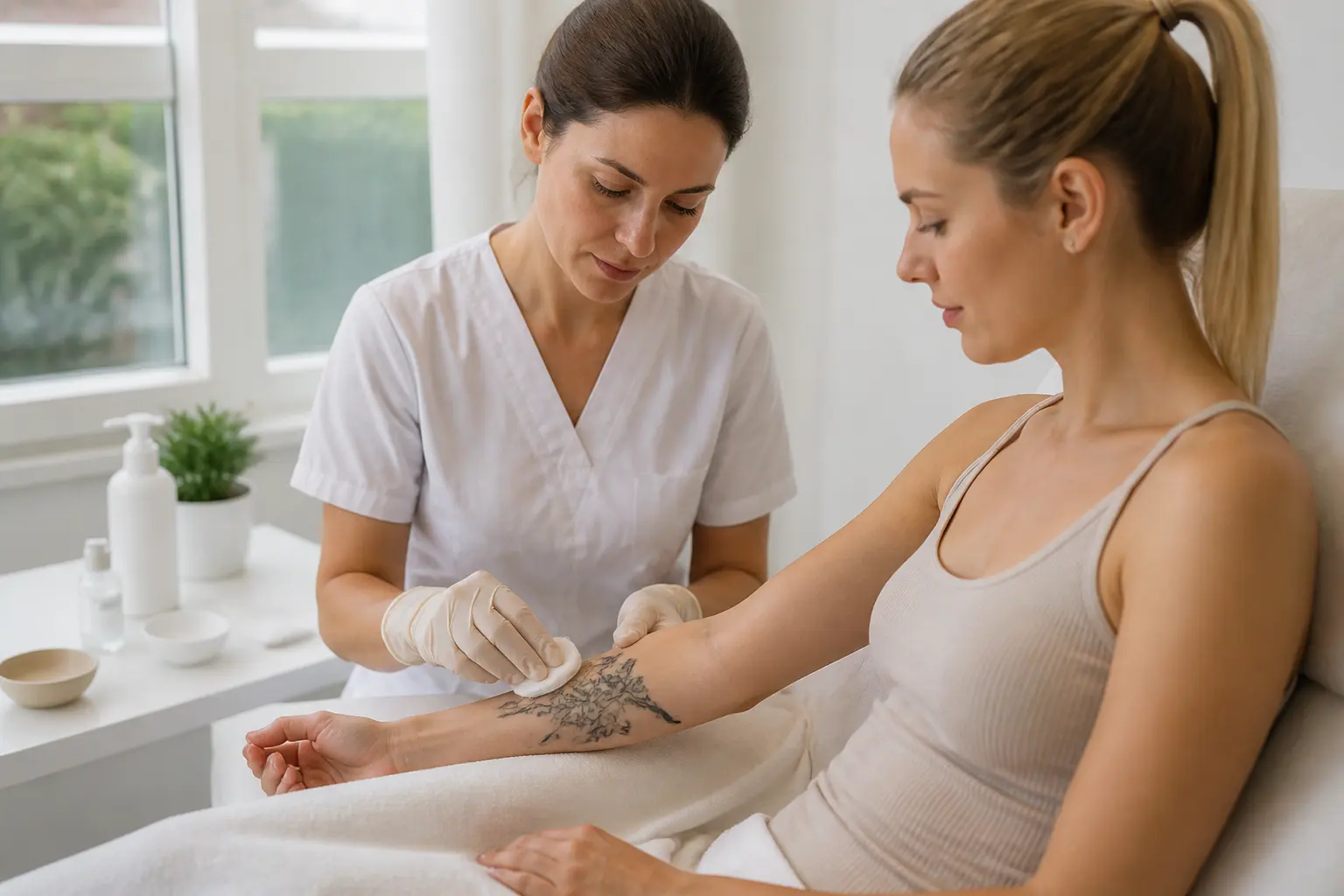
Laser tattoo removal is a gradual process, and the care you give your skin after every appointment matters just as much as the appointment itself. Redness, warmth, tenderness and some swelling can happen as the area settles. For some people, small blisters or scabs may also appear. These reactions can feel worrying, particularly after a first session, but the most helpful response is usually calm, careful protection and patience.
At a professional studio, aftercare should never be an afterthought. You should leave with clear, personalised instructions based on the tattoo, the area treated and how your skin responded on the day. At Becammo, laser tattoo removal is available in Sliema, and a consultation is the right place to discuss your tattoo, skin history, expectations and the practical care needed between sessions.
This guide explains the usual principles of tattoo removal aftercare, what a blister needs from you, and when it is important to contact your practitioner or seek medical advice.
Why tattoo removal aftercare requires patience
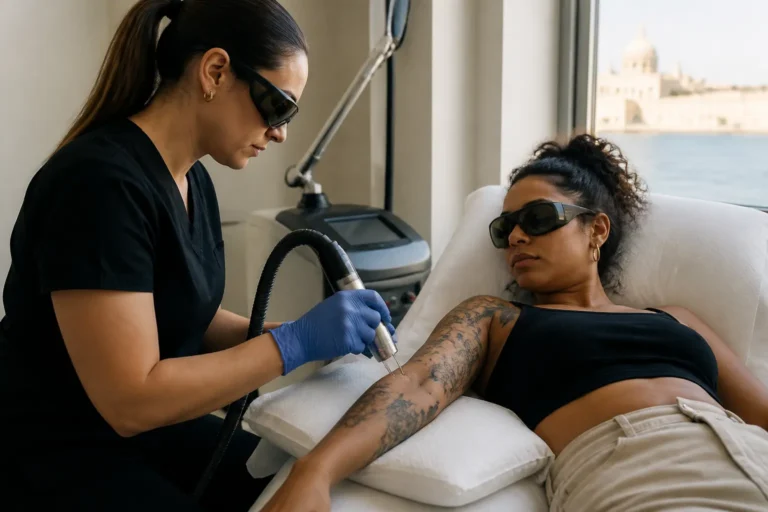
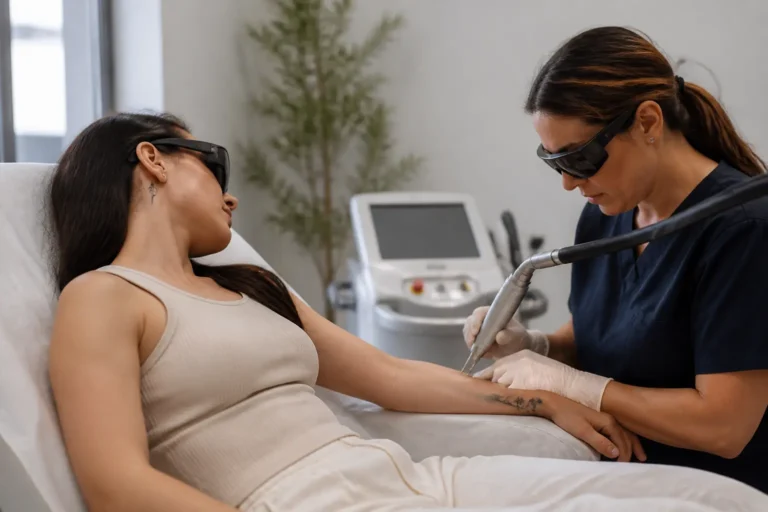
Laser tattoo removal works by targeting pigment in the tattoo and breaking it into smaller particles. Your body then clears those particles gradually over time. The laser session is therefore only one part of the process. Your skin needs a chance to recover before another session, while your body continues its work in the background.
That is why tattoo removal is not something to rush. The number of sessions and the spacing between them vary according to factors such as the colours used, the density and depth of ink, the tattoo’s age, its location and your individual response. Complete removal cannot be promised, and a professional practitioner should set realistic expectations from the beginning. The FDA’s overview of tattoo removal also notes that multiple treatments are normally needed and that results vary between tattoos.
Aftercare supports this measured approach. It is not about trying to make the area heal faster with lots of products or constant checking. It is about reducing friction, keeping the area protected, following the instructions you were given and allowing the skin to settle without interference.
What may happen after a laser tattoo removal session
Immediately after treatment, the area can look red, raised or slightly swollen. It may feel warm or sore for a short period. These changes should gradually settle, although everyone’s skin reacts differently. Some people develop blistering or scabbing in the days after treatment, while others do not.
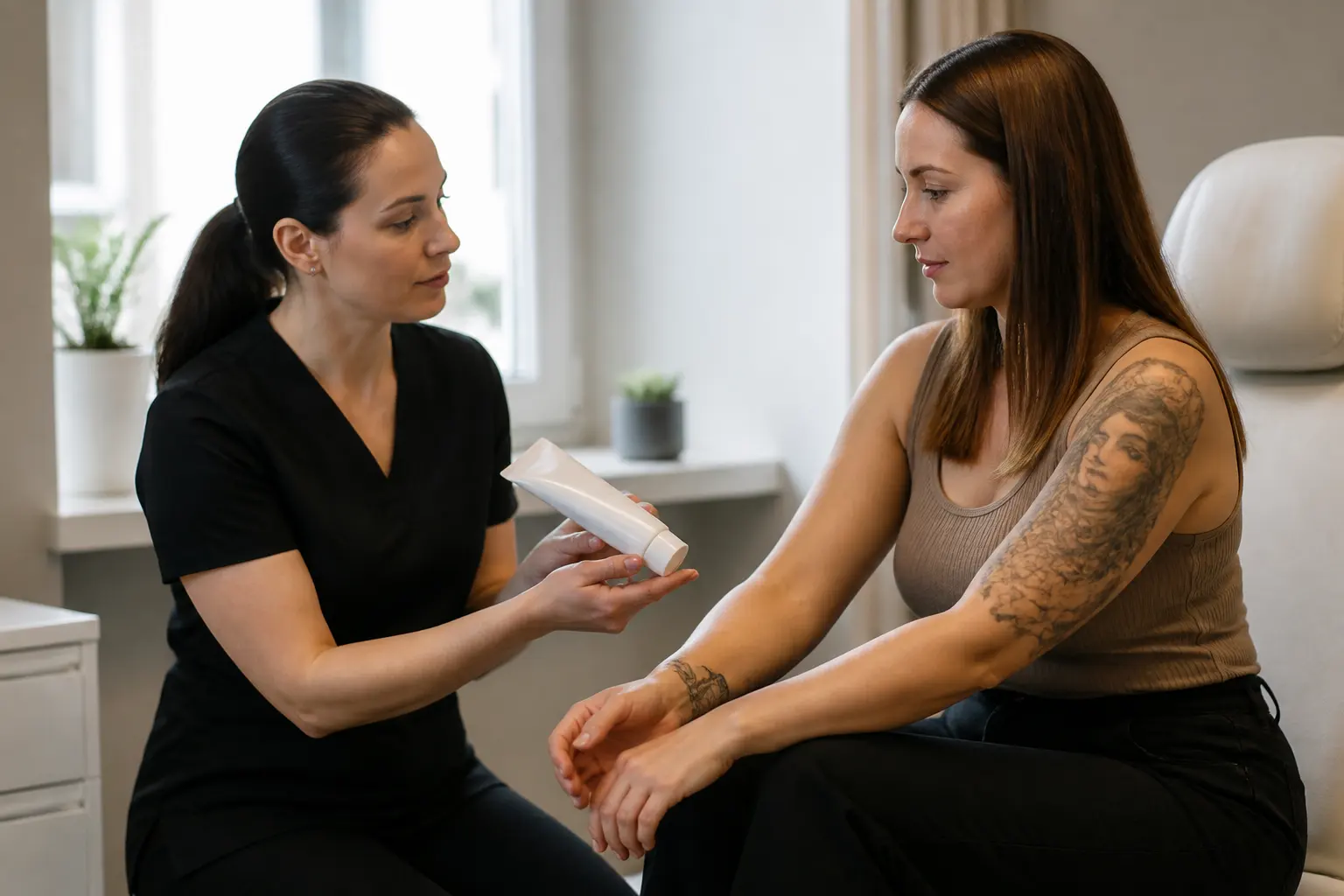
A blister is a pocket of fluid beneath the surface of the skin. It can be a response to the heat and energy involved in laser treatment. It does not automatically mean that something has gone wrong, but it does mean that the treated skin deserves extra care. Blisters and scabs should not be picked, scratched or deliberately opened, because damaging the protective surface can raise the risk of infection and scarring.
It is useful to separate two ideas. A mild, expected-looking reaction can still need thoughtful care. On the other hand, a reaction that becomes more painful, more widespread or increasingly inflamed needs professional attention. You do not have to decide this alone. Contact the practitioner who carried out the session if you are uncertain.
The first stage: protect the treated area
Your own written aftercare instructions come first, because the right approach can differ according to the treatment and the condition of your skin. Follow any advice about dressings, cleansing and products exactly as provided by your practitioner.
In general, the goal during the first stage is to avoid adding heat, friction, bacteria or irritation to already sensitive skin. Practical habits can include:
- Wash your hands before touching near the treated area.
- Wear loose, clean clothing if the tattoo is on a part of the body that may rub against fabric.
- Avoid scratching, rubbing or checking the area repeatedly.
- Keep the area away from direct sun exposure.
- Pause activities that create heavy sweating, rubbing or pressure until your practitioner says it is appropriate to resume them.
- Avoid swimming pools, hot tubs, saunas and steam rooms while the skin is healing, particularly if there is blistering, scabbing or broken skin.
General laser aftercare guidance from Leeds Teaching Hospitals NHS Trust advises protecting treated skin from rubbing and avoiding strenuous exercise, swimming, saunas, steam rooms and fragranced products during recovery. The exact timeframe for you should come from your treating practitioner, rather than a one-size-fits-all online rule.
Blisters after tattoo removal: what to do
The key rule is simple: do not pop a blister yourself. It may be tempting to release the fluid, especially if the blister looks large or catches on clothing, but the skin over it acts as a protective barrier. Opening it without proper assessment can make the area more vulnerable.
If the blister is intact
Leave it intact and minimise contact. Keep it clean, protect it from rubbing and contact your practitioner for advice, especially if it is large, painful or located where it is difficult to protect. Do not apply a new cream, antiseptic or dressing simply because it was recommended online or worked for someone else. Products can be unsuitable for your skin, your treatment area or the stage of healing.
The NHS advises people not to burst blisters or peel away the overlying skin. It also recommends keeping them clean and covering them with an appropriate soft dressing where needed for protection. NHS blister guidance is useful general information, but it does not replace the specific instructions from the professional who performed your laser treatment.
If a blister breaks on its own
Do not pull away the loose skin. Wash your hands before dealing with the area, avoid rubbing it and contact your practitioner promptly for individual guidance. A burst blister should be treated with more caution because the skin barrier is no longer fully intact. The appropriate dressing or product depends on the appearance of the area and the advice you have been given.
If a scab develops
A scab can be another part of the skin’s recovery. The same principle applies: leave it alone. Picking at a scab can remove skin that is still healing and may increase the chance of an unwanted mark. Let it come away naturally when the skin underneath is ready.
Sandwell and West Birmingham NHS Trust specifically advises against picking, scratching or aggravating the treated area, noting that removing a scab or blister can increase the risk of scarring. Its tattoo removal guidance also highlights the importance of protecting healing skin from ultraviolet exposure. Read the NHS tattoo removal information leaflet.
Cleaning, products and sun protection
Aftercare is often where people feel the urge to do more. However, more is not necessarily better. Strong exfoliants, fragranced body products, scrubs and active skincare can irritate skin that is trying to recover. Keep your routine simple and follow the product advice from your practitioner.
For tattoos on exposed areas, sun protection is an especially important part of the wider removal journey. Sun exposure can affect how the skin looks and may influence when it is appropriate to have another session. In Malta, this needs particular attention because daily sunshine, beach plans and outdoor commuting can make accidental exposure easy.
Covering the area with suitable clothing can be helpful when practical. Ask your practitioner when you can begin applying sunscreen to the treated skin and which type is appropriate. Do not assume that applying a product immediately after treatment is right for everyone. If you have a holiday, a day at the beach or extended outdoor time planned, mention it before booking so your treatment schedule can be considered sensibly.
What not to do while the area heals
Good aftercare is often about avoiding a short list of unhelpful actions. Until the skin has recovered and your practitioner confirms it is appropriate, avoid:
- Popping blisters or removing scabs.
- Scratching an itchy or tight-feeling area.
- Exfoliating the tattooed skin.
- Using perfumed lotions, scrubs or unfamiliar active products on the area.
- Wearing tight clothing or equipment that repeatedly rubs the treated skin.
- Swimming or soaking the area before it has healed.
- Sunbathing, using sunbeds or deliberately tanning the area.
- Booking another session because the tattoo has not visibly changed as quickly as you hoped.
Patience is not passive in this process. It means making choices that protect the skin now and give the next session the best possible starting point later.
When to contact your practitioner or seek medical advice
Contact your laser practitioner if you develop blistering, scabbing, crusting, weeping or a reaction that concerns you. A photo may help them understand what you are seeing, but follow their preferred contact process and do not delay asking for guidance because you are unsure whether the issue is “serious enough”.
Seek prompt medical advice if you notice signs that could suggest infection or a more significant reaction. These can include spreading redness, increasing warmth, worsening pain, swelling that does not improve, yellow or green discharge, feeling unwell or fever. Skin changes can appear differently across skin tones, so pay attention to how the area feels as well as how it looks.
This article provides general aftercare education, not a diagnosis. A professional assessment is always the safer choice when you are worried about how your skin is healing.
How to prepare for the next tattoo removal session
Before your next appointment, the treated skin should be fully settled. Do not treat a new session as a deadline that must be met regardless of healing. If a blister took longer to resolve, if the skin is still sensitive or if you have had notable sun exposure, tell your practitioner before attending.
It can help to keep a simple record after each session. Note the date, how long redness or tenderness lasted, whether blistering occurred, any products used on the area and any questions you want to raise. This gives you clearer information for your consultation and helps the treatment plan stay responsive to your actual experience.
Professional tattoo removal is a partnership. The practitioner chooses an appropriate approach for the tattoo and observes how your skin responds. You protect the area at home, communicate changes early and allow adequate recovery time. Both parts matter.
A calmer approach to tattoo removal aftercare
Blisters, scabs and slow-looking progress can test your patience, but they are not a reason to take matters into your own hands. Protect the skin, avoid picking or friction, follow the instructions you received and ask for advice whenever something does not feel right.
If you are considering laser tattoo removal in Malta, or you want to discuss how aftercare would fit around work, travel and sun exposure, book a consultation at Becammo in Sliema through the online booking system on the website. A clear conversation before treatment can make the process feel far more manageable.
Frequently asked questions
Are blisters normal after laser tattoo removal?
Blisters can occur after laser tattoo removal, although not everyone develops them. If you notice one, do not pop it. Contact your practitioner for advice that reflects your treatment area and skin response.
Should I remove a scab after tattoo removal?
No. Let scabs fall away naturally. Picking or pulling can disrupt healing skin and may increase the risk of irritation, infection or scarring.
Can I exercise after laser tattoo removal?
It is usually sensible to avoid strenuous exercise while the treated area is freshly irritated, especially where sweat, heat or rubbing may affect it. Ask your practitioner when it is suitable to return to your normal routine.
Can I go swimming after tattoo removal?
Avoid swimming, hot tubs and similar soaking activities until the skin has healed and your practitioner confirms it is appropriate. This is particularly important if you have a blister, scab or any broken skin.
When can I put sunscreen on the treated tattoo?
Ask your practitioner for timing and product advice. Sun protection is important during a tattoo removal course, but freshly treated skin may need a specific approach before sunscreen is applied directly.
How long should I wait between tattoo removal sessions?
The right interval varies by tattoo, skin response and treatment plan. Your practitioner will recommend suitable spacing so the skin has time to recover and your body has time to process the fragmented ink.