If you wear brow pencil, powder or pomade every day, arrive at your brow appointment with clean brows where possible and bring a photo of your usual finished look instead. Your makeup is useful information about the finish you like, but the design should follow your natural hair growth, facial balance and preferred definition rather than copy the drawn outline. Avoid tweezing before the visit.
If brow pencil, powder or pomade is part of your everyday routine, booking an eyebrow appointment can feel slightly more complicated than it needs to be. You may wonder whether to arrive with your brows fully made up, remove everything beforehand, or ask for a shape that follows the look you draw in at home.
The simple answer is that your usual brow makeup is useful information, but it should not be the only guide for your design. A well-planned threading and brow-design appointment considers your natural hair growth, facial balance, skin condition and preferred level of definition. Your daily pencil, powder or pomade routine then helps the brow artist understand how you like to present your brows between appointments.
With a little preparation and clear communication, you can leave with a tidy, personalised shape that supports your makeup routine rather than making it harder to do.
Why does your everyday brow makeup matter?
Brow products can change the way your face looks at a glance. A pencil may create fine hair-like strokes in sparse areas. Powder can soften the appearance of uneven density. Pomade can create a stronger outline or a more structured arch. None of these choices are wrong; they simply show the kind of finish you enjoy.
During a brow appointment, that preference is worth discussing. For example, you may prefer a naturally soft brow but use pencil only to balance one tail. Or you may love a more defined, lifted look for work and evenings, even though your natural brow hair grows in a gentler shape.
However, makeup can also conceal details that matter when planning the design. It may hide where hairs are genuinely sparse, where the natural arch sits, or where one brow grows differently from the other. That is why the appointment should begin by looking at the brows without relying solely on the makeup outline.
Should you arrive with brow pencil, powder or pomade on?
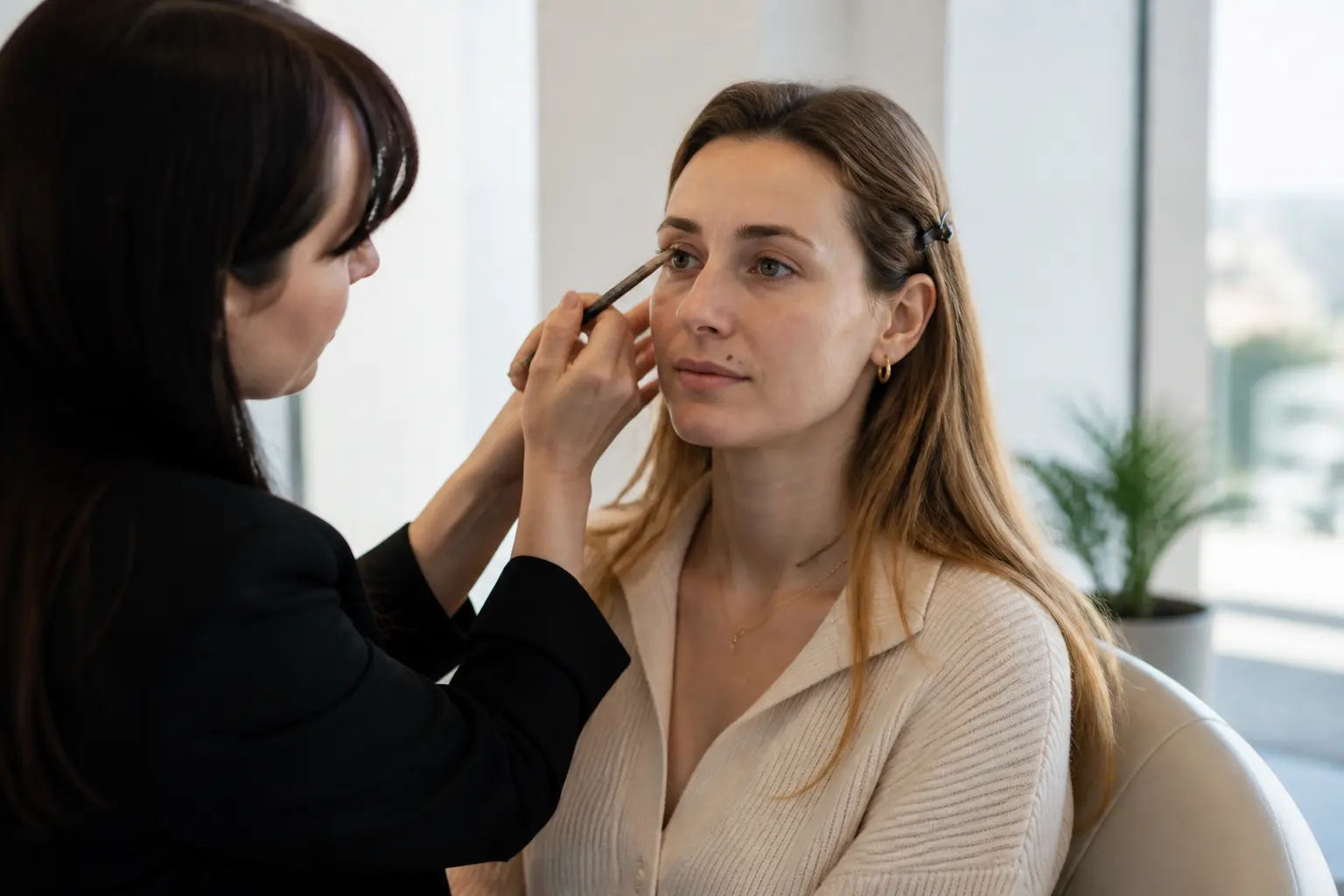
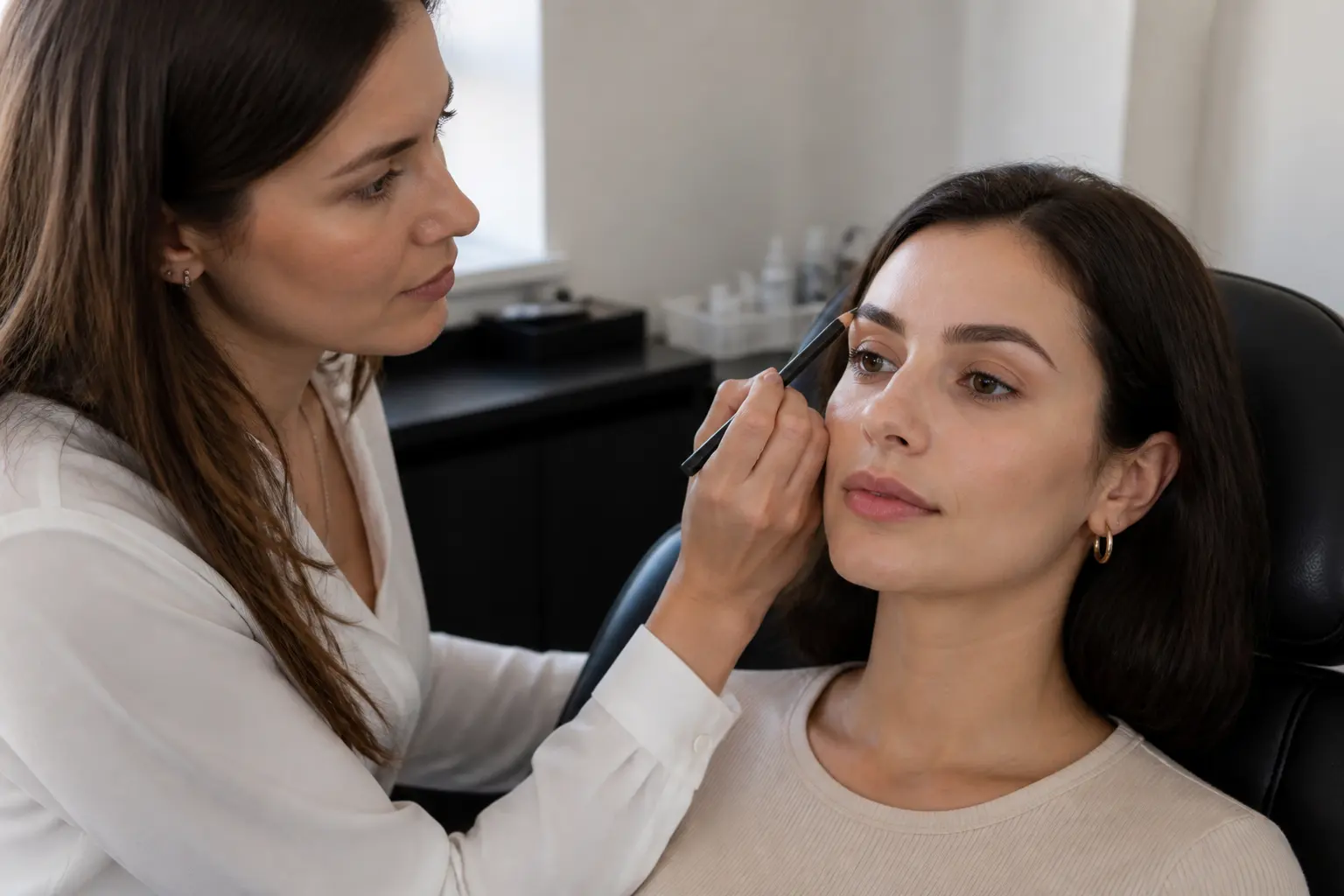
If possible, arrive with clean brows and avoid applying brow makeup immediately before the appointment. This gives the brow artist a clear view of your natural growth pattern and makes the threading and mapping process more straightforward.
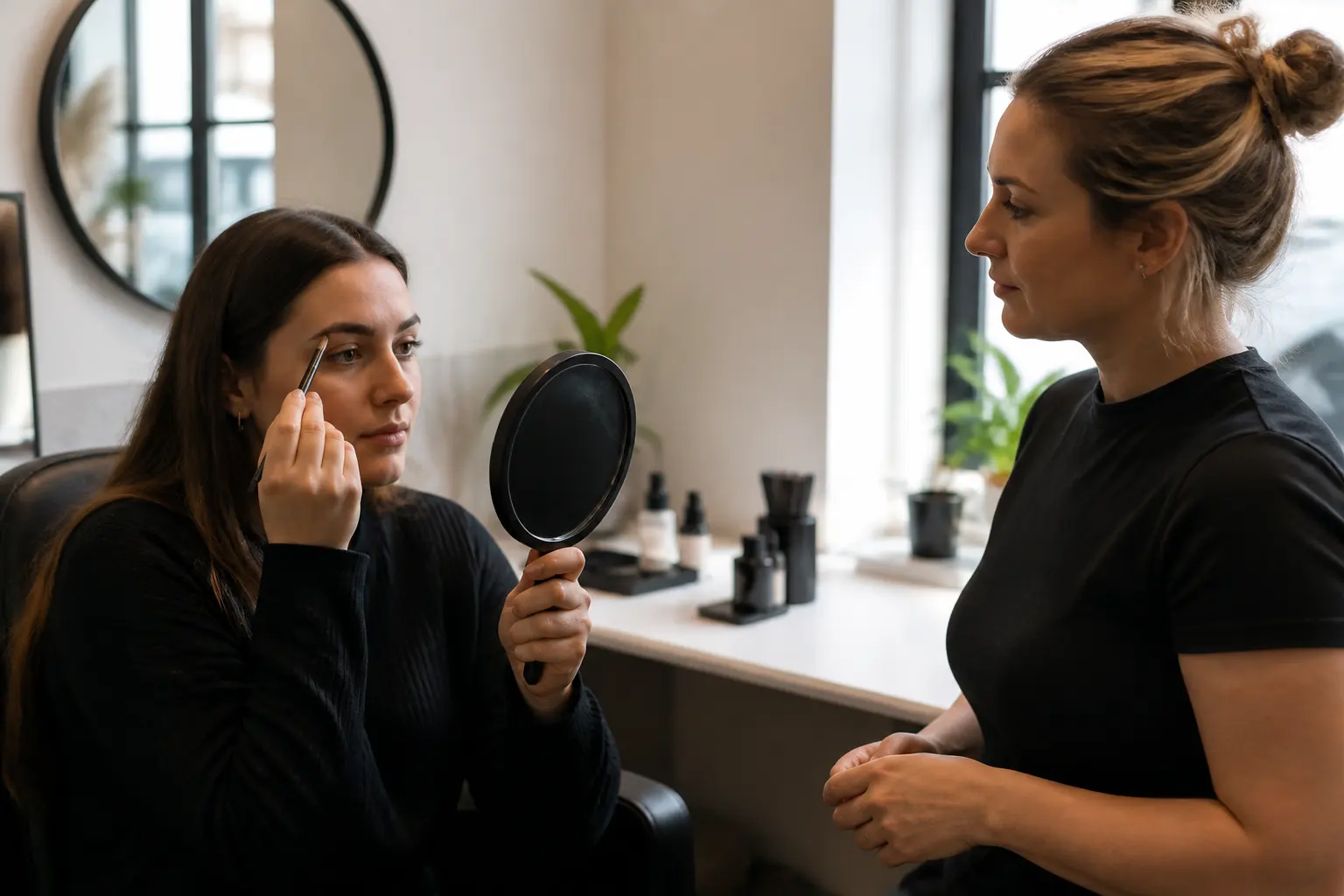
That does not mean your usual makeup style should be ignored. There are several easy ways to share it without wearing a full brow look to the appointment:
- Take a clear photo of your brows after you have done them in your preferred everyday style.
- Bring a photo from the front in natural light, rather than relying only on heavily filtered images.
- Save one or two examples of looks you have created yourself and genuinely feel comfortable wearing.
- Explain which area you usually fill in: the front, arch, tail, underside or an area with less density.
- Tell the brow artist whether you prefer a soft, natural effect or a more polished, defined result.
If you do arrive wearing makeup, mention it at the beginning of the appointment. The area will need to be assessed cleanly before shaping. Avoid trying to redraw the brow quickly in the chair to demonstrate your preferred outline, as this can make it harder to see the natural structure underneath.
At BeCammo · Sliema · Swieqi
Eyebrow threading in Malta
Same client, before and after threading.
Clean, natural brows shaped to your face, at our salons in Sliema and Swieqi. Threading is what BeCammo was built on.
- from €16price
- Sliema · Swieqiwhere
- ★ 5.0460+ Google reviews
How do you plan the appointment around your routine?
Before booking, think about how and when you use brow makeup. Your answers will help you choose a practical shape rather than a look that only works in a photograph.
Consider how much time you want to spend each morning
Some people enjoy a detailed makeup routine and are happy to use several products. Others want brows that look neat with minimal effort. Be honest about which group you are in. A shape-first brow appointment can create cleaner boundaries and improve balance, but it will not necessarily remove the need for makeup in naturally sparse areas.
If your priority is speed, ask for a design that is easy to follow with a small amount of product. If you like a stronger finish, ask for a shape that gives you a clear foundation while still leaving enough natural texture to work with.
Think about the product you use most often
Different brow products encourage different application habits:
- Pencil: often used for precise definition, small gaps and a refined tail.
- Powder: often chosen for a softer, diffused effect through the body of the brow.
- Pomade: often used for a more defined shape, stronger colour or longer-wearing makeup look.
You do not need to change products before a threading appointment. But explaining how you use them can help guide the conversation about thickness, arch placement and the level of definition you prefer.
Allow for your lifestyle, not just one occasion
A brow shape should work on ordinary days as well as special ones. Consider whether you wear makeup for work, exercise, holidays, evenings out or only occasionally. If you are planning an appointment before an event, it is usually sensible to avoid leaving it to the last possible moment, particularly if your skin can look temporarily pink after hair removal.
For day-to-day maintenance, many clients find that planning regular appointments around their own visible regrowth helps them keep a familiar shape without overcorrecting at home.
What should you tell your brow artist at the start?
Clear information is more valuable than trying to describe a brow shape with technical terms. You do not need to know whether you have a high or low arch, or whether your brows should be called straight, rounded or angled. Instead, describe your experience and preferences in simple language.
You could say:
- “I fill in the tail every day because it looks lighter than the rest.”
- “I like my brows to look tidy, but I do not want them too sharp.”
- “I normally use pomade, but I find it difficult to make both brows look even.”
- “I prefer a fuller look and do not want too much removed from the top.”
- “I have been growing my brows out after over-plucking and want to keep as much hair as possible.”
- “I usually draw my arch higher, but I am not sure whether it suits my natural brow.”
It is also helpful to mention any recent changes. Perhaps you have stopped using a certain product, grown out an area, had brow lamination, or started using skincare products around the brow area. These details support a more considered appointment and help avoid assumptions.
Should your makeup be a reference or a template?
It is natural to become attached to the brow shape you create every morning. You may have spent years perfecting it, especially if your brows are naturally uneven, fine or sparse. Still, it is useful to see the makeup outline as a reference rather than a strict template.
A drawn-on brow can sometimes extend beyond the natural hair pattern, create a sharper angle than the face needs, or make both brows look identical in a way that is difficult to maintain with real hair growth. Trying to remove hair to match that exact outline can lead to over-thinning or a shape that feels less balanced once the makeup is removed.
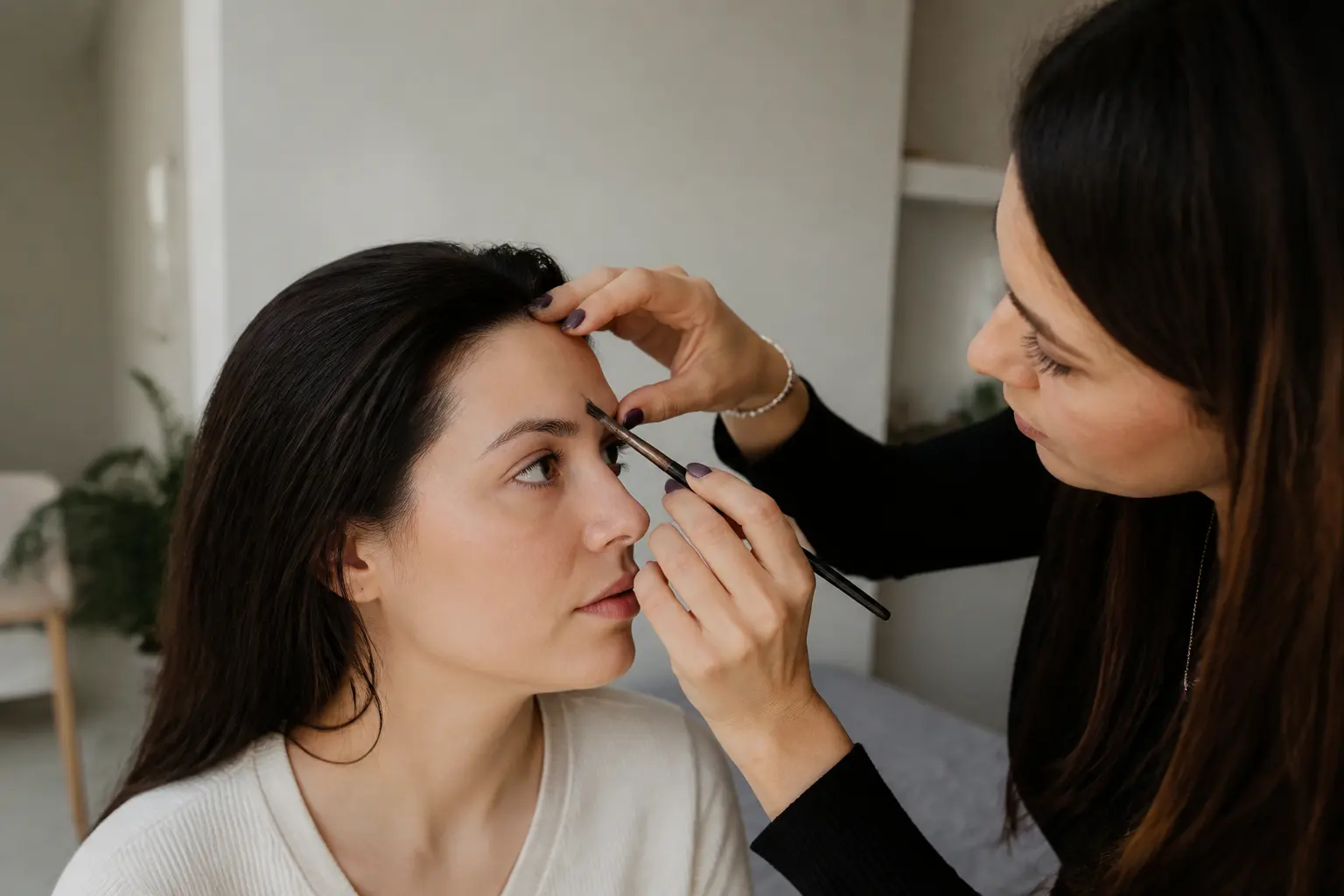
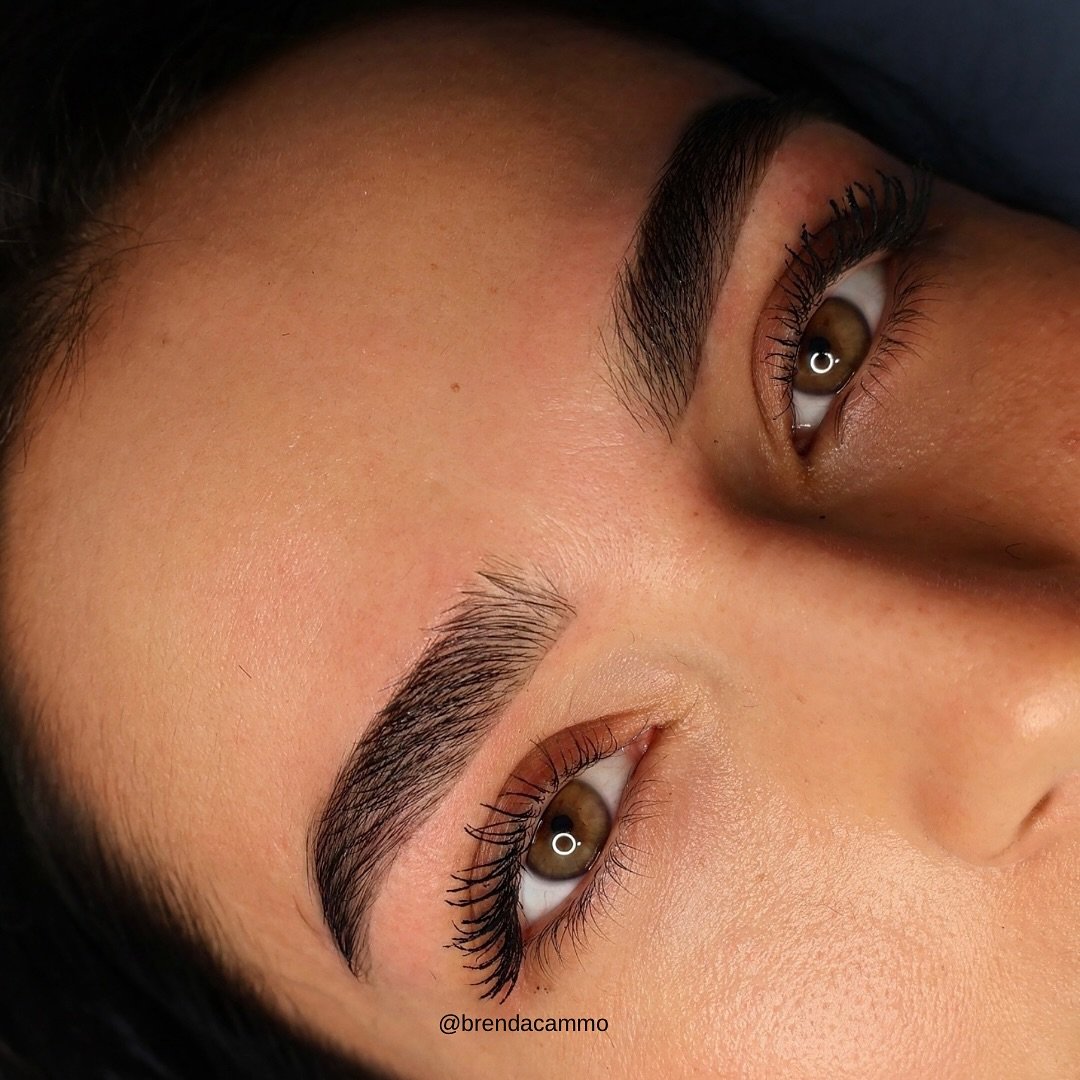
A personalised design aims to work with the brows you have now. It can tidy excess growth, clarify the overall structure and preserve areas that support fullness. From there, your pencil, powder or pomade becomes easier to apply because it follows a cleaner base.
The goal is not to make both brows perfectly identical. It is to create balance while respecting their natural differences in growth, density and direction.
Which photos make the consultation easier?
Photos can be genuinely helpful, especially if you usually wear brow makeup to create an effect that is not obvious when your brows are bare. The best images are realistic and personal: photos of your own makeup on a normal day, rather than only celebrity images or highly edited inspiration pictures.
Try to bring a small selection with different levels of makeup. One image might show your quick everyday brow, while another shows your more defined evening look. This helps distinguish your true preference from a style you might like visually but would not want to recreate every morning.
If you use inspiration photos, focus on what you like about them. Is it the fuller front, the soft arch, the shorter tail or the brushed-up texture? A brow artist can then discuss whether that feature is suitable for your natural hair pattern and your maintenance preferences.
Why avoid over-tweezing before your appointment?
When you rely on makeup every day, it can be tempting to tweeze any hair that appears outside the outline you draw. This is understandable, but frequent home correction can make it difficult to see the natural shape clearly. It may also gradually reduce fullness in areas you later wish you had kept.
If you have an appointment coming up, pause the urge to tidy every small regrowth hair. Let the brow artist assess what belongs to the overall design and what can be removed. This is particularly useful if you are trying to grow out sparse brows or regain a fuller-looking shape.
Between appointments, if one or two hairs are bothering you, take a photo first and consider whether waiting is the better choice. A short period of regrowth often gives more options during the next design session than repeated small corrections at home.
How can threading support a makeup-friendly brow shape?
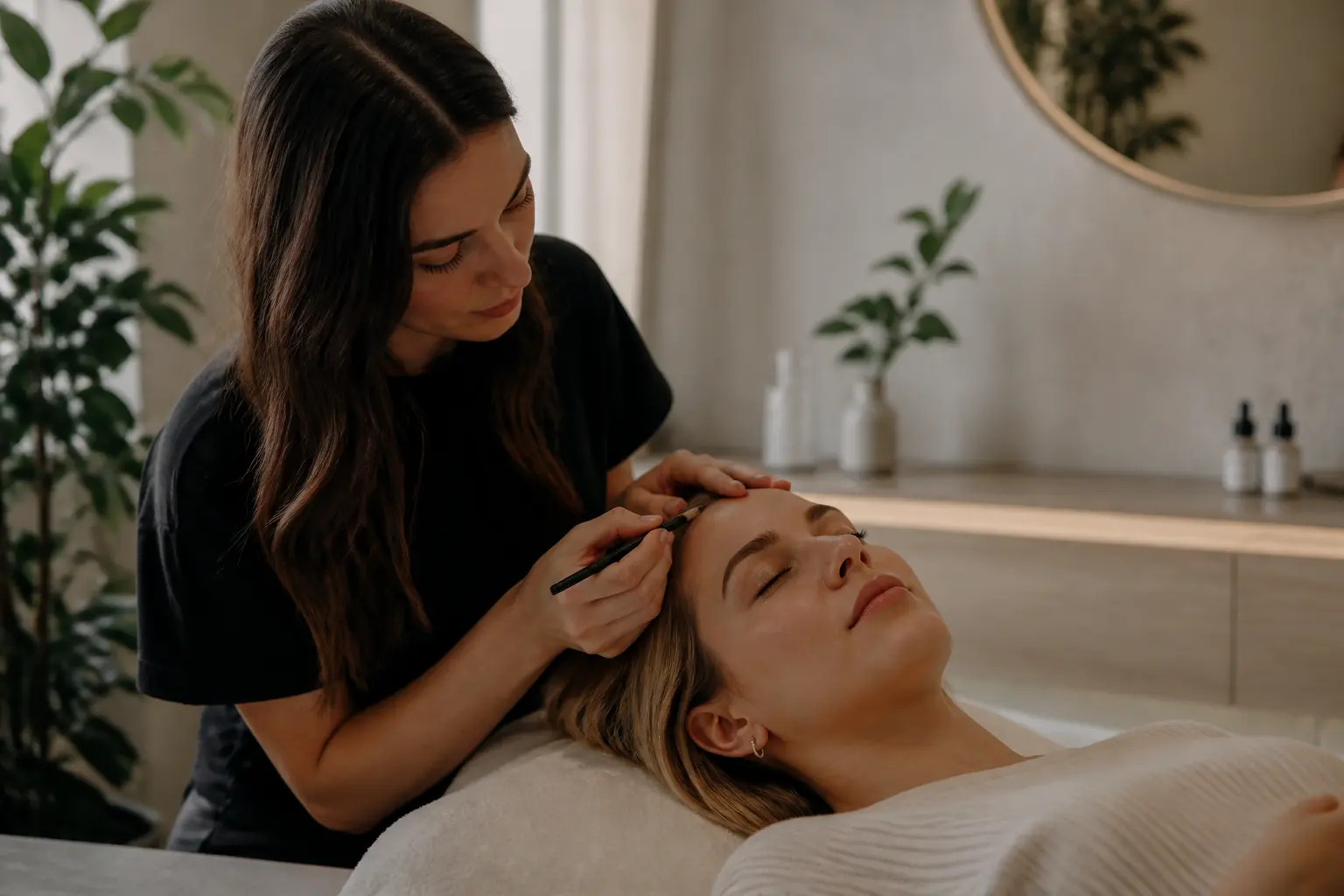
Threading is a hair-removal method that uses a fine thread to remove unwanted hairs with precision. At BeCammo, the eyebrow service combines threading with a personalised design conversation, so the shape is planned around the individual rather than a single brow trend.
For people who wear brow products every day, this can be useful because a clearer shape can make makeup placement more intuitive. You may still choose to fill sparse areas, extend a tail or add definition, but you are less likely to be guessing where the main line of the brow should sit.
The service is not about forcing every brow into the same arch or thickness. Brow hair can vary widely in density, texture, direction and colour across different backgrounds and individuals. A thoughtful design works with those characteristics and with the finish you feel most like yourself wearing.
When can you apply your usual products after the appointment?
After threading, follow the aftercare guidance given during your appointment. If the skin feels sensitive or looks pink, avoid immediately covering the area with multiple products unless your brow artist has advised that it is suitable for you.
For your next makeup application, start lightly. A freshly shaped brow often needs less product than expected. Use your pencil, powder or pomade to enhance rather than redraw the whole brow. You may find that a small amount through a sparse tail or a few soft strokes in the front is enough.
This is also a good moment to reassess your technique. If you previously used a dark, heavy or highly structured application to compensate for an unclear outline, a cleaner shape may allow you to use a softer hand. On the other hand, if a defined makeup look is part of your style, you can continue enjoying it with a more consistent base beneath it.
Which booking is right for your brow goal?
If your main concern is everyday shape, symmetry and making your regular brow makeup easier to apply, a threading and brow-design appointment is the most relevant place to start. If you are also considering brow tint or henna, mention that when booking so you can choose the appropriate service.
If your goal is a brushed-up, more lifted appearance with the natural hairs, brow lamination is a separate service and should be planned as its own conversation. And if you are considering semi-permanent eyebrow techniques, a consultation is important before deciding whether that route suits your expectations, skin and desired finish.
Keeping these goals separate makes it easier to book the service that matches what you actually want, rather than expecting one appointment to solve every makeup concern.
Conclusion
Wearing brow pencil, powder or pomade every day does not mean you need to arrive at an eyebrow appointment with a finished brow look. Clean brows give the clearest starting point, while photos and an honest explanation of your usual routine give valuable context.
The most useful appointment is one that respects both your natural hair pattern and the way you like to look in everyday life. By sharing where you fill in, how much definition you enjoy and how much maintenance feels realistic, you can work towards a brow shape that is easier to maintain and simpler to enhance with your preferred products. When you are ready, choose an eyebrow threading and design appointment at the BeCammo location most convenient for you.
Frequently asked questions
Should I remove brow pencil before a threading appointment?
Yes, arriving with clean brows is usually the most practical option because it allows the natural hair growth and shape to be assessed clearly. If you want to show your usual makeup style, bring a photo of your finished brows instead.
Can I ask for my brows to match the shape I draw with pomade?
You can certainly explain what you like about your pomade look. However, the final design should take your natural hair pattern, brow density and facial balance into account. This helps keep the result realistic and easier to maintain.
Will threading mean I no longer need brow makeup?
Not necessarily. Threading can create a cleaner shape and make makeup easier to place, but it does not add hair to naturally sparse areas. You may still enjoy using pencil, powder or pomade for your preferred level of definition.
What if one brow needs more pencil than the other?
This is very common. Natural brows often differ in density, direction or height. Mention where you usually need more product so the design can focus on improving overall balance without removing useful hair unnecessarily.
Can I tweeze stray hairs before my appointment?
It is usually better to avoid significant tweezing before your visit. Allowing some regrowth gives the brow artist more information about your natural shape and more flexibility when planning the design.
Should I bring my brow products to the appointment?
It is not essential, but it can be helpful if you use a particular shade or product and want to discuss how it works with your new shape. A photo of your usual finished brows is often just as useful.