Bringing Photo References to Your Semi-Permanent Make-Up Consultation
Brenda Cammo Team
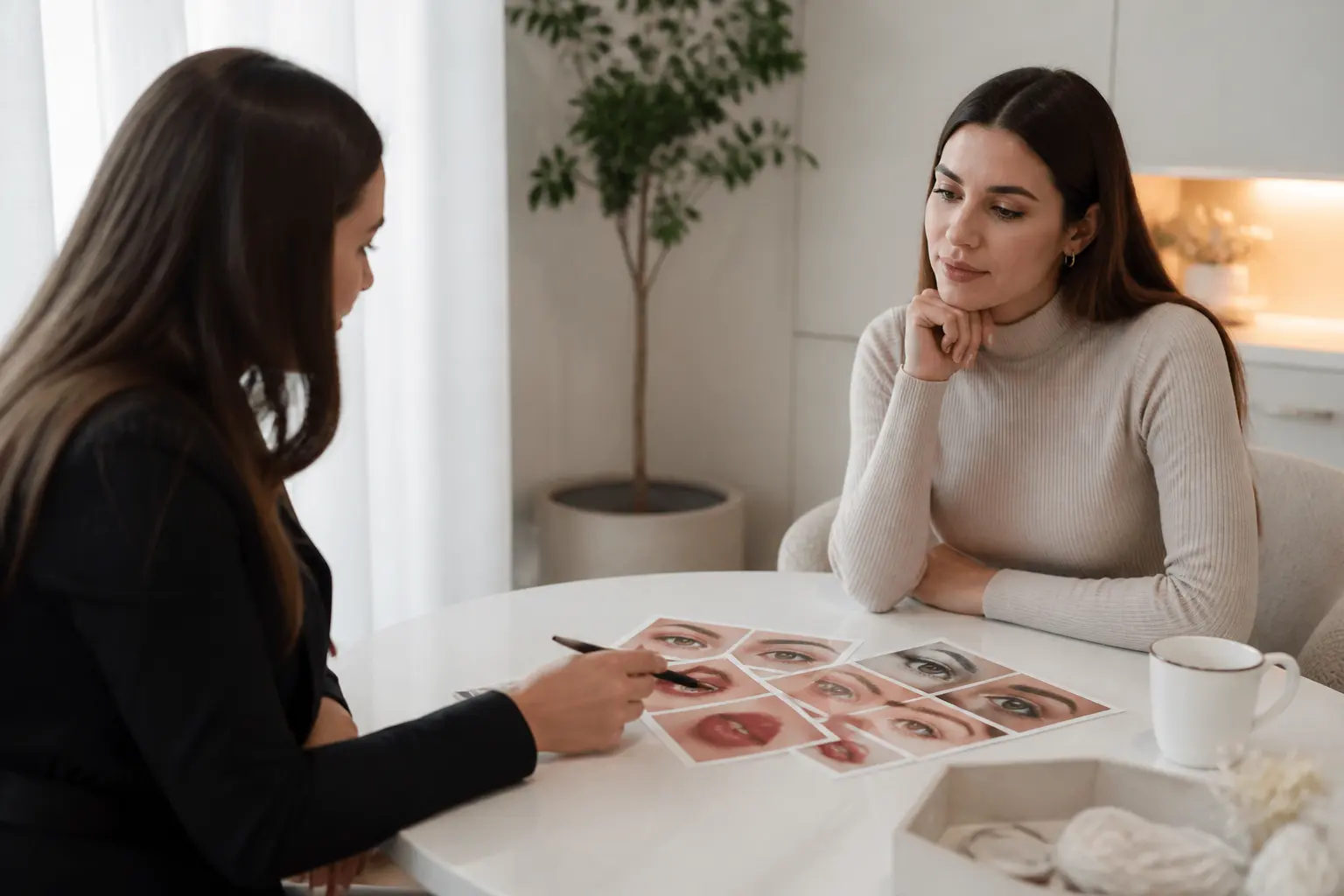
Bringing photo references to a semi-permanent make-up consultation can make the conversation clearer, more relaxed and far more personal. Whether you are considering microblading, microshading, nanoblading or semi-permanent lip colour, images can help you explain the finish you are drawn to when words such as “natural”, “soft” or “defined” feel too vague.
The key is to see photos as a starting point for discussion, not as a fixed blueprint. A result that looks beautiful on one person may be designed around a different brow structure, skin tone, natural hair pattern, lip shape, lifestyle or make-up routine. At a professional consultation, your references become part of a wider conversation about what suits you, what feels like you and what can be planned responsibly for your individual features.
Here is how to choose helpful inspiration images, what to notice in them and how to use them to get the most from your semi-permanent make-up consultation.
Why photo references are useful before semi-permanent make-up
Semi-permanent make-up is a personal decision. It affects how you see your brows or lips each day, including on make-up-free days, busy mornings and holidays. It is therefore useful to arrive at your consultation with a clear sense of the overall look you enjoy.
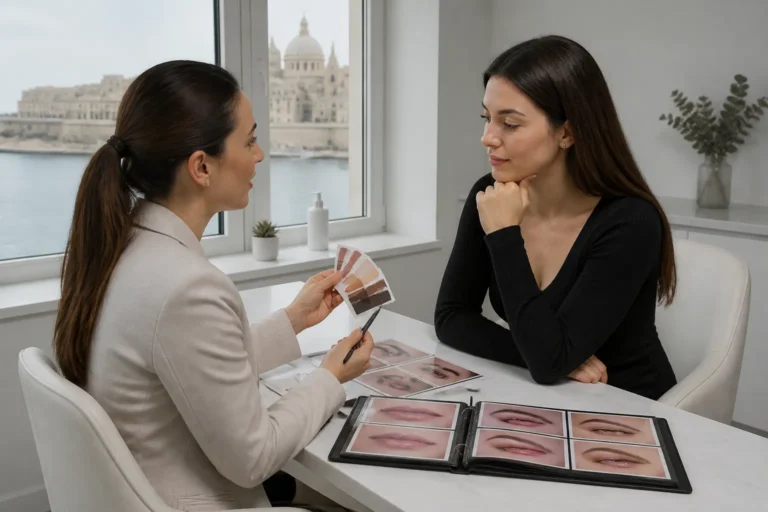
Photos can help translate your preferences into practical details. For brows, they may show whether you prefer a fluffy texture, delicate hair-like strokes, a softly shaded effect, a more polished outline or a bolder everyday appearance. For lips, they can show a preference for a neutral nude, a rosy tone, a gentle blush effect or a more noticeable wash of colour.
They also help your artist understand what you do not want. Perhaps you have seen a brow shape that feels too angular for your style, a lip colour that looks too warm, or a finish that feels more defined than you would wear. These are all useful observations.
A thoughtful consultation is not about copying somebody else’s face. It is about using your references to identify patterns in your taste, then adapting the plan to your own features and goals.
The best types of photos to bring
Photos of looks you genuinely like
Choose several examples rather than relying on one image. A small group of references gives a fuller picture of your preferences. You might save images that make you pause because the brows feel balanced, the lip shade feels wearable or the overall finish looks aligned with your usual style.
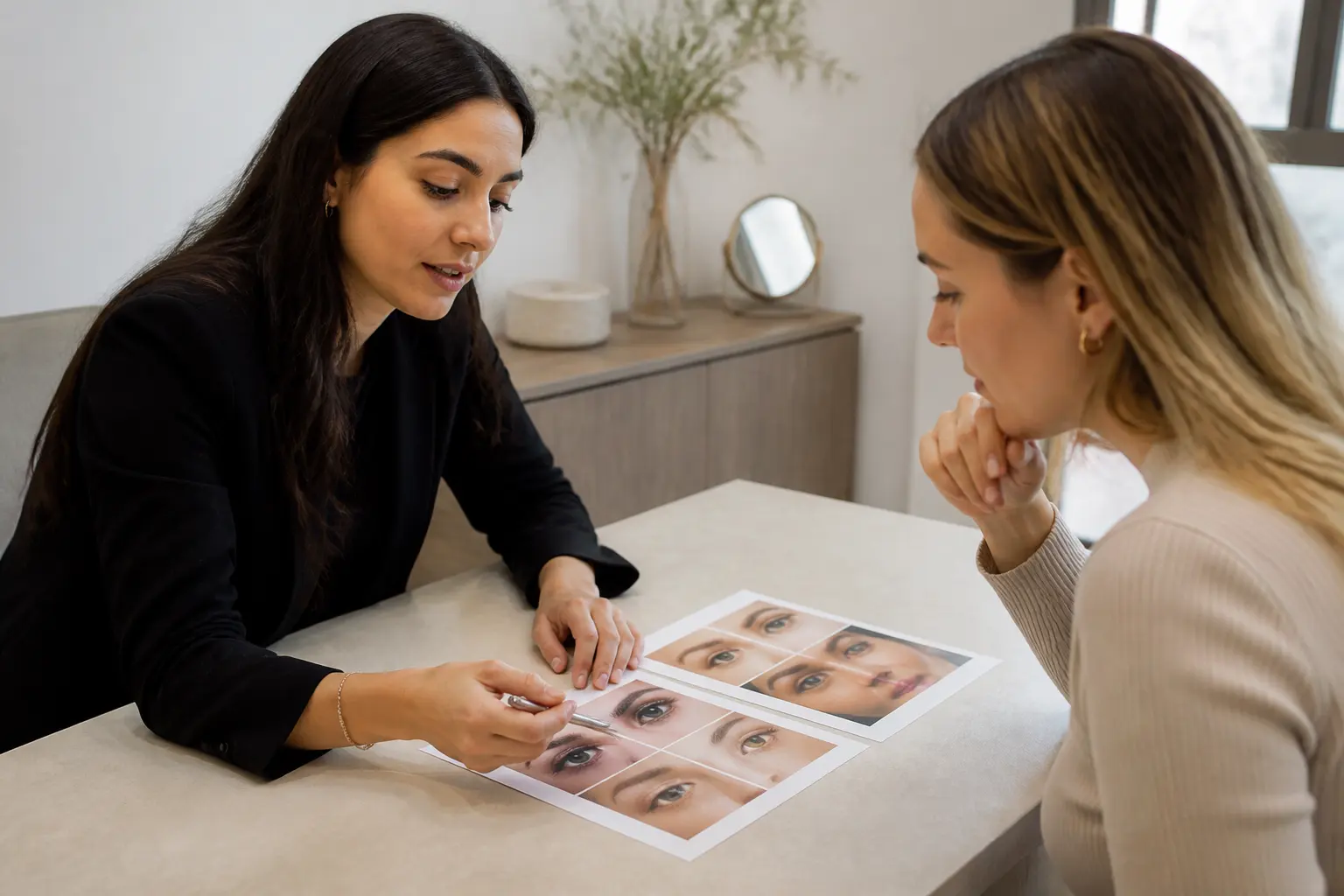
Try to include close, clear images where the relevant area is visible in good lighting. Heavily filtered selfies, dramatic studio lighting and images with a strong beauty filter can still communicate a mood, but they are less useful for judging details such as colour, texture and definition.
A photo of yourself when you loved your brows or lips
One of the most valuable references is often an older photo of you. It might be from a time when your brows were fuller, when you had a make-up look that made you feel especially confident or when your lip colour felt most like your own.
This gives important context because it shows how you have previously enjoyed seeing yourself. It may reveal a preferred brow thickness, a familiar arch, a natural lip tone or a level of definition that already feels comfortable to you.
Photos showing different levels of definition
If you are unsure how subtle or noticeable you want the result to feel, bring examples at different points on the spectrum. For instance, you could save one image with barely-there brows, one with a softly enhanced look and one with a more polished make-up effect.
This comparison can make it easier to say, “I like the softness of this one, but with a little more structure,” or “I like this colour family, but I would prefer a lighter finish.” Those details help make the consultation more precise.
Photos of your normal day-to-day style
Your inspiration folder does not need to contain only close-ups of brows or lips. A few photos showing your usual make-up, hair colour and personal style can be useful too. Semi-permanent make-up should work with the way you live and present yourself, rather than feeling disconnected from it.
If you usually wear minimal make-up, you may prefer a result that fits comfortably into that routine. If you enjoy a more defined brow or lip on a daily basis, that is equally helpful to discuss. There is no single ideal look. The aim is a personalised approach that reflects your preferences.
What to look for when saving brow references
When you are considering semi-permanent brows, do not focus only on whether an image looks attractive. Look more closely at the elements that create the effect.
- Shape: Is the brow straighter, softly curved or more arched?
- Thickness: Does it look fine and delicate, medium and balanced, or fuller?
- Front of the brow: Is it soft and airy, lightly defined or more structured?
- Texture: Can you see hair-like strokes, a shaded finish or a combination of both?
- Tail: Does it taper naturally, or is it sharper and more pronounced?
- Colour depth: Does the brow appear light, medium, rich or strongly contrasted?
You may not know the name of every technique, and that is completely fine. Your role is to share what appeals to you. The consultation is the right setting to ask how approaches such as microblading, microshading or nanoblading may differ in appearance and whether a particular finish fits your expectations.
It is also helpful to notice whether the reference image resembles your own natural brow situation. Someone with dense natural brow hair may create a different visual effect from someone with sparse areas or limited hair in the tail. This does not make one look better than another. It simply shows why a personalised plan matters.
What to look for when saving lip colour references
For semi-permanent lips, colour names can be misleading. A “nude” can appear peachy, pink, beige, brown-toned or mauve depending on the person, lighting and existing lip tone. Bringing visuals is often more useful than arriving with a single colour name in mind.
Save images that show the kind of colour family you enjoy, then consider the intensity. Ask yourself whether you like a gentle tinted effect, a fresh rosy look, a balanced neutral tone or a more defined appearance. Think about how the shade sits with your complexion, the colours you wear most often and the lip products you already reach for.
It is wise to bring a photo of your favourite lipstick, lip liner or gloss if you have one. A picture taken in daylight can be particularly helpful. It gives you and your artist a practical reference for the colours that already feel familiar in your routine.
Remember that images online may be edited, photographed under changing lights or shown immediately after a procedure. A consultation is the place to discuss the type of finish you like, while keeping the conversation rooted in what is appropriate for your own lips and the professional plan being considered.
How many reference photos should you bring?
You do not need a huge folder. Around five to ten well-chosen images is usually enough to reveal useful patterns without making the discussion overwhelming. If you have saved dozens of images, take a few minutes before your appointment to sort them into simple groups.
- Looks I love
- Details I would like to avoid
- Photos of myself that feel most like me
- Colour or shape ideas I am unsure about
This simple preparation makes it easier to explain your preferences. It also leaves room for the consultation to focus on the questions that matter most, rather than trying to assess every image individually.
How to talk about your references clearly
You do not need beauty terminology to communicate well. Plain, honest descriptions are often the most useful. You could say:
- “I like how soft these brows look at the front.”
- “I want more balance through the tails, but I do not want an overly sharp shape.”
- “This is the level of definition I normally create with make-up.”
- “I like this lip colour, but I would prefer something more muted.”
- “I am drawn to this style, although I am not sure whether it would feel like me every day.”
It can also help to share your concerns openly. Perhaps you worry about the result appearing too dark, too structured or too unlike your natural style. Perhaps you have had an earlier brow procedure, or your brow hair has changed over time. A good consultation makes room for these questions.
Why an exact copy is not the goal
It is natural to bring a photo and hope for a similar effect. However, an ethical and professional approach does not promise an identical copy of someone else’s result. Every face has its own proportions, natural asymmetries, skin characteristics, hair growth and colouring.
The same image can also look different depending on how it was taken. Camera angles, filters, editing, brow make-up, lighting and the stage at which a photo was captured can all change what you see online. This is particularly relevant when looking at close-up images on social media.
Instead of asking for an exact replica, use references to guide the direction of the design. You might identify a softness, colour family, texture or balance that you would like to explore. From there, your consultation can focus on creating a look that is coherent with your own features and comfortable for your everyday life.
The most useful reference photo is not necessarily the most dramatic one. It is the one that helps you explain how you would like to feel when you look in the mirror.
Bring questions as well as photos
Photo references work best when combined with practical questions. A semi-permanent make-up consultation is an opportunity to understand the procedure before deciding whether to proceed.
You may wish to ask about the differences between the available brow techniques, how the chosen look may fit your natural brows, what preparation is needed and what aftercare considerations apply. If you are considering lip colour, you can ask how your preferred shade direction will be discussed in relation to your natural lip tone.
It is also a sensible time to mention previous semi-permanent make-up, past reactions to cosmetic products, skin concerns that may be relevant to your appointment or any uncertainty about whether the procedure is right for you. Depending on your individual situation, the studio can explain whether further assessment, colour discussion or a patch test should be considered before a booking.
A simple checklist for your consultation
- Save five to ten images that represent styles or colours you genuinely enjoy.
- Include at least one photo of yourself with brows or lips you have loved.
- Choose clear, unfiltered images where possible.
- Make a note of what you like in each picture, such as softness, shape, colour or texture.
- Save one or two examples of looks that are not for you, if they help explain your boundaries.
- Write down any questions about techniques, preparation, aftercare or your suitability.
- Arrive ready to discuss your normal make-up habits and how much definition feels comfortable day to day.
Preparing for a personalised conversation
A semi-permanent make-up consultation is not a test you need to prepare for perfectly. You do not have to know the right technique name or arrive with a complete design in mind. Your photos simply give the conversation a useful starting point.
At Becammo, the focus is on helping you make an informed decision before moving forward with semi-permanent brows or lips. Bring the images that inspire you, explain what feels most important and allow space for a personalised professional discussion. The goal is clarity, not pressure.
When you are ready, book a semi-permanent make-up consultation and bring your reference folder with you. It is one of the easiest ways to turn online inspiration into a thoughtful plan designed around you.
Frequently asked questions
Should I bring photos even if I do not know which brow technique I want?
Yes. You do not need to decide on microblading, microshading or nanoblading before your consultation. Images of finishes you like can help guide the discussion about your preferences and questions.
Can I bring a celebrity photo as a reference?
Yes, if it helps communicate a mood, shape or level of definition you like. It should be used as inspiration rather than a request for an identical result, as each person’s facial features and natural brows are different.
Are filtered social media photos useful?
They can help show your preferred style, but they are less reliable for judging realistic colour, texture and detail. If possible, include a mix of clear, natural-light images and photos of yourself.
What if I like different styles in different photos?
That is very common. Bring them along and explain which elements appeal to you in each one. You may like the soft front of one brow image, the tail of another and the colour depth of a third.
Can photos help me choose between semi-permanent brows and lips?
They can. References may make it easier to see which change feels most meaningful to your routine right now. If you are deciding between brows and lips, bring examples for both and discuss your priorities during the consultation.