A Complete Brow Transformation: From Consultation to Reveal
Brenda Cammo Team
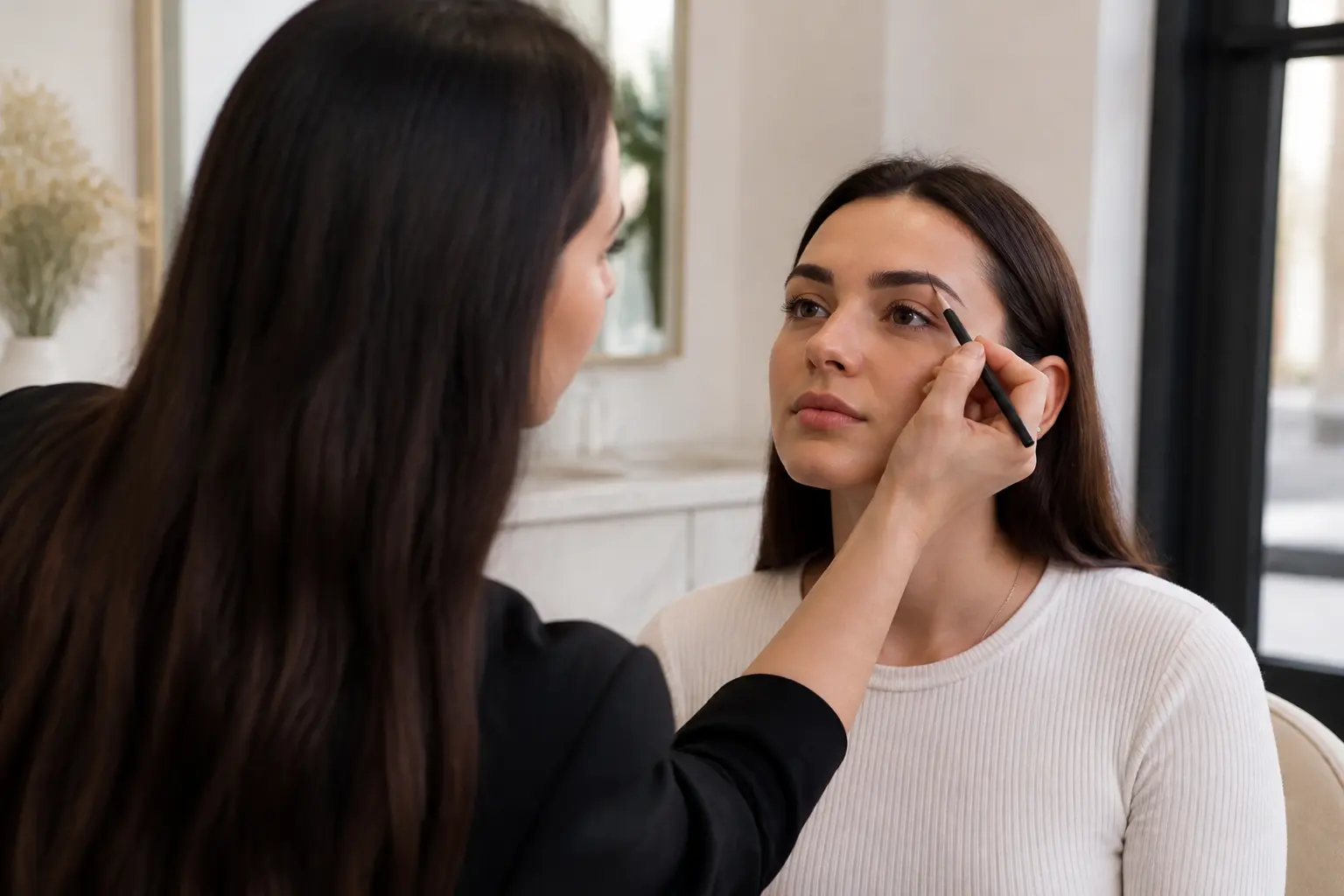
A complete brow transformation is rarely about making your eyebrows look like somebody else’s. It is about seeing what is already there, understanding what you would like to change, and creating a cleaner, more balanced shape that still feels like you.
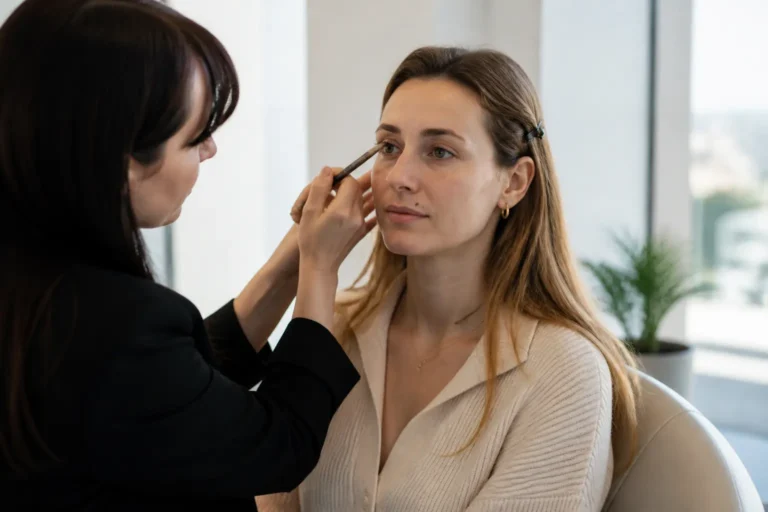
At a professional brow studio, the result begins before the first hair is removed. Your brow artist looks at your natural growth pattern, facial features, hair density and day-to-day style, then uses those details to guide the design. For clients in Malta, this personalised approach can be especially reassuring when you are booking for the first time, maintaining brows between busy weeks, or hoping to refresh an overgrown shape before an occasion.
Here is what a brow transformation can involve, from the first conversation to the moment you see your finished brows in the mirror.
What does a brow transformation really mean?
The phrase can sound dramatic, but a brow transformation does not have to mean a dramatic brow. Sometimes the biggest difference comes from subtle adjustments: defining an unclear lower line, softening an uneven arch, tidying hairs that sit outside the intended shape, or giving sparse areas a more considered framework.
A professional transformation is built around proportion and personal preference. Some clients prefer a softly groomed, low-maintenance finish. Others enjoy more definition, whether through a tint or henna service where suitable. The goal is not to force every face into the same trend. It is to create brows that suit your features, your natural hair and the way you like to present yourself.
Threading is often central to this process because it allows detailed hair removal and shaping with cotton thread. At Becammo, the thread is single-use and discarded after each client. Cotton is the standard material, while polyester may be used for clients with an allergy to cotton. The technique can be used to refine the brow outline while keeping the design focused on your individual growth pattern.
Step one: begin with an honest consultation
The consultation is where a good brow appointment starts to feel personal. It does not need to be complicated, but it should give you space to explain what you want and what you do not want.
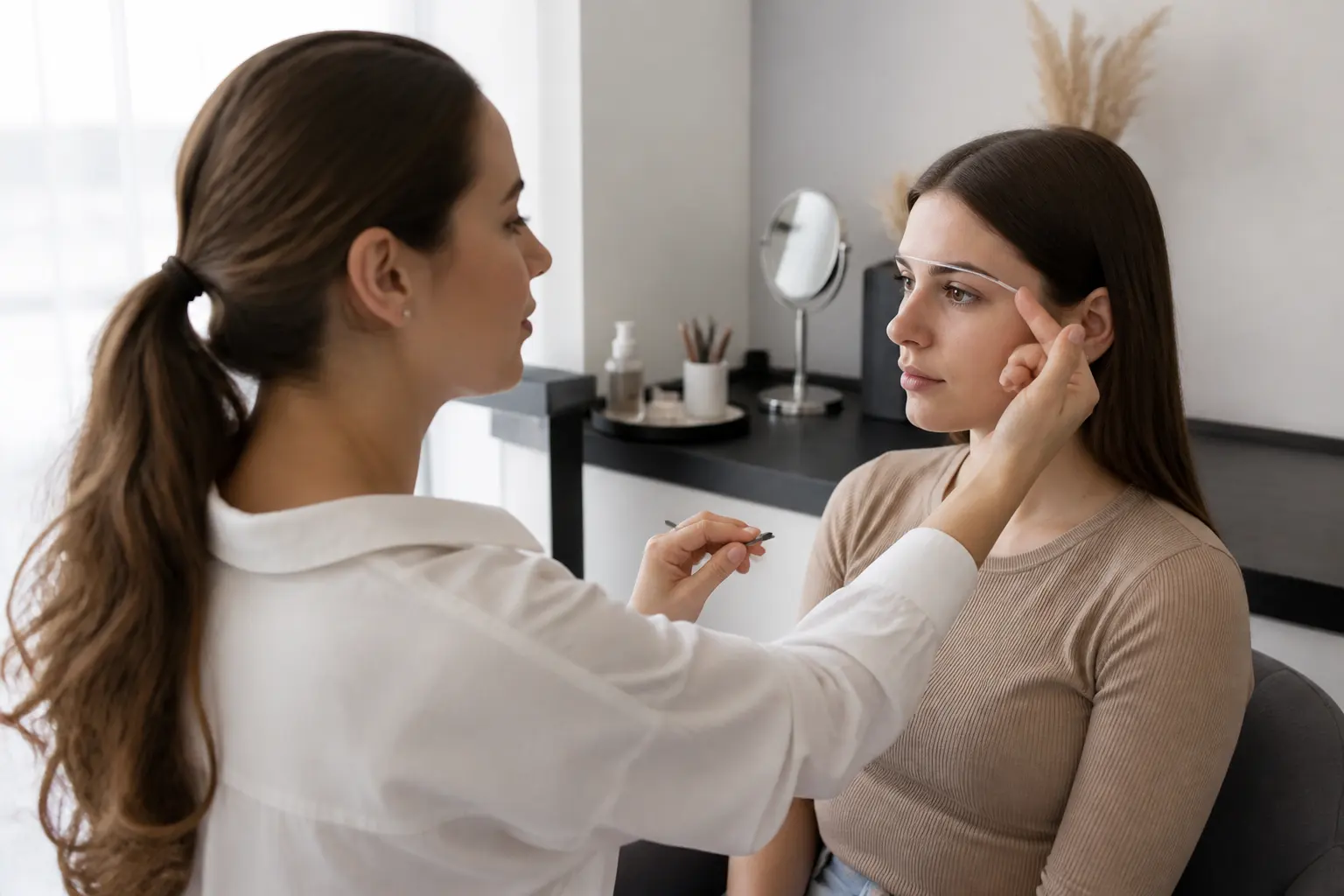
You might arrive saying that your brows feel uneven, too thin, too heavy, too straight or simply difficult to manage. You may bring a reference image, although it is best to treat this as inspiration rather than a fixed template. Your own brow bone, hair pattern and facial proportions will always matter more than copying another person’s shape.
What your brow artist may consider
- Your natural brow density and areas of sparseness.
- The direction in which your hairs grow.
- Differences between the left and right brow.
- Your existing arch and how much definition feels comfortable to you.
- Your face shape and key facial proportions.
- Your usual make-up routine, if you wear make-up.
- Any skin sensitivity, recent irritation or relevant concerns you mention.
This is also the moment to be clear about your boundaries. If you are growing your brows out after years of over-plucking, say so. If you want to keep fullness and only remove obvious stray hairs, say that too. A professional design should be a conversation, not a surprise.
Step two: map the shape before removing hair
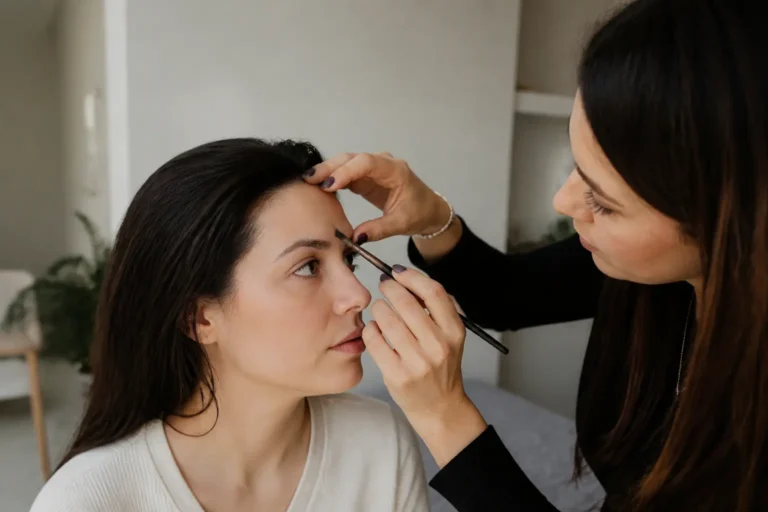
Mapping gives the appointment structure. Rather than removing hair immediately, the artist assesses where the brow should begin, where the highest point may sit and where the tail can end in balance with your features. These points are guides, not rigid rules.
Natural asymmetry is normal. Almost no one has identical brows, and trying to make them perfectly matched can lead to unnecessary removal. A skilled approach aims for harmony, not a stamped-on mirror image.
For example, one brow may naturally sit slightly higher or have a fuller front. Instead of thinning the fuller brow excessively, the artist may make small refinements to help both brows read as balanced from a normal viewing distance. This matters more than chasing mathematical perfection under a magnifying mirror.
Why mapping matters for different brow types
Every brow brings a different starting point. Fine, fair hairs can require a gentle approach so the overall shape does not disappear. Dense or coarse brows may need careful editing to retain their natural fullness without looking untidy. Curly hairs, downward-growing tails and gaps from previous hair removal also call for individual decisions.
Becammo’s brow work is designed with a diverse Malta clientele in mind, including European, American, Canadian, African, Arab and Latin brow types. Diversity is not a problem to correct. It is part of the information that helps shape a design which feels considered and wearable.
Step three: refine the outline with threading
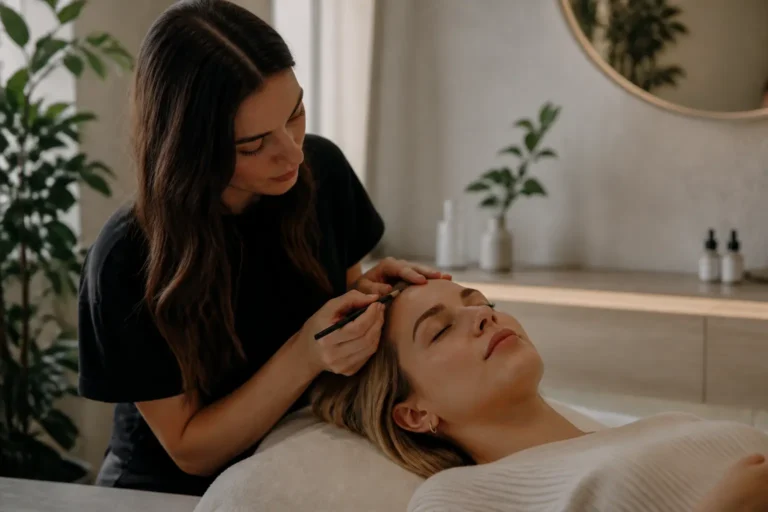
Once the proposed shape is clear, threading can begin. The artist twists and rolls the thread across the skin to catch and remove unwanted hairs with precision. During a brow appointment, this is usually focused around the upper and lower lines, the centre between the brows and any hairs that distract from the intended shape.
Clients experience threading differently. Some feel mild, brief discomfort, particularly in more sensitive areas. If it is your first time, let your artist know. Clear communication can make the experience more comfortable, as can arriving without rushing and avoiding unnecessary irritation beforehand.
Threading is not about taking away as much hair as possible. It is about knowing which hairs support the shape and which ones interrupt it. Leaving the right hairs in place is just as important as removing the ones outside the design.
What a careful shaping approach looks like
- The front of the brow is kept appropriate to your natural density, rather than made harsh or block-like.
- The arch is refined only as far as your own brow structure allows.
- The lower line is cleaned to create definition without over-thinning.
- The tail is considered in relation to length, balance and existing growth.
- Both brows are checked throughout the appointment, not only at the end.
This measured process is why a brow transformation can look effortless. The most convincing result often appears as though your brows have always suited you this well.
Step four: decide whether colour or styling would add to the result
For some clients, threading and design are enough. For others, colour can help make the shape more visible, especially when brow hairs are very light or there are areas that look less defined. A brow tint or henna option may be discussed if it aligns with your preferences and is appropriate for you.
Colour should complement rather than overpower. The right choice depends on your natural brow hair, skin tone, hair colour and the finish you prefer. A soft enhancement can make the mapped shape easier to see in daily life, while a more defined result may suit clients who enjoy a polished look with minimal morning effort.
It is useful to be specific about what you mean by “natural”. For one person, natural means barely noticeable. For another, it means a fuller brow that still follows their own hair pattern. Sharing this preference helps the artist tailor the finishing stage.
Step five: the final reveal and small adjustments
The final reveal is not simply a quick glance in the mirror. It is your opportunity to look at the brows from a comfortable distance, see how the shape works with your whole face and ask questions about what has been done.
A thoughtful artist will check the overall balance, brush the brows into place and make small refinements if needed. This is also a useful time to discuss whether you would like to maintain this level of definition at future appointments or allow certain areas to grow before the next visit.
Try not to judge the shape only by one close-up selfie angle. Look straight ahead, turn your face slightly and notice how the brows work when you smile and speak. Brows are expressive, living features, so they should feel right in movement as well as in a still image.
How to care for your brows after the appointment
Aftercare is simple but worthwhile. Freshly threaded skin can look a little pink or feel sensitive for a short time, especially if your skin is reactive. Avoid rubbing the area, picking at it or applying products that may sting immediately afterwards.
If you have an important event, consider booking with enough time to allow your skin to settle in its own way. Your artist can also advise you based on your skin and the services chosen during your visit.
Simple post-appointment habits
- Keep your hands away from the brow area where possible.
- Avoid adding unnecessary friction with towels, make-up removal or exfoliation straight after your appointment.
- Use your usual brow make-up gently once the area feels comfortable, if you choose to wear it.
- Resist the urge to tweeze new growth between visits, as this can disrupt the shape being grown or maintained.
- Ask for guidance if you are unsure how soon to return or whether tint or henna could suit your next appointment.
Growth patterns vary, but many clients choose regular maintenance around every 15 to 20 days. The most suitable rhythm depends on how quickly your hair grows, how defined you like your brows to look and how much natural fullness you want to keep.
When a transformation may need more than one appointment
Not every brow goal can be achieved in a single visit, and that is often a sign of a responsible approach. If your brows have been heavily over-plucked, have uneven areas or need time to regain a more balanced outline, your artist may recommend a gradual plan.
That could mean preserving selected hairs while cleaning the surrounding area, revisiting the design after a period of growth, or discussing options such as tint, henna or another brow service when relevant. Patience can protect the long-term look of your brows far better than trying to make every change at once.
A complete transformation, then, is not always a one-day reinvention. It can be the beginning of a more intentional relationship with your brows, based on regular maintenance and choices that respect your natural features.
Choosing a studio for your brow transformation in Malta
When choosing where to book, look for a studio that makes personal assessment part of the experience. You should feel able to explain your preferences, ask practical questions and understand the service before it begins.
Becammo offers eyebrow threading and design in Sliema and Swieqi, with an approach centred on mapping, personalised shaping and hygienic working practices. Whether you want a tidy-up or a more noticeable change, starting with an open conversation helps create a result that feels true to you.
If you are ready to see what a considered brow design can do for your features, choose the Becammo location that is most convenient for you and book the eyebrow service that fits your needs. Your final reveal should feel polished, balanced and, above all, recognisably yours.
Frequently asked questions
Will my brows look completely different after one appointment?
They can look noticeably cleaner and more defined, but the level of change depends on your natural brow shape, density and the design you choose. A subtle refinement can be just as effective as a dramatic change.
Can threading help if my brows are uneven?
Threading can refine the outline and improve visual balance. However, natural asymmetry is common, and the aim is usually harmony rather than making both brows identical.
Should I grow my brows out before booking?
If you are hoping to rebuild a shape after over-plucking, allowing some growth can give your artist more to work with. If you are unsure, book a brow appointment and explain your goal before shaping begins.
Does a brow transformation include tint or henna?
Not necessarily. Threading and design may be all you need. Tint or henna can be considered when you would like additional colour and definition, subject to an individual discussion.
How often should I book brow maintenance?
Many clients maintain their shape every 15 to 20 days, although the right interval varies with hair growth, skin sensitivity and the finish you prefer.