Eyebrow Growth Cycles and When to Book Threading
Brenda Cammo Team
A well-timed eyebrow appointment is not only about fitting beauty care into a busy week. It is also about working with your natural eyebrow growth cycle. When you understand why some hairs seem to appear overnight while others take longer to return, it becomes easier to plan threading appointments that keep your brows neat without chasing every single new hair.
At a professional studio, brow maintenance is never a one-size-fits-all timetable. Your natural hair density, growth speed, previous hair removal habits, desired shape and skin comfort all matter. For many people, a regular threading visit every 15 to 20 days is a useful starting point, but the best rhythm is the one that suits your own brows and routine.
This guide explains what happens beneath the skin, why eyebrow regrowth can look uneven and how to choose an appointment schedule that feels practical and considered.
What is the eyebrow growth cycle?
Every eyebrow hair grows from its own follicle and moves through a repeating sequence of phases. The cycle is not synchronised, meaning neighbouring hairs are usually at different stages at the same time. That is why brows do not all grow back in one perfectly even line after threading.
The broad hair cycle is usually described in three main phases: active growth, transition and rest. DermNet explains that hair follicles move continuously through anagen, catagen and telogen phases, while timing varies by body area and from person to person.
Anagen, the active growth phase
Anagen is the phase in which a hair is actively growing. In the eyebrow area, this phase is much shorter than it is for scalp hair, which is one reason eyebrow hairs stay relatively short. A hair that is in active growth may become visible soon after an appointment, particularly if it was too fine or short to remove during your previous visit.
Catagen, the transition phase
During catagen, the follicle moves from active growth towards rest. The hair is no longer developing in the same way as it did during anagen. This is a normal part of the cycle, not a sign that anything is wrong with your brows.
Telogen, the resting phase
In telogen, the hair rests before eventually shedding and making way for new growth. Hair cycles naturally differ across the face and body. This is important because a smooth brow area after threading can gradually show scattered new hairs as separate follicles return to visible growth on their own schedule.
The main takeaway is simple: eyebrow hair does not grow back all at once. Your appointments work best when they respect that natural variation rather than trying to force an identical result every few days.
Why eyebrow regrowth can look uneven
Uneven regrowth is one of the most common reasons clients wonder whether they should book sooner. Usually, it simply reflects the fact that follicles are working independently. A few hairs may appear above the arch, beneath the tail or between the brows before the rest of the shape needs attention.
Several everyday factors can influence how noticeable that regrowth feels.
- Natural density: Fuller brows may show new hairs more quickly because there are more active follicles across the area.
- Hair colour and texture: Darker or coarser hairs may become visible earlier than fine, lighter hairs.
- Previous shaping: If your brows are recovering from years of over-plucking or waxing, the overall pattern can look less predictable for a while.
- Your preferred finish: Someone who loves a crisp, polished outline may choose a more regular maintenance rhythm than someone who prefers a softer, natural look.
- Hormonal and lifestyle changes: Hair behaviour can shift over time. If you notice a marked, sudden change in shedding or density, it is worth discussing it with an appropriate healthcare professional rather than assuming it is a normal beauty concern.
A professional brow artist looks at the visible hairs, but also at the structure already present in the brow. Threading is not about removing as much hair as possible. It is about tidying the growth that sits outside your intended shape while protecting the balance and expression created by your natural brow pattern.
How threading fits into natural brow maintenance
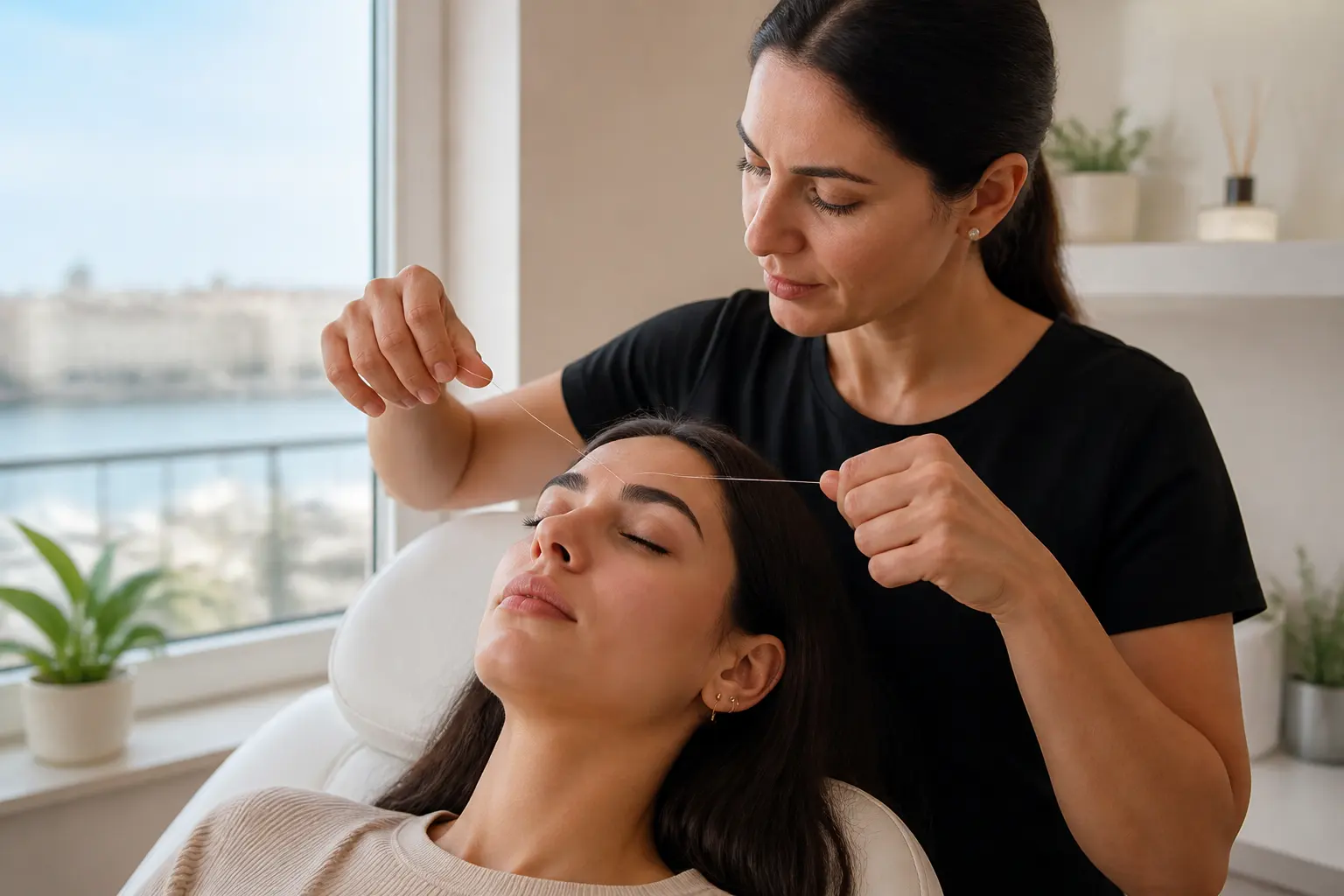
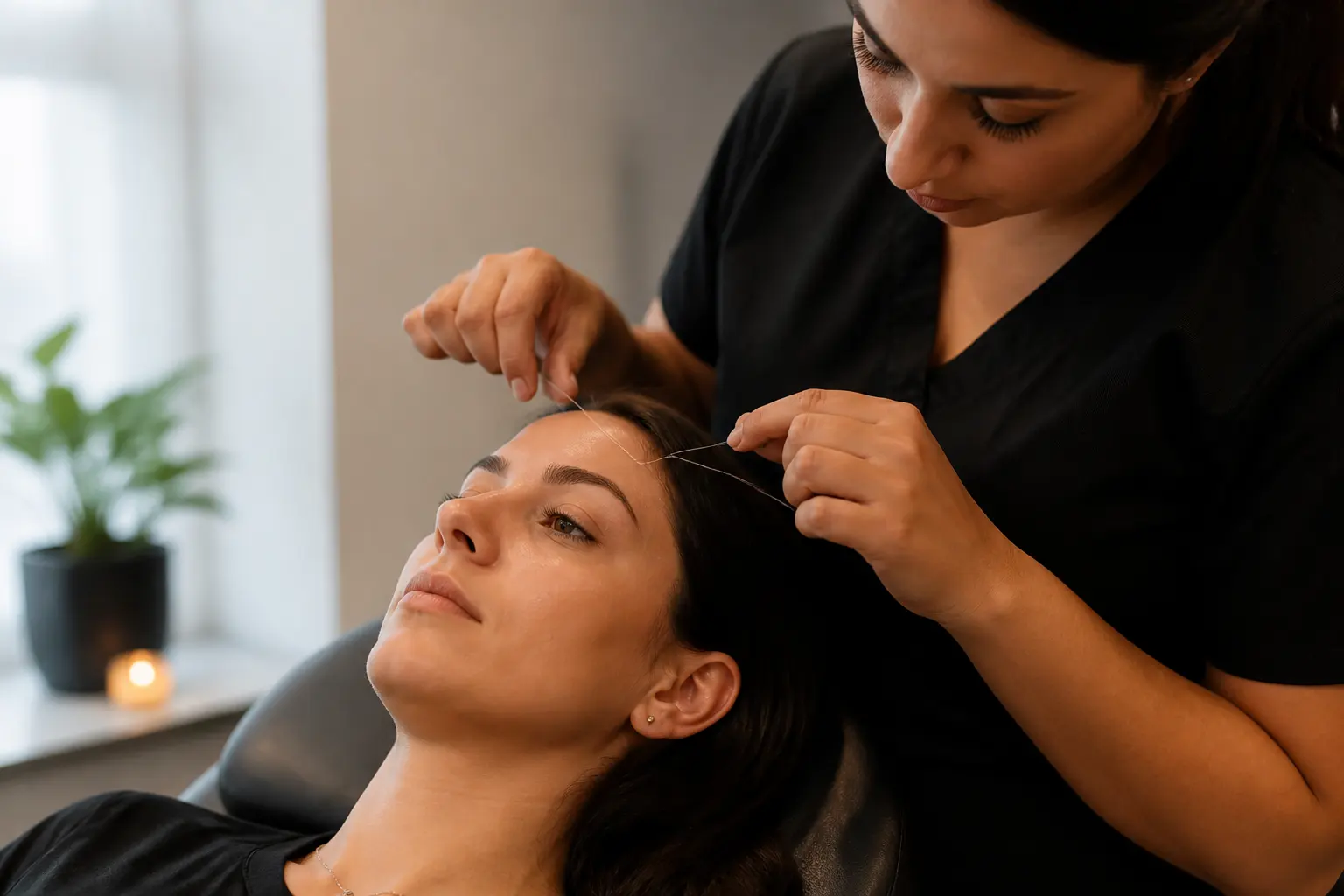
Threading uses a fine thread to remove unwanted hairs with precision. It is particularly useful around detailed areas such as the arch, the lower brow line and the space between the brows. Because the appointment is based on what is visibly ready to be shaped, it can be adapted to a range of brow densities and growth speeds.
At Becammo, brow design starts with an individual assessment of your facial features, natural asymmetries and existing eyebrow growth. The aim is not to make every face fit one fashionable template. It is to create a clean, balanced shape that remains recognisably yours.
For appointment planning, threading offers a practical advantage: you do not need to wait until every hair has returned. Booking when there is enough visible regrowth to refine the outline can help maintain the design while avoiding unnecessary removal from the main brow body.
Consistent brow care is less about chasing perfection and more about choosing a rhythm that preserves your preferred shape comfortably.
When should you book your next eyebrow threading appointment?
There is no universal interval that suits every client. However, the following signs can help you decide that it may be time to book.
Your brow outline has started to lose definition
If the lower line, arch or tail no longer looks as clear as you like, a maintenance appointment may be useful. This does not require heavy regrowth. A small number of strategically placed hairs can change how defined the brows appear.
You can see hairs growing outside your mapped shape
New growth between the brows, above the upper line or under the arch can make the shape feel less tidy. Threading can target these areas while leaving the hairs that contribute to your natural fullness.
You are preparing for an occasion
Holidays, weddings, professional photographs and celebrations often make people want a fresher brow shape. If possible, avoid leaving your first-ever threading appointment until the same day as an important event. Booking with a little time in hand lets you learn how your skin responds and gives you a clearer sense of your ideal maintenance timing.
You are rebuilding a more natural brow shape
If you are growing out sparse or over-plucked brows, appointments may need a slightly different approach. Your brow artist may recommend keeping the clean-up focused on clearly stray hairs, while allowing selected areas to grow. This process requires patience because not every hair follows the same timetable.
A practical appointment rhythm for different brow goals
Your ideal schedule can change with your priorities. Think of these examples as planning tools, not fixed rules.
| Brow goal | Useful planning approach | What to discuss at your appointment |
|---|---|---|
| Neat everyday maintenance | Consider checking in roughly every 15 to 20 days, then adjust according to visible regrowth. | How quickly your outline softens and which areas show first. |
| Soft, fuller-looking brows | Allow more time between appointments where appropriate, so the brow artist can see the natural pattern clearly. | Which hairs should be kept during the growing-out period. |
| Defined brows for an event | Plan ahead rather than booking at the last minute, especially if you are new to threading. | Your event date and whether you would like tint or henna alongside shaping. |
| Regular tint or henna maintenance | Coordinate colour services with shape maintenance based on your personal brow condition and desired finish. | Colour preference, skin sensitivity and how natural or defined you want the result to look. |
The most helpful schedule is one you can realistically keep. For some clients in Sliema, Swieqi and nearby areas, that may mean a regular appointment between work commitments. For others, it may mean planning a brow tidy before travel or fitting it into a wider self-care routine.
Why waiting too long can make shaping less precise
Waiting longer between visits is not automatically a problem. Some people prefer it, particularly when they are aiming for a softer finish or allowing fuller areas to grow. However, very extended gaps can make it harder to see which hairs belong to the intended shape and which are simply stray growth.
When regrowth becomes dense around the brow, the shape can lose its visual guide. This may mean spending more time reassessing proportions rather than simply maintaining a familiar outline. A regular routine can make each appointment feel more straightforward because your brow artist has a clearer reference point.
This does not mean you need to book constantly. It means that a considered maintenance rhythm can support a consistent result, particularly if you enjoy a defined arch, balanced tail or tidy brow start.
How to prepare for a threading appointment
Good planning is not only about dates. A few simple steps can make the appointment easier for you and allow the brow artist to assess your natural growth more accurately.
- Arrive without heavy brow make-up where possible, so the natural shape is easy to see.
- Avoid plucking between appointments if you are trying to rebuild or refine your shape. It is easier to make a thoughtful plan when the full pattern is visible.
- Tell your brow artist if your skin feels irritated, unusually sensitive or affected by a new skincare routine.
- Share your plans if you have an important event, holiday or photograph coming up.
- Bring reference images only as a conversation starter. Your final design should take account of your own bone structure, hair density and natural direction of growth.
After threading, follow the studio’s aftercare guidance and give the area time to settle. Everyone’s skin is different, and a professional appointment should leave room for personalised advice rather than assumptions.
When a change in eyebrow hair deserves extra attention
Normal regrowth is varied, but a sudden or pronounced change in eyebrow density, patchy loss, persistent irritation or unexpectedly heavy hair shedding should not be treated as a routine shaping issue. The American Academy of Dermatology notes that excessive shedding can follow a range of physical and emotional stressors, and that hair loss and shedding are not the same thing.
A brow artist can help you plan the cosmetic side of your routine, but cannot diagnose the reason for unexpected hair changes. If you are concerned, seek advice from a qualified healthcare professional before making assumptions or trying to correct the issue through more frequent hair removal.
Conclusion
Your eyebrow growth cycle is individual, and the best appointment schedule is built around your natural regrowth rather than an arbitrary calendar rule. For many people, regular threading every 15 to 20 days helps maintain a clean outline. Others benefit from longer intervals, especially when they are growing out their brows or prefer a softer finish.
A professional brow assessment can turn that uncertainty into a clear plan. By looking at your growth pattern, desired level of definition and everyday routine, your brow artist can help you decide when to book next and how to maintain a shape that feels personal to you. When you are ready, choose your preferred Becammo location in Sliema or Swieqi and book a threading appointment that suits your brows and your schedule.
Frequently asked questions
How often should I get my eyebrows threaded?
Many clients find that every 15 to 20 days works well for regular maintenance. Your ideal timing may be shorter or longer depending on hair density, growth speed and how defined you like your brows to look.
Why do some eyebrow hairs grow back faster than others?
Individual follicles are at different stages of the hair cycle. Because the cycle is not synchronised, some hairs become visible sooner while others remain in a resting or less noticeable stage.
Should I pluck stray hairs between threading appointments?
If you are trying to preserve a particular shape or grow out areas of the brow, it is usually better to leave the hairs for your brow artist to assess. Removing hairs at home can make the natural pattern harder to read.
Can threading help if my brows are sparse?
Threading can tidy the surrounding area and support a more intentional shape, but it cannot promise new growth. A brow artist can discuss a conservative design approach that makes the most of the hairs you have.
Is it better to book threading before a holiday or special event?
It is sensible to plan ahead, especially for a first appointment. This gives your skin time to settle and helps you avoid making your first experience part of a last-minute event schedule.