Why Lip Blush Consultations Ask About Cold Sores
Brenda Cammo Team

If you are considering lip blush, you may be surprised by how many questions come before any colour is chosen. One of the most important is whether you have ever had a cold sore, fever blister, lip herpes or a tingling outbreak around the mouth.
It is not an awkward question and it is not about judging your health history. It is a practical part of planning a lip procedure responsibly. Lip micropigmentation works directly on the lip area, so a professional consultation needs to identify factors that could affect comfort, timing and healing.
This guide explains why cold sore history matters before lip blush, what to share during your consultation and what to do if you have an active or recently healed outbreak. It also helps you understand the difference between a professional beauty consultation and medical advice.
Why does a lip blush consultation ask about cold sores?
Cold sores are commonly linked to the herpes simplex virus. Some people have one outbreak and never notice another, while others recognise a familiar pattern of tingling, itching, soreness or small blisters around the lips.
For someone with a history of cold sores, any procedure that involves the lip area deserves thoughtful planning. Physical irritation or trauma around the mouth can be a trigger for a recurrence in some people. Professional cosmetic guidance therefore recommends careful screening, recording the relevant history and delaying an aesthetic procedure if there are early symptoms or an active lesion. You can read more about cold sore triggers and when they are contagious on the NHS cold sores guidance.
The consultation question exists for three straightforward reasons:
- To decide whether this is the right time to book. An active cold sore, a recently healing area or early warning signs may mean the appointment should be moved.
- To make the practitioner aware of your individual history. A previous outbreak is useful information when discussing preparation and realistic planning.
- To help protect your healing process. Lip blush has its own settling period. An outbreak during that time can make the experience more uncomfortable and complicate how the area looks while it is healing.
A consultation is not a diagnosis and it does not replace advice from a GP, pharmacist, dermatologist or other appropriate clinician. Its purpose is to make sure that a cosmetic appointment is approached with the right information, rather than assumptions.
Cold sores, fever blisters and lip herpes: do the names matter?
Clients use different words for the same type of concern. You may call it a cold sore, fever blister, lip herpes or simply “a blister I get when I am stressed”. What matters at consultation is describing what you have experienced as clearly as you can.
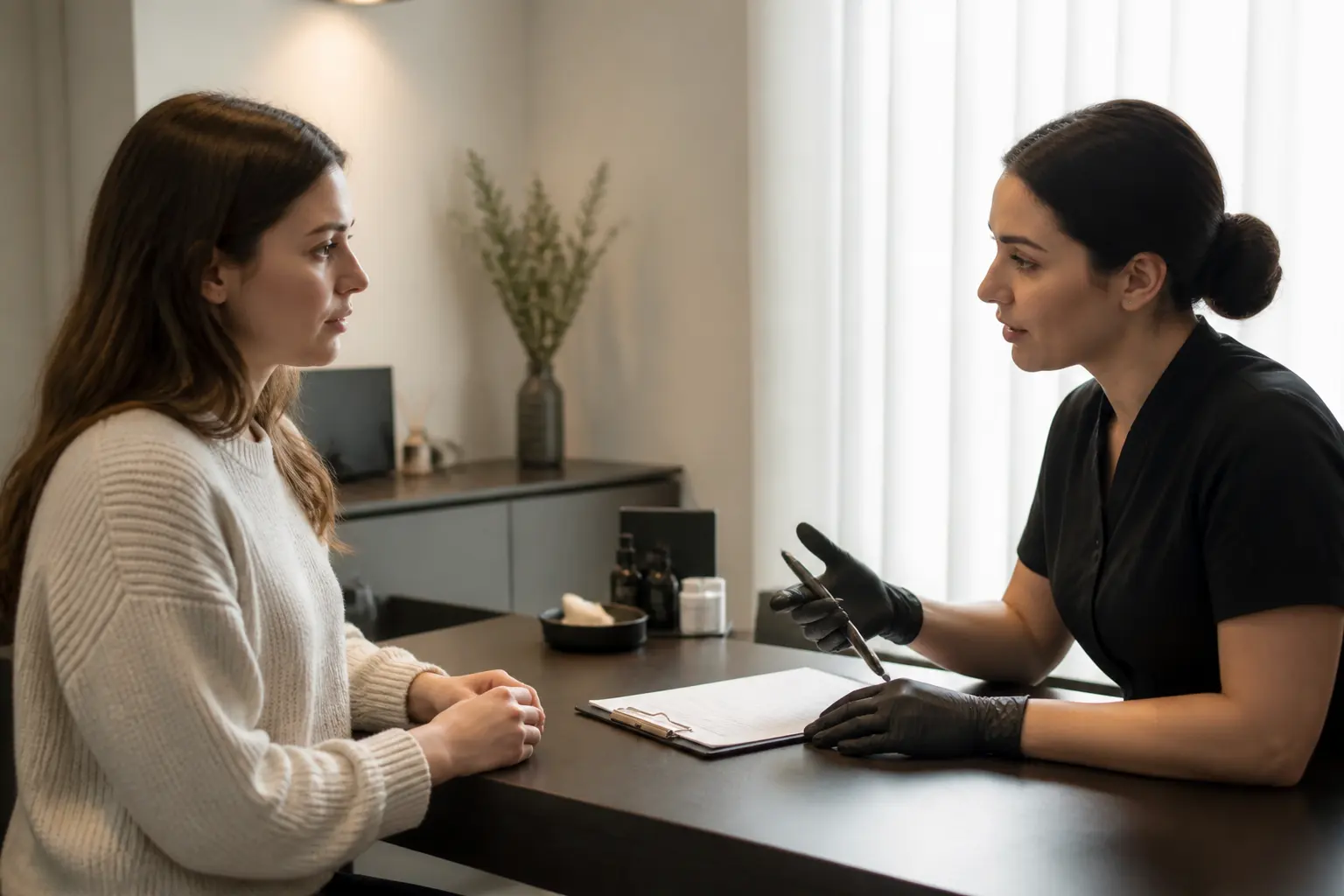
If you have previously been told that you get cold sores, say so even if your last outbreak was a long time ago. If you are not certain whether a past lip problem was a cold sore, explain what happened instead of guessing. For example, you might remember tingling followed by blisters on the lip line, recurring in a similar place, or you may only recall a sore patch after a period of illness or lots of sun exposure.
Cold sores can have triggers that differ from person to person. The NHS notes that illness, sunshine and periods can be triggers. Other people notice a pattern around stress, tiredness or local irritation. Your own history is more useful than trying to fit it into a standard timeline.
Why honesty at consultation protects your appointment
It can feel tempting to leave out a cold sore history because you want to keep your preferred appointment date. However, a good lip blush experience begins with open information. There is no benefit in a practitioner being surprised by a factor that should have been discussed before the procedure.
Being open gives the studio the chance to explain its policy, consider whether the timing is suitable and tell you when to seek advice from your own healthcare professional. It also helps you avoid arriving for an appointment only to discover that it cannot responsibly go ahead that day.
Be especially clear if any of the following apply:
- You have had a cold sore before, even if it was years ago.
- You currently feel tingling, burning, itching or sensitivity around the lips.
- You have a visible blister, sore, scab or an area that is still healing.
- You have recently used a cold sore product or received advice for a lip outbreak.
- You are unsure whether a recent lip irritation was a cold sore.
- You tend to get outbreaks after sun exposure, illness, dental appointments or periods of stress.
This is not a checklist for self-diagnosis. It is simply the information a practitioner needs in order to have a sensible conversation with you before working on the lips.
Can you have lip blush if you have had cold sores before?
A history of cold sores does not automatically answer whether lip micropigmentation is suitable for you. It does mean that the decision should be made carefully, with a consultation before committing to the procedure.
Professional guidance on herpes simplex and cosmetic interventions highlights the importance of screening clients with a relevant history and avoiding procedures when symptoms are present or lesions are not fully healed. It also recognises that the approach to prevention or medication is an individual clinical decision, rather than something to copy from another person’s experience. See the guideline on herpes simplex and cosmetic interventions for further detail.
If you have had cold sores, your practitioner may ask when the last outbreak occurred, how often you get them and whether you know your usual warning signs. Depending on your history, you may be advised to speak with your GP or another qualified prescriber before booking. Only an appropriate healthcare professional can advise whether any medicine is suitable for you and how it should be used.
Do not borrow antiviral medication, take prescription medicine based on a social media recommendation or assume that an over-the-counter product is the right preparation for a cosmetic procedure. Individual health circumstances, allergies, medicines and previous outbreak patterns all matter.
When should a lip appointment be postponed?
A lip procedure should not go ahead when there is an active cold sore or a suspected outbreak. This includes the early stage, when you feel that familiar tingling or burning before a visible blister appears.
Postponing is not a punishment and it does not mean you have done anything wrong. It is a sensible step that puts the condition of your lips first. The NHS advises that cold sores are contagious from the first tingling symptoms until they have completely healed. A professional studio needs the lip area to be calm and fully healed before reassessing an appointment.
It is also wise to get in touch early rather than waiting until you arrive. A quick message to the studio allows the team to guide you on the next booking step under its policy. If your symptoms are unusual, severe, frequent or you are concerned about them, seek medical advice rather than relying on a beauty appointment for an answer.
What happens in a professional lip micropigmentation consultation?
A consultation for semi-permanent procedures is designed to help you make an informed decision. It is the right place to raise practical questions before booking a longer lip micropigmentation appointment.
At a professional studio, the conversation may cover:
- Your desired result, such as a soft wash of colour, improved-looking definition or a more balanced everyday appearance.
- Your natural lip tone and how this affects colour planning.
- Previous lip procedures or relevant cosmetic history.
- Cold sore history, current symptoms and any concerns about timing.
- General suitability questions and whether you need to obtain medical advice before proceeding.
- The expected healing period and why the immediate colour is not the finished result.
- Aftercare responsibilities, including following the studio’s instructions and contacting an appropriate healthcare professional if you have a health concern.
The aim is not to make every client fit the same plan. Lip colour, skin response, personal preferences and health history vary. A considered consultation creates space to decide whether to proceed, postpone or gather more information first.
How to prepare for the conversation
You do not need medical jargon to have a useful consultation. A few notes on your phone can make it easier to remember the details that matter.
Make a simple cold sore history note
Before your consultation, write down the approximate date of your last outbreak, how often they happen and any pattern you have noticed. Include whether you have experienced warning signs such as tingling before an outbreak. If you have discussed cold sores with a healthcare professional before, mention that too.
Bring your questions about lip blush
Ask about the process, colour approach, healing expectations, the studio’s hygiene standards and what would require rescheduling. There is no need to feel rushed. Choosing a semi-permanent lip procedure should feel informed, not pressured.
Tell the practitioner about changes close to the appointment
Your situation can change between consultation and booking. If you develop a cold sore, feel early symptoms or have another lip concern, contact the studio before the appointment. Early communication is kinder to your schedule and supports a more responsible decision.
What not to assume about cold sores and lip procedures
Several common assumptions can make planning harder than it needs to be.
| Assumption | A more useful approach |
|---|---|
| “My last cold sore was years ago, so it is irrelevant.” | Share the history anyway. The consultation is the place to decide what information is relevant to your booking. |
| “There is no visible blister, so I should keep the appointment.” | Early tingling, burning or itching can matter. Contact the studio before attending. |
| “A beauty practitioner can prescribe what I need.” | Prescription decisions belong to an appropriate healthcare professional. |
| “If another client had lip blush with cold sore history, the same plan will suit me.” | Health histories differ. Use your own consultation and clinical advice where needed. |
| “Postponing means I cannot have lip blush.” | Often it simply means choosing a better time, once the area is fully healed and any relevant advice has been followed. |
A note on hygiene and professional standards
Cold sore questions are one part of a wider consultation process. A professional lip procedure should also involve hygiene protocols, clear aftercare and a practitioner who is willing to pause when the timing is not right.
At Becammo, a consultation for semi-permanent services gives you an opportunity to discuss your goals and relevant history before deciding on lip micropigmentation. It supports a personalised approach rather than treating every lip appointment as identical.
If you are visiting Malta, living in Sliema, Swieqi or nearby, booking a consultation first can take uncertainty out of the process. You can ask the questions that matter to you, disclose a cold sore history privately and understand the next step before arranging the full procedure.
Conclusion
Asking about cold sores is a sign that a lip blush consultation is taking the lip area, timing and client history seriously. It is not a reason for embarrassment, and it is not a diagnosis. It is information that helps a professional studio decide whether to proceed, postpone or suggest that you seek advice from your own healthcare professional first.
If you are thinking about lip micropigmentation and have ever had a cold sore, start with an honest consultation. Bring your questions, share any relevant history and give yourself the confidence to plan your appointment at the right time.
Frequently asked questions
Do I need to mention a cold sore from many years ago?
Yes. Mention any known history of cold sores, even if it was a long time ago. Your practitioner can then discuss whether it affects the timing or whether you should seek individual advice before booking.
Can I have lip blush with an active cold sore?
No. Contact the studio to postpone rather than attending with an active sore, a healing lesion or early symptoms such as tingling. The area should be fully healed before an appointment is reconsidered.
What if I am not sure whether it was a cold sore?
Explain what you noticed, when it happened and whether it has returned. If you need clarity about a symptom or diagnosis, speak with a GP, pharmacist or other appropriate healthcare professional.
Will the studio prescribe antiviral medicine before lip blush?
No. A beauty studio does not prescribe medication. If your history suggests that you need clinical advice before a lip procedure, speak with an appropriate qualified prescriber.
Can I book a consultation before deciding on lip micropigmentation?
Yes. A semi-permanent consultation is specifically useful when you want to discuss suitability, your colour goals, cold sore history and the practical considerations before committing to the procedure.