Why Threading Creates Crisper Brow Edges Than Razors
Brenda Cammo Team
When your eyebrows look polished, the difference is often in the edges. The beginning of the brow, the line beneath the arch and the tail all help frame the face, even when the overall shape remains soft and natural. If you have tried an eyebrow razor or small facial trimmer at home, you may have noticed that it can tidy visible hair quickly, yet it rarely creates the same clean definition as a professional threading appointment.
The reason is not simply that one method is more precise than another. It is about how each method handles the individual hairs around your brow shape. Threading allows a trained brow artist to target and remove selected hairs, one small line at a time. Razors and trimmers cut hairs at the surface of the skin, which can be useful for a quick touch-up but does not create the same freshly shaped outline.
For clients in Malta who want brows that feel tidy without looking overdone, understanding this distinction can make it easier to choose the right approach between appointments.
Threading vs eyebrow razor: the key difference
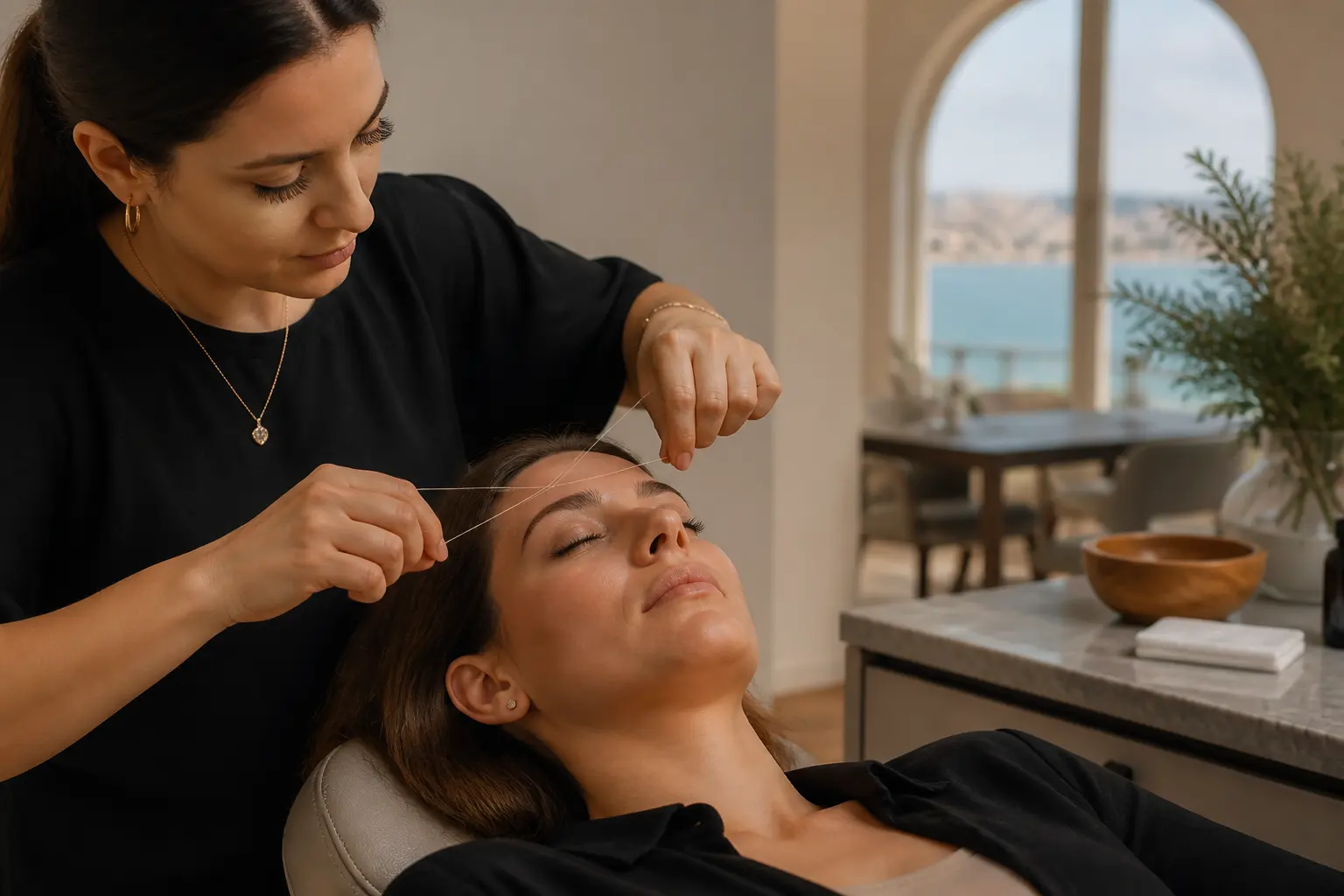
Threading uses a fine twisted thread to catch and remove unwanted hairs from the root. At Becammo, the standard material is cotton thread, with polyester available for clients with an allergy concern. The thread is single-use and discarded after each client. Your brow artist works through the hairs around the intended shape, removing only what sits outside the mapped design.
An eyebrow razor or trimmer works differently. Its blade cuts the hair above, or very close to, the skin’s surface. It does not lift the hair out from the root. That means the hair remains in the follicle and may become visible again sooner, depending on your individual hair growth pattern.
Neither option needs to be treated as universally right or wrong. A trimmer can be practical when you need a fast, temporary tidy. Threading is usually the better fit when your aim is a clearly defined brow line that has been shaped around your natural growth, facial balance and personal style.
Why threading creates a cleaner outline
It removes the hair rather than shortening it
Clean edges depend on what happens to the fine hairs just outside the brow design. Because threading removes those hairs rather than cutting them, the skin around the brow can look smoother immediately after the appointment. With shaving or trimming, the hair has been shortened rather than removed, so the outline may not have the same crisp, freshly shaped appearance.
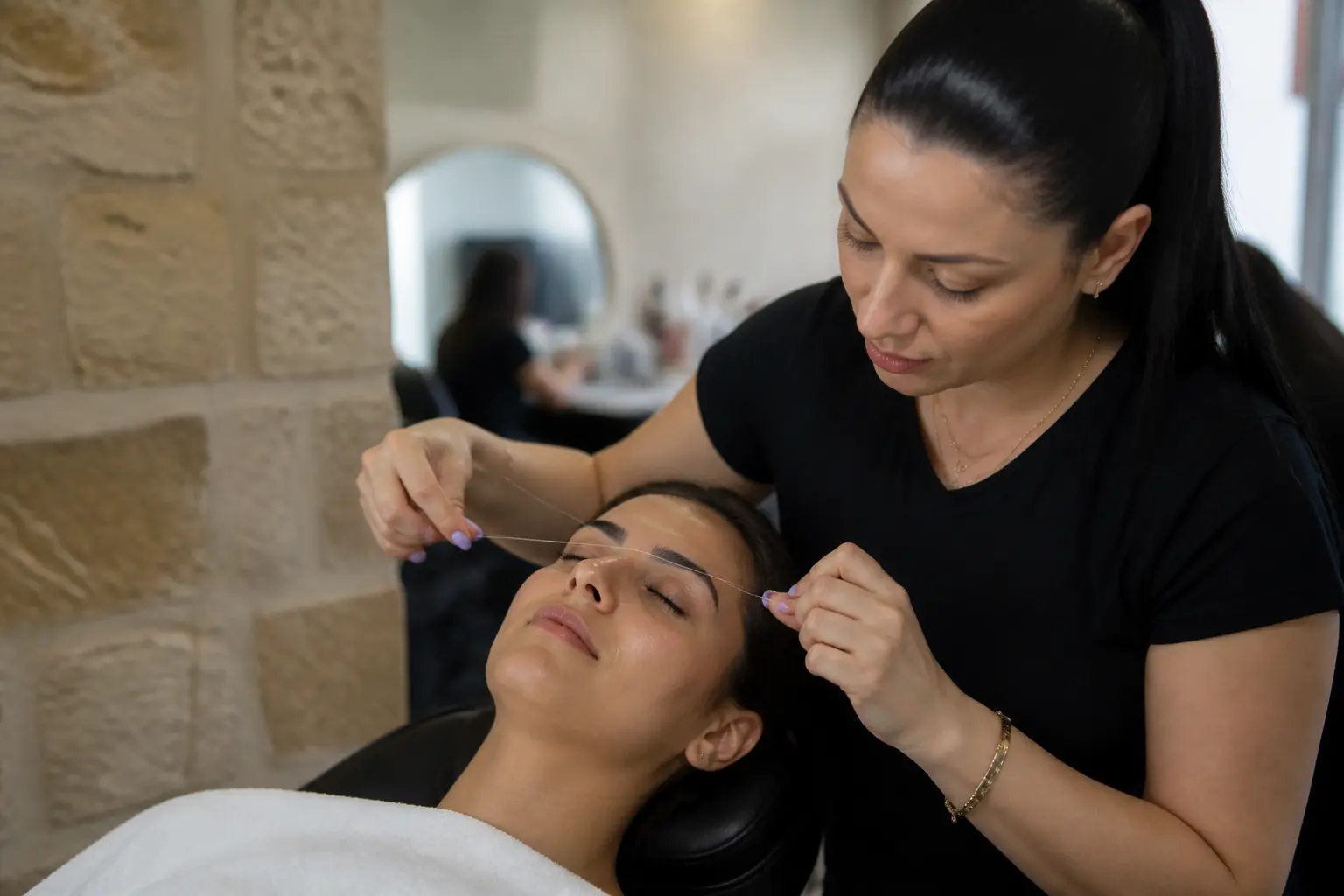
This is particularly noticeable beneath the arch and below the brow tail. These areas often contain short, fine hairs that affect how defined the lower brow line appears. A brow artist can use threading to work through them with control, rather than sweeping broadly across the area with a blade.
It gives the artist control over individual hairs
A strong brow design should not be based on removing as much hair as possible. It should be based on deciding which hairs support your natural shape and which ones sit outside it. Threading is well suited to this careful selection.
During a professional service, the artist can pause, assess the line and make small adjustments as they work. That makes a difference for brows that are naturally uneven, sparse in some areas, fuller in others or affected by a cowlick. The goal is not to force identical brows. It is to create balance while respecting the natural direction and density of your hair.
It can define both the top and bottom lines
The lower edge of the brow often receives the most attention because it gives the arch its visible structure. However, the top edge matters too. A few stray hairs above the brow can make the shape appear less intentional, especially in photographs or when you wear minimal make-up.
Threading can refine both borders with a light touch. This helps create a complete frame around the brow rather than a line that looks defined only underneath. The artist should still preserve enough natural texture so the result suits your features and does not look overly sharp unless that is the style you have requested.
Why razors and trimmers can look less precise
Razors and trimmers are designed to cut, so their result is influenced by the angle of the blade, the pressure used and the way the hair lies against the skin. Around eyebrows, where the shape changes direction through the front, arch and tail, this can make it harder to create a consistent line at home.
There are also practical limits to what you can see and reach on your own face. It is easy to remove one hair too many at the beginning of the brow, take a little too much from the tail or create a line that looks uneven once you step back from the mirror. A close-up mirror can make every hair look urgent, while a professional brow assessment considers how the brows look at normal conversation distance.
Another consideration is regrowth visibility. Cut hairs can become noticeable as they grow back, particularly if your brow hair is dark or coarse. This is not because shaving changes the number of hairs or transforms their biology, but because a cut hair can have a blunt end as it emerges. For someone who likes consistently clean edges, this may mean more frequent touch-ups.
Precision does not mean making every brow identical
Crisp edges should support your face, not create a rigid template. Natural brows are sisters, not exact twins. One may sit slightly higher, grow more densely or have a different arch. Skin texture, facial expression and hair direction also influence how the brows appear from side to side.
At a professional threading appointment, mapping and visual assessment help guide the shape. This is especially valuable for the international, multi-ethnic community in Malta. Brow density, texture and growth direction can differ widely, so a suitable design is always personalised. A good result may be softly rounded, gently angled, straighter or more lifted in appearance, depending on your natural brows and preferences.
The most flattering crisp edge is not necessarily the thinnest or most dramatic one. It is the one that makes your own brow shape look deliberate and balanced.
What a professional threading appointment focuses on
A professional brow service is more than removing visible stray hairs. It begins with understanding the look you want and assessing what your natural brow can realistically support. You may prefer a fuller brow with a tidy perimeter, a softly structured everyday shape or more definition for an event. Sharing this at the start helps your artist make considered choices.
The appointment may include the following elements:
- Looking at your natural brow growth, density and direction.
- Discussing how defined or natural you would like the result to appear.
- Mapping the key points of the brow where appropriate, including the beginning, arch and tail.
- Removing selected hairs with thread to refine the outline.
- Checking balance from a normal viewing distance, not only under close inspection.
- Sharing appropriate aftercare guidance for your skin and routine.
At Becammo, threading is approached as a personalised design service. The technique has historical roots in India and the Middle East, and it remains valued because it can offer detailed control around the brow area. The focus is always on working with the brows you have, rather than trying to make every client fit one fashionable shape.
When a razor might still be useful
An eyebrow razor is not automatically a mistake. It can be convenient for a quick tidy when you are travelling, between events or unable to book a brow appointment straight away. Some people also use facial trimmers for areas away from their main brow shape.
The key is to be cautious around the brow boundaries. If you are maintaining your brows at home, avoid making major changes to the front of the brow, the highest point of the arch or the tail. These areas have a large effect on proportion, and a small removal can change the overall shape more than expected.
It is also sensible not to use a razor immediately before a threading appointment. Leaving the hair long enough for the thread to catch gives your artist more to work with and makes it easier to assess the true shape. If you are unsure whether there is enough growth, ask the studio when booking rather than guessing.
How to keep threaded edges looking neat between visits
How often you choose threading depends on your hair growth, preferred level of definition and personal routine. Some clients like to maintain a very clean outline, while others are happy to allow more natural growth between appointments. There is no single schedule that suits everyone.
These simple habits can help you get the most from a professional shape:
- Let the brow grow enough for a proper assessment. Repeatedly removing random hairs at home can make it more difficult to see the natural line.
- Use brow make-up strategically. A light pencil, powder or tinted product can add definition to sparse areas without changing the underlying shape.
- Brush brows into place. A spoolie brush or suitable brow gel can make a professional shape look more polished day to day.
- Avoid chasing every new hair. Removing one or two hairs can seem harmless, but regular over-tidying may gradually alter your brow balance.
- Tell your artist what has changed. If you are growing out over-plucked areas, want a softer look or have changed your brow routine, mention it at the beginning of the appointment.
Choosing the right method for your brow goal
| Your priority | Threading | Razor or trimmer |
|---|---|---|
| Clearly defined brow borders | Designed for selective hair removal around the shape | Can tidy surface hair, but is harder to use for detailed shaping |
| Longer-lasting appearance between touch-ups | Hair is removed from the root | Hair is cut at the surface and may become visible again sooner |
| Quick home maintenance | Usually best performed by a trained professional | Convenient for a temporary, light tidy |
| Personalised design | Allows assessment of symmetry, density and natural growth | Depends on your own technique and view in the mirror |
| Major shape changes | Better discussed and carried out in a professional appointment | Higher risk of taking off more than intended at home |
If your goal is simply to shorten visible hair for a day or two, a trimmer may be enough. If you want brows that look cleanly shaped from the front, side and normal viewing distance, threading offers a more considered route.
Conclusion
The reason threading gives crisp edges is straightforward: it allows unwanted hairs to be removed selectively from around the brow shape, rather than being cut at the skin’s surface. That level of control helps a trained artist refine the outline while preserving the fullness, texture and character that make your brows your own.
Whether you live in Malta, are visiting Sliema or Swieqi, or simply want to move away from rushed at-home shaping, a professional threading appointment can give you a clearer starting point. Book the service that suits you, share the look you have in mind and let your brow artist create definition that works with your natural features.
Frequently asked questions
Does threading make eyebrows look sharper than shaving?
Threading can create a sharper-looking outline because it removes selected hairs around the brow from the root. Shaving cuts hairs at the surface, so it is generally better suited to a quick temporary tidy than detailed brow design.
Will threading make my eyebrows too thin?
Not when the service is planned around your preferences and natural growth. Tell your brow artist if you want to keep your brows full, grow out previous over-plucking or maintain only a soft, natural edge.
Can I use an eyebrow razor between threading appointments?
You can, but use it carefully and avoid changing the main brow structure. If you want your next threading service to be as precise as possible, allow enough regrowth for the thread to catch before your appointment.
Does threading work on fine eyebrow hairs?
Threading is often chosen for its ability to work carefully around fine hairs that sit outside the intended brow shape. What can be removed depends on the hair length, direction and individual growth pattern.
How should I prepare for a threading appointment?
Arrive with enough brow growth for shaping, avoid making last-minute changes with a razor or tweezers, and let your artist know about skin sensitivity, recent products or the style you would like to achieve. If you have questions, ask the studio before your visit.