Sparse Brow Patches: How Clever Shaping Creates Balance
Brenda Cammo Team
Sparse patches can make brows feel uneven, especially when one side appears fuller than the other or a small gap sits right where you would like a cleaner line. It is tempting to remove more hair in pursuit of symmetry, but that can make the overall brow look thinner and draw even more attention to the area you hoped to disguise.
A more considered approach is to shape sparse eyebrows around the hair you do have. With thoughtful brow mapping, precise threading and an understanding of how your brows grow naturally, it is possible to create a tidier, more balanced frame for the face without trying to force two identical brows.
At a professional brow studio, the goal is not to copy a trend or create a template. It is to work with your facial proportions, natural brow density, hair direction and the placement of each sparse area. The result should still look like you, only more organised and intentional.
Why sparse patches appear in eyebrows
Brows are naturally sisters rather than twins. They may differ in height, density, direction and arch, even when neither brow is particularly sparse. A patch can therefore become noticeable because of the surrounding shape, not simply because hair is missing in one exact spot.
Common reasons brows may look patchy include:
- Natural differences in hair density between the left and right brow.
- Previous over-plucking or waxing that changed the outline over time.
- Hair growing in different directions, which can expose more skin in one area.
- A naturally higher or lower arch that makes one brow appear less full.
- Make-up removal, cleansing or daily brushing habits that reveal gaps you do not notice at other times.
- Changes in personal grooming, such as allowing brows to grow after years of maintaining a very narrow shape.
It is important not to diagnose the cause of hair loss from appearance alone. If you have noticed sudden, marked or unexplained changes in brow growth, it is sensible to speak with an appropriate healthcare professional. For everyday uneven density and established sparse spots, however, careful brow design can make a meaningful visual difference.
The principle behind shaping sparse eyebrows
Good shaping does not chase perfect sameness. Instead, it creates visual balance. This means deciding where each brow should begin, where the arch can sit naturally and where the tail should finish, then removing only the hairs that distract from that structure.
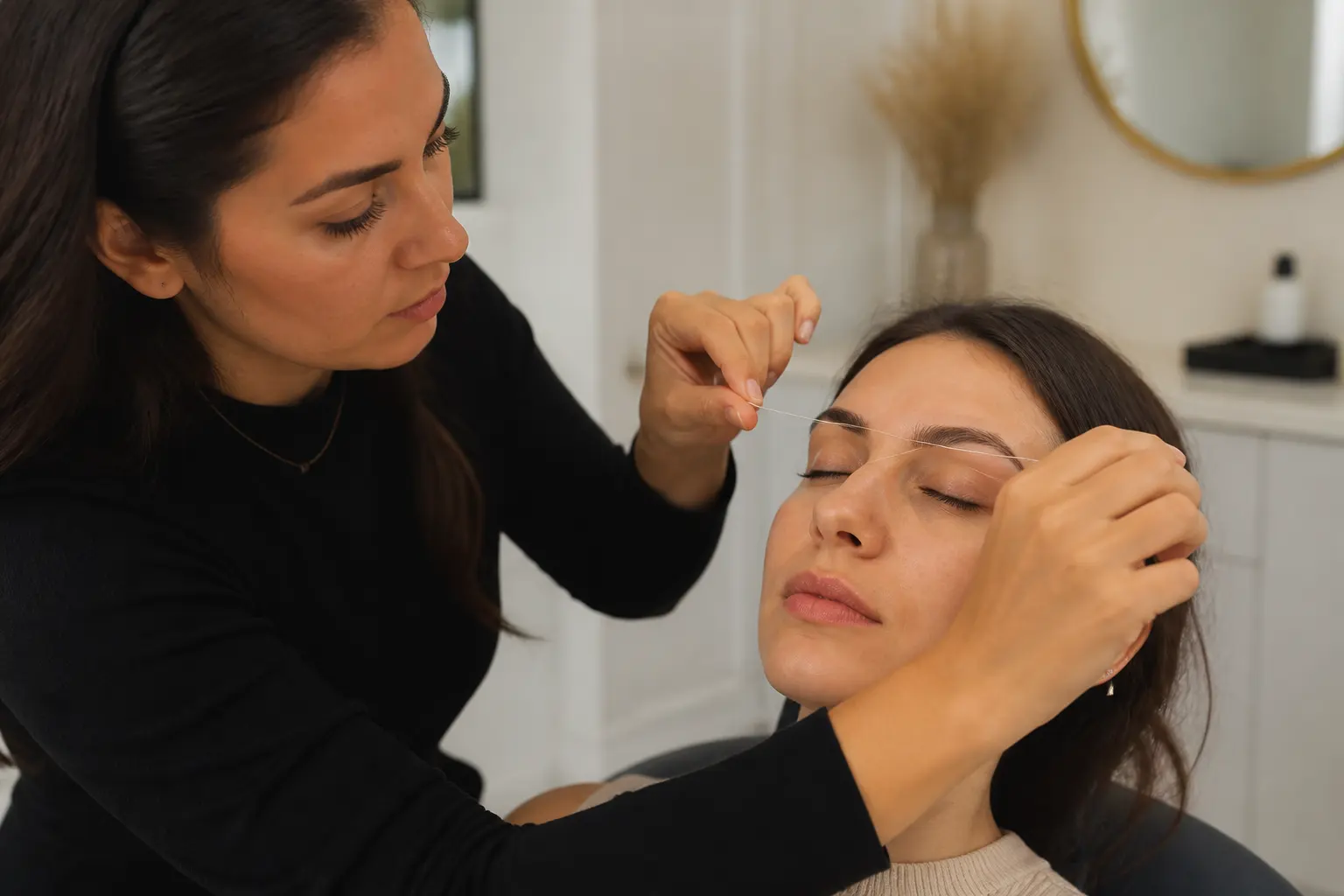
When there is a gap, the surrounding hairs become especially valuable. Taking too much from above or below the sparse area can turn a small patch into a large empty space. Leaving strategic density nearby, by contrast, can soften the contrast between hair and skin.
Professional shaping often focuses on three priorities:
- Protecting density. Fullness is preserved wherever it supports the brow’s overall line.
- Clarifying the outline. Stray hairs are removed selectively so the brow looks clean without looking overly thin.
- Balancing the pair. Small differences in height, thickness or tail length are assessed in relation to the whole face, rather than corrected aggressively in isolation.
This is why a brow appointment is not simply a matter of hair removal. The design decisions made before and during threading influence whether sparse areas look more exposed or more integrated into the finished shape.
How brow mapping helps with patchy brows
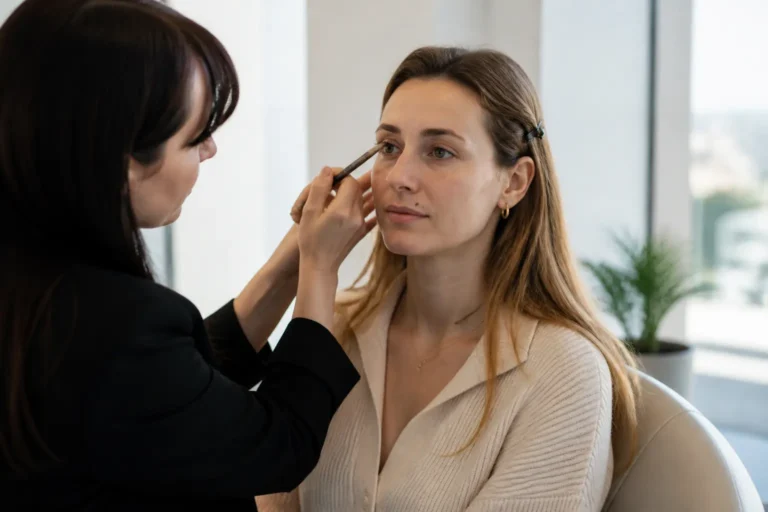
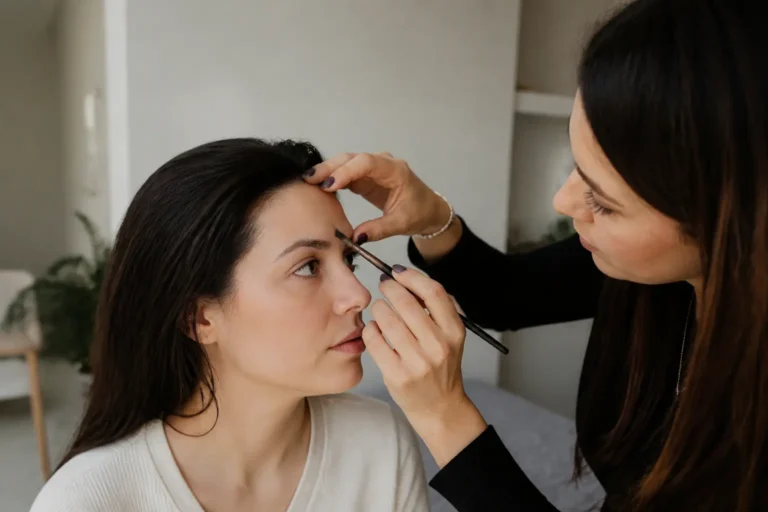
Brow mapping is the starting point for a personalised shape. It uses facial reference points to guide the beginning, arch and tail of each brow. These points are useful because they create proportion, but they are not a rigid stencil. Your natural growth pattern still matters.
For sparse eyebrows, mapping helps a brow artist see where the outline can be refined without sacrificing essential hair. For example, a naturally fuller lower line may be left largely intact if the upper section has a patch. If one tail is lighter than the other, the opposite tail may be softened slightly rather than dramatically narrowed.
Beginning of the brow
The inner brow creates much of the brow’s overall density. If this area is sparse, it is usually best to avoid creating an overly sharp or square front. A softer, brushed effect can look more natural and reduce the appearance of a sudden gap. Threading can remove obvious hairs between the brows while retaining the hairs that support a gentle start.
Arch placement
A patch near the arch can make people feel they need a higher, stronger curve. In many cases, that would only make the space more noticeable. A softer arch, placed where your natural brow allows it, may give a more balanced result. The aim is to create lift through proportion, not by removing too much hair below the brow.
The tail
Brow tails are often naturally finer. If a sparse patch sits there, a very long or sharply tapered tail can look disconnected. Keeping the tail proportionate, neat and slightly softer may help the brow appear more continuous. A small amount of brow pencil or powder can then be used to add definition when desired.
Why threading can suit a careful brow-shaping plan
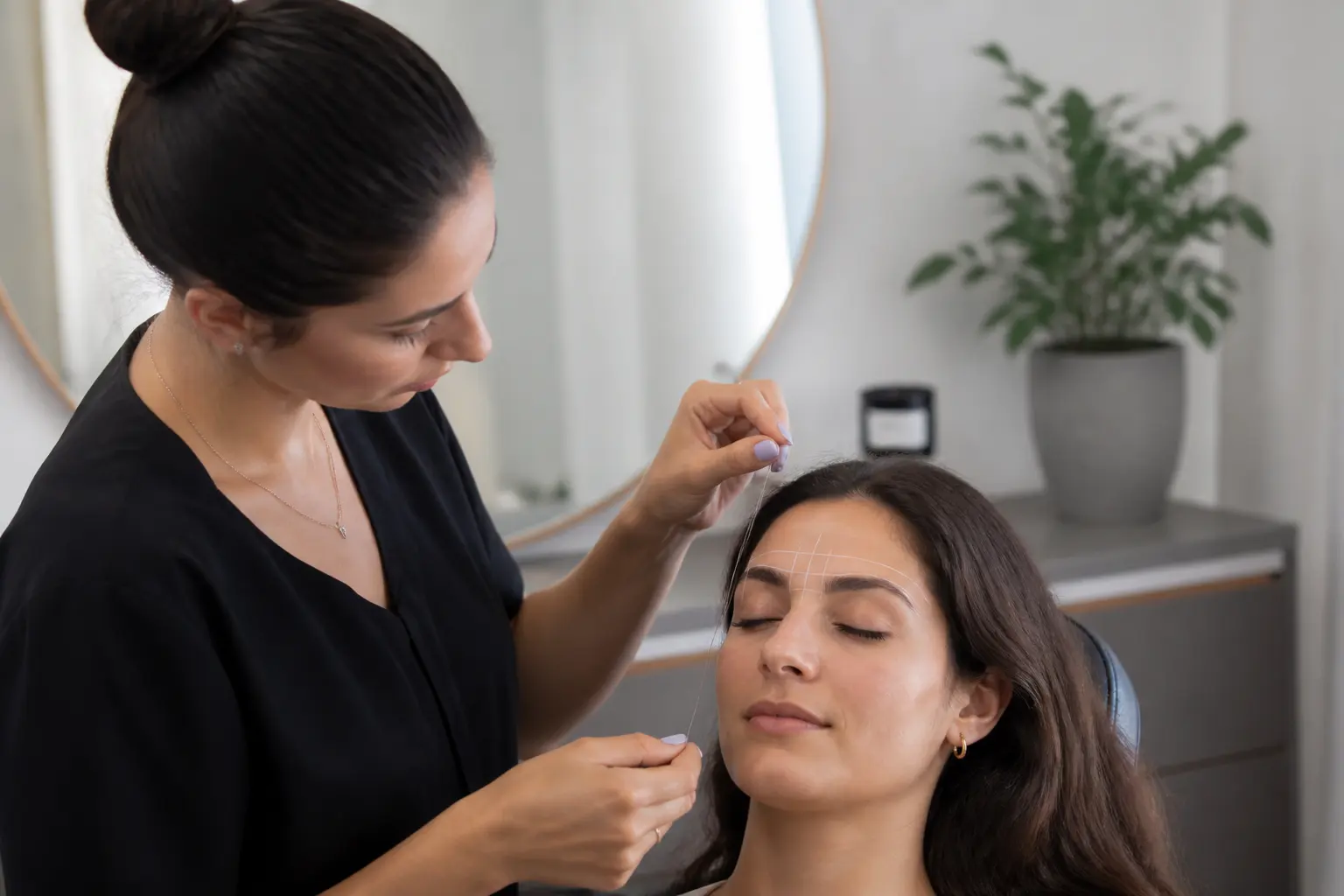
Threading is a precise method of hair removal using a twisted thread to remove hairs from the root. At Becammo, brow threading is paired with design and mapping, so the focus is on shaping the brow thoughtfully rather than removing hair indiscriminately.
For someone with sparse patches, precision matters. The artist can target individual stray hairs around the planned shape while leaving supportive hairs in place. This can be particularly helpful when the brow needs tidying but does not have much density to spare.
Threading is also useful for refining small areas around the brow, including hairs that interrupt the arch or extend beyond the tail. The thread used at the studio is single-use and disposable for each client. Cotton thread is standard, with polyester available for clients with an allergy to cotton.
Every brow responds differently, so a professional appointment should include a conversation about your priorities. You might prefer a fuller look, a more polished outline, a softer arch or a shape that is easy to fill at home. Sharing this before the service helps the design stay aligned with your lifestyle and comfort level.
What not to do when you notice a sparse patch
Small gaps often inspire quick fixes that make the situation harder to manage later. Before attempting to reshape your brows alone, consider these common mistakes.
Do not over-correct the fuller brow
If one brow has a sparse patch, it can seem logical to remove hair from the fuller brow until both look equal. This can leave you with two thinner brows rather than a balanced pair. A more useful goal is visual harmony, not matching every hair.
Do not chase the same arch on both sides
Facial features are naturally asymmetrical, and brow growth follows that pattern. Forcing identical arches can require unnecessary removal, particularly around the very areas that need protecting. A trained artist can create a coordinated shape while respecting these natural differences.
Do not create a very thin outline around the gap
Removing hairs immediately around a sparse area can create a crisp but disconnected shape. Keeping a little softness and density around the patch generally gives more flexibility for styling with make-up later.
Do not fill the whole brow too heavily
Dense, block-like make-up can make patches stand out because the contrast between product and natural hair becomes more obvious. Light, hair-like strokes and a shade that suits your colouring usually look more believable than a solid line.
Simple ways to style sparse brows between appointments
Professional shaping creates the foundation, while your daily routine can support the look. You do not need a large collection of products. A few careful steps can make sparse areas less obvious while keeping the brows soft.
- Brush first. Use a clean spoolie to see the true direction of your brow hairs. Brushing upward at the front and following the natural angle through the arch can reveal where only minimal filling is needed.
- Map the missing area lightly. Rather than drawing a complete new brow, add short strokes only where skin is showing through.
- Build gradually. Start with less product than you think you need. You can always add another fine stroke, but heavy product is harder to soften.
- Keep the front airy. The inner brow often looks best when it is less defined than the arch and tail.
- Set only if it helps. A clear or tinted brow gel may help hairs sit in a direction that gives better coverage. Use a light hand so the finish does not become stiff.
If you are unsure which brow product or application style works with your shape, bring your usual product to an appointment. A brow professional can often show you where to focus your effort, so your routine becomes quicker and less frustrating.
Can tint or henna help sparse-looking brows?
Colour services can be a useful addition for some clients, but they do a different job from shaping. Tint can make existing brow hairs look more noticeable, which may give the impression of extra definition. Henna can also be discussed as an option for clients who want more visible colour and shape between appointments.
Neither option creates new brow hair, and the appearance and upkeep will vary from person to person. The most flattering result usually starts with a well-planned shape, then considers whether colour would support the desired finish. During a brow consultation, it is worth explaining whether you want a barely-there effect, a more defined make-up look or simply easier mornings.
When to book professional brow shaping
You may benefit from a professional brow design appointment if you find yourself repeatedly correcting one brow with make-up, avoiding certain hairs because you are worried about creating a bigger gap, or feeling that your brows look uneven in photographs. A fresh professional assessment can be especially useful when you are growing out a previous shape and do not know which hairs to leave alone.
At Becammo, the appointment can be tailored around your current brow condition and the look you want to maintain. Rather than aiming for a fashionable shape that may not suit your natural pattern, the focus is on creating an individual, wearable result.
For many clients, regular maintenance also makes shaping easier over time. Booking before the brow becomes heavily overgrown allows the design to be refined gradually, without needing to remove large amounts of hair at once. The right interval depends on your hair growth and how defined you like your brows to look.
A balanced brow is better than a perfect copy
Sparse patches do not mean your brows need a complete reinvention. Often, the most effective solution is a clever shape that protects fullness, tidies the surrounding area and works with your individual features. A few carefully chosen adjustments can make the whole brow look calmer and more balanced.
If you are in Malta and would like help with patchy or uneven brows, book a threading and brow design appointment at Becammo in Sliema or Swieqi. A professional assessment can help you understand which hairs to preserve, where to refine the shape and how to maintain the result confidently at home.
Frequently asked questions
Can eyebrow threading make sparse patches worse?
It can if too much hair is removed around the patch. This is why personalised design matters. A careful threading appointment should protect the hairs that support the overall shape and remove only what is needed for a clean outline.
Should I grow my brows out before a shaping appointment?
If possible, allowing some growth can give the brow artist more to assess. However, you do not need to wait until your brows feel untidy. Let the studio know that you are concerned about sparse areas, so the shape can be planned conservatively.
Can brows with gaps still look natural after shaping?
Yes. Natural-looking results often come from preserving density, using a soft outline and avoiding overly dramatic changes. Light make-up can be added afterwards if you want extra definition in a particular area.
Is brow tinting enough to cover sparse areas?
Tint can make existing hairs appear more visible, but it does not replace missing hair. It may work well alongside a carefully designed shape, depending on the location of the sparse area and the finish you prefer.
How often should I shape sparse eyebrows?
The ideal timing varies with your hair growth and desired level of definition. Regular but measured maintenance can help preserve the shape, while your brow artist can advise on an interval that does not encourage over-removal.