Threading Around Moles and Freckles: Why Consultation Matters
Brenda Cammo Team
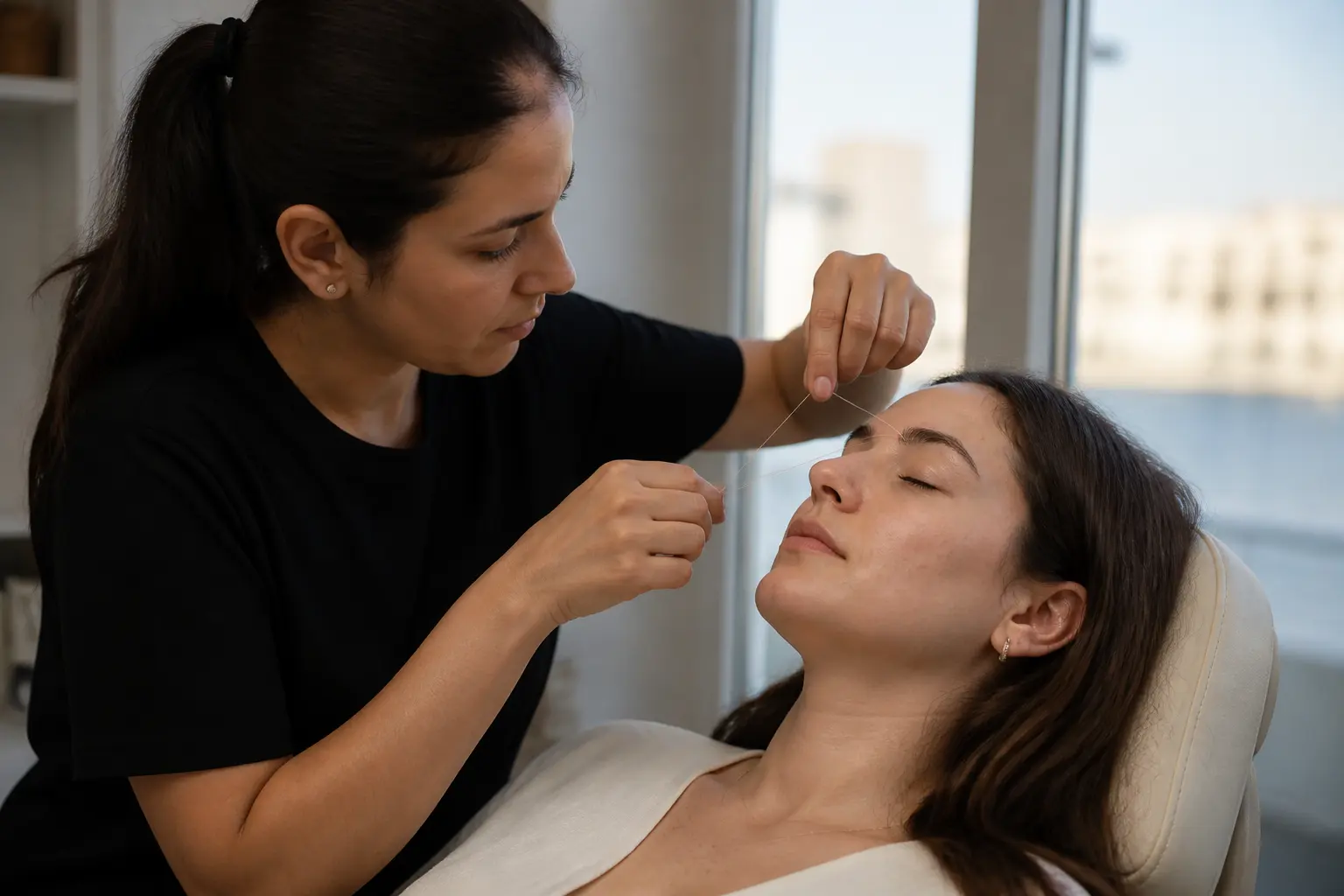
Eyebrow threading is valued for its precision, but precision should never mean ignoring the skin beneath and around the brow. Moles, freckles, birthmarks, scars and other natural skin features are part of many people’s faces. They do not need to be hidden or treated as imperfections. They do, however, deserve a clear conversation before hair removal begins.
If you are considering threading around moles, the most useful first step is a careful consultation. This allows you and your brow professional to identify the areas to preserve, decide how the brow shape can be refined around them, and recognise when a feature should be checked by a medical professional before any cosmetic appointment goes ahead.
A beauty appointment is not a skin examination, and a threading professional should not diagnose a mole or decide whether it is medically harmless. The role of the consultation is simpler and equally important: to work carefully, respect your natural features and pause where there is uncertainty.
Why natural skin features matter during eyebrow threading
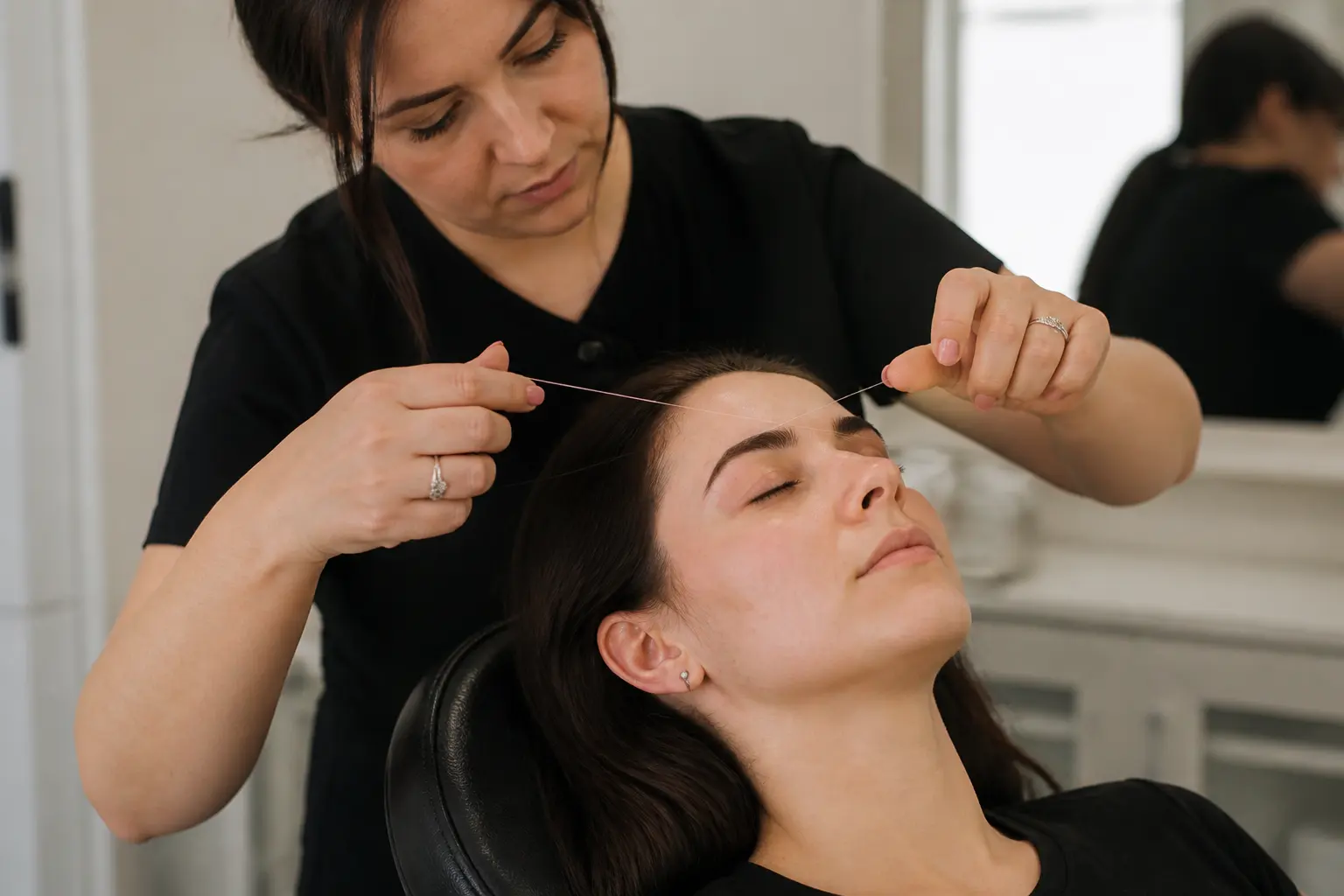
Threading removes individual hairs or small lines of hair by using twisted thread. Around the brows, that control can help create a tidy, personalised outline while retaining the fullness and character that suit your face. Yet the brow area is not a blank canvas. It may include flat freckles, raised moles, pigmentation, small marks, healed scars or areas that are more sensitive than the surrounding skin.
These features can affect how a threading plan is approached. A freckle may simply be a familiar part of your complexion and have no impact on the desired brow shape. A raised mole sitting close to the tail of the brow, on the other hand, may mean the hair-removal path needs to be adjusted. The objective is not to make every brow look identical. It is to refine the hairs that can be safely and comfortably addressed while respecting your skin’s individual landscape.
This is particularly relevant when you are new to threading, have recently noticed a change in a skin feature, or usually remove brow hair at home without having to explain the details of your face to someone else.
What a careful consultation can cover
A good consultation does not have to be long or complicated. It should give you enough space to point out anything that may affect the appointment and to explain the result you want.
1. Showing the features you want protected
Before the threading starts, point out any mole, raised area, freckle cluster, birthmark, scar or sensitive patch near your brows. Do this even if it seems obvious to you. Your brow professional may not know which features are longstanding, which are new, and which areas are easily irritated unless you mention them.
Useful wording can be as simple as: “I have a raised mole near this brow tail; please avoid it,” or “These freckles are normal for me, but I would like to keep the shape soft around this area.”
2. Explaining whether anything has changed
Tell the professional if a mole or mark is new, recently changing, sore, itchy, bleeding, crusted or already irritated. This is not information to minimise because you have booked a brow appointment. It may be a reason to postpone threading around that area and seek medical advice first.
The NHS advises people to check moles for changes and to contact a GP if they notice a mole changing in size, shape or colour, or if it becomes itchy, sore, bleeds, crusts or looks unusual. NHS guidance on moles is a helpful starting point if you are unsure what you have noticed.
3. Discussing your preferred brow shape
A natural feature may sit inside, above or below the brow line you would ideally choose. That does not automatically prevent a polished result. Instead, it can guide a more thoughtful design. The plan may keep extra softness around a brow tail, avoid taking a sharp line too close to a raised feature, or focus on balance elsewhere in the brow.
Brows are naturally sisters rather than exact twins. A personalised shape considers hair growth, density, facial expression, brow height and the skin features already present. It should not force symmetry at the expense of comfort or good judgement.
4. Talking about recent skin sensitivity
Let the studio know if the area is currently reactive, sunburnt, broken, healing or affected by a product reaction. You should also mention recent exfoliation, peels or any skincare routine that has left the brow area unusually tender. The aim is to make an informed decision about whether the appointment can proceed as planned, needs adapting, or is better rescheduled.
Moles, freckles and birthmarks are not the same thing
People often use one word for several different skin features, but they may look and feel quite different. You do not need to identify them perfectly before a threading appointment. It is enough to say what you have noticed and where it is.
- Freckles are usually flat spots of pigmentation. They can be more noticeable after sun exposure and may sit across the nose, cheeks and brow bone.
- Moles can be flat or raised and vary in colour, size and shape. Many are common and stable, but a new or changing mole deserves medical attention rather than cosmetic guesswork.
- Birthmarks are broad descriptions for marks that may have been present from birth or developed early in life. Their appearance and sensitivity vary.
- Other marks may include healed blemishes, scars, pigmentation or small skin growths. Each can call for a different level of care around the area.
The important distinction in a beauty setting is not to label a feature medically. It is to recognise that a raised, irritated, unfamiliar or changing area should not be treated casually.
When to postpone threading and seek medical advice first
It is sensible to pause the cosmetic plan if you have noticed a concerning change in a mole or another mark close to the brow. A brow professional can make an appointment more careful, but they cannot assess whether a changing lesion needs medical investigation.
The commonly used ABCDE reminder can help you describe a mole that needs checking:
- A – Asymmetry: one half does not resemble the other.
- B – Border: the edge looks irregular, blurred or uneven.
- C – Colour: there are several colours or a noticeable colour change.
- D – Diameter: it appears to be increasing in size.
- E – Evolving: it is changing in size, shape, colour, sensation or behaviour.
This checklist is not a diagnosis tool, and not every concerning feature follows it neatly. A mark that itches, bleeds, crusts, hurts or changes is still worth discussing with a GP or dermatologist. The American Academy of Dermatology’s overview of moles similarly advises prompt dermatology assessment for spots that grow, itch, bleed or change.
Do not try to remove, shave, pick at or chemically treat a mole at home because it catches on brow hairs or makes shaping inconvenient. If removal is something you are considering, it is a medical conversation. The American Academy of Dermatology explains why mole removal should be assessed by a dermatologist, including the importance of not delaying diagnosis of a suspicious spot.
How threading can be adapted around a known, stable feature
Where a feature is longstanding, familiar to you and not currently irritated, the appointment can often be planned with extra awareness. The exact approach depends on its location, whether it is flat or raised, nearby hair growth and the shape you want to maintain.
Keeping a clear boundary
A practitioner may work around a feature rather than across it, leaving a small margin where appropriate. This does not mean the brow will look unfinished. In many cases, removing the surrounding stray hairs can still make the overall shape appear neat and intentional.
Changing the design rather than chasing a rigid outline
If a mole sits exactly where a very sharp lower or upper brow line would normally be created, a softer outline may be the more sensible choice. This is a good example of why a consultation matters: the most flattering brow is not always the one copied from a template.
Taking a gradual approach
For a first appointment, you may prefer to keep the changes conservative. A light refinement lets you see how the brow sits with your features before choosing a more defined shape at a later visit. This can be especially reassuring if you have a prominent mark close to the arch or tail.
Preparing for your appointment
A little preparation makes the consultation easier and helps your brow professional see the natural hair pattern and skin clearly.
- Arrive without heavy brow makeup where possible, or be ready for it to be removed before shaping.
- Make a mental note of any mole, raised mark or sensitive patch close to the brow area.
- Tell the professional about recent changes, irritation or healing skin before threading begins.
- Bring up your preference for a soft, natural or more defined finish rather than assuming one shape suits everyone.
- If you are already waiting for medical advice about a changing feature, say so and avoid pressure to proceed around that area.
Threading is often chosen because it is precise and well suited to facial areas where you want to retain selected hairs. The American Academy of Dermatology notes that threading removes unwanted hair while allowing brow hairs to be kept where desired. Their overview of hair-removal methods also highlights that threading requires skill, so choosing an experienced professional matters.
Aftercare: keep the area simple
After threading, the skin around the brows can look temporarily pink or feel a little sensitive. Avoid rubbing, scratching or trying to inspect a mole repeatedly straight after the service. Keep your usual aftercare uncomplicated and follow the guidance provided during your appointment.
If a raised feature has been accidentally irritated, if there is unexpected bleeding, or if you are worried about how a particular mark looks after the appointment, do not attempt to treat it yourself. Seek appropriate medical guidance. For routine, stable freckles and marks, the main goal is simply to let the skin settle and enjoy a brow shape that still looks like you.
A careful conversation supports better brow design
Threading around moles and freckles is not about erasing the features that make your face distinctive. It is about making room for them in a considered brow plan. A clear consultation helps identify what should be avoided, what can be gently refined and when the right next step is medical advice rather than a cosmetic service.
At Becammo, brow shaping is approached as a personalised service rather than a one-shape routine. When booking, choose the Sliema or Swieqi location that is most convenient, then mention any moles, freckles, scars or skin sensitivity at the start of your appointment. That small conversation helps create a more comfortable, thoughtful threading experience.
Frequently asked questions
Can you get eyebrow threading if you have freckles?
Often, yes. Freckles are commonly flat, and they can usually be accommodated in a brow-shaping conversation. Tell your threading professional about them, particularly if you have any area of skin that is irritated or has recently changed.
Can threading go over a raised mole?
Do not assume it should. Point out the raised mole before the appointment begins so the professional can assess the practical hair-removal area and adapt the brow design. If the mole is new, changing, painful, itchy or bleeding, seek medical advice first.
Should I cover a mole with makeup before a threading appointment?
It is better to make sure the feature can be seen clearly during the consultation. Heavy makeup may make it harder to identify the exact area that needs care. You can discuss your usual makeup routine after the brow shape has been planned.
Can a brow technician tell whether a mole is safe?
No. A threading professional can recognise that an area needs caution, but they cannot diagnose skin conditions. A new or changing mole should be checked by a GP or dermatologist.
Will avoiding a mole make my brows look uneven?
Not necessarily. A skilled, personalised design can often refine the surrounding hairs and use a softer line where needed. The aim is balanced brows that work with your face, not a rigidly identical outline.
What if a mole changes after my threading appointment?
Changes to a mole should be discussed with a GP or dermatologist, whether or not you have recently had threading. Pay attention to changes in size, shape, colour, itching, bleeding or crusting, as advised by the NHS.