Can You Have Your Brows Threaded With a Brow Piercing?
Brenda Cammo Team
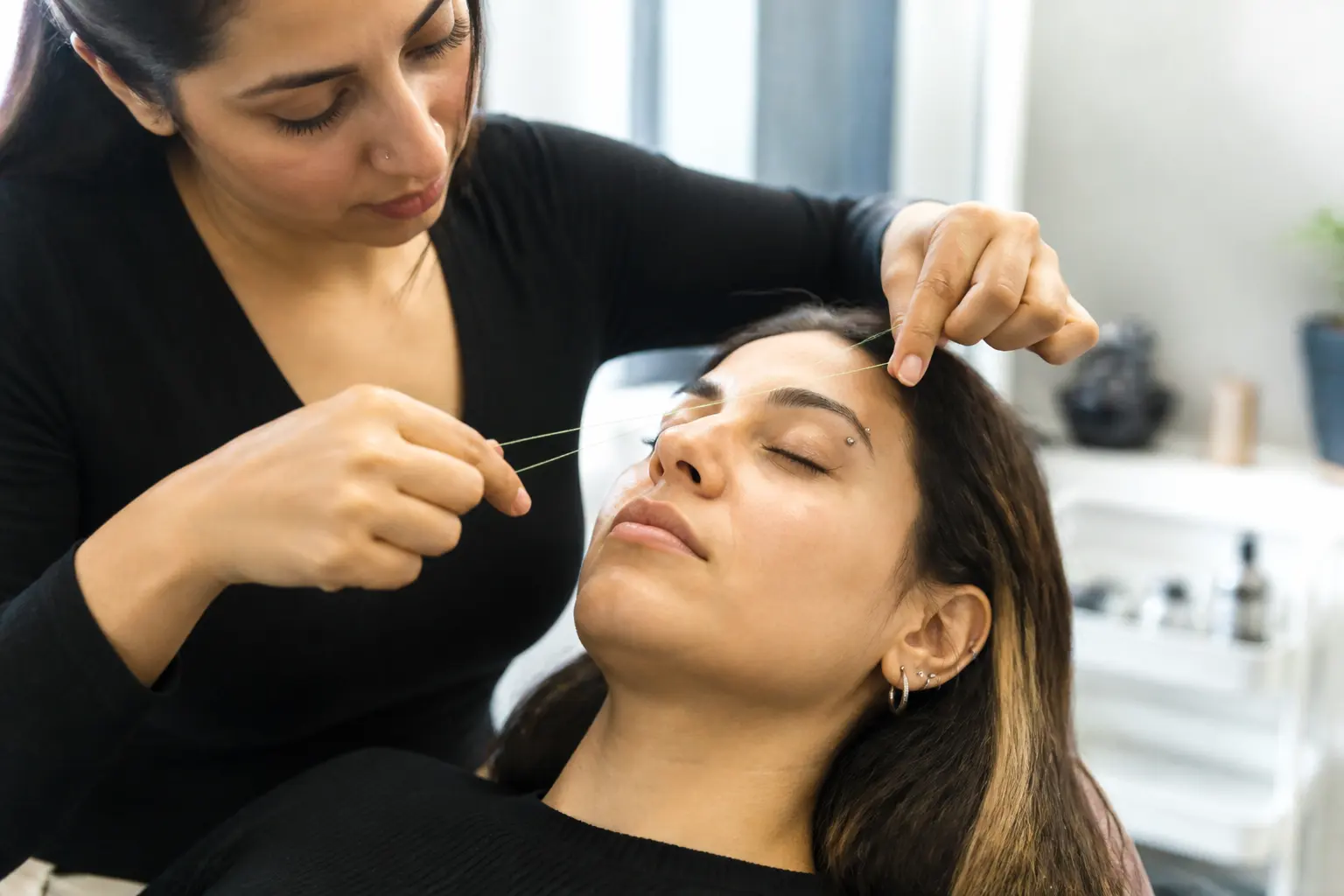
Having a brow piercing does not automatically mean you cannot have your eyebrows threaded. However, it does mean your appointment needs a more careful conversation before any shaping begins. The position of the jewellery, the condition of the skin and whether the piercing is fully settled can all affect what can be approached comfortably and safely.
Threading is a precise brow-hair removal and shaping technique, but it works close to the skin. A brow piercing may sit within, above or beside the area you would normally like refined. Rather than treating every piercing in the same way, a thoughtful appointment starts with a clear look at your brow, the placement of the jewellery and your current comfort.
This guide explains the questions to raise before booking eyebrow threading with a brow piercing, what an experienced brow professional can assess on the day and when it is sensible to wait.
Can you have eyebrow threading with a brow piercing?
In some cases, yes. If a brow piercing is well healed, the surrounding skin looks calm and the jewellery is positioned away from the hairs being removed, it may be possible to thread parts of the brow around it. The exact approach depends on your individual brow and piercing placement.
Threading uses a twisted thread to catch and lift hairs from the root. Because the practitioner works with controlled tension close to the brow line, they need enough clear space to work without pulling against the jewellery or putting unnecessary pressure on the pierced area. If the piercing lies close to hairs that would usually be removed, the shape may need to be adapted or that small area may be left untouched.
The aim should not be to force a standard brow shape around a piercing. A personalised design can respect your natural brow density, facial features and the space needed around the jewellery.
Why the condition of the piercing matters
A piercing is not simply an accessory from a brow-shaping point of view. The skin and tissue around it need to be considered before a threading service. A fresh, irritated or tender piercing deserves a different approach from one that has been settled for a long time.
A newly pierced brow needs extra caution
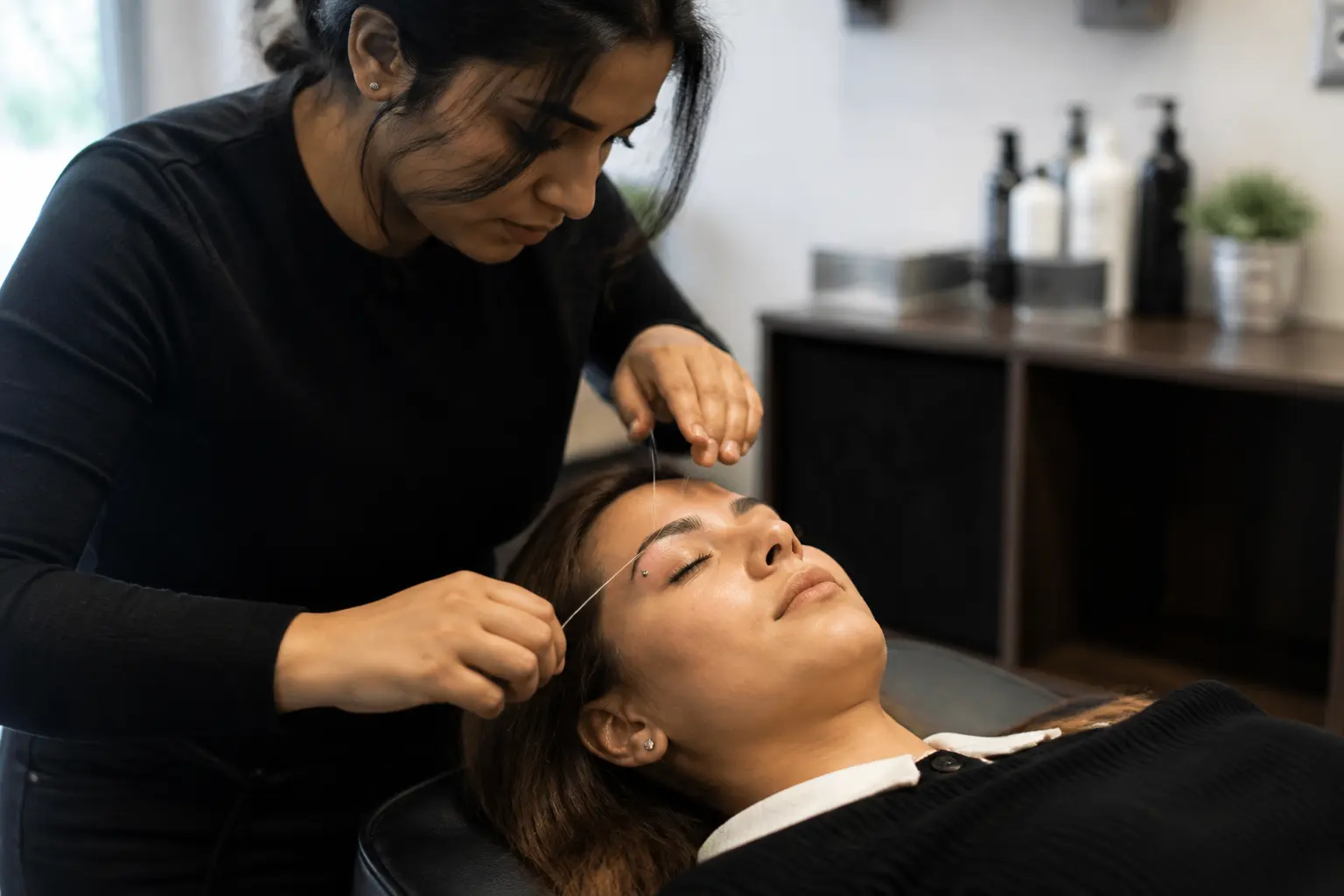
If your piercing is new or still healing, it is generally best to postpone threading in that immediate area. Healing times can vary significantly between people and piercing types, so it is better not to rely on a fixed timetable alone. Your piercer is the appropriate person to ask about the healing stage of your specific piercing.
Even if the rest of your brows need tidying, do not assume that a professional can simply thread around a new piercing. Movement, close contact or accidental catching of the jewellery can be uncomfortable and may disturb the area. Tell the brow professional before the appointment so they can advise whether a partial shape is realistic or whether waiting is the more suitable choice.
Signs to mention before the appointment
Be open about any current changes around the piercing. You should flag:
- tenderness, pain or sensitivity around the jewellery;
- visible redness, swelling or heat in the area;
- crusting, discharge or broken skin;
- recent snagging, trauma or a change of jewellery;
- any uncertainty about whether the piercing has fully settled.
These are reasons to pause the cosmetic service and seek guidance from your piercer or an appropriate healthcare professional where needed. Brow shaping should never take priority over an area that feels unwell or unsettled.
Questions to ask before you book
A few specific questions can help you book with clearer expectations. You do not need to diagnose the condition of your piercing yourself; simply share the relevant information accurately.
1. Is threading around my piercing possible?
When booking, say that you have a brow piercing and explain which brow it is on. If the booking system allows notes, add this there. At the appointment, point out the exact position of the jewellery before the service starts.
The answer may depend on how close the piercing is to the upper or lower brow border, whether it sits near the arch and how much hair you would like removed nearby. A practitioner may be able to refine other sections of the brow while avoiding the piercing zone. They may also recommend keeping the shape slightly softer in that area.
2. Should I remove the jewellery first?
Do not remove your jewellery solely for a brow appointment unless your piercer has advised that it is appropriate and you are comfortable doing so. Removing and reinserting jewellery can be difficult, especially for a newer piercing, and it is not something a brow professional should decide for you.
In many cases, it is more practical for the jewellery to stay in place while the practitioner assesses what can be shaped around it. This makes the visible placement clear and reduces the risk of threading too close to an area that needs to be avoided.
3. Can I still have my usual brow shape?
Possibly, but it may need adjusting. Brows are naturally individual, and a piercing adds another feature that affects where hair can be safely and comfortably removed. Your ideal result may be a clean, balanced outline that works with the jewellery rather than trying to create perfect symmetry at all costs.
For example, if the piercing is close to the brow tail, the practitioner might refine the top and lower line elsewhere while preserving a little more hair near the jewellery. If it sits high above the brow, there may be more scope to follow your usual design. The best choice comes from seeing the brow in person.
4. What if the piercing is close to stray hairs?
It is tempting to focus on every stray hair, particularly around the arch or tail. Yet hairs immediately beside a piercing may be best left alone if removing them would require the thread to pass too close to the jewellery or sensitive skin.
One or two untouched hairs are often less noticeable than a brow area that has been overworked. A good brow design considers the overall line from a normal conversational distance, not only the smallest detail under close inspection.
5. Should I book a simple threading service or add tint or henna?
If you are considering colour as well as shaping, mention the piercing before booking. A calm, fully settled piercing may still need the immediate surrounding area protected from cosmetic products. Whether tint or henna is suitable depends on the skin condition, placement and individual assessment.
It can be sensible to begin with a threading-focused conversation if you are unsure. Once the brow shape and the space around the piercing have been assessed, you can discuss whether adding colour is appropriate for your appointment and desired finish.
What happens during a thoughtful consultation?
A personalised brow appointment should begin before the thread is used. The practitioner can look at the natural direction and density of your brow hairs, ask how long you have had the piercing and check the visible condition of the surrounding skin.
They may ask what you want to change: perhaps you want to keep your brows full, clean up underneath, soften a heavy tail or restore definition after growth. Explain if you normally fill gaps with pencil or brow gel, as this helps set realistic expectations where the piercing limits hair removal in one small section.
At Becammo, brow threading is approached through mapping and design rather than a one-shape-fits-all template. This is particularly useful when a piercing, scar, natural asymmetry or varied hair density influences the available shape. The goal is to refine what your brows already do well while respecting the area around the jewellery.
How the brow shape may be adapted
A brow piercing can influence the details of shaping, but it does not have to make your brows look unfinished. The adjustment is usually about precision and restraint.
Keeping a softer outline
A softer outline can be helpful when the piercing is close to the natural brow border. Rather than making a sharp line that stops abruptly at the jewellery, the practitioner may preserve fine hairs nearby and create definition through the rest of the brow. This often looks more intentional and balanced.
Prioritising the brow’s strongest areas
If one section cannot be threaded closely, attention can shift to areas where shaping is practical: the centre between the brows, the underside through the arch or the outer tail away from the piercing. Small changes in these areas can make the whole brow look neater without interfering with the pierced area.
Accepting natural asymmetry
Brows are sisters, not identical twins, and a brow piercing may make minor differences more visible. Trying to remove extra hair from the other brow purely to match the pierced side can lead to an overly thin result. It is usually more flattering to aim for visual harmony than identical hair placement.
How to prepare for your threading appointment
Preparation is simple, but communication matters. Before you arrive, avoid experimenting with new products around the piercing or trying to remove difficult stray hairs yourself. Let the brow professional see the real growth pattern and the exact space around the jewellery.
- Arrive with clean brows where possible, without heavy brow makeup.
- Tell the team about the piercing when you book and again at the start of the appointment.
- Share whether it is new, recently irritated or fully settled.
- Point out any part of the area that feels sensitive.
- Bring a clear idea of whether you prefer a fuller, softer or more defined brow.
- Be prepared for the recommendation to avoid one small area or postpone if the skin is not calm.
Threading can cause brief discomfort because hairs are removed from the root. With a brow piercing, you may be more aware of the work taking place nearby. Tell the practitioner immediately if you feel sharp discomfort, pulling around the jewellery or unexpected sensitivity.
Aftercare: keep the pierced area in mind
After threading, the skin around the brows can feel temporarily sensitive. Avoid touching the area with unwashed hands, rubbing the jewellery or applying unfamiliar products close to the piercing. Follow your piercer’s established aftercare guidance for the piercing itself, particularly if it is still relatively new.
If your brow professional has deliberately left hairs close to the piercing, resist the urge to tweeze them at home straight away. The decision may have been made to protect the area and maintain a more comfortable service. You can review the shape again at a future appointment when the surrounding skin and piercing placement allow.
When it is better to postpone threading
Postponing is not a setback; it is a sensible decision when the area is not ready for cosmetic work. Consider delaying the appointment if the piercing is fresh, visibly irritated, recently injured or uncomfortable to touch. The same applies if there is broken skin or any concern that calls for advice from your piercer or a healthcare professional.
You can still plan ahead. Ask how to book once the piercing has settled, and let the team know you would like a shaping approach that works around your jewellery. A little patience can make the eventual appointment more straightforward and comfortable.
Conclusion
You may be able to have your brows threaded with a brow piercing, but the answer should always be based on the placement of the jewellery, the condition of the surrounding skin and a close in-person assessment. Be upfront before booking, avoid asking for threading over a fresh or irritated piercing and stay open to a shape that is adapted around the area.
For a personalised threading and brow-design conversation in Malta, choose the Becammo location that suits you and note your brow piercing when booking. This gives the team the information needed to plan a careful, realistic service around your natural brows and your jewellery.
Frequently asked questions
Can a brow piercing be caught during threading?
Threading close to jewellery requires care, which is why you should disclose a brow piercing before the service starts. A practitioner may avoid the immediate area or adapt the shape to reduce the chance of working too close to the jewellery.
Can I thread my brows if my brow piercing is still healing?
It is best to ask your piercer about the healing stage and tell the brow professional. A fresh or unsettled piercing may mean postponing threading in that area, particularly if there is tenderness, redness, swelling or broken skin.
Should I take out my brow piercing before a threading appointment?
Do not remove jewellery just for threading unless your piercer has advised it is appropriate. Keeping it in place often helps the brow professional see exactly where the area needs to be avoided.
Can I have brow tint or henna with a brow piercing?
It depends on the condition and placement of the piercing, as well as the condition of the nearby skin. Mention the piercing before booking so the practitioner can assess whether a colour service is appropriate and how the area can be protected.
Will a brow piercing affect the shape of my brows?
It can affect the finer details if the jewellery sits near the natural brow line. A personalised design may leave a small area unthreaded while refining the rest of the brow for an overall balanced result.