Can You Book Eyebrow Threading When Using a Brow Growth Serum?
Brenda Cammo Team
Yes, you can often book eyebrow threading when you use a brow growth serum. The important part is not to treat the serum as a small detail: mention it before your appointment begins, ideally when booking or during the consultation.
‘Brow growth serum’ can describe many different products. Some are simple conditioning formulas, while others contain active ingredients or are used as part of a clinician-led routine. They may also be applied at different frequencies and can leave the skin around the brows feeling completely normal, dry, sensitive or irritated. Those details can affect whether threading is comfortable and appropriate for you on the day.
A clear conversation helps your threading artist plan a personalised shape without making assumptions about your skin or your brow goals. It also helps you protect the progress you feel you are making with your home routine: perhaps you want to keep new fine hairs, grow out an over-plucked area, or simply maintain a fuller-looking shape while removing hair outside the design.
The short answer: book, but mention the serum first
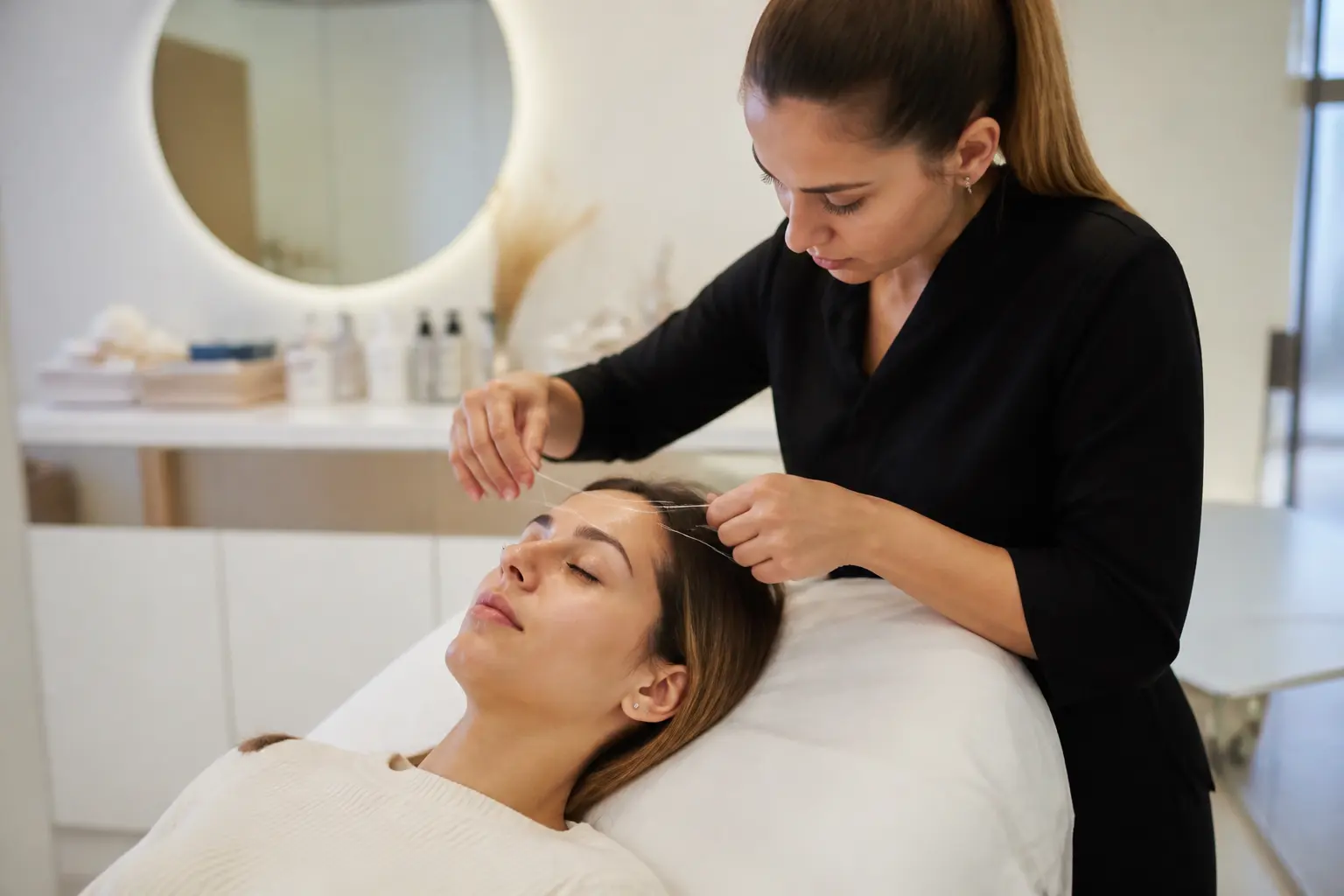
Threading removes selected hairs with a twisted cotton thread. It is a precise method for refining the outline of the brow and clearing hair from areas such as between the brows, above the brow line or below the arch. A brow growth serum does not automatically prevent you from having threading.
However, the appointment should begin with a few practical questions. Your artist needs to know what you are using, where you apply it, how recently you used it and whether your skin has reacted in any way. This is especially relevant if you are trying to grow a particular section of the brow or if you have noticed dryness, flaking, tenderness, redness or itching.
Do not feel that you need to diagnose the product or know every ingredient by heart. Bringing the bottle, taking a clear photo of the label, or having the ingredient list available on your phone is enough. If the serum was prescribed or recommended by a pharmacist, GP, dermatologist or other qualified clinician, say so. Follow the product instructions and any professional advice you have been given rather than changing your routine solely for a beauty appointment.
What to mention before eyebrow threading
A useful consultation is brief but specific. These are the details that matter most.
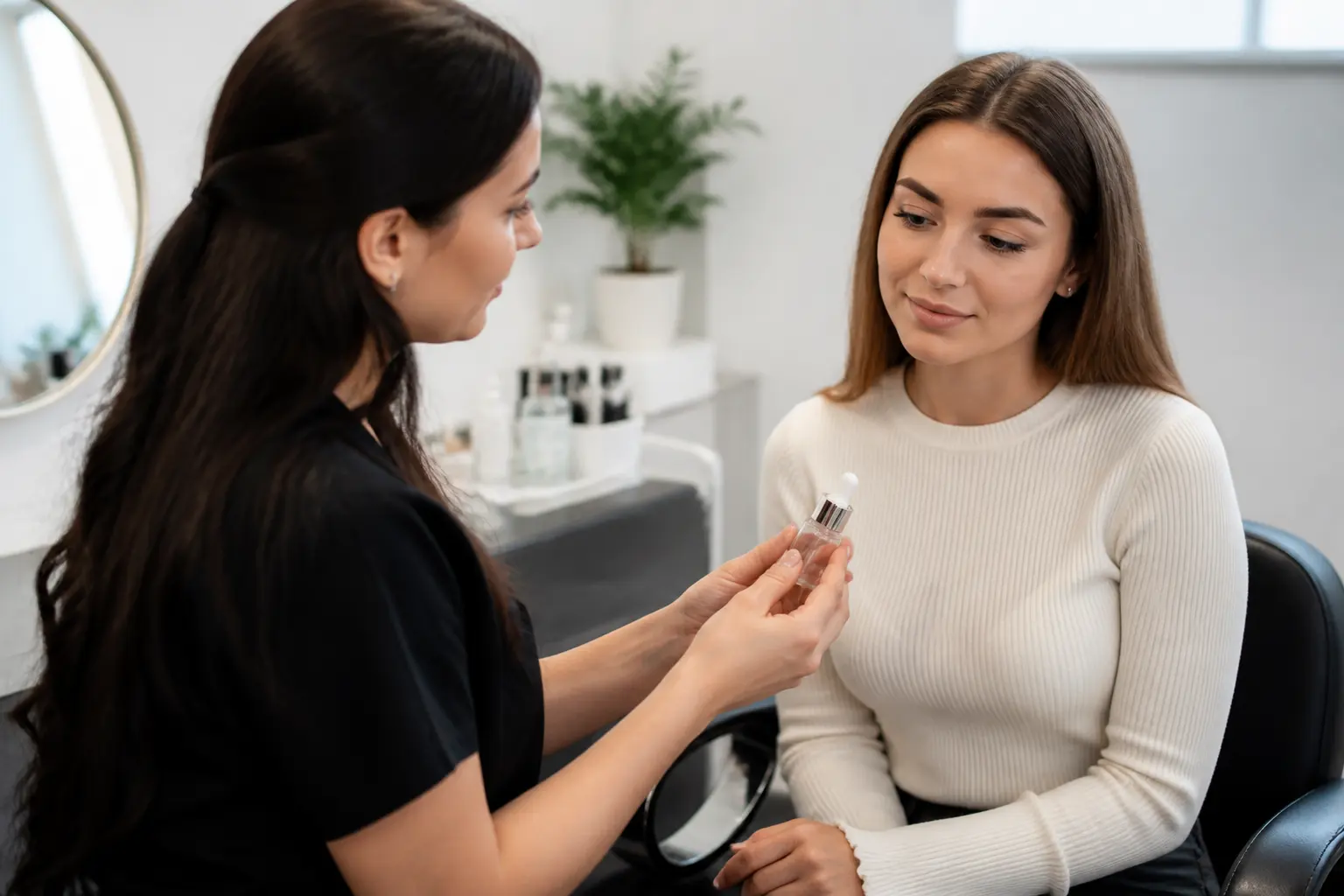
1. The name of the product and its ingredient list
Say which serum you use and, where possible, show the packaging or ingredient list. ‘Growth serum’ is a broad marketing term rather than one standard formula. Knowing the exact product is more useful than simply saying that you use a serum.
Some products are designed mainly to condition brow hairs. Others make stronger growth-related claims or may contain ingredients that require more caution around the eye area. For context, regulators distinguish between cosmetic eyebrow preparations and products making claims that affect hair growth or body function. FDA guidance on cosmetic and drug claims illustrates why product category and instructions should not be assumed from the word ‘serum’ alone.
2. Where and how you apply it
Explain whether you apply the product across the full brow, only on sparse patches, directly on the skin, or mainly through the brow hairs. Also mention whether you apply it once a day, twice a day or only occasionally.
This gives useful context for shaping. If you are growing out the tail of one brow, for example, you may prefer that your artist preserves fine new hairs in that area while still tidying the surrounding shape. A personalised threading appointment is not about forcing both brows into an identical template. It is about agreeing on a balanced, wearable result that works with your natural density, growth direction and routine.
3. When you last used it
Tell your artist whether you applied the serum that morning, the night before, or several days ago. Arriving with a clean brow area is generally helpful because it allows the skin and hair growth to be assessed clearly. Heavy oils, makeup, brow pencil, pomade and styling products can make the area harder to evaluate and may need to be removed before shaping.
Do not guess about whether a product must be paused. If the label gives directions about use around the eye area, follow those directions. If you are unsure, ask the brand, a pharmacist or the professional who recommended the product before changing how you use it.
4. Any recent skin reaction
Be open about discomfort, even if it seems minor. Mention recent redness, burning, itching, dry patches, peeling, swelling, a rash, broken skin or increased sensitivity around the brows. These signs do not automatically mean something serious is happening, but they do mean the brow area should be assessed carefully before hair removal.
Topical products can sometimes cause irritation, and irritation can be more noticeable on already sensitive skin. For example, MedlinePlus information on topical minoxidil lists irritation, dryness, scaling, flaking and burning among possible side effects and advises using it only as directed. That information relates to a medicine used for hair growth and does not mean every brow serum contains minoxidil. It does underline why the exact product and any reaction should be disclosed.
5. Your actual brow goal
Tell your artist what you are hoping to achieve with both the serum and the threading appointment. You might say:
- ‘I am trying to grow back the front of this brow, so I do not want that area thinned.’
- ‘I use a serum because my brows are uneven, but I still want a clean outline.’
- ‘I would like to keep my brows full and only remove obvious stray hairs.’
- ‘I am growing out an old shape and need help keeping it tidy in the meantime.’
This conversation is often more valuable than asking for a named brow shape from a photograph. The best design for you should take account of your current growth, facial features, daily styling habits and the areas you want to preserve.
When it may be better to postpone the appointment
It is sensible to contact the studio before travelling in if the skin around your brows is visibly irritated or uncomfortable. An artist may recommend delaying threading if there is active redness, broken skin, a fresh rash, swelling, peeling or another sign that the area needs time to settle. This is a comfort and hygiene decision, not a judgement on your serum routine.
Postponing can also make sense if you have recently started a new product and do not yet know how your skin responds. The same applies if you have used another exfoliating or sensitising facial product near the brow area, had a recent skin procedure, or are managing a skin concern under professional guidance. Explain the situation rather than trying to conceal it with makeup.
If you have significant swelling, eye-area symptoms, persistent discomfort or a suspected allergic reaction, seek advice from an appropriate healthcare professional. A threading appointment is not a substitute for medical assessment.
How brow growth serums can affect your shaping plan
The most noticeable effect is usually not on the threading technique itself, but on the design conversation. As brows grow out, new hairs may appear unevenly. One side may look fuller first, hairs may emerge outside your previous outline, or fine short hairs may make the brow look less defined between appointments.
That does not mean you need to remove every new hair. If your aim is fuller brows, a careful approach may involve keeping selected hairs while refining the parts that make the shape look untidy. This is particularly useful when you are growing out sparse tails, an over-plucked arch or an area affected by a scar.
Remember that eyebrow hairs naturally grow at different speeds. A serum routine does not necessarily make every area develop in the same pattern, and a symmetrical result does not require removing the same amount from both brows. Your artist can use mapping as a guide, then adapt the final shape to what is present on each side.
Preparing for your appointment
A little preparation makes the consultation easier and gives you the best chance of a calm, focused shaping session.
- Check your brow area the day before. If it feels sore, looks irritated or has broken skin, contact the studio instead of assuming the appointment should go ahead.
- Keep the brow area easy to assess. Come without heavy brow makeup where possible. If you prefer to arrive wearing makeup, be ready for it to be removed before threading.
- Bring product information. A photo of the packaging and ingredients is useful, especially if you use more than one brow product.
- Know what you want to keep. Identify any patch you are intentionally growing out. Point it out during the consultation rather than hoping it will be obvious.
- Allow time for a real conversation. If you are trying a serum for the first time or have changed products recently, mention this at check-in. It may influence whether a simple tidy-up is the most suitable plan.
What happens after threading?
After threading, keep your routine straightforward. Your brow area may look temporarily pink or feel slightly sensitive, particularly if you are new to threading or have reactive skin. Avoid immediately layering multiple new products on the area. Follow the aftercare advice provided at your appointment and continue to use your serum only in line with its own instructions.
It is worth paying attention to how your skin feels when you return to your usual routine. If a product regularly stings, causes redness or seems to make the area uncomfortable, do not assume that this is something you simply have to tolerate for fuller-looking brows. Review the label and seek product-specific advice from the retailer, manufacturer, pharmacist or clinician as appropriate.
A practical booking message you can use
You do not need a complicated explanation. When booking or arriving, try a simple note such as:
‘I use a brow growth serum on the sparse areas of my brows. I applied it last night, my skin feels normal, and I would like to keep the new hairs on the tails while tidying the rest of the shape.’
Or, if your skin has been unsettled:
‘I recently started a brow serum and have noticed some dryness around one brow. Could you advise whether I should come in or reschedule?’
These messages give the studio the information needed to respond responsibly. They also make it easier to plan a result that feels intentional rather than over-removed.
FAQs
Can I use a brow growth serum and still have regular threading?
Often, yes. Let your threading artist know which product you use, where you apply it and whether your skin has been sensitive. Your appointment can then be planned around the areas you want to maintain or grow out.
Should I stop using my brow serum before threading?
Do not change a prescribed or professionally recommended routine without checking with the relevant clinician or pharmacist. For any serum, follow its label instructions and tell your artist when you last used it. If the skin is irritated, contact the studio before your appointment.
Will threading remove the new hairs I am trying to grow?
It does not have to. Explain which sections you are growing out and what level of tidiness you want. A personalised design can focus on removing hairs outside the agreed shape while preserving selected growth where appropriate.
Can I apply brow serum immediately after threading?
Follow both the product instructions and the aftercare guidance you receive. Because skin can be temporarily sensitive after threading, avoid making assumptions about applying active products straight away, particularly if the area feels irritated.
What if my serum has made the skin around my brows itchy or flaky?
Tell the studio before your appointment. It may be better to postpone threading until the area is comfortable and intact. For persistent, severe or concerning symptoms, seek advice from a suitable healthcare professional.
Conclusion
Using a brow growth serum does not mean you have to give up eyebrow threading. It means your appointment should start with a transparent conversation about the product, your skin and the brow areas you want to preserve. With clear information and a personalised design plan, threading can help keep your brows neat while respecting your fuller-brow goals. When you are ready, choose the most convenient Becammo location in Sliema or Swieqi and book an eyebrow appointment with your current routine in mind.