Curly Eyebrow Hairs and Threading: What a Personalised Shape Consultation Can Consider
Brenda Cammo Team
Curly eyebrow hairs can make brow shaping feel less predictable. A few hairs may curl upwards, turn sideways, sit flat against the skin or spring beyond the outline you expected. That does not mean your brows need to be made thinner or forced into a completely different shape. It means the shape conversation matters.
Threading for curly eyebrow hairs is most useful when it begins with a personalised assessment of how the hairs grow, where the brow already has natural fullness and how you prefer to style it day to day. The aim is not to make every hair behave identically. It is to refine the surrounding growth so the brow looks intentional, balanced and still like yours.
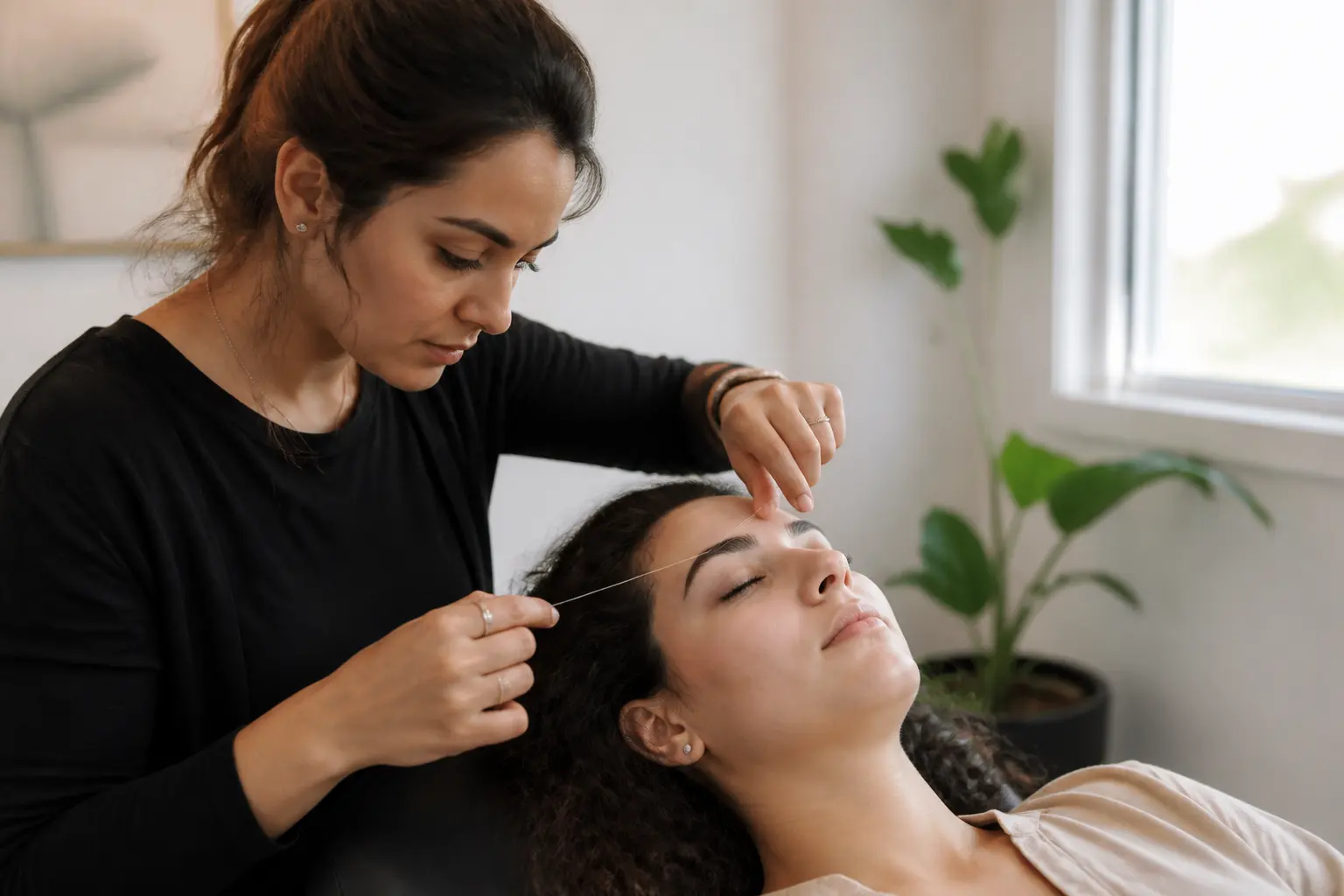
Threading uses twisted thread to lift out selected hairs, making it a precise option for an area such as the eyebrow, where keeping some hair is just as important as removing it. The American Academy of Dermatology notes that threading can remove several unwanted hairs at once while allowing the natural brow to remain in place. With curly or wiry hairs, that selectivity is particularly valuable.
Why curly eyebrow hairs need a different kind of shape conversation
Eyebrow hairs rarely grow in one perfectly uniform direction. This is true for all brows, but it can be more noticeable when the hairs are curly, coarse, wiry or have a strong bend through the length. A hair at the front may stand upright, the middle may sweep diagonally and the tail may curl downwards or outwards.
Because curved hairs can occupy more visual space than straight hairs, a brow may appear fuller, less even or more extended than it really is. Removing hair based only on the way it sits on that particular day can create an outline that feels too narrow once the brow has been brushed differently. A personalised consultation helps avoid making decisions solely from one angle.
Rather than treating curl as a problem, an experienced brow professional can look at the overall pattern. Some curved hairs contribute character and density. Others sit clearly outside the desired boundary or interrupt the definition of the arch and tail. The difference is individual, which is why a one-size-fits-all brow template is rarely helpful.
What a personalised threading consultation can consider
Your natural growth direction
The first point is not simply where hair is present, but where it grows from and where it naturally travels. A hair that appears to sit below the brow line may begin within a full, healthy section of the brow and curl downwards. Removing it may make sense in one design, but keeping it may protect density in another.
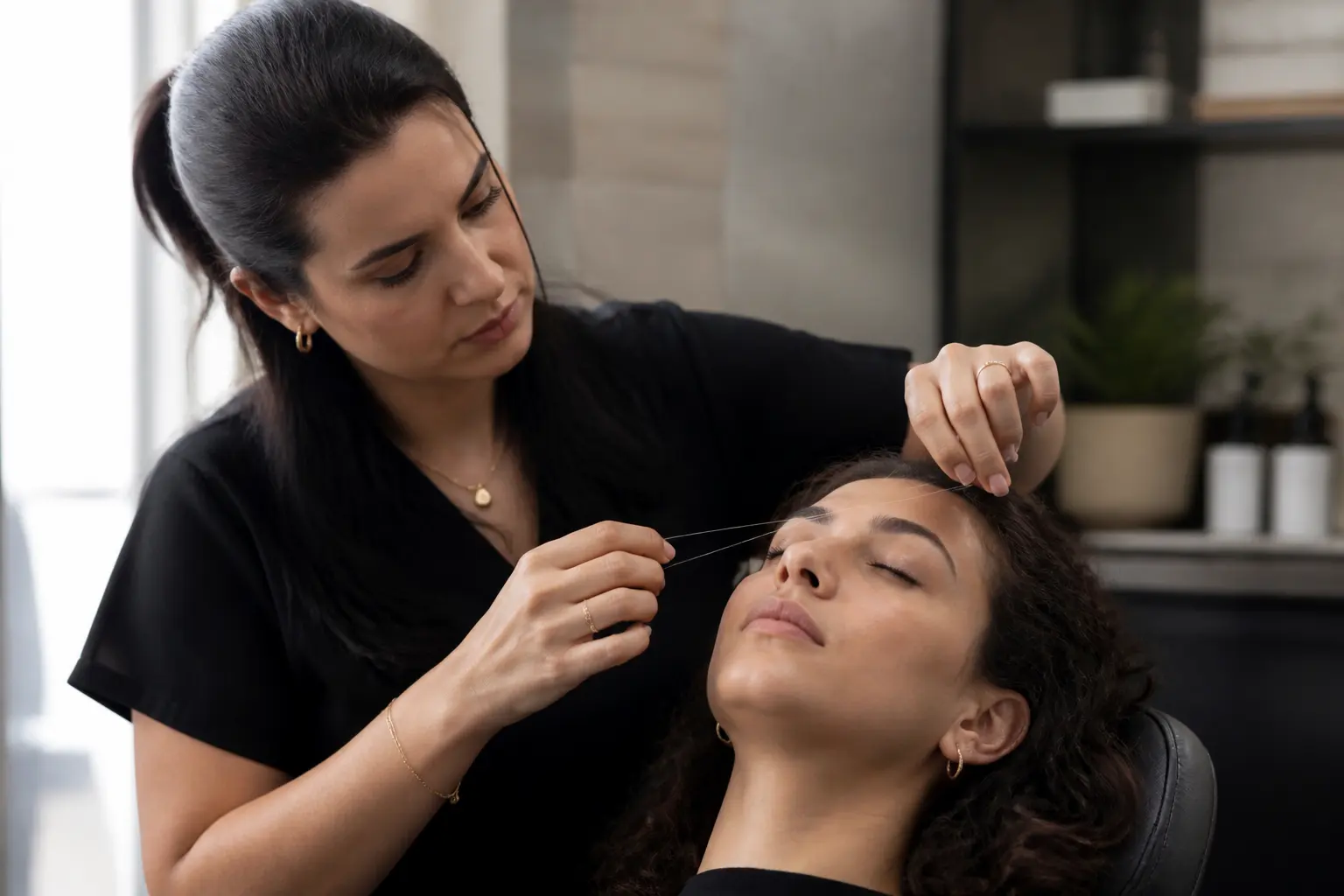
Looking closely at growth direction can help distinguish between hairs that form part of the brow structure and hairs that are genuinely outside it. This is especially relevant at the front of the brow, where overly sharp removal can make a naturally textured brow look abrupt.
Density across the brow
Curly hairs can make one area look denser than another even when the number of hairs is similar. For example, a fluffy, curved front may appear much fuller than a flatter tail. The consultation can consider whether the goal is to retain that soft front and bring gentle definition to the arch, rather than trying to make every section match exactly.
Density also affects how much threading is appropriate. A brow with plenty of natural hair may allow for more visible clean-up around the outline. A brow with gaps or a sparse tail may benefit from a lighter approach that preserves as much useful growth as possible.
The brow’s natural top line and lower line
Many people focus on the lower brow line because it is the easiest place to see stray hairs. With curly eyebrow hairs, however, the top line deserves equal attention. A few hairs can lift above the brow and create a halo effect, while removing too much from above can change the brow’s natural expression.
A shape consultation can therefore consider both lines together. The question is not whether every projecting hair should be removed. It is whether a small amount of refinement will improve the outline without taking away the softness and fullness that make the brow suit your face.
How the arch appears when hairs curl
Curly hairs can disguise an arch or make it look higher than it is. A brow professional may assess the brow before and after brushing the hairs into their usual direction, rather than relying on a single brushed-up position. This helps create a shape that works when you leave the studio and when you style your brows yourself at home.
The arch does not need to be dramatic to look polished. For many brows, a subtle lift created through careful clean-up around the peak is enough. The best placement depends on your existing growth, facial proportions and the level of definition you actually enjoy wearing.
Symmetry without chasing identical brows
Natural brows are sisters, not copies. One side may have more curl, a stronger tail, a higher arch or a different density pattern. Trying to remove every difference can lead to unnecessary thinning, particularly where curly hairs make one brow look larger simply because they sit differently.
Instead, threading can focus on visual balance. That may involve refining a few hairs from one side, preserving more structure on the other or adjusting the outline gently so both brows look harmonious at a normal conversational distance. The target is a balanced overall impression, not a ruler-perfect match.
Your everyday styling routine
How you wear your brows matters. If you use clear gel, tinted gel, pencil or soap-style styling products, tell your brow professional. Curly hairs can look very different when held upwards compared with when they are left soft and natural. A design that suits a brushed-up look may need a different level of clean-up from one intended for minimal styling.
It is also useful to say whether you prefer a defined brow, a soft and natural finish, or something in between. Clear communication gives the professional a better starting point than a generic request for “cleaner brows”.
How threading can work with curly brow texture
Threading does not straighten eyebrow hair. Its role is to remove selected hairs from the root and refine the shape around the brow. Curly hairs that remain within the chosen outline may still curve, lift or twist afterwards; that is simply part of their texture.
The value of threading is precision. It can clear fine regrowth around the brow without relying on a broad strip of removal. This makes it possible to keep a fuller, textured brow while defining areas such as the lower edge, the space between the brows and the tail.
At Becammo, threading is performed with single-use thread: cotton as the standard material, with polyester available for clients with an allergy. The service is approached with hygiene, individual assessment and aftercare in mind. For curly brows, that tailored approach is more useful than trying to make the brow conform to a trend.
Practical examples of personalised choices
- Curly hairs at the brow front: A soft approach may retain the natural, feathered start of the brow while removing only hairs clearly outside the intended area.
- A dense, wiry arch: The focus may be on cleaning around the arch rather than thinning heavily through it, so the brow keeps its strength.
- A tail that curls downwards: The consultation can assess whether a light refinement beneath the tail improves the visual line without making the tail look short.
- One brow that looks fuller: Rather than removing a large amount immediately, the shape can be adjusted conservatively to account for different curl patterns between sides.
- Brows that look untidy after brushing: It may be helpful to identify whether the issue is hair outside the shape, hairs growing in multiple directions or simply a styling preference that could be addressed with a suitable brow product.
What to say before your appointment
You do not need to know professional brow terminology to have a useful consultation. A few clear observations are enough. Consider mentioning:
- which hairs bother you most, such as hairs that curl above the outline or turn down at the tail;
- whether you want to keep your brows full or would prefer more definition;
- how you usually style them, if at all;
- whether you are growing areas out after previous over-removal;
- if one brow always seems higher, fuller or more curved than the other; and
- any recent irritation, sensitivity or skin concern around the brow area.
Arriving with minimal brow make-up can make the natural growth pattern easier to assess. If you normally fill your brows in, it can still be useful to explain the look you create, or to bring a reference that shows the level of definition you like. The reference should guide the conversation, not override the reality of your own hair pattern and face shape.
After threading: what to expect from curly hairs
Immediately after threading, the brow outline may look especially crisp because surrounding regrowth has been removed. Curly hairs within the shape may still need a little styling once you are at home. Brushing them gently in their preferred direction can show you how the new outline works with your usual routine.
Avoid assuming that a single appointment must solve every styling concern. Hair growth changes over time, and curly brow hairs may reveal different patterns as they grow in. Regular, measured appointments can help maintain a tidy outline while giving you the opportunity to review what is and is not working.
If the skin feels sensitive after hair removal, keep the area simple and avoid rubbing or experimenting immediately with strong products. If you have a persistent skin issue, an unexpected change in hair growth or a concern that goes beyond cosmetic grooming, seek advice from an appropriate healthcare professional.
When brow lamination may be a separate conversation
Some people with curly or unruly eyebrow hairs ask whether brow lamination is the answer. It can be a separate styling service to discuss when your main aim is to change how the hairs sit and create a more brushed-up appearance. Threading and lamination do different jobs: threading refines unwanted growth around the shape, while lamination concerns the direction and finish of the hairs that remain.
Whether either option suits you depends on your brow condition, desired look and routine. If your priority is simply a cleaner shape that respects your natural curl, threading may be enough. If you are considering a more structured, lifted styling effect, discuss that goal before booking so the right service can be chosen thoughtfully.
Conclusion
Curly eyebrow hairs do not need to be flattened, over-thinned or made identical to create a polished result. A personalised threading consultation can consider growth direction, curl pattern, density, symmetry, facial balance and the way you actually wear your brows. The result should feel refined while still respecting the texture that makes your brows individual.
If you would like a brow shape that works with your natural growth rather than against it, book a threading appointment at the Becammo location that is most convenient for you. A clear conversation at the start helps create a finish that is realistic, wearable and easy to maintain.
Frequently asked questions
Can threading remove curly eyebrow hairs?
Yes. Threading can remove selected curly hairs, particularly those growing outside the chosen brow outline. It does not change the natural texture of hairs that remain within the shape.
Will threading make curly brows look thinner?
Not necessarily. The outcome depends on how much hair is removed and where. A personalised approach can prioritise preserving fullness while cleaning up the areas around the brow.
Should I trim curly eyebrow hairs before threading?
It is usually best to let the brow professional assess the hairs first. Trimming changes how hair sits, so it can make the natural growth pattern harder to judge before shaping.
Why does one curly brow look fuller than the other?
The two brows may have different growth directions, density or curl patterns. A brow professional can focus on visual balance without trying to make both sides exactly identical.
Can I wear brow gel after threading?
Once the skin has settled, brow gel can help guide curly hairs into your preferred direction. Follow the aftercare guidance given at your appointment, especially if the area feels sensitive.