How to Ask for Polished Brows That Do Not Look Overdone
Brenda Cammo Team
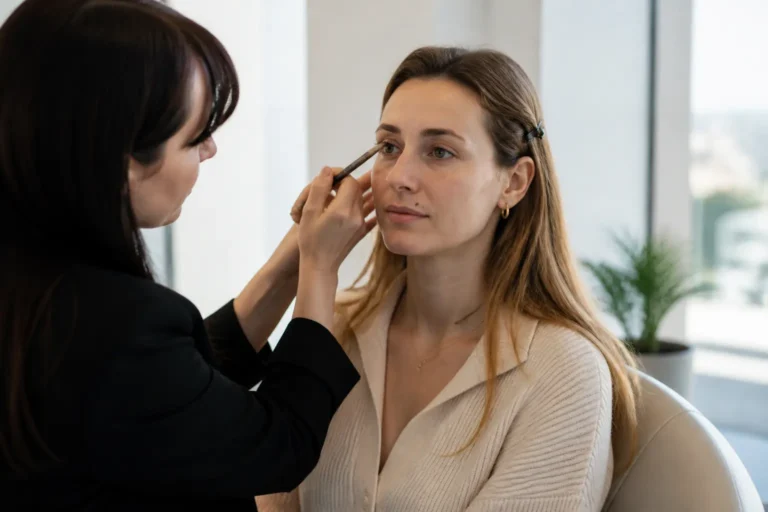
Polished brows do not have to mean dramatic brows. For many people, the goal is simply to look more put together: stray hairs are tidied, the outline is clearer and the shape works with the face without appearing heavily drawn, too thin or sharply changed.
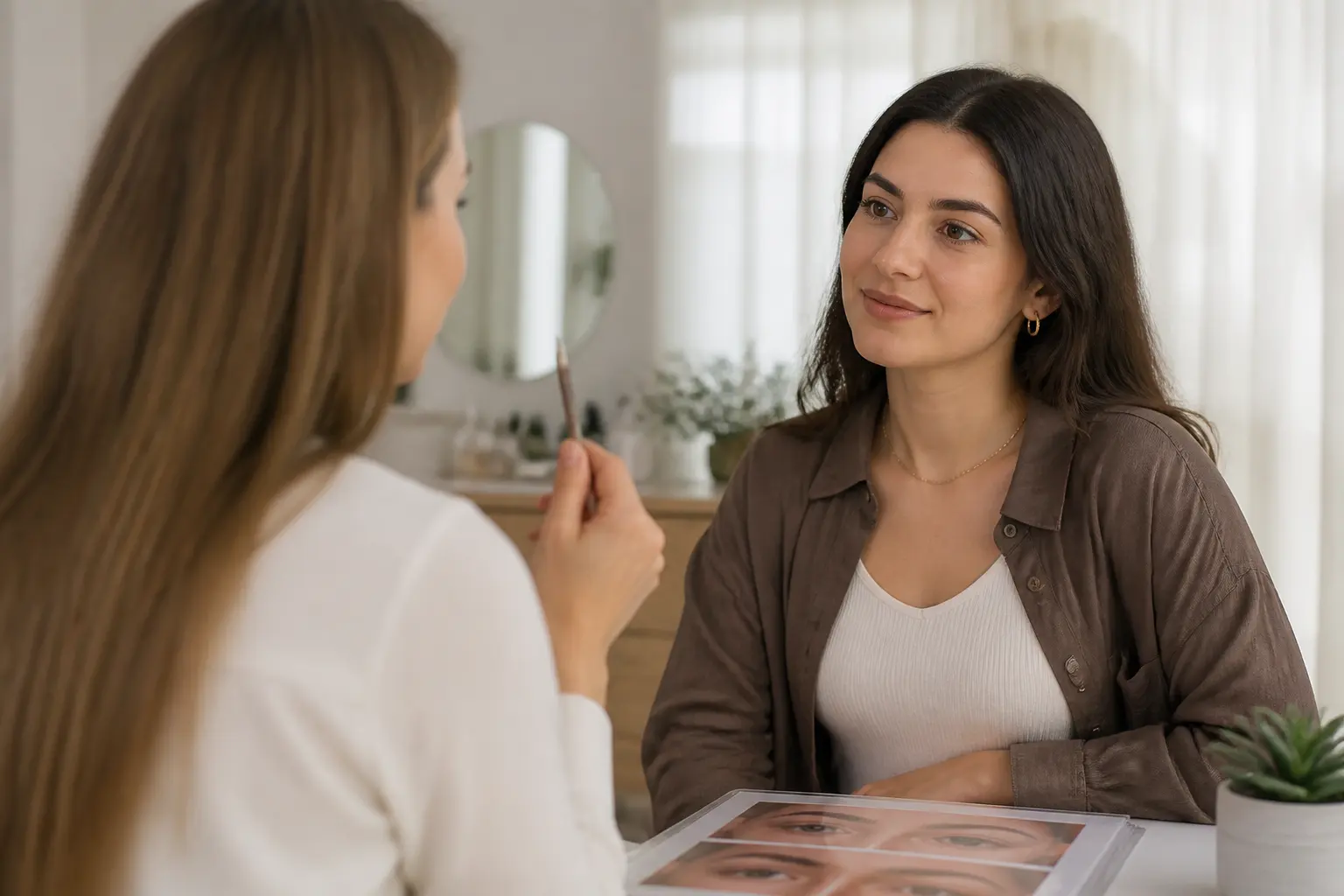
The most useful way to ask for this result is not to request a vague “natural brow” and hope for the best. Explain what you like about your existing brows, what tends to bother you in the mirror and how much day-to-day maintenance you are comfortable with. A good brow conversation is about preserving character while bringing more balance and definition to the areas that need it.
Whether you wear no brow make-up, use a little pencil each morning or want a cleaner base for tint or henna, clear language helps your brow artist tailor the design to your hair pattern, density, facial features and personal style.
What “polished but not overdone” usually means
The phrase can mean different things from one person to another, so it helps to turn it into practical preferences. In most cases, a polished yet understated finish involves keeping the natural brow structure visible rather than creating an entirely new shape.
- Removing obvious regrowth and hairs that sit outside the intended outline.
- Keeping enough fullness through the front and body of the brow.
- Creating a soft, considered arch rather than an exaggerated peak.
- Making the tail look neat without thinning it excessively.
- Respecting natural differences between the two brows instead of forcing identical shapes.
- Using colour, if wanted, to add gentle definition rather than a block-like effect.
It does not necessarily mean that no hair is removed. It means the removal is intentional. Threading can be particularly useful for detailed shaping because it allows the brow area to be refined hair by hair in a way that supports the existing pattern.
Start with what you want to keep
Many people arrive at an appointment focused only on what they dislike: a messy tail, a few hairs between the brows or an uneven-looking arch. These points are helpful, but the clearest starting point is often what you do not want changed.
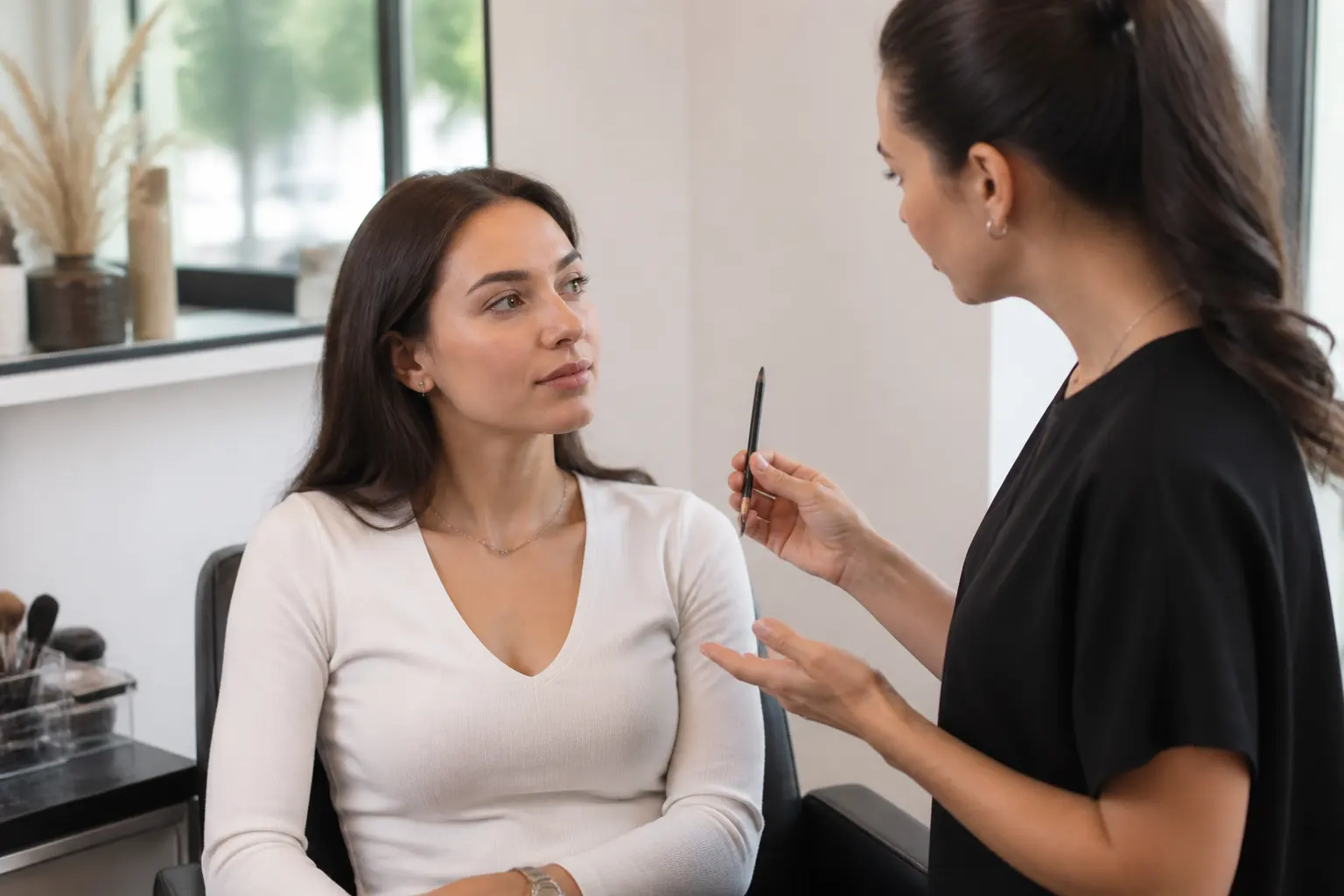
You might say:
“I like the fullness at the front and do not want that taken away.”
“I want a cleaner shape, but I do not want my brows to become thinner.”
“Please keep the arch soft rather than making it very high.”
“I still want to recognise my own brows, just a tidier version.”
These requests give the artist a useful boundary. They also make it easier to decide where careful clean-up will have the greatest visual effect, such as beneath the tail, between the brows or along a slightly irregular top line.
Describe the finish, not just the shape
Words such as “defined”, “full” and “natural” can be interpreted in several ways. Add a little context about the finish you are hoping to see when you leave the studio and during the weeks between appointments.
If you want subtle definition
Try explaining that you want the brow outline to be visible but soft. You may prefer a shape that looks neat without make-up and still does not look overly angular in close-up photos. This can guide choices around the thickness retained through the body, the treatment of the front and the amount of hair removed around the arch.
If you want a fuller appearance
Say that preserving density is a priority. Sparse areas, different hair directions and old over-plucking can affect how much structure is available to work with. Rather than promising a particular shape, a personalised assessment can identify where removal would support balance and where it may be wiser to leave more hair in place.
If you use brow make-up
Explain your usual products and technique. Someone who fills only the tail with pencil may need a different clean-up from someone who uses pomade across the entire brow. Your artist can shape with your routine in mind, while avoiding a result that requires much more product or precision than you normally enjoy.
Bring visual references thoughtfully
A photograph can be useful, especially when it shows a finish you like. However, it is best treated as a reference for mood and styling rather than a template to copy exactly. Brow bone structure, hair direction, density, skin tone and natural asymmetry vary from person to person.
Instead of saying, “I want these exact brows,” identify the element that appeals to you:
- “I like how soft the front looks here.”
- “I prefer this flatter, less arched silhouette.”
- “I like that these are groomed but still have texture.”
- “I want the tail to look tidy, not long and very pointed.”
A photo of your own brows from a time when you liked them can be even more informative. It shows the artist what is realistically achievable with your natural growth pattern and gives a more personal starting point than a celebrity image or filtered social-media post.
Talk openly about thickness, length and arch
These three details have a major effect on whether brows feel refined or overdone. Be specific about your comfort level, particularly if you have previously had a shape that felt too narrow, too short or too sharply lifted.
Thickness
If your main concern is avoiding an overdone look, ask to retain your natural fullness wherever possible. A tidy lower edge and a controlled outline can create a polished effect without removing large amounts of hair. Remember that a brow may look more defined after threading simply because the surrounding fine hairs are gone; it does not automatically mean the brow itself has been made thin.
Length
The tail contributes strongly to the overall expression. A tail that is cleaned up carefully may look more intentional, while removing too much can make the brow appear shorter than expected. Mention whether you prefer your tail to remain soft and full, or whether you usually extend it with make-up.
Arch
A well-placed arch does not have to be dramatic. You can ask for a gentle lift that follows your existing line, or say that you prefer a straighter brow. The aim is not to impose one fashionable shape, but to find a proportion that feels harmonious for you.
Why symmetry should not mean identical brows
Natural brows are often sisters rather than twins. One may grow more densely, sit slightly higher or have a different arch. Facial expressions, muscle movement and previous hair removal can all contribute to these differences.
It is reasonable to ask for greater balance. But trying to make each brow exactly identical can lead to unnecessary removal from the fuller side. A considered design usually focuses on visual harmony from a normal conversational distance, while respecting the hair available on each side.
You could ask, “Can we make them look balanced without taking too much from the fuller brow?” This creates space for an honest discussion about what can be refined in one appointment and what may need time to grow in.
Explain your lifestyle and maintenance preference
The right brow design should fit more than a single mirror moment. Tell your artist how you live with your brows between appointments.
- Do you prefer a low-maintenance shape that grows out softly?
- Do you exercise, swim or spend time outdoors most days?
- Do you wear glasses that cover part of the brow line?
- Do you regularly use brow gel, pencil, powder or pomade?
- Are you preparing for a holiday, wedding or professional event?
- Have you been growing your brows out after over-plucking?
For instance, a person who wants to avoid daily filling may prioritise retaining density. Someone who enjoys a defined make-up routine may want a particularly clean outline that makes their usual products easier to apply. Neither preference is better; they simply call for different design decisions.
Consider whether colour is part of the result
Sometimes the brows are already well shaped, but light, grey or unevenly coloured hairs make them appear less defined. In that situation, a discussion about brow tint or henna may be relevant. Colour can change how visible the existing hairs look, while threading focuses on the shape and surrounding hair removal.
Ask what a subtle colour option might achieve for your brows and how it may sit alongside your skin tone, hair colour and make-up habits. It is sensible to mention if you are cautious about brows looking too dark, particularly for the first day after a colour service. A tailored choice should take your preference for a soft finish seriously rather than assuming darker always means better definition.
Not everyone needs colour. For some people, a carefully mapped threading and design appointment provides all the polish they want. For others, tint or henna can be a useful addition when selected with restraint.
Prepare for the consultation
You do not need an elaborate plan before booking, but a few simple steps can make the conversation easier. If possible, arrive knowing roughly how you usually style your brows. If you have a product you rely on, describe it or bring it along. Let the artist know about any recent brow services, sensitivity, skin concerns around the brow area or attempts to reshape your brows at home.
Try not to remove “just a few” hairs immediately before the appointment. Those hairs may help the artist see the true growth pattern and make more conservative choices. This is especially useful if your brows have become uneven or you are trying to recover fullness.
A simple script to use at your appointment
If you are unsure how to put your preference into words, use this structure:
- State the overall goal: “I would like my brows to look polished and natural.”
- Name what you want preserved: “Please keep the fullness, especially at the front.”
- Flag what you want to avoid: “I do not want a very sharp arch or a thin tail.”
- Describe your routine: “I usually wear only clear gel,” or “I lightly fill the sparse areas with pencil.”
- Ask for professional input: “What can we refine today while keeping the shape soft?”
This approach is clear without being restrictive. It communicates your priorities while allowing the artist to assess your brow hair, face and natural proportions in person.
After the appointment: judge the result at the right time
Freshly shaped brows can feel more noticeable because the skin around them is newly clear and the outline is more visible. Give yourself time to see them in your usual lighting and alongside your normal routine. A polished result should settle naturally into your face rather than require you to change your whole make-up style.
At your next appointment, share what worked and what you would alter. Perhaps you loved the clean lower line but would like the tail left slightly fuller, or perhaps you found that a little more definition would suit your routine. Brow design benefits from this ongoing feedback because preferences, hair growth and styling habits can all change.
Conclusion
Asking for polished brows without an overdone finish is largely about being specific: protect the features you like, explain the level of definition you enjoy and be honest about how much maintenance suits your lifestyle. The goal is not a universal brow trend. It is a considered shape that feels balanced, tidy and recognisably yours.
When you are ready to book, choose a brow appointment that allows time for a personalised threading and design conversation. Selecting the most convenient Becammo location in Sliema or Swieqi is a practical first step towards a shape that supports your everyday look.
Frequently asked questions
What should I say if I do not want my brows too thin?
Say clearly that fullness is your priority and point out the areas you want to keep, such as the front, body or tail. You can also ask for a tidy clean-up around your natural shape rather than a major reshape.
Can threading make brows look polished without tint?
Yes. Removing unwanted hairs and refining the outline can make the brows look more defined without adding colour. Whether tint or henna is useful depends on your natural hair colour, density and preferred finish.
Should I ask for identical eyebrows?
Ask for balance rather than exact matching. Natural brows often differ slightly in height, density or growth direction. A skilled design aims for harmony while avoiding unnecessary removal from the fuller brow.
How do I explain that I want a soft arch?
You can ask for an arch that follows your natural brow line and avoids a high or sharply angled peak. A reference photo may help if you explain which feature of it you like.
Can I wear brow make-up to a threading appointment?
Tell the artist what products you normally use and how you apply them. This helps shape the brows around your real routine. They may need to assess the brow area clearly before beginning the design.