How to Discuss Your Brow Shape if You Wear Glasses Every Day
Brenda Cammo Team
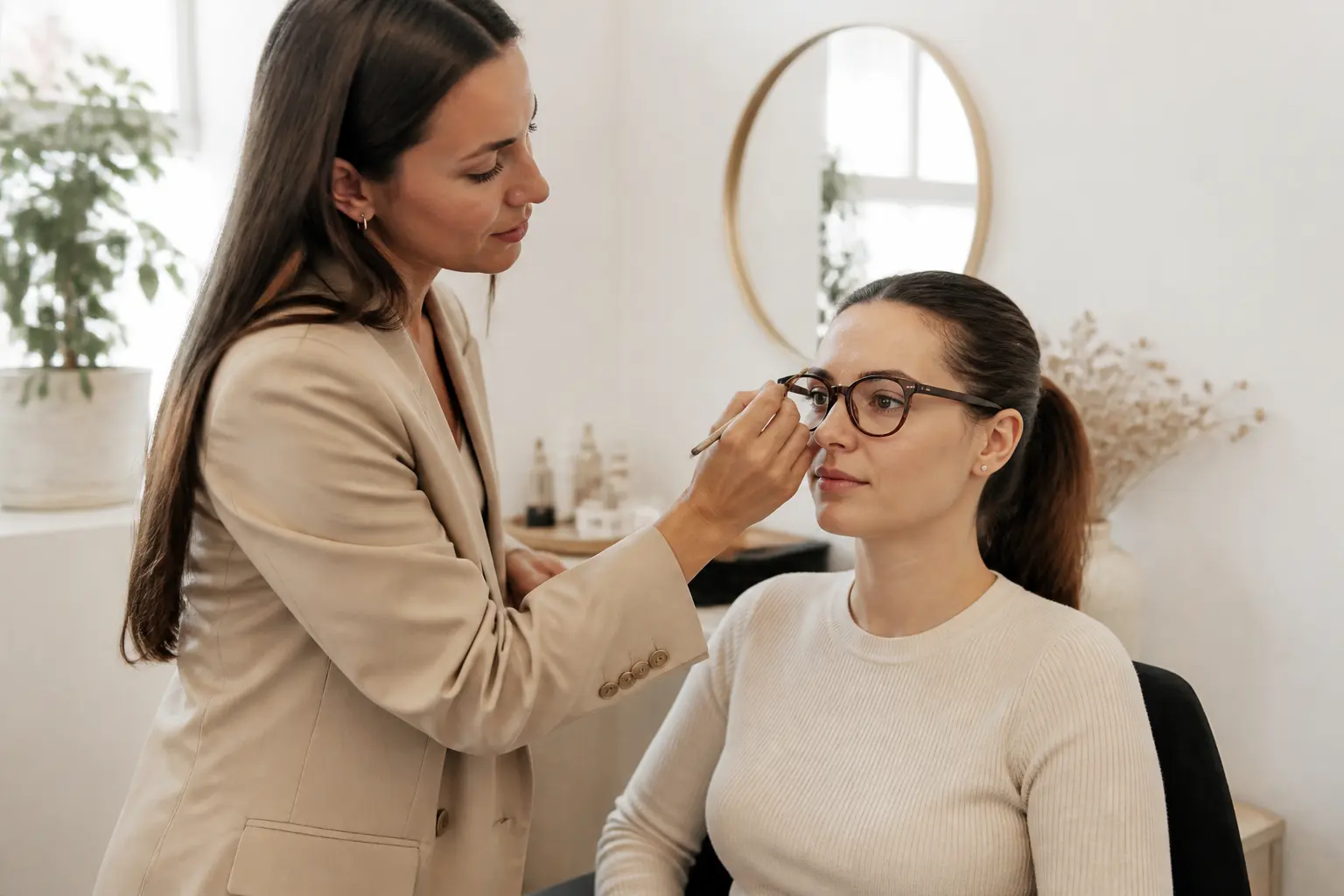
Glasses can be a defining part of your everyday look, so it makes sense to consider them when planning your eyebrow shape. Your frames sit close to the brow area, draw attention to the upper half of the face and can change how much of the brow is visible at first glance. That does not mean your eyebrows need to follow the exact line of your frames. It means your brow appointment should take your glasses, natural hair growth and personal style into account together.
If you wear prescription glasses from morning to evening, mention it before your brow shaping begins. A thoughtful conversation helps the professional understand how your brow shape is seen in real life, not only when you are seated without your frames. This is especially useful if you have recently changed frames, are growing out over-plucked areas or want a more defined but still low-maintenance result.
The aim is not to create one “correct” brow shape for glasses wearers. It is to create a balanced, personalised design that respects your natural brow structure and feels comfortable with the frames you actually wear.
Why glasses matter when planning eyebrow shape
Eyebrows help frame the eyes, while glasses add another visible frame over the same area. Depending on their size, colour, thickness and position on the bridge of the nose, frames may sit below the brow, overlap its lower edge or leave most of it clearly visible. Each option changes the visual relationship between your brows and your glasses.
For example, a bold dark frame may make a very sharp, heavily filled-in brow look stronger than expected. A fine metal frame may leave the brow more exposed, so uneven growth or a faded tint can be easier to notice. Oversized frames may hide part of the brow when viewed straight on, but the brow shape can still be visible from the side and in photographs.
These are not rules telling you what you should choose. They are useful observations to bring into the consultation. A professional can look at where your frames sit, how your brows grow and how much definition you enjoy wearing day to day before deciding how much hair to remove, retain or enhance.
Bring your everyday glasses to the brow appointment
The simplest and most useful preparation is to bring the glasses you wear most often. If you normally arrive wearing them, keep them with you during the consultation rather than placing them in a bag and forgetting about them. Your brow artist may ask you to put them on at different points so the design can be considered from more than one angle.
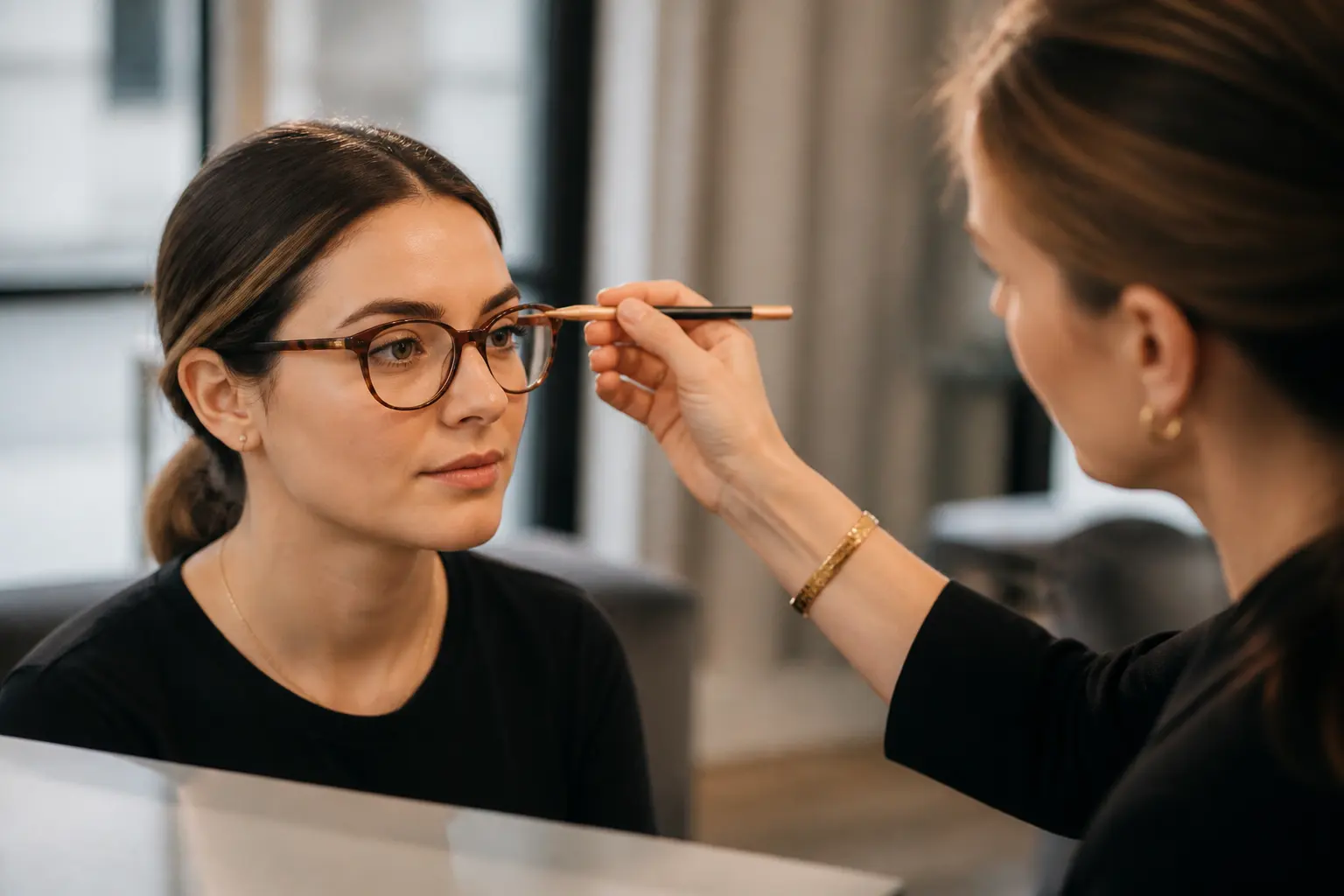
If you alternate between two pairs, bring both if practical. You may have a subtle pair for work and a more statement-making frame for evenings, or prescription glasses and sunglasses that you use frequently in Malta’s bright conditions. The daily prescription pair should normally guide the conversation, because it is the pair that shapes most of your routine.
It can also help to explain whether your current glasses are a long-term choice or a temporary pair. If you expect to replace them soon, avoid making an overly specific decision based only on a frame that may no longer be part of your everyday look in a few weeks.
What to tell your brow artist
Clear information makes a brow consultation more productive. You do not need technical language. Simply describe what you notice when you wear your glasses and what you would like to feel different after your appointment.
Explain how often you wear your frames
Tell the brow artist whether you wear glasses all day, mainly for screens, only for reading or only when driving. Someone who wears frames continuously may prioritise a shape that looks balanced with them at close range and in everyday conversation. Someone who wears glasses occasionally may prefer to focus first on how the brows look without frames.
Point out what bothers you now
You might feel that your frames make your brows seem too close together, that the arch appears hidden, or that the brow tails disappear behind a wider frame. You may also feel that your brows look overly strong once you add brow pencil beneath a dark rim. These details are more helpful than asking for a generic “better shape”, because they identify the visual issue you want to discuss.
Share your usual brow routine
Let the professional know whether you use pencil, powder, pomade, tinted gel or no brow make-up at all. Your preferred routine affects how much natural definition you may want from the design. If you wear a small amount of make-up each morning, a softly structured brow may be enough. If you prefer bare brows, you may want to discuss shaping alongside tint or henna, depending on your hair, skin and desired finish.
Mention recent changes
New glasses can change your perception of your brows. So can a new haircut, a different hair colour or a decision to grow your brows out after years of tweezing. Mention anything that has changed recently, including skin sensitivity, so the appointment can be planned with appropriate care.
Frame details worth discussing
You do not need to choose a brow shape according to a rigid face-shape chart. However, the following frame details can help you and your brow artist talk more precisely about proportion and visibility.
Frame thickness
Thick acetate frames create a stronger visual line around the eyes. With these frames, many people prefer brows that remain clear and tidy without looking excessively sharp or overdrawn. The right balance depends on your natural density and the overall look you enjoy. A bolder frame does not automatically require a bolder brow.
Fine or rimless frames usually leave more of the brow visible. In this case, small details in the brow line can become more noticeable. A careful threading appointment can help tidy the surrounding growth while preserving the density that gives the brow its natural character.
Where the top rim sits
Some frames sit well below the brows, leaving a visible space between the top rim and the lower brow line. Others sit higher and may visually overlap the area beneath the arch. Show your brow artist where your frames naturally rest rather than lifting them into a position you do not use in daily life.
If the top rim is close to your brows, the conversation may focus on keeping the shape clean and readable without trying to force a high arch. Removing too much hair in pursuit of extra space can make a brow look thinner or less balanced once the glasses are off.
Frame colour and finish
Black, tortoiseshell, coloured and translucent frames each create a different level of contrast. A strong colour can make brow make-up appear more intense, while transparent frames may place more visual attention on the brow hairs themselves. If you are considering tint or henna, describe the level of definition you want with your usual frames rather than choosing a colour based only on a mirror moment without them.
Frame shape
Rounded, rectangular, cat-eye and softly angular frames can all work with many brow shapes. The goal is not to make the brow copy the curve or angle of the glasses. Matching every line too closely can look forced. Instead, a professional considers whether the overall effect feels harmonious while respecting the natural direction and placement of your brow hair.
Questions to ask before shaping begins
A good brow appointment should feel collaborative. These questions can help you communicate your preferences without asking for an artificial template.
- Can we look at my brows with my glasses on before we start?
- Which parts of my natural brow should we preserve to keep the shape balanced?
- Does my current arch sit comfortably with where my frames rest?
- Will tidying this area make a noticeable difference when I wear my glasses?
- If I want more definition, should I discuss tint or henna separately from the shaping?
- What can I do at home to keep the result neat without over-tweezing?
These questions keep the focus on your own features, habits and expectations. They also make it easier to understand why a brow artist may recommend keeping a little more density in one area rather than chasing a highly sculpted look that needs constant make-up or maintenance.
How threading can support a glasses-friendly brow routine
Threading is a method of hair removal that uses a twisted thread to remove unwanted hairs with precision. At Becammo, disposable single-use thread is used for each client, with cotton as the standard option and polyester available for clients with an allergy to cotton. For brow shaping, the technique can be useful when the goal is to refine the outline while keeping the natural brow structure central to the design.
For glasses wearers, this may mean cleaning up stray growth that becomes noticeable above the top rim, between the brows or beneath the arch, while avoiding unnecessary removal from areas that support the overall shape. The exact design should always be based on an individual assessment. Hair density, growth direction, previous hair removal and personal preference all matter.
Threading can create a neat result, but it is still normal to experience some temporary sensitivity or mild redness after hair removal. If you wear glasses immediately after the appointment, make sure they are clean and sit comfortably. Avoid rubbing the freshly shaped area with the frame or repeatedly adjusting it against the skin.
Do not make glasses the only factor
It is easy to focus so much on frames that you forget your brows also need to look like you when you are not wearing them. Your brow shape appears in photographs, video calls, social occasions and moments at home without glasses. That is why the best approach is usually balanced rather than frame-led.
A personalised brow design takes account of your bone structure, natural brow starting point, arch placement, tail length, hair texture and density. Glasses are one useful part of the picture, but they should not override everything else. A shape that is comfortable with your frames and still recognisably yours is more likely to feel natural over time.
Practical preparation before your appointment
- Arrive with clean brows. If possible, avoid heavy brow make-up so the natural hair pattern is easier to assess.
- Bring or wear your everyday glasses. This gives the consultation a real-life reference point.
- Save inspiration carefully. Photos can show the level of softness or definition you like, but use them as a conversation starter rather than a shape to copy exactly.
- Pause home tweezing. If you are unhappy with your brow shape, removing more hair before an appointment can make it harder to assess what is available to work with.
- Say if you are growing your brows out. This changes the goal from maximum tidiness to a more strategic approach to shaping.
Aftercare and everyday styling with glasses
After threading, follow the aftercare guidance given during your appointment. Keep the brow area clean, avoid unnecessary touching and be mindful of anything that may rub against freshly shaped skin. Your glasses are not a problem, but clean frames are a sensible part of an everyday routine, particularly where they rest near the bridge of the nose and upper cheeks.
When styling your brows at home, start lightly. Put your glasses on before deciding whether you need more product. A brow that seems subtle without frames can look much more defined once dark or thick rims are in place. Small, hair-like strokes or a light brush-through with brow gel may be all you need.
If you are considering brow tint or henna, discuss how the colour and definition may appear with your glasses as well as without them. The most suitable option depends on your natural brow hair, skin, preferred maintenance and the finish you want. It is better to choose an approach that fits your routine than to pursue a level of intensity that feels unfamiliar every morning.
Conclusion
Wearing glasses every day does not limit your brow options. It simply gives you another useful reference point for a more considered consultation. Bring your usual frames, explain how you wear them, share your brow routine and be clear about what you would like to improve. From there, brow shaping can focus on balance, natural growth and a result that works both with and without your glasses.
If you are ready to refine your brows with threading and personalised design, choose the Becammo location that is most convenient for you in Sliema or Swieqi and book the eyebrow service that suits your routine.
Frequently asked questions
Should my eyebrow arch match the shape of my glasses?
Not exactly. Your brow does not need to mirror the curve or angle of the frame. A better goal is overall balance: a shape that works alongside your glasses while respecting your natural brow placement and growth pattern.
Should I wear my glasses during an eyebrow consultation?
Yes, especially if you wear them most days. Your brow artist can assess how the frames sit in relation to your brows and discuss the result with your everyday look in mind.
Can thick frames make my eyebrows look darker?
They can create more contrast around the eye area, which may make brow make-up or a very defined brow appear stronger. If this concerns you, mention it during your appointment and take a gradual approach to at-home styling.
Can threading help if my glasses hide part of my eyebrows?
Threading can tidy unwanted growth and refine the brow outline, but it should not be used to remove excessive hair simply to create more space above a frame. The best design depends on your individual brow structure and the position of your glasses.
Should I get tint or henna if I wear glasses every day?
It depends on the degree of definition you want, your natural brow hair and your normal make-up routine. Discuss your frames, preferred finish and maintenance expectations before choosing between tint, henna or shaping alone.
How often should glasses wearers book eyebrow threading?
Glasses do not change your hair growth cycle. The right timing depends on how quickly your brow hair grows and how tidy you like the shape to remain. Discuss a maintenance rhythm that feels realistic for your routine rather than removing hair too frequently at home.