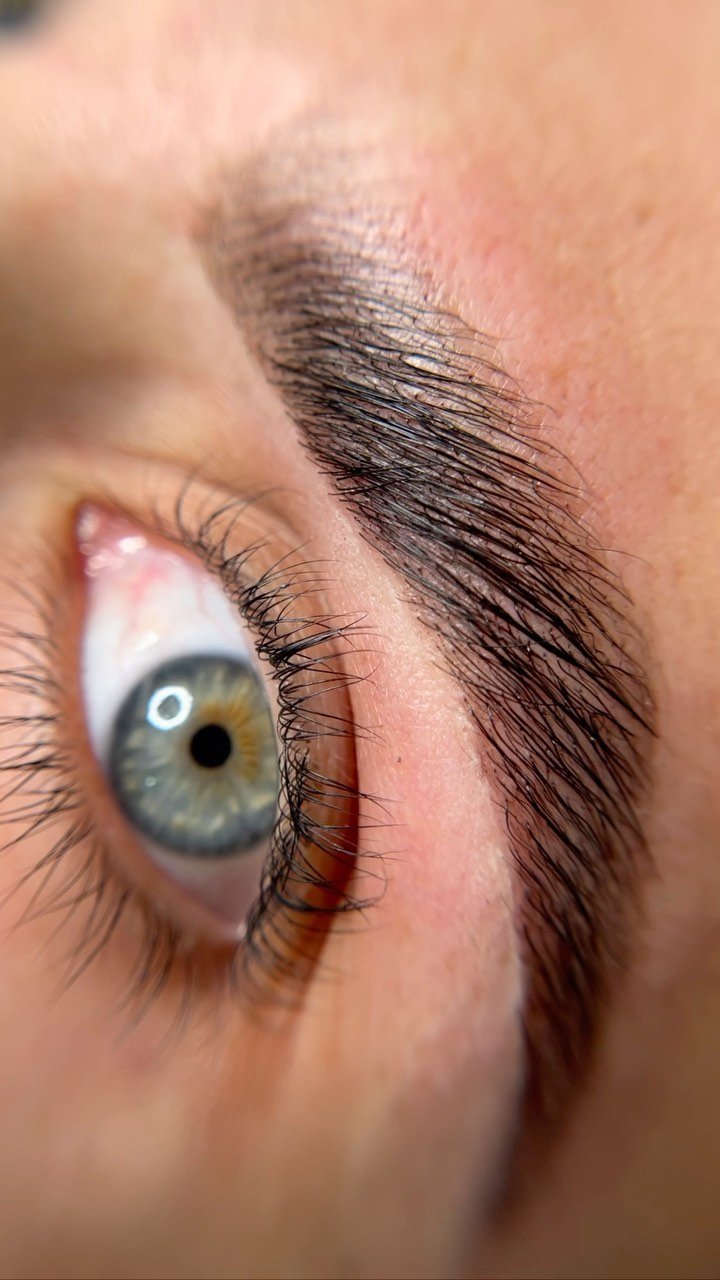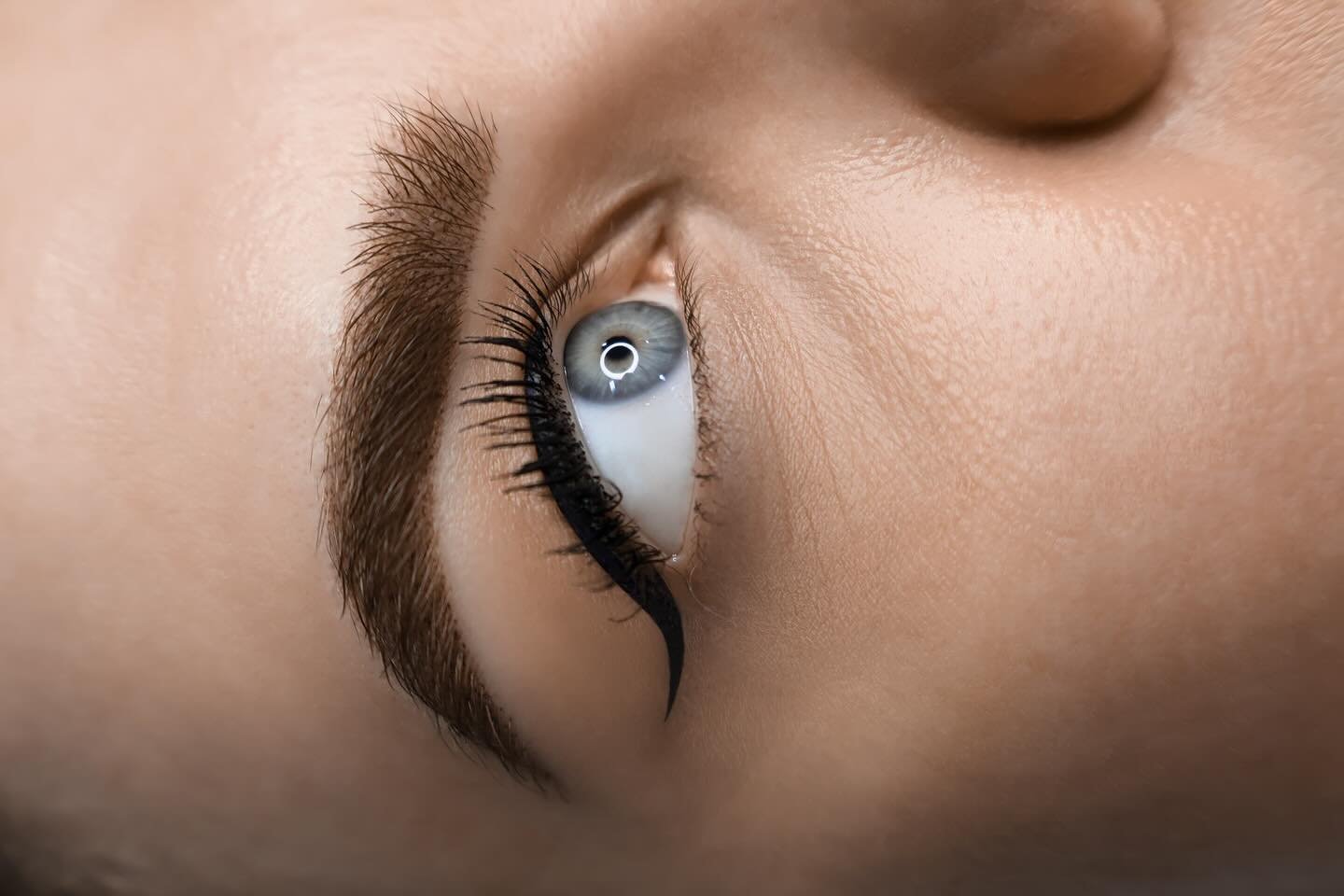
For a barely-styled natural look, tell your brow artist what you want to keep, not just what to remove: fullness, your existing shape, a soft front and your natural arch. Use words like soft, full, tidy and my natural shape, bring realistic reference photos as a conversation starter, and ask for a conservative first clean-up before any hair is removed.
A barely-styled brow look is not the same as doing nothing. It is a considered, low-maintenance finish that keeps your own brow character intact while quietly tidying the details that can make the area look uneven. The goal is usually to look like yourself on a particularly good day, rather than to leave the appointment with a noticeably new brow shape.
If that is the result you want, the most helpful thing you can do is explain it clearly before any hair is removed. A professional brow artist can then assess your natural growth, facial proportions, existing shape and day-to-day routine, and use that information to create a subtle plan. At a threading appointment, small decisions make a real difference: how much fullness to preserve, whether to soften the arch, how lightly to clean underneath, and whether the front of the brows should remain almost untouched.
Here is how to communicate your preference for natural eyebrow shaping with confidence, including the phrases that help, the details worth discussing and the questions to ask before your appointment begins.
How do you describe the result you want?
Many people arrive with a vague request such as “just tidy them up”. It is a useful starting point, but it can mean different things to different people. One person may want only stray hairs removed, while another may expect a clearer line beneath the brow or a more balanced arch.
For a barely-styled look, describe the finished feeling as well as the amount of hair you want removed. You could say:
- “I want my brows to look natural, just cleaner.”
- “Please keep them full and follow my existing shape.”
- “I do not want sharp lines or a dramatic arch.”
- “I want them to look groomed, but not obviously done.”
- “Please preserve as much density as possible.”
These phrases tell your artist that restraint matters. They also set the right expectation: natural eyebrow shaping is about refining what is already there, not drawing a completely different brow onto your face.
If you wear little or no make-up most days, say so. This gives useful context, because a brow that looks balanced with a full make-up look may feel too defined when your face is otherwise bare. Equally, if you often fill sparse areas with a pencil or tinted brow gel, explain where you normally add product. Your artist can take that into account without removing hair simply to make both brows identical.
What should you tell your artist to keep?
When clients worry about over-shaping, the conversation can easily focus on what should be removed. For a softer result, it is often more useful to start by identifying what you value about your brows.
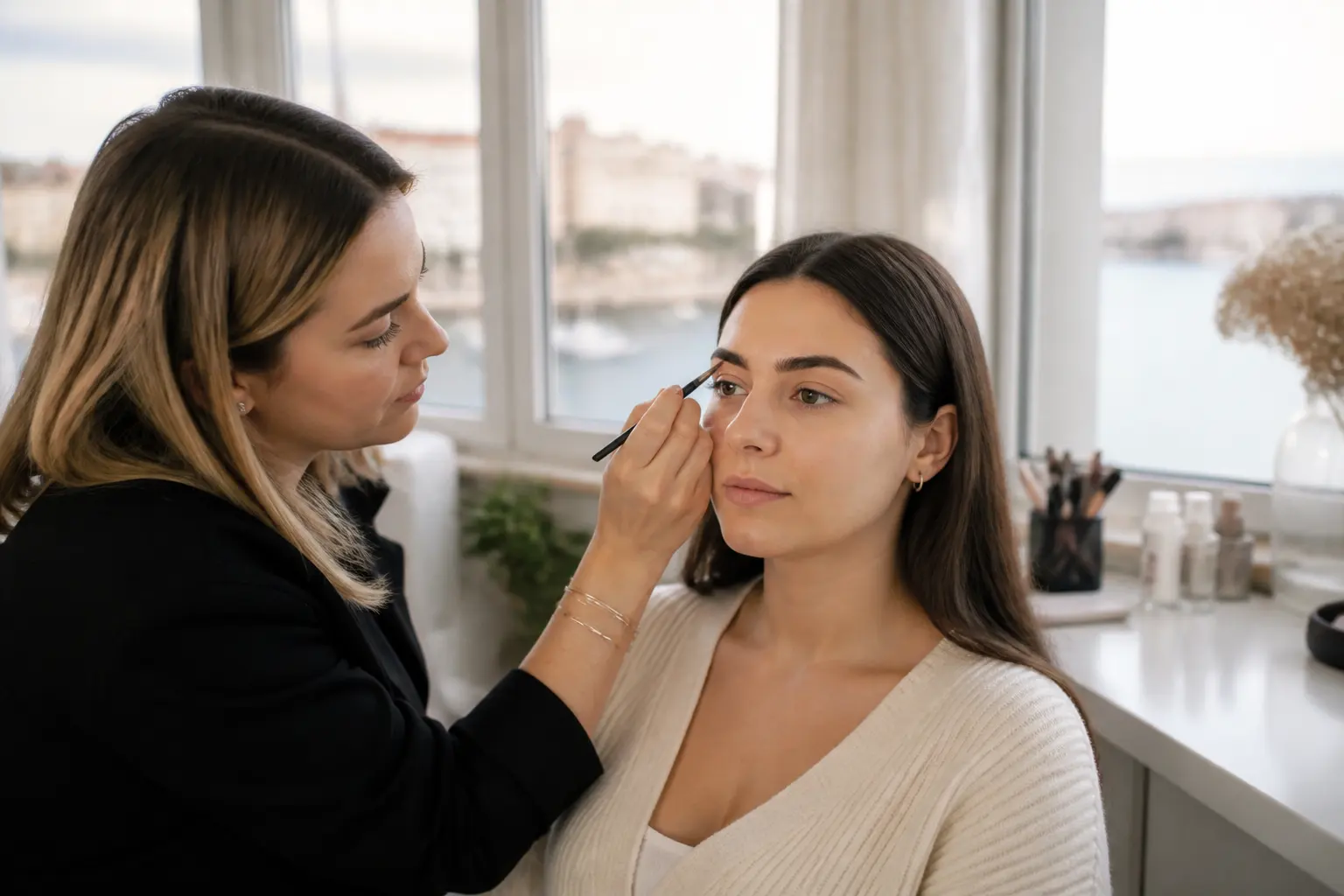
Perhaps you like their thickness, their relatively straight direction, a gentle natural arch, or the soft texture at the front. Mention it. Your brow artist needs to know which features you see as part of your look.
Tell your artist if fullness is your priority
Full brows can still look neat. Ask for minimal removal through the body of each brow, especially if you are growing out areas that were previously over-plucked. A light clean-up may focus on hairs that sit noticeably outside the main shape, rather than thinning the brow to create a more dramatic outline.
You can say, “I would rather keep a few soft hairs than make them too narrow.” That is a clear and practical instruction. It makes your preference for fullness more important than achieving an ultra-crisp edge.
Explain how you feel about the front of your brows
The front, sometimes called the brow head, has a strong effect on whether brows look soft or highly structured. A squared, sharply defined front can create a bolder finish. A lighter, more natural front often suits someone who wants minimal styling.
If you prefer a relaxed look, ask for the front to be kept soft. You might say, “Please do not make the fronts too boxy,” or “I like the front to stay fluffy and natural.” Your artist can then avoid taking away hairs that support that softer transition.
Say whether you want to keep your natural arch
An arch does not need to be exaggerated to look polished. Some people naturally have a subtle lift, while others have a straighter brow line. Both can be beautiful when the shape works with the person’s own features and hair pattern.
If you do not want a noticeable change in direction, be direct: “Please follow my natural arch rather than creating a higher one.” This is especially useful if you have previously had brows shaped into a more pronounced curve than you felt comfortable wearing.
At BeCammo · Sliema · Swieqi
Eyebrow threading in Malta
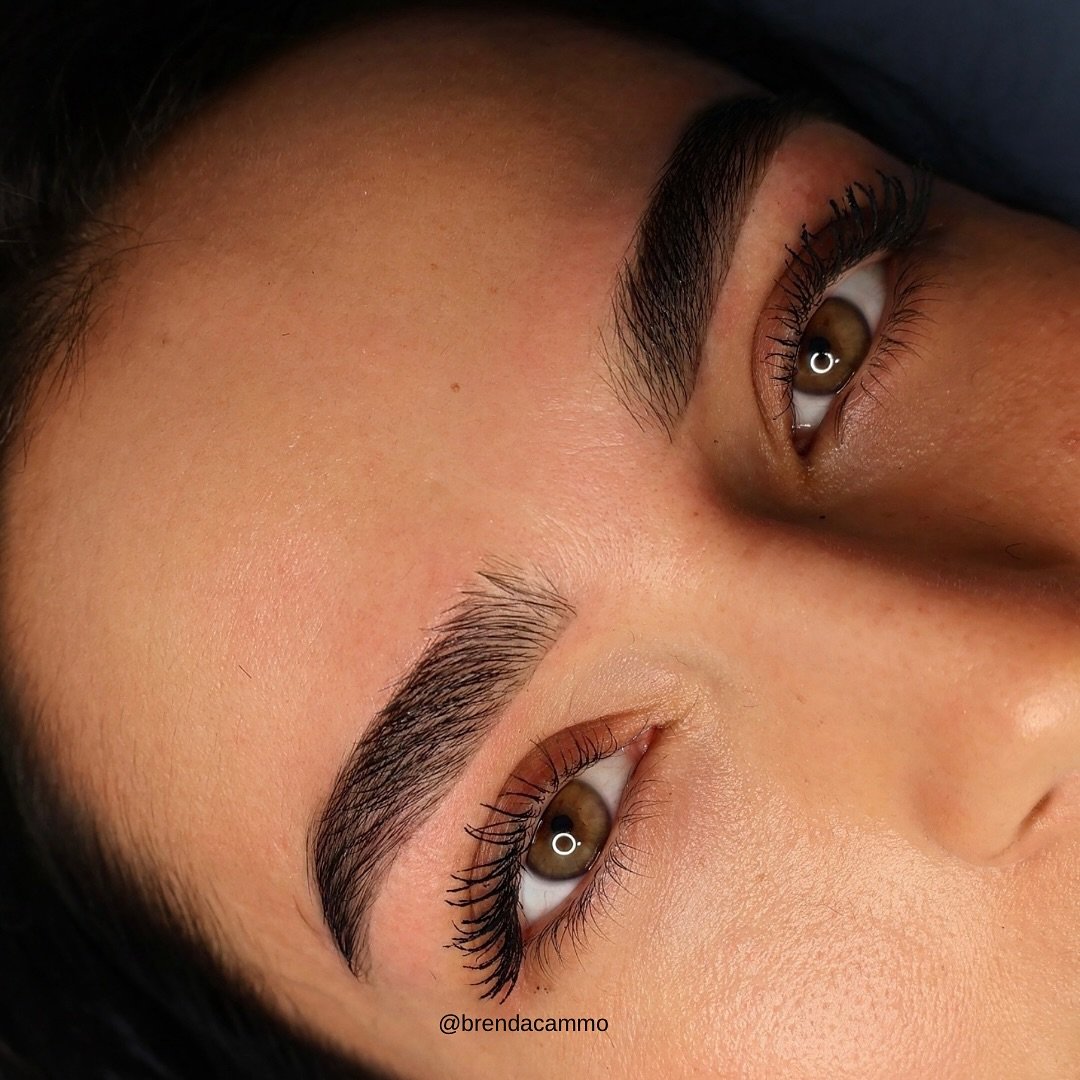
Same client, before and after threading.
Clean, natural brows shaped to your face, at our salons in Sliema and Swieqi. Threading is what BeCammo was built on.
- from €16price
- Sliema · Swieqiwhere
- ★ 5.0460+ Google reviews
How should you use reference photos at a brow appointment?
Reference images can make a consultation easier, particularly when you do not know the language for brow shape. A photo helps show whether you mean soft, brushed, straight, airy, fuller or simply less defined.
Choose images that reflect a realistic goal for your own brows. The most useful references usually show people with a similar density, hair direction or overall brow character. A photo of your own brows from a time when you loved their shape can be even more valuable.
Use the image to explain the finish, rather than to request an exact copy. Brow bone structure, natural asymmetry, hair growth and facial proportions vary from person to person. A professional artist should adapt the principle of the reference to your features rather than force a shape that does not suit your natural starting point.
A good reference photo starts a conversation. It does not replace an individual brow assessment.
It can also be helpful to show a photo of a brow style you do not like. For example, you may want to avoid a very thin tail, an overly high arch, strong outlines or an intensely tinted result. This gives your artist a clearer sense of your boundaries.
Why ask for a consultation before shaping begins?
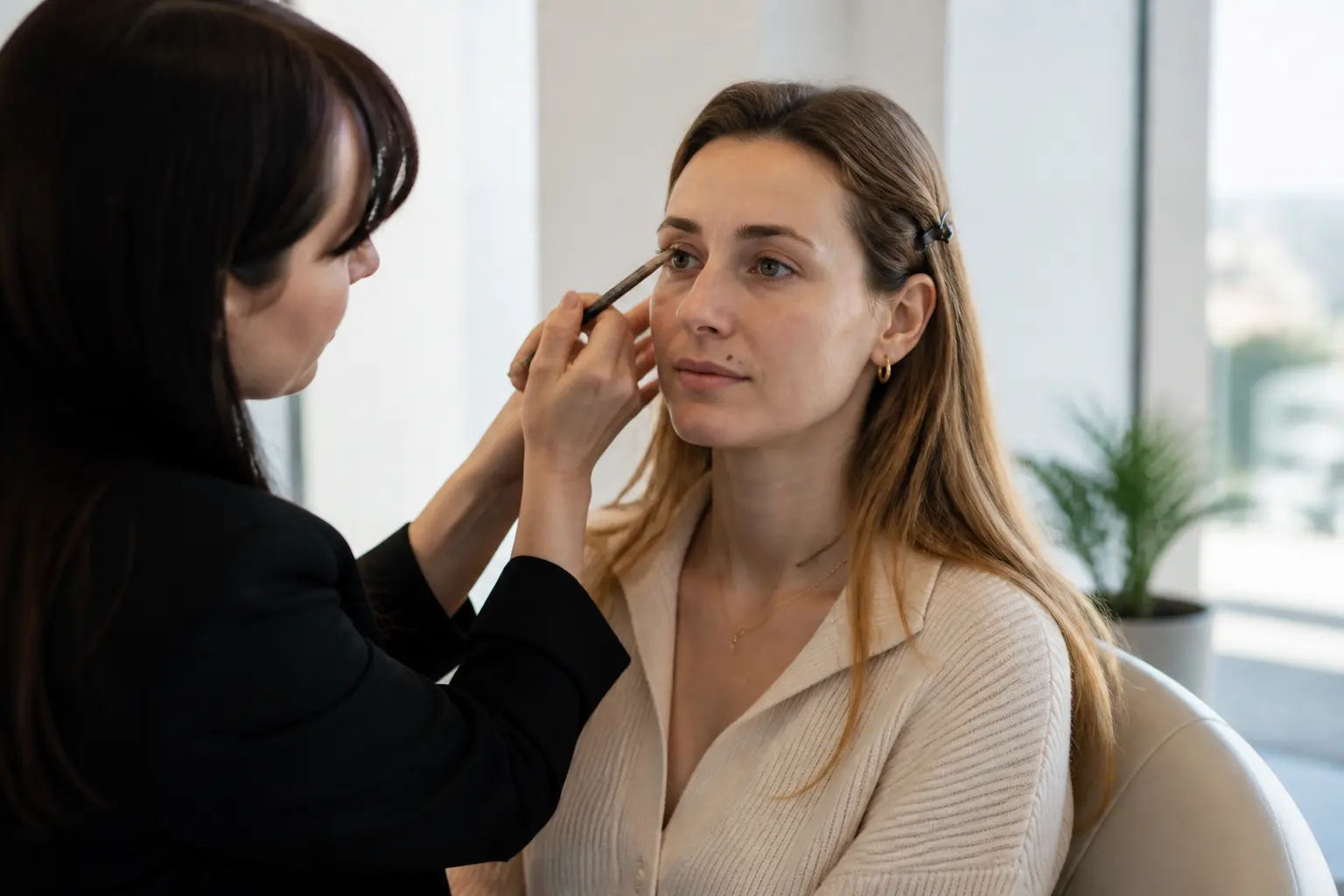
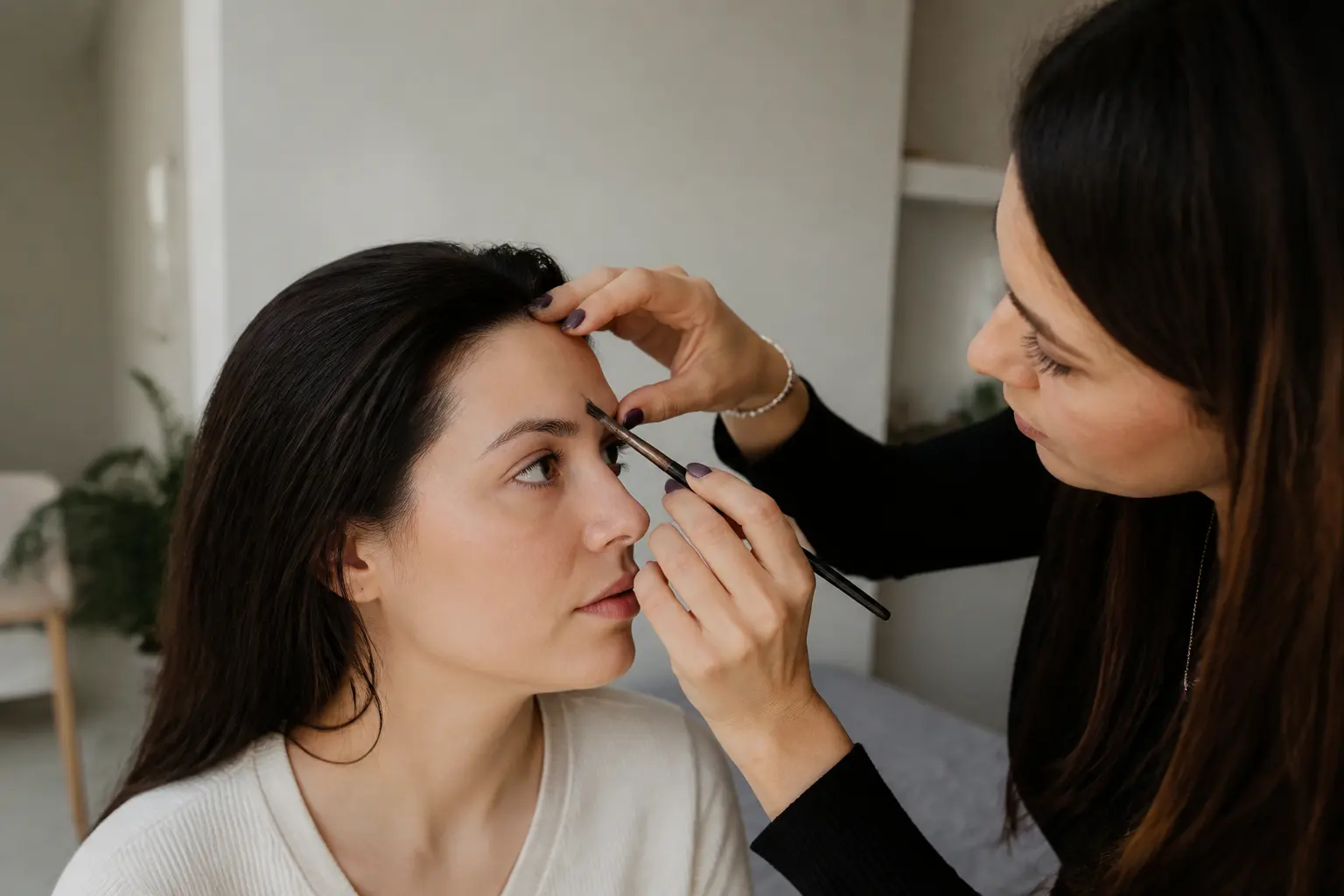
The consultation is where a natural result is protected. Before threading starts, your artist should be able to look at your brows from different angles, discuss your preferences and explain what can realistically be refined during that visit.
At a professional studio, brow design is not about treating both brows as identical templates. Natural brows are not perfectly symmetrical, and facial features have their own small differences. The aim is usually visual balance, while respecting what your brows can naturally do.
If you are nervous about losing too much hair, say it at the beginning. You can ask the artist to show you the proposed shape or talk you through the areas they plan to tidy. You can also request a conservative first appointment. It is generally easier to remove a little more during the session if you both agree it is needed than to regret taking away too much.
Useful consultation questions include:
- “Which hairs are you planning to remove, and which are you keeping?”
- “Can we keep the shape soft underneath?”
- “Is there an area that would benefit from growing out?”
- “Will this make my brows look noticeably thinner?”
- “Can we keep the tail natural rather than too narrow?”
These are not difficult questions or signs that you are being fussy. They are part of getting a personalised service that matches the way you want to look.
What should you say about your routine and upkeep?
The right shape is not only about appearance on the day. It should also make sense for your routine. Someone who likes a quick, low-effort morning may prefer a shape that still looks soft as new hairs begin to grow through. Someone who uses brow make-up every day may be happy with a little more definition around the edges.
Tell your artist whether you prefer to let your brows grow between visits, maintain them regularly or do small amounts of grooming at home. This helps create a plan that is realistic for you.
For a barely-styled look, many clients prefer a gradual maintenance approach. Rather than changing the shape each time, the artist can preserve the established direction and lightly tidy regrowth as needed. Hair growth differs from person to person, so the best timing for your appointments will depend on how quickly you notice regrowth and how polished you like your brows to look.
If you are trying to grow in sparse areas, mention that too. Your artist can help you distinguish between hairs that may support your desired shape and hairs that sit outside it. Avoid assuming that every stray hair needs to be removed. Sometimes patience is an important part of a more natural brow plan.
Which finishing details keep the look subtle?
Natural eyebrow shaping can be paired with other brow services, but the finishing choices should reflect your preference for an understated result.
Threading for controlled clean-up
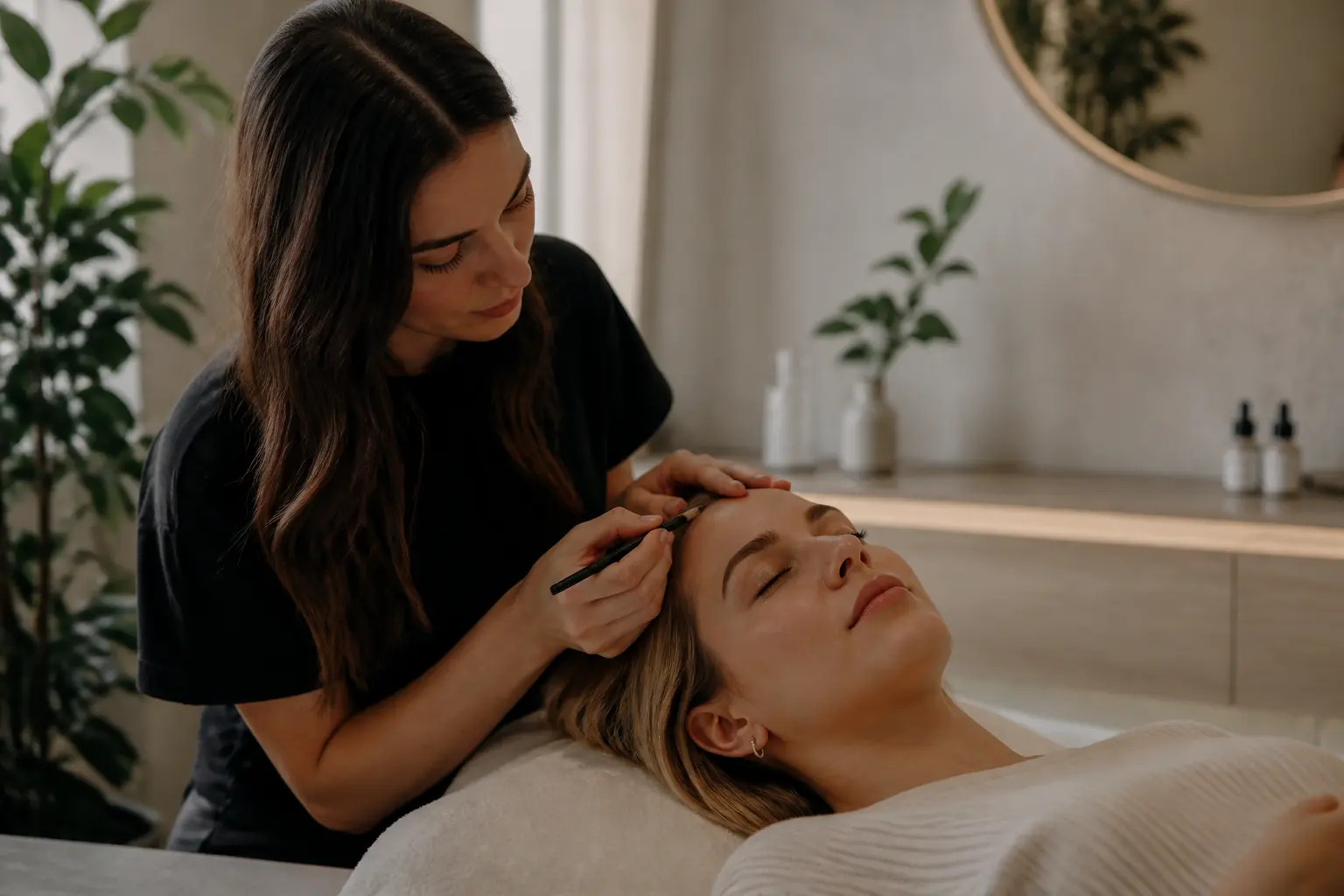
Threading uses a twisted thread to remove unwanted hairs with precision. For a natural finish, the technique can be used conservatively, cleaning around the shape while preserving density and softness. At BeCammo, disposable thread is used for each client, with cotton as the standard option and polyester available for clients with an allergy concern.
The sensation can involve mild discomfort, particularly in more sensitive areas, but the appointment is also an opportunity to communicate. If you feel unsure about how much is being taken away, speak up during the service. A good appointment should feel collaborative.
Tint or henna only if definition is truly wanted
A tint or henna service may help some clients see fine or fair hairs more clearly, but colour is not essential for a barely-styled look. If you are considering it, explain that you want the lightest possible enhancement and ask how it may appear on your own brow hair and skin.
If you like the idea of your brows looking naturally fuller without visible colour, a threading-only appointment may be the better place to begin. You can always discuss colour at a later visit once you are happy with the shape.
Be cautious with products before your appointment
Try to arrive with your brows as close to their usual natural state as possible. Heavy pencil, pomade or brow fibres can make it harder for your artist to see your true growth pattern. If you wear brow make-up most days, a quick photo of your preferred finished look can still be useful.
Also let your artist know if you have recently used strong exfoliating products, have irritation around the brow area or are concerned about skin sensitivity. This allows the appointment to be approached with appropriate care and may affect whether it is best to proceed that day.
What is the difference between natural and unfinished brows?
A barely-styled brow look should still feel intentional. It is not about leaving every hair in place or chasing perfect symmetry. It is about making quiet adjustments that improve the overall frame of the face without making the brows the only thing people notice.
After a well-planned shaping appointment, you may see a cleaner line, a little more openness around the eyes and a shape that works better with your natural growth. You should still recognise your brows. If a proposed style feels much bolder, thinner, sharper or more arched than your usual preference, pause and say so before the service continues.
Your artist brings technical judgement, but you are the person who will wear the result every day. The most successful natural looks come from combining both: professional assessment and an honest explanation of what feels like you.
Conclusion
To ask for a barely-styled natural look, focus on the words “soft”, “full”, “tidy” and “my natural shape”. Explain what you want to preserve, whether that is density, a straight brow direction, a gentle arch or an unstructured front. Bring a reference if it helps, ask questions before the threading begins and do not be afraid to request a conservative first clean-up.
At BeCammo in Sliema or Swieqi, a professional brow appointment can start with a conversation about your features, growth pattern and preferred level of definition. If you are ready for brows that look polished without looking overdone, choose the eyebrow service that suits you and share your natural-look goal when you book.
Frequently asked questions
What should I say if I do not want my eyebrows too thin?
Say that keeping fullness is your priority and that you would prefer a conservative clean-up. You can ask your artist to remove only hairs that clearly sit outside your natural shape and to avoid thinning through the main body of the brow.
Can threading create a natural eyebrow shape?
Yes. Threading can be used for a very light tidy-up or for more defined shaping. The result depends on the plan agreed during the consultation and how much hair is removed. Explain that you want a soft finish that follows your existing shape.
Should I show my brow artist a photo?
Yes, if it helps you explain the look you want. Photos are most useful when they show a realistic finish for your own brow density and hair pattern. They should be used as inspiration, not as a template to copy exactly.
How do I keep my brows looking natural after shaping?
Avoid over-filling them with strong product if you prefer a soft result. A clear or lightly tinted brow gel, used sparingly, may be enough for daily grooming. Follow any aftercare guidance provided by your artist, especially if your skin feels sensitive after hair removal.
Can my brows still look natural if they are uneven?
Natural brows often have small differences in height, density or direction. A brow artist can work towards better overall balance, but forcing exact symmetry can sometimes make brows look less natural. The aim is harmony with your facial features, not identical brows.