Sideburn and Jawline Threading: Tidy Facial Edges Gently
Brenda Cammo Team
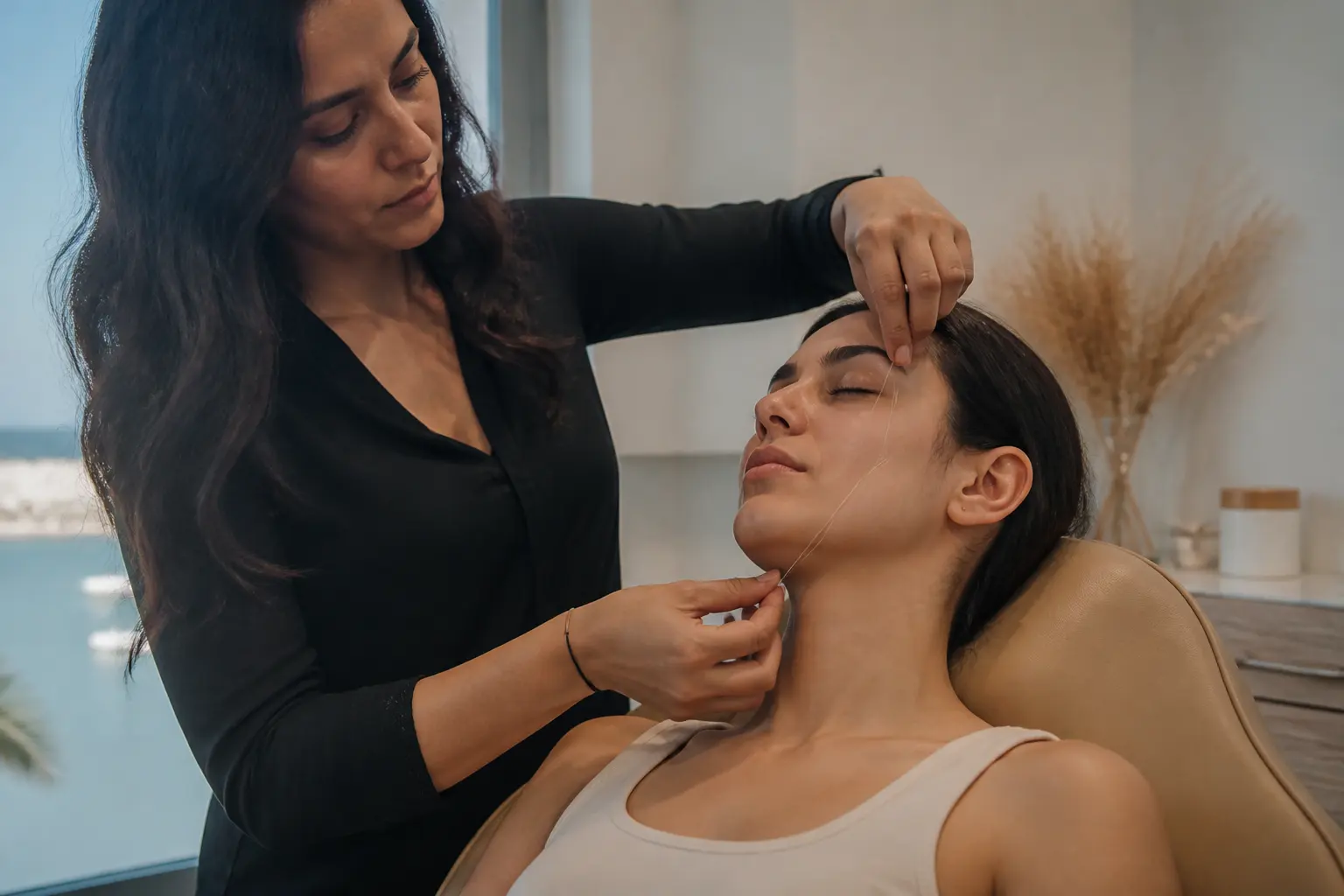
Sideburn and jawline threading is a precise way to tidy the soft facial hairs that can blur the edges of a haircut, beard, make-up look or overall facial shape. It is not about removing every visible hair or creating an unnaturally sharp line. Done thoughtfully, it is about refining the areas where sideburns meet the cheek and where fine growth appears along the jaw, while keeping the result balanced with your natural features.
For many people in Malta, these facial edges are the areas that need attention between hair appointments. Shaving can leave shadow, stubble or razor irritation, while home plucking can be slow and make it difficult to keep both sides even. Professional threading offers a controlled alternative for small, detailed areas. It can remove several hairs at once with a twisted thread, allowing the therapist to work gradually around the line rather than relying on a single broad strip of wax.
That said, no facial hair-removal method can promise zero redness or zero sensitivity. Skin can react differently depending on its condition, the products used beforehand and the individual’s hair growth. The aim of a professional appointment is to reduce avoidable irritation through careful technique, clean single-use materials and sensible aftercare.
What is sideburn and jawline threading?
Threading is a hair-removal technique in which a loop of thread is twisted and rolled across the skin to catch and lift unwanted hairs from the root. At Becammo, cotton thread is the usual material, with polyester available for clients who have a relevant allergy. The thread is single-use and discarded after each client.
When used around the sideburns and jawline, threading focuses on detail. The therapist can follow the natural direction of growth, assess how much density to remove and stop before the line looks overly severe. This matters because sideburns frame the temples and cheeks, while the jawline can have very different growth patterns from one side of the face to the other.
The technique is particularly suited to smaller facial areas where accuracy matters. The American Academy of Dermatology notes that threading can be precise for areas where you want to retain some hair, and that it may cause relatively little irritation for some people. Individual experience still varies, so a professional should always take your skin and recent routine into account.
Why tidy these facial edges?
The best reason is personal preference. Some clients like a cleaner transition from sideburn to cheek. Others want to remove fine, light-catching hairs around the jaw before an event, holiday or photographs. Some prefer the appearance of a more polished edge but do not want the frequent upkeep of shaving.
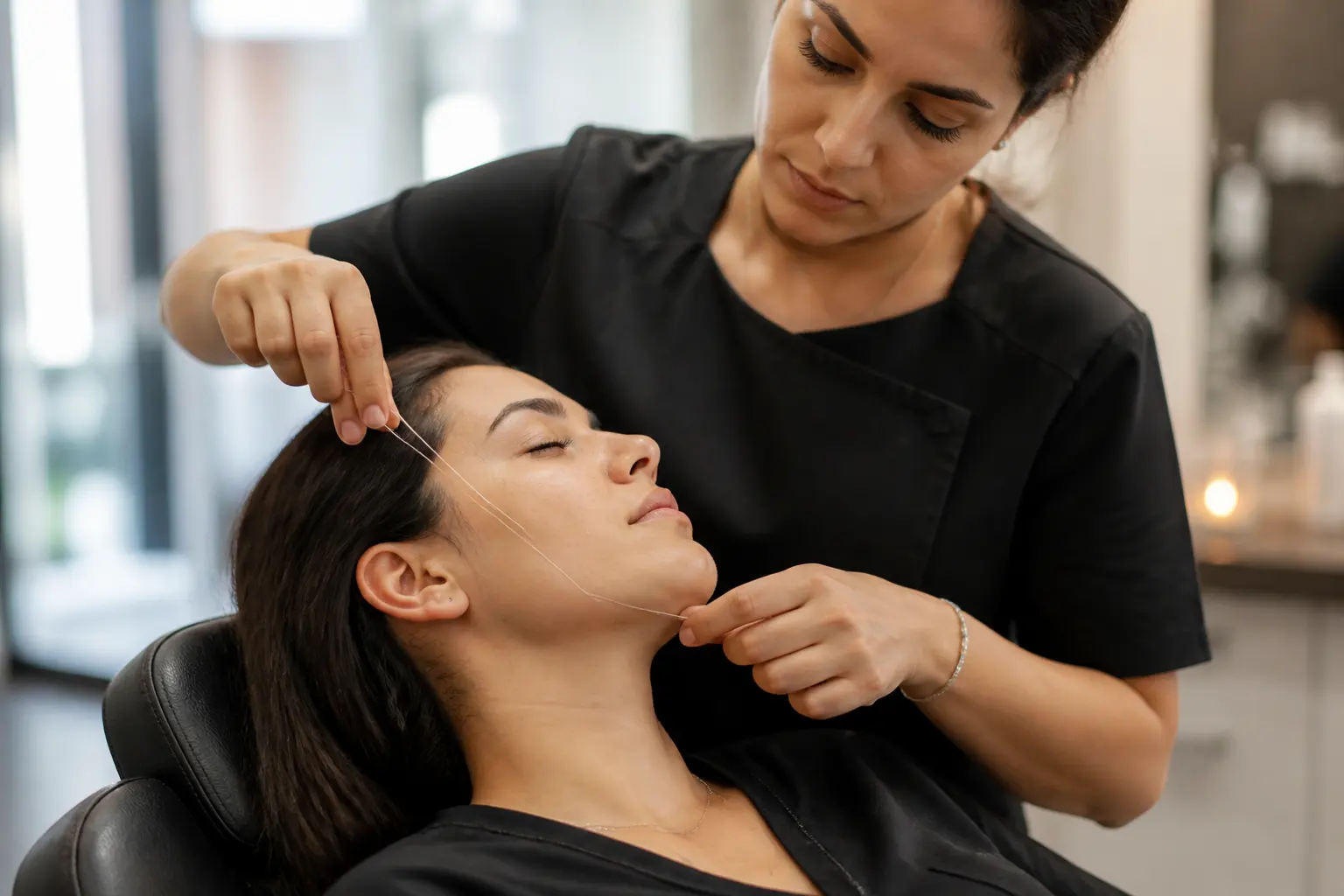
Threading can be a useful option when you want refinement rather than a dramatic redesign. A good appointment begins with looking at the face as a whole. The goal is not to copy a ruler-straight line from somebody else’s face. It is to work with your hairline, facial proportions, hairstyle and comfort level.
Sideburn shaping without taking too much
Sideburns can be easy to over-remove, especially when trying to make both sides match exactly at home. A small change near the temple can alter how the cheek area appears. During a professional threading service, the therapist can begin conservatively, remove the hairs that sit outside the intended edge and check the balance before refining further.
This is especially helpful if your sideburns are naturally soft, uneven or fine. A harshly squared finish is not automatically the right choice. A tapered or gently curved transition may look more natural, depending on your existing hair growth and hairstyle.
Jawline tidying without a heavy outline
Hair along the jaw can range from barely visible peach fuzz to more defined strands. Threading is often chosen to clear scattered hairs and improve the visual neatness of the lower face. It is not necessary to remove hair right up to an imagined contour. Leaving an appropriate amount of natural growth can make the result feel softer and easier to maintain.
If you wear facial hair, jawline threading can also help tidy the skin immediately outside your preferred beard outline. Be clear with the therapist about whether you want a close finish, a subtle clean-up or simply removal of isolated hairs. Communication is what turns a generic hair-removal appointment into a personalised service.
How a professional appointment should work
A professional facial threading appointment should feel considered, not rushed. Before the first thread touches the skin, explain what you would like to change and what you would prefer to keep. Mention any recent sensitivity, active breakouts, irritated patches or skin-care products that may affect how your skin feels.
At Becammo, facial threading is approached with the same attention to mapping and facial balance that informs eyebrow design. Even when the service is focused on sideburns or the jawline, the therapist should assess the areas in relation to your natural features rather than treating them as isolated strips of hair.
- Discuss the finish you want. You might want a soft clean-up, a more defined sideburn edge or a general full-face refresh.
- Check the skin. Let the therapist know if the area is sore, sunburnt, freshly exfoliated or affected by a rash, acne flare-up or cut.
- Set the boundary. The intended edge is identified before substantial hair is removed, so you can agree on how natural or defined it should look.
- Thread in small sections. Working gradually gives the therapist more control around curves, corners and areas with changing hair direction.
- Review the balance. The two sides of a face are naturally different. The aim is visual harmony, not forced identical lines.
How to prepare for sideburn and jawline threading
Preparation is simple, but it makes a difference. Arrive with clean skin where possible and avoid covering the area with heavy make-up, self-tan or thick styling products. These can make it harder to assess the natural hair pattern and may leave the skin feeling less comfortable during the service.
It is also wise to tell the therapist about products you have recently used on the area. Retinoids, exfoliating acids, strong scrubs and certain acne products can leave skin more reactive. Do not assume that every product is relevant, but do share your routine when you are unsure. A trained professional can decide whether it is sensible to proceed, adapt the appointment or wait until the skin is calmer.
- Avoid threading over sunburnt, broken or visibly irritated skin.
- Do not aggressively exfoliate the sideburn or jaw area immediately before your visit.
- Leave enough hair growth for the thread to catch. There is no need to shave immediately beforehand.
- Tell your therapist if you have previously reacted to hair removal or skin-care products.
- For a special occasion, allow some time before the event in case your skin shows temporary redness.
Clients having laser hair removal in nearby facial areas should also mention this when booking. Different hair-removal methods have different preparation rules, and the safest timing depends on the area and treatment plan. It is better to ask before combining appointments than to make assumptions.
What does threading feel like?
Threading involves a quick pulling sensation as hairs are lifted. Some people describe it as a brief pinch or flick, particularly where the hair is coarse or the skin is delicate. The sideburn area may feel different from the jaw because hair density, skin texture and growth direction can change across the face.
Comfort is influenced by more than pain tolerance. Tired skin, recent sun exposure, dehydration, hormonal changes and an over-active skin-care routine can all affect how an appointment feels. Tell your therapist if you need a short pause. A careful service should not make you feel pressured to endure more than you are comfortable with.
Rather than promising a completely sensation-free experience, it is more useful to prepare for a brief and manageable level of discomfort. Clear communication, good positioning and experienced technique can make the session feel more straightforward.
Aftercare: keeping freshly threaded skin calm
It is common for skin to look a little pink immediately after threading, especially if the hair is dense or your complexion shows redness easily. This usually settles, but there is no fixed timetable that applies to everyone. Keep the area clean and avoid friction while it calms.
For the rest of the day, choose a gentle approach. Avoid picking at the skin, scrubbing the area or testing several new products at once. If you use make-up, apply it only once the skin feels settled and use clean brushes or sponges. Fragrance-heavy products, strong actives and rough towels can be unhelpful on freshly threaded skin.
- Keep hands away from the treated area where possible.
- Use a gentle, familiar moisturiser if your skin feels dry, rather than introducing a new product.
- Pause exfoliating acids, retinoids and physical scrubs until the skin feels back to normal.
- Avoid prolonged heat, steam and intense exercise immediately afterwards if your skin tends to flush.
- Use daily sun protection appropriate for your skin, particularly in Malta’s bright conditions.
If redness becomes unusually persistent, painful, very itchy or is accompanied by swelling or a rash, stop applying new products and seek advice from a qualified healthcare professional. A beauty appointment is not a substitute for medical assessment when the skin is reacting significantly.
How often should you book?
Your ideal schedule depends on how quickly the hair grows, how defined you like the edges and whether you are maintaining a hairstyle or beard shape. Some clients book when they notice fine regrowth affecting the outline, while others prefer to include facial threading in a regular brow routine.
There is no need to force a strict timetable. Rebooking too soon can make it difficult for the thread to catch very short hairs, and waiting longer may suit clients who prefer a softer, lower-maintenance finish. At your appointment, ask what interval is likely to work for your growth pattern and desired result.
Threading, shaving or waxing for facial edges?
Each method has a different purpose. Shaving is convenient for a fast surface-level clean-up, but it can create stubble quickly and may irritate some people. Waxing can be efficient for larger areas, but it is less easy to make tiny adjustments around a detailed sideburn or jawline edge. Threading is generally chosen when precision and gradual shaping are the priority.
The right option is not universal. It depends on your skin, hair texture, preferred finish and maintenance habits. If you are moving away from shaving or waxing, explain what has not worked for you. That gives the therapist useful context without assuming that one method is right for every face.
A polished edge should still look like you
Sideburn and jawline threading can make everyday grooming feel more intentional, whether you are preparing for a night out in Sliema, keeping up a neat look between appointments or simply enjoying a clearer facial outline. The most successful result is usually subtle: the edges look tidier, while your natural features still lead.
If you are not sure how much hair to remove, start conservatively and ask questions during the appointment. A professional threading service can be tailored to a full-face tidy-up or a focused edge clean-up, with the approach adjusted to your skin and natural growth. When you are ready, choose your preferred Becammo location in Sliema or Swieqi and book the eyebrow and threading service that best matches your needs.
Frequently asked questions
Can threading remove hair from both the sideburns and jawline?
It can be used to tidy several small facial areas, but the exact areas included should be confirmed when booking. Tell the therapist that you want sideburn and jawline edges refined, so the appointment can be planned around your goals.
Will sideburn and jawline threading make hair grow back thicker?
Threading removes visible hairs from the root. It does not change your natural hair follicle or guarantee a change in how hair regrows. New growth can feel more noticeable simply because you are paying closer attention to the area.
Is threading suitable for sensitive facial skin?
Many people choose threading because it is a precise method that does not rely on wax. However, sensitivity varies. Share any current irritation, active skin concerns or relevant products with your therapist before the appointment.
Can I have threading before a holiday or event?
Yes, but avoid leaving your first facial threading appointment until the last minute. Skin may show temporary redness, so allowing some time beforehand is a sensible precaution, particularly before photographs or a beach day.
Should I shave before jawline threading?
No. Avoid shaving immediately before your appointment, as the thread needs enough visible hair to catch. If you are unsure about the right length, contact the studio before booking.
Can men book sideburn and jawline threading?
Yes. Facial edge grooming is not limited by gender. The service can be tailored to a softer clean-up, a sideburn tidy or detail around a preferred facial-hair outline.