Massage for Desk Workers: Neck, Shoulders and Posture Tension
Brenda Cammo Team
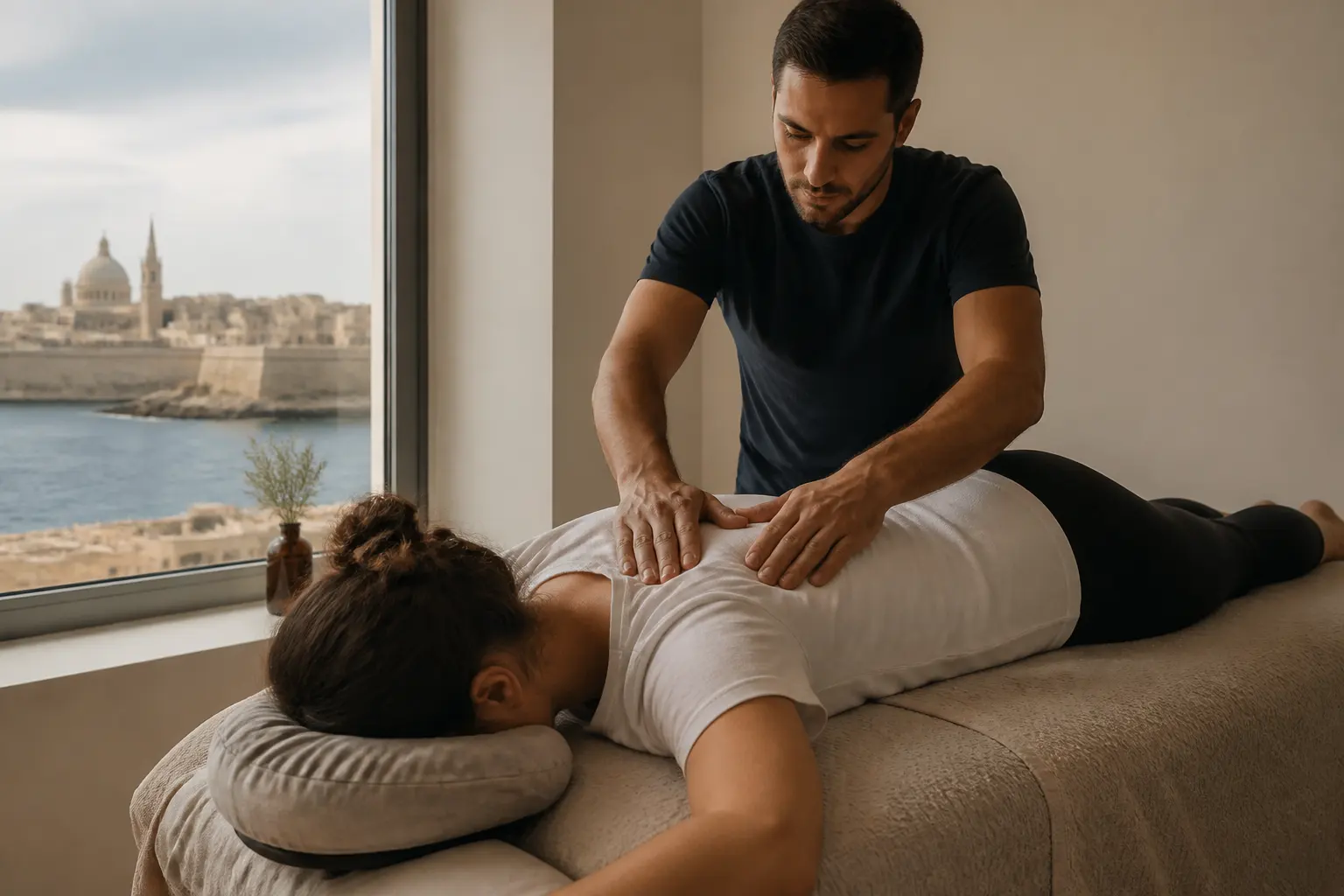
A long day at a laptop can leave your neck feeling stiff, your shoulders drawn upwards and your upper back tired before the day is over. Whether you work from an office in Sliema, remotely from home, or move between meetings and screens across Malta, desk-based work can encourage the same positions for hours at a time.
Massage for desk workers is not about forcing your body into a perfect posture or promising to solve every cause of discomfort in one appointment. It is a chance to step away from the routine, focus on areas that feel overloaded and create a more considered self-care plan. Combined with small changes to your workstation and regular movement, a professional massage can be a valuable part of looking after your comfort.
Why desk work often affects the neck and shoulders
Desk work is not necessarily physically demanding in the usual sense, but it can be repetitive. Looking down at a laptop, reaching towards a mouse, holding a phone between your shoulder and ear, or working with raised shoulders can all make the upper body feel tense over time.
Workstation guidance from the Occupational Safety and Health Administration highlights practical aims such as keeping the head and neck balanced with the torso, relaxing the shoulders, supporting the lower back and placing the keyboard and mouse within easy reach. These principles are useful because the best desk set-up is not one rigid pose. It is a set-up that helps you avoid constantly twisting, reaching or bracing your muscles.
Common desk-work patterns include:
- Leaning towards a screen that is too low or too far away.
- Hunching one shoulder while using a mouse or trackpad.
- Holding tension in the jaw, neck or upper back during concentrated work.
- Sitting still for long stretches without changing position.
- Working from a sofa, bed or dining chair without enough support.
- Switching frequently between a laptop, mobile phone and second screen.
None of these habits means you have failed at posture. They are simply useful clues. Noticing where your body repeatedly works harder than it needs to can help you make changes that are realistic for your routine.
What a massage for desk workers can focus on
A professional massage session should begin with listening. You may explain where you feel tension, how your workday is structured, whether you spend more time typing, driving, standing at a counter or moving between devices, and what level of pressure feels comfortable for you.
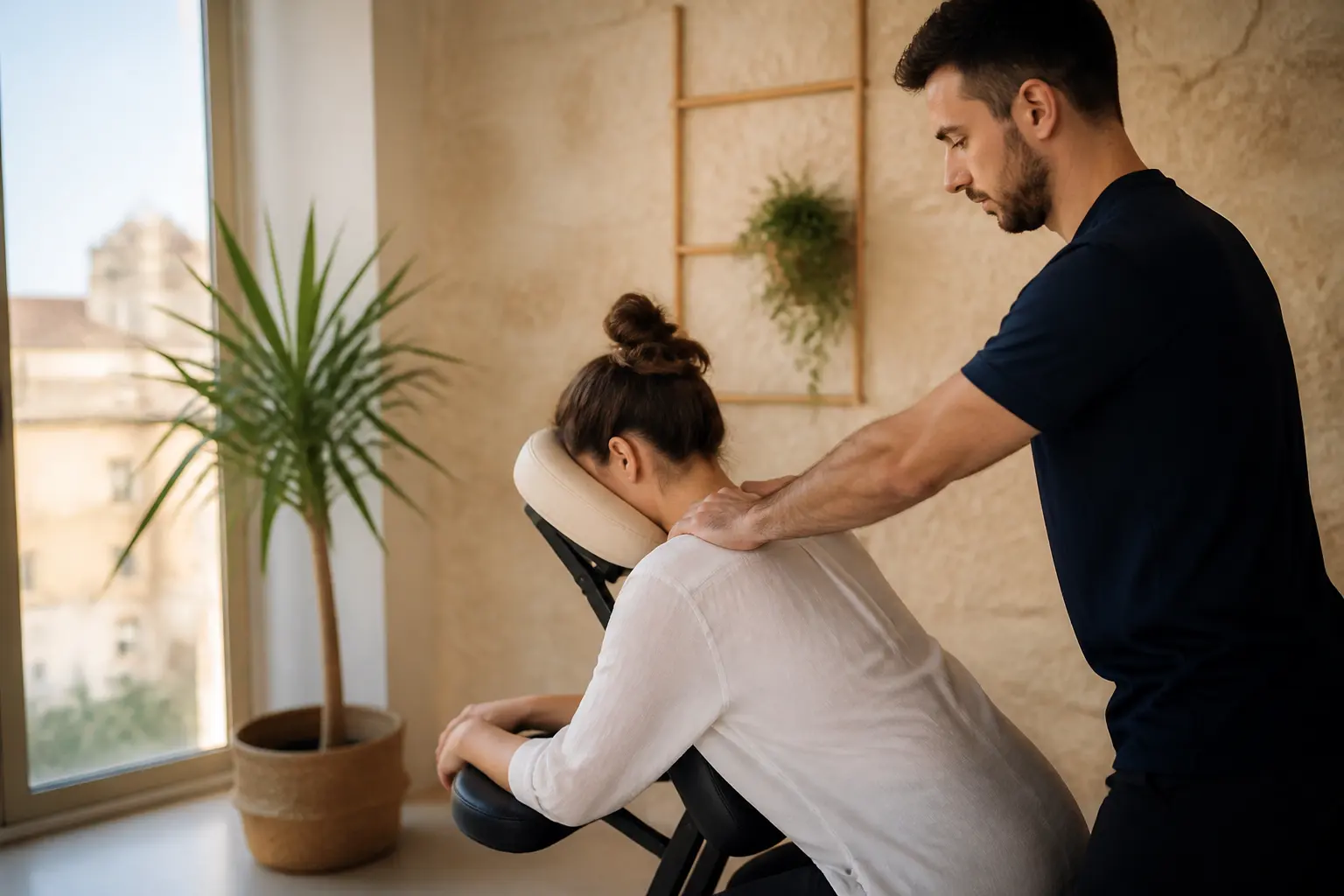
For a desk worker, the focus may include the neck, shoulders, upper back, arms and hands, depending on your needs and the service selected. These areas work together. For example, a shoulder that feels tight may be linked to repeated reaching for a mouse, while upper-back fatigue can be associated with staying in one seated position for too long.
Massage techniques and pressure should be tailored rather than assumed. Some clients prefer a slower, relaxing experience after a demanding week. Others may ask for more focused work on areas that feel especially tense. At a professional studio, communication matters throughout the appointment. You should feel able to mention if the pressure is too light, too strong or uncomfortable.
Massage can support a feeling of ease and recovery, but it is not a substitute for medical assessment when symptoms are severe, sudden, persistent or worrying.
Massage is support, not a posture correction programme
It is easy to think that one massage should “fix” posture. In reality, posture is dynamic. Your body naturally changes position while you work, walk, rest and move through the day. A more helpful goal is to make your usual positions more comfortable and to give yourself regular opportunities to move.
A massage appointment may help you feel more aware of where you tend to hold tension. That awareness can make it easier to adjust your chair, move your screen or take a short break before discomfort builds. However, the benefits you notice, and how long they last, vary between people and depend on work habits, stress, activity levels and individual circumstances.
Think of massage as one part of a wider routine:
- Set up your workspace so regular tasks are easy to reach.
- Change position regularly rather than trying to sit completely still.
- Use short movement breaks during screen-heavy days.
- Choose a massage style and pressure that suit your current needs.
- Seek appropriate healthcare advice if symptoms do not settle or affect daily life.
Simple desk adjustments that can make a difference
You do not need an expensive home office to make useful improvements. Start with the items you use most often and adjust one thing at a time. The aim is comfort and reduced strain, not a showroom-perfect workstation.
Bring the screen in front of you
When a monitor sits off to one side, the head and neck may remain turned for long periods. The OSHA monitor guidance recommends positioning the monitor directly in front of you so your head, neck and torso can face forward. If you use two screens, consider which one receives most of your attention and arrange your space around that task.
Keep shoulders relaxed while typing
If your chair, keyboard or desk is too high, you may find yourself lifting your shoulders as you type. If it is too low, you may lean forward or bend your wrists awkwardly. Your elbows should feel close to your body and your forearms should have support where possible. The OSHA keyboard guidance also advises keeping the keyboard directly in front of you, with relaxed shoulders and wrists in line with the forearms.
Move the mouse closer
A mouse placed far from the keyboard asks the shoulder and arm to reach repeatedly. Bring it close enough that your elbow can stay near your side. If your work allows it, keyboard shortcuts can reduce continuous mouse use. The OSHA mouse guidance notes that prolonged reaching can place stress on the shoulder and arm.
Support your feet and back
Adjust your chair so your back is supported and your feet rest on the floor. If your chair needs to be higher for your desk, a stable footrest can help. Also check the space beneath the desk. Bags, storage boxes and cables can make it harder to sit close enough to the keyboard without leaning forward.
Change position before you feel stuck
There is no single position that remains comfortable forever. Stand to refill your water, walk briefly after a call, roll your shoulders gently, or look away from the screen between tasks. Short, regular changes can be more manageable than waiting until the end of a very long day.
How to prepare for a massage appointment
Preparation can be simple. Arrive with enough time that you are not rushing from a meeting, and wear comfortable clothing for before and after your appointment. You do not need to stretch intensely or try to “work out” the tension beforehand.
It is useful to tell the therapist about:
- The areas that feel most uncomfortable or fatigued.
- How long you spend at a desk on a typical day.
- Any recent changes to your workload, exercise routine or sleep.
- Any sensitivity to pressure.
- Relevant health information that could affect whether massage is suitable for you.
Be clear about your goal. You may want a quiet, restorative session after a demanding week, or you may prefer a focused massage that pays closer attention to your neck, shoulders and upper back. A good appointment starts with a conversation, not assumptions.
What to do after your massage
Try not to return immediately to hours of uninterrupted screen time. If possible, give yourself a little space after the appointment to walk, drink water, eat normally and notice how your body feels. Keep your plans gentle if that feels right for you.
For the next working day, choose one or two desk habits to practise. For example, you might raise your laptop with a stand and use a separate keyboard, place your mouse closer, or set a reminder to stand after finishing a task. Small changes are more likely to become part of your routine than a complete overhaul made all at once.
There is no universal booking schedule for massage. Some desk workers book around particularly busy periods, travel or project deadlines. Others include massage in an ongoing wellbeing routine. The right timing depends on how you feel, what your work involves and your personal preferences.
When to seek medical advice instead
Massage is intended for wellbeing and comfort, and it is important to recognise when you need a medical opinion. Seek prompt medical advice for severe pain, pain after an injury, new weakness, numbness or tingling, pain spreading into the arm or hand, dizziness, unexplained symptoms, or discomfort that is persistent or getting worse.
If you are unsure whether massage is suitable, speak with an appropriate healthcare professional first. You can also ask the studio about the service before booking, so you can make an informed decision based on your circumstances.
Choosing a massage in Malta when work tension builds up
For busy professionals, a massage should feel practical as well as restorative. Look for a professional setting where you can discuss your needs, choose a suitable service and communicate openly about pressure and comfort. Your session should be personalised to the areas you would like to prioritise, without making unrealistic promises about posture or long-term outcomes.
At Becammo, massage and spa services can be part of a considered self-care routine for people who spend long days at a desk, on calls or travelling between work commitments. If neck, shoulder and upper-back tension has become a familiar part of your week, booking time to slow down and focus on your comfort can be a useful place to begin.
Frequently asked questions
Can massage help with desk-related neck and shoulder tension?
Massage can support relaxation and help you focus on areas that feel tired or tense after desk work. Your experience will vary, and it is most useful when combined with regular movement and a workstation that is adjusted for your comfort.
What type of massage is best for office workers?
The best choice depends on your preferences, comfort with pressure and the areas you want to prioritise. Explain that you spend long hours at a desk and describe where you feel tension, so the therapist can help guide the conversation.
Should a massage be painful to work?
No. Firm pressure may feel intense at times, but you should not feel that you have to tolerate pain. Tell your therapist straight away if the pressure feels too strong or uncomfortable.
How often should desk workers book a massage?
There is no fixed schedule for everyone. Some people book when work feels especially demanding, while others choose regular appointments as part of their wellbeing routine. Your needs, lifestyle and budget will all shape the right frequency.
Can I book a massage if I have persistent neck pain?
If pain is persistent, severe, follows an injury, or comes with symptoms such as numbness, weakness or tingling, seek medical advice before booking. A massage appointment should not delay assessment of concerning symptoms.
When desk work leaves you carrying the day in your shoulders, a professional massage can offer a calm, personalised pause. Choose a session that suits your comfort, share what your workdays are like, and pair the appointment with small changes that make your desk feel easier to use. You can explore the massage and spa options at Becammo and choose a convenient appointment in Sliema or Swieqi.