How Often to Book Eyebrow Threading to Keep Your Shape Sharp
Brenda Cammo Team

A well-shaped brow does not have to mean a high-maintenance routine. For many people, booking eyebrow threading every 15 to 20 days is a useful starting point for keeping the outline tidy and the shape easy to recognise. But the right timing is personal. Your natural hair growth, the density of your brows, the finish you like and what is happening in your diary can all influence when it makes sense to return.
At a professional brow studio, regular threading is not about making every appointment identical. It is about checking how your brows have grown back, preserving the structure created through mapping and design, and making careful adjustments rather than repeatedly changing the shape. That approach can help your brows continue to look balanced while still feeling like your own.
If you are deciding how often to get eyebrow threading in Malta, this guide will help you plan a realistic routine, recognise when it is time to book and prepare for occasions when you want your brows looking especially polished.
The usual eyebrow threading rhythm: every 15 to 20 days
Eyebrow hairs do not all grow at the same pace. After threading, some new hairs may become visible sooner than others, especially beneath the brow line, between the brows or around the tail. For this reason, a maintenance visit every 15 to 20 days is often a practical rhythm for people who like a consistently clean, defined outline.
This timing is a guide rather than a strict rule. Some clients prefer to return closer to two weeks because they notice regrowth quickly or enjoy a very crisp finish. Others are happy to wait three or four weeks, particularly if their natural brow shape stays neat for longer or they prefer a softer, more grown-in look between visits.
The aim is not to remove every new hair as soon as it appears. A good schedule gives your brow artist enough visible growth to tidy the area thoughtfully, while avoiding the feeling that your brows have become difficult to shape again.
What determines how often you should book?
Your ideal eyebrow threading schedule is shaped by more than a calendar reminder. These are the main factors a professional brow appointment can take into account.
Your individual hair-growth pattern
Growth can vary from person to person and even from one part of the brow to another. You may find that hairs at the front stay neat, while the arch or lower edge needs attention earlier. One eyebrow can also appear to grow more quickly or more densely than the other. This does not necessarily mean anything is wrong. Natural asymmetry and different growth directions are common, which is why an in-person design focuses on balance rather than forcing both brows to look identical.
How defined you like your brows to look
If you enjoy a sharp lower line and a clean space between the brows, a more regular booking pattern may suit you. If you prefer a natural, softly defined brow with a little more texture around the outline, you may be comfortable leaving longer between sessions.
Neither preference is better. The useful question is how you want your brows to look during an ordinary week, not only immediately after an appointment.
Your brow density and natural shape
Fuller brows can sometimes hold their overall shape well even as fine hairs grow around them. Sparse or over-plucked areas may call for a more conservative approach, so the artist can protect the hairs that contribute to the shape. In both cases, the appointment should be personalised. Threading can tidy unwanted growth around the brow without treating every brow as though it needs the same outline.
Your routine and upcoming plans
Work trips, holidays, celebrations, professional photographs and family events can all influence when you book. If you want a freshly threaded appearance for a particular date, it is sensible to arrange the appointment with enough time for your skin to settle into its usual post-threading appearance. If you are new to threading, booking your first visit well before an important occasion can give you a clearer sense of how your skin and brow hairs respond.
Your home routine and product use
The products you use around the brow area matter. If you use active skincare products, including retinol, it is important to mention this before your appointment so the studio can advise appropriately. Avoid treating threading as a completely separate step from skincare. The skin around the brows deserves the same thoughtful attention you give to the rest of your face.
Signs that it is time to book a threading appointment
You do not need to count every day after your last visit. Instead, look for practical signs that your shape is starting to lose definition.
- The lower brow line is becoming less clear.
- New hairs between the brows are more noticeable.
- The arch or tail no longer looks as tidy as you like.
- Make-up takes longer because you are trying to redraw the brow outline.
- Your two brows are beginning to look less balanced from a normal viewing distance.
- You have an event coming up and would feel more confident with a fresh design.
These signs do not mean you need a dramatic reshaping. Often, a maintenance threading appointment is simply a careful tidy that restores clarity to the design already established.
Why regular maintenance can be easier than waiting too long
When you wait until the brows have grown out substantially, it can take more time to see the original structure clearly. There may be more hairs around the edges, and it may be harder to tell which ones belong to the intended shape and which ones are simply new growth.
Regular appointments can make the process more straightforward because the brow artist is maintaining a familiar design. Mapping and visual assessment can still be used whenever needed, especially if your goals have changed or your brow growth looks different, but the focus is often on keeping the existing shape clean and balanced.
There is also a practical benefit: a manageable routine can reduce the temptation to remove hairs impulsively at home. One or two extra hairs may seem minor, yet repeated self-tidying can gradually alter the line of the brow. If you are growing out an area, preserving symmetry or trying to avoid over-removal, it is usually better to leave uncertain hairs for your professional appointment.
Threading appointments are not all the same
A maintenance session may be brief, but it should still be attentive. At Becammo, eyebrow threading is approached as brow design, not simply hair removal. The shape is considered in relation to your facial features, natural hair direction, brow density and the level of definition you prefer.
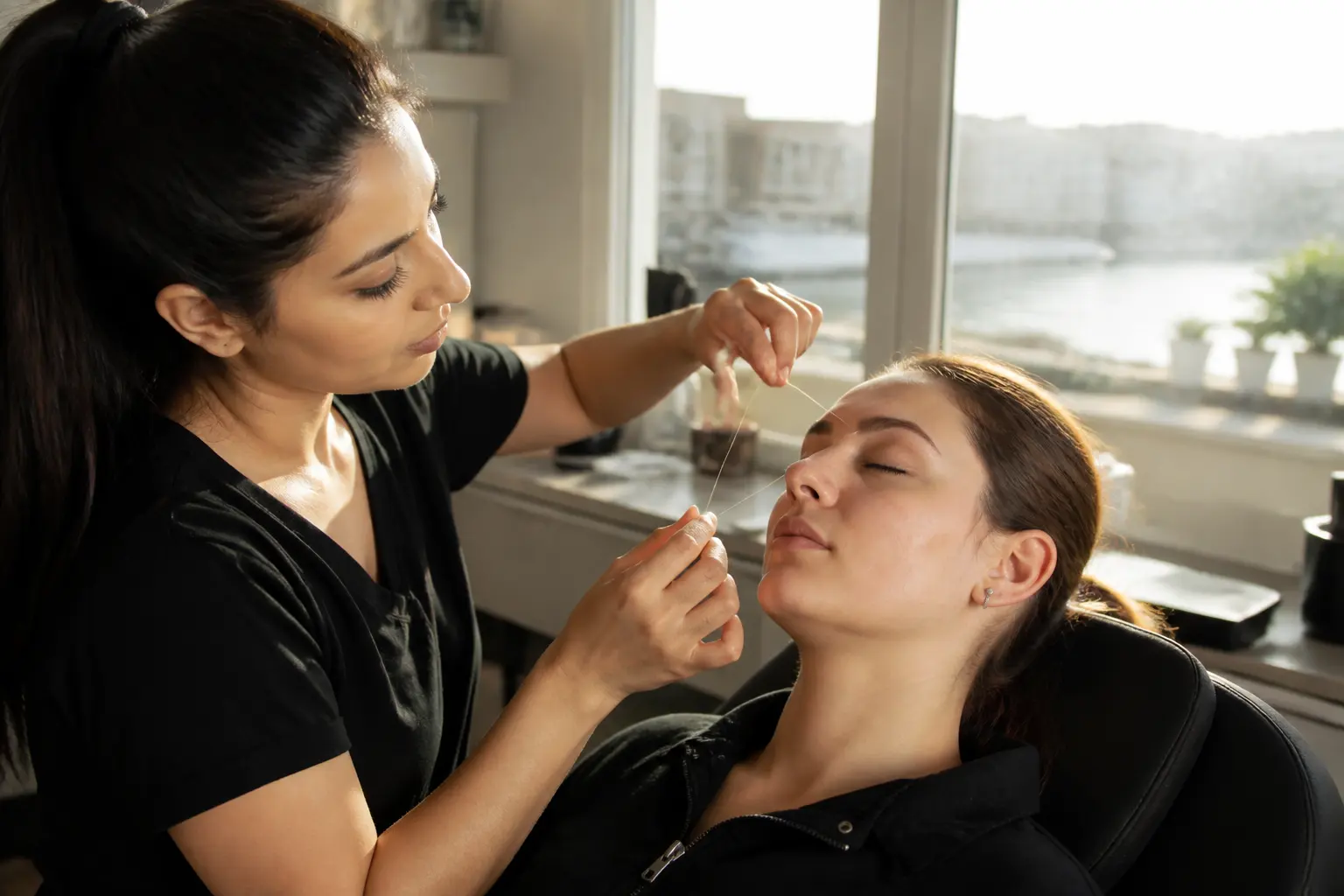
Threading uses a fine thread to remove hairs with precision. The studio uses single-use thread for each client, with cotton as the standard option and polyester available for clients with a relevant material sensitivity. If you have allergies, skin concerns, are pregnant or use particular skincare products around the brow area, raise this when booking or before the service begins. Clear information helps the appointment be planned with care.
It is also worth remembering that threading can involve mild, temporary discomfort. The sensation differs between clients and can vary depending on the area being threaded and your own sensitivity on the day. A calm, experienced approach and open communication can make the session feel more comfortable.
How to plan your appointments around a special event
For weddings, holiday photos, interviews, celebrations or professional shoots, do not leave your brow appointment until the last possible moment. A little forward planning gives you flexibility if the preferred time at your chosen location is unavailable, and it avoids adding unnecessary pressure to an already busy week.
If you already know how your skin usually looks after threading, you can select a timing that feels comfortable for you. If it is your first threading appointment, consider booking earlier rather than treating it as a same-day beauty task. This gives you time to become familiar with the experience and to discuss the level of shaping you want.
For regular clients, an event can fit naturally into the usual maintenance cycle. For example, if your brows are normally refreshed every 15 to 20 days, simply choose the session that falls before the occasion rather than trying to squeeze in extra removal too soon.
Should you thread your brows every week?
Weekly threading is not necessary for most people. Very early regrowth can be tempting to remove, particularly if you love a freshly defined look, but allowing enough growth for a thoughtful tidy is often more practical. A 15 to 20-day schedule is a common starting point for maintenance, then you can adjust based on what you see in the mirror and what your brow artist observes over several visits.
If you are unsure whether to return sooner, ask yourself whether the design itself has lost clarity or whether you have simply spotted a few fine hairs up close. Brows can still look well kept in everyday life without being perfectly hair-free at every moment.
How to make your brow shape last neatly between appointments
You cannot stop brow hairs from growing, and you do not need to. The goal between visits is to protect the design and keep your routine simple.
- Avoid plucking hairs unless you have been given clear guidance on which ones to leave alone.
- Brush brows into place with a clean spoolie, particularly if some hairs grow in different directions.
- Use brow make-up lightly if you want extra definition, following the natural shape rather than creating a completely different arch.
- Keep strong skincare products away from the immediate brow area when appropriate, and mention your routine before your next threading appointment.
- Book your next visit before your routine becomes inconvenient, especially before travel or a busy period.
For clients who also want more visible colour or a softer filled-in effect, brow tint or henna can be discussed as part of an eyebrow service. These options have different visual effects and should be selected according to your hair colour, skin, desired finish and personal preferences. They are not a substitute for every threading appointment, but they may complement a brow routine when suitable.
Finding a schedule that works in real life
The best eyebrow threading schedule is one you can maintain without stress. A fortnightly rhythm may be ideal if you like a consistently sharp outline. A three-week or monthly pattern may be more realistic if you prefer a softer finish, travel often or do not notice regrowth quickly. Your routine can also change with the seasons, your work schedule and your personal style.
Rather than copying someone else’s booking pattern, start with your own growth. Notice when you first feel that your brows are losing their shape, then use that as a guide for the next appointment. Over time, you and your brow artist can settle into a rhythm that keeps the design looking intentional without overcomplicating your diary.
Conclusion
For most people, booking eyebrow threading every 15 to 20 days is a helpful starting point for a neat, defined shape. The right interval can be shorter or longer depending on your growth pattern, brow density, desired finish and plans. Regular maintenance is less about chasing perfection and more about preserving a design that feels balanced, personal and easy to wear.
If you are in Malta and would like help finding a threading routine that suits your brows, book an eyebrow appointment at Becammo in Sliema or Swieqi. A professional consultation during your visit can help you decide whether you need a simple tidy, a refreshed shape or added colour definition.
Frequently asked questions
How often should I get eyebrow threading?
Every 15 to 20 days is a useful maintenance starting point for many people. Your ideal schedule may differ according to how quickly your hairs grow and how crisp you like the shape to look.
Can I wait a month between eyebrow threading appointments?
Yes. A monthly schedule can work well if your natural shape stays tidy and you prefer a softer look between visits. If the outline becomes difficult to maintain before then, a shorter interval may suit you better.
Will regular threading change my natural brow shape?
Regular professional maintenance should focus on preserving the agreed design rather than repeatedly changing it. Tell your brow artist if you are trying to grow out an area or would like a softer, fuller appearance.
Should I pluck stray brow hairs between threading appointments?
It is usually best to avoid removing hairs you are unsure about. Small changes at home can affect the overall line, particularly around the arch and lower edge. Save questions about specific hairs for your next appointment.
When should I book threading before a special event?
Book with enough time for your skin to return to its usual appearance after threading. If it is your first visit, plan it earlier so you can get familiar with the service before the event.