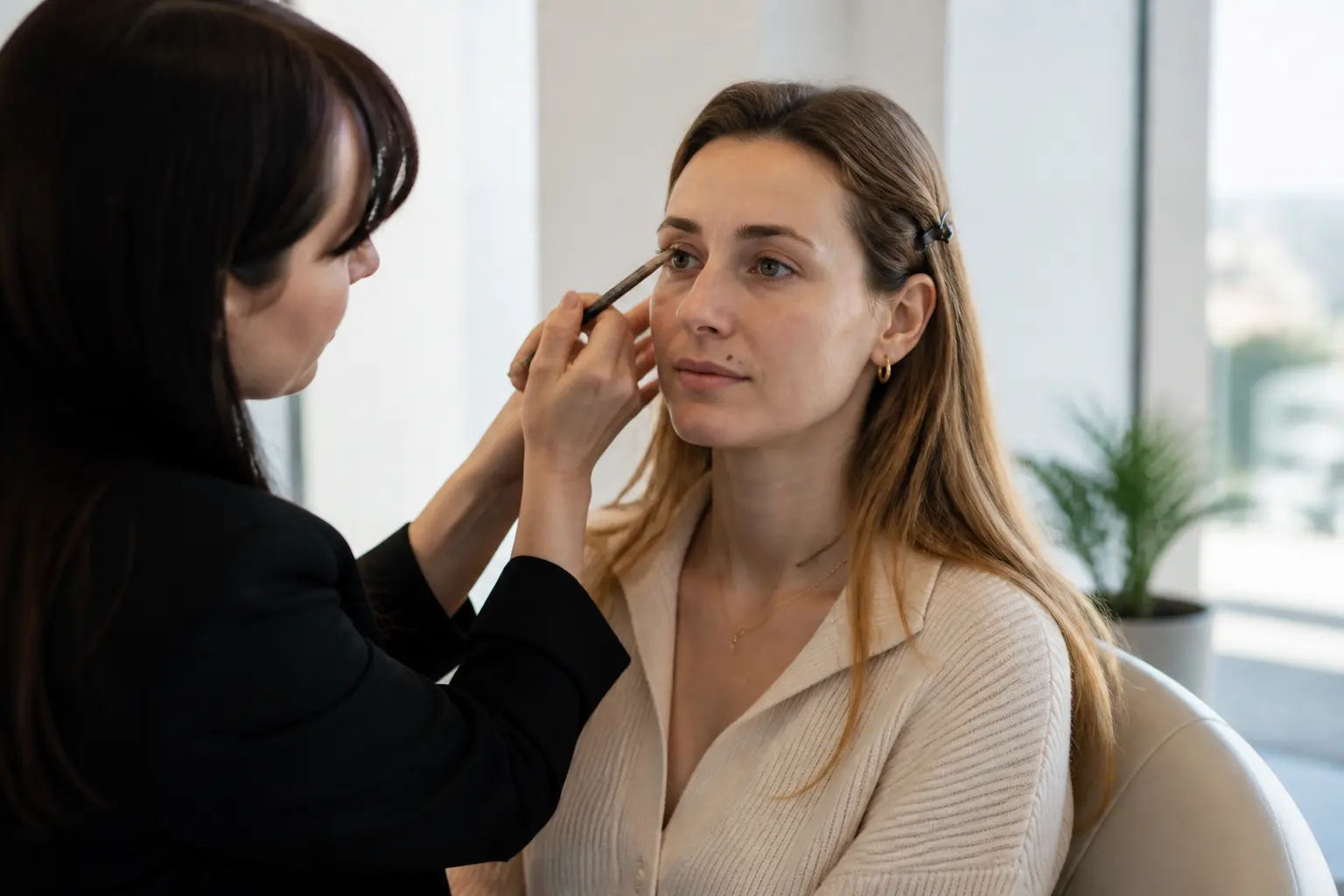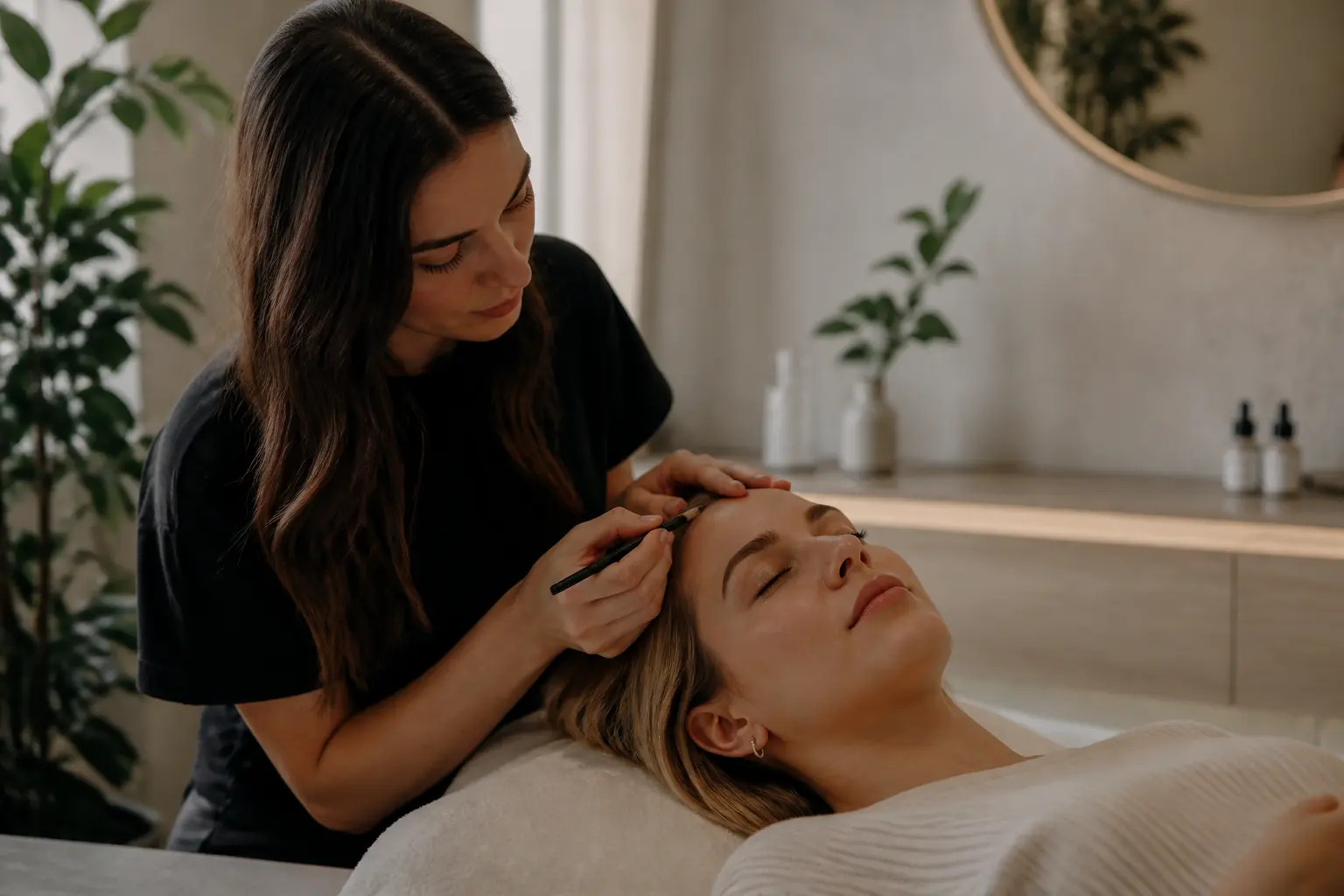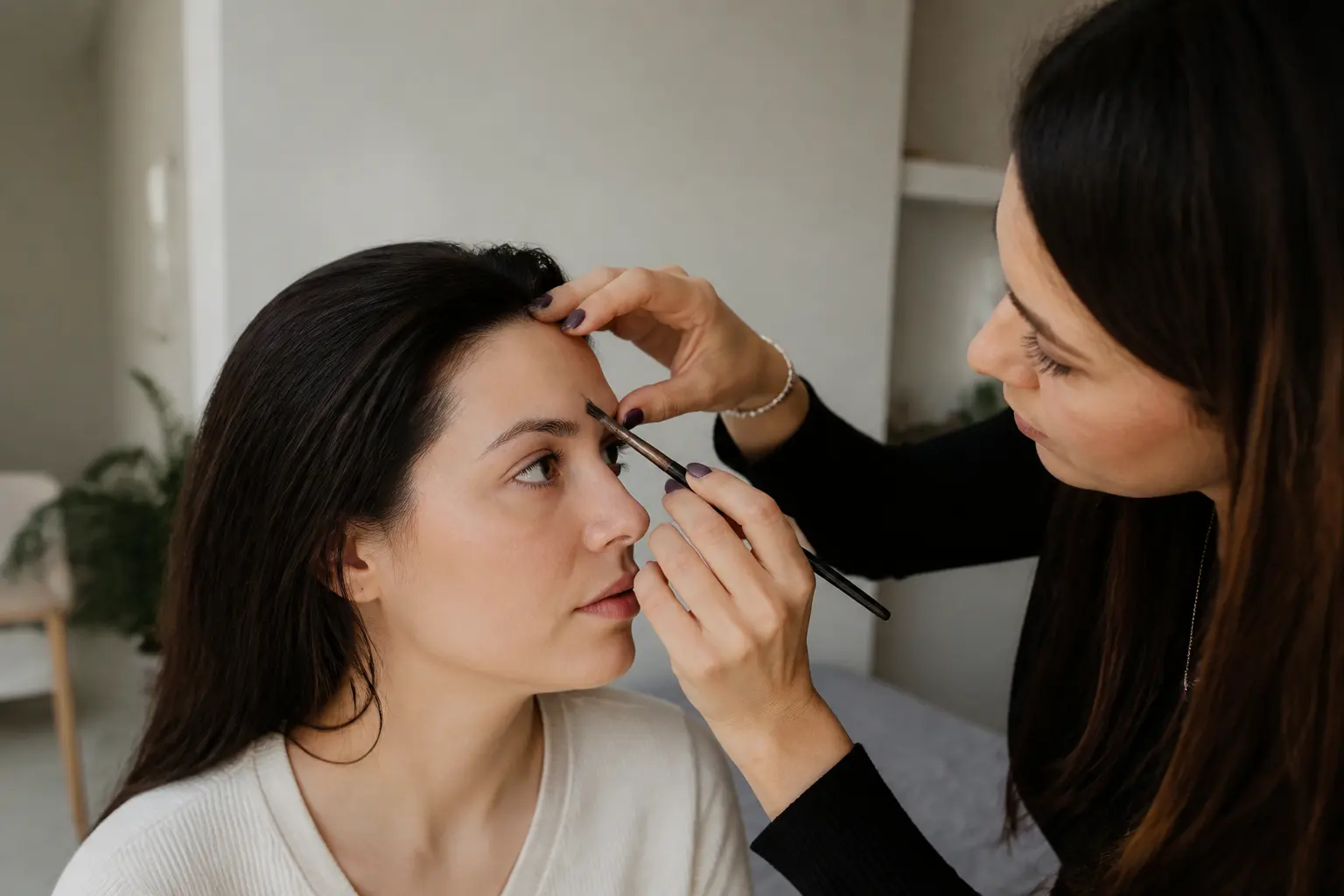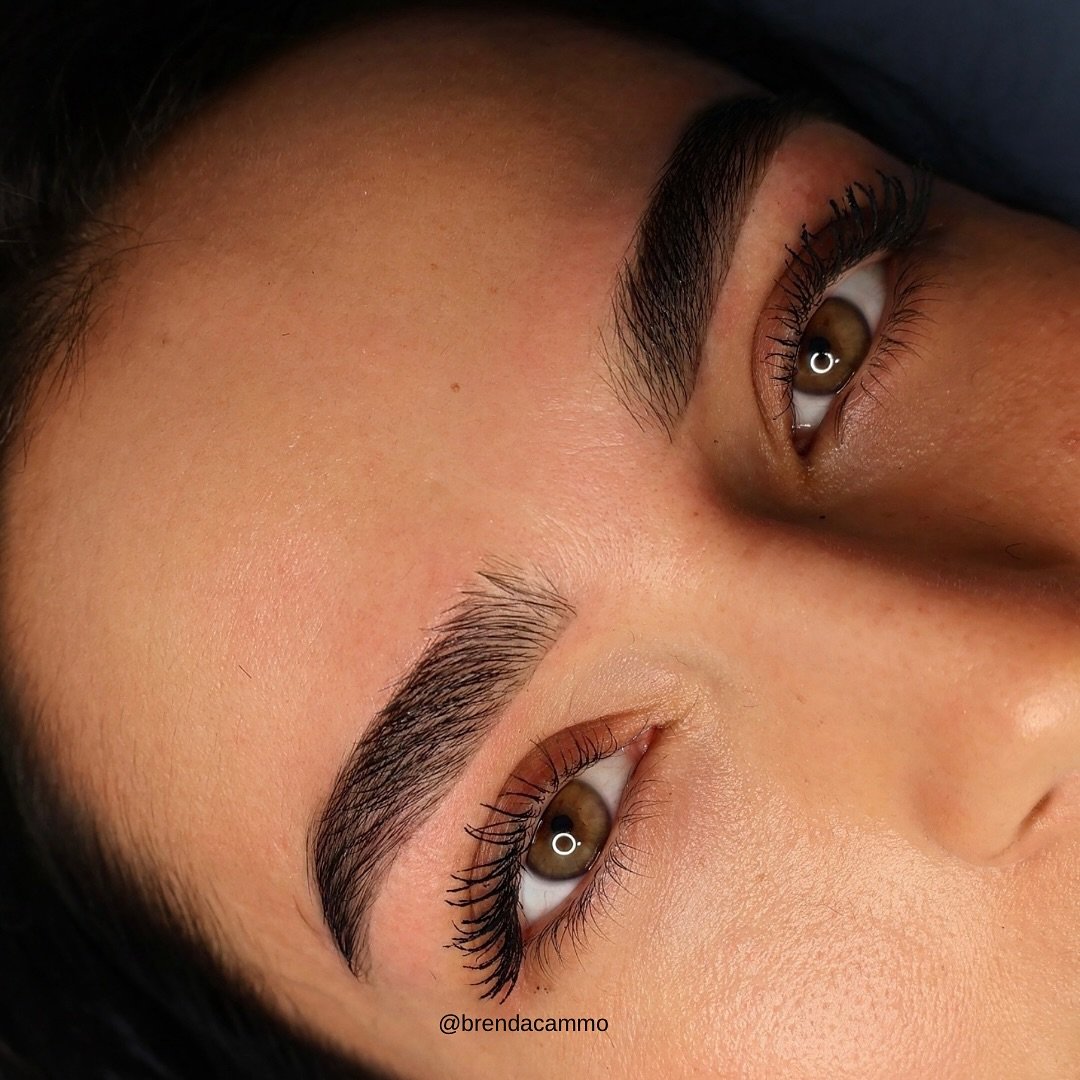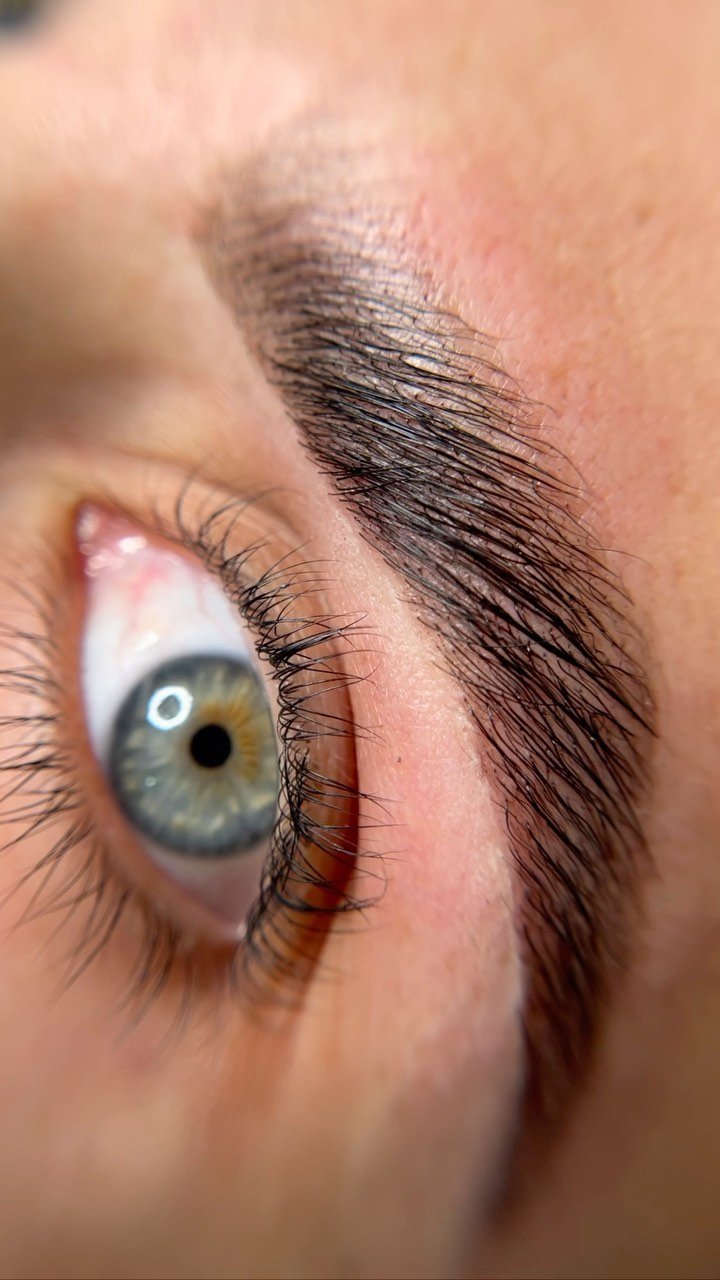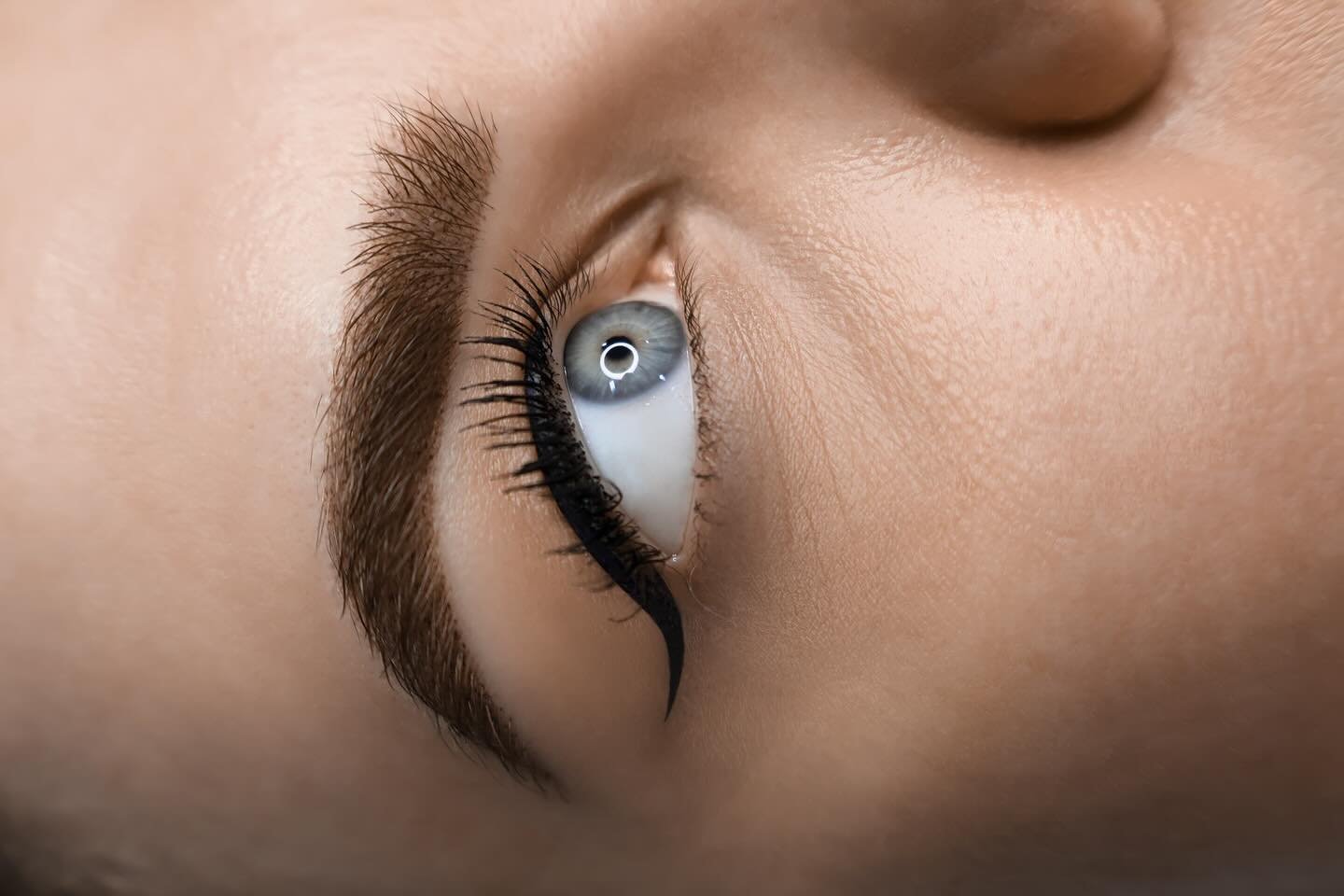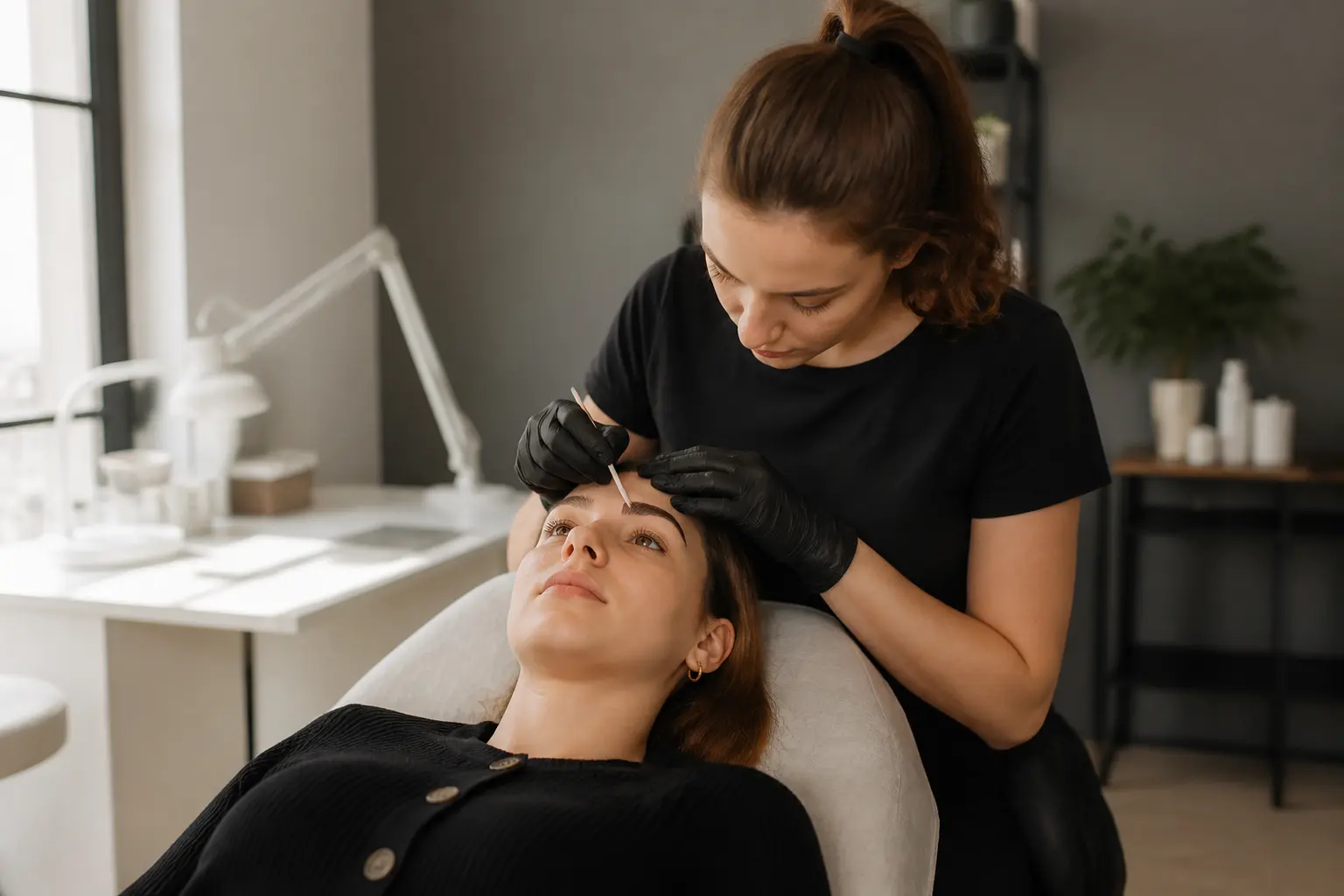
Brow artists choose lamination setting time by assessing each client rather than applying one fixed number of minutes. They consider hair thickness and density, natural growth direction, current condition and previous services, then work within the manufacturer protocol for the specific product system in use. Longer processing is not automatically better, so the artist monitors the brows throughout and does not extend beyond the maximum time in the instructions.
Brow lamination may look simple from the treatment chair, but one of the most important decisions happens quietly during the appointment: how long each solution should stay on your brow hairs. This is known as the processing or setting time, and it is never something a careful artist should choose from a one-size-fits-all rule.
At a professional brow studio, the aim is to guide the natural hairs into a more cooperative direction while respecting their current condition. Fine brows, dense brows, previously tinted brows and brows that naturally grow in several directions can all need a different approach. The result is not about making every hair stand straight up. It is about creating a softer, balanced shape that suits your features and daily routine.
If you are considering brow lamination in Malta, understanding how setting time is chosen can make the appointment feel far less mysterious. It also explains why a proper consultation, careful observation and precise timing matter as much as the finished styling.
What does setting time mean in brow lamination?
Brow lamination is a multi-step service. In broad terms, the first solution helps make the brow hairs more flexible, so they can be brushed into a new direction. A subsequent setting or neutralising step helps stabilise that chosen direction. Conditioning and finishing care may then be used according to the professional protocol and product system.
Setting time is the period each product is left to process. It is not simply a timer that produces a stronger result when extended. Product instructions set safe limits and professional artists work within those instructions while adapting the timing to the individual client. Official professional product protocols show why timings differ between systems. For example, some specify shorter ranges for fine hair and longer ranges for coarse hair, while others ask for the second step to match or follow a particular relationship to the first step. Brow Code’s professional directions and Thuya’s instructions for use both illustrate that hair characteristics affect the recommended processing window.
In other words, an experienced artist does not decide that every client needs exactly the same number of minutes. They assess your brows, use the manufacturer’s protocol for the products in use and keep a close eye on the service from beginning to end.
What does the artist assess before the timer starts?
A good lamination appointment begins with questions and observation, not with solution application. Your artist needs to understand what your brows are like now, what has been done to them recently and what look you hope to achieve.
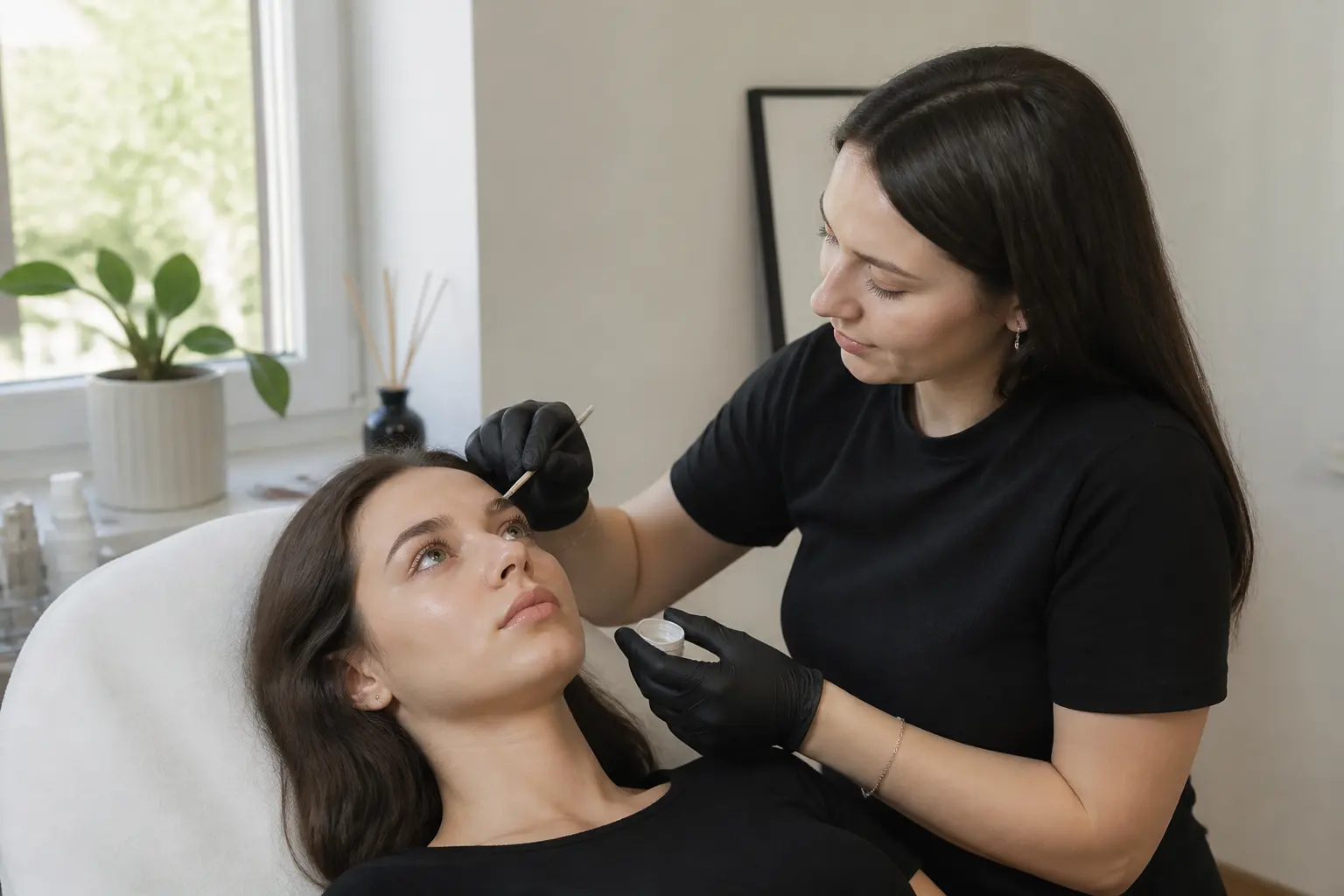
Hair thickness and density
Thickness is often the first factor people think of. Fine brow hairs may respond more quickly than coarse, wiry or resistant hairs. Density matters too. A full brow can contain hairs with different textures, especially when the front, arch and tail behave differently.
That does not mean dense brows automatically need the maximum possible time. Healthy-looking hairs can still be delicate, while sparse brows may have individual hairs that are surprisingly strong. The artist assesses the hair itself rather than relying only on how full the brow appears from a distance.
Natural growth direction
Some brow hairs already sit neatly to the side. Others grow downwards at the front, cross over one another at the arch or flick outwards through the tail. These patterns influence how the artist applies the product and brushes the hairs into place.
A brow with a strong natural direction may need particularly thoughtful placement and monitoring. The goal is to guide the hairs, not force them into an identical pattern from inner corner to tail. This is why lamination can look polished and still natural when it is customised well.
Current condition and service history
Your artist should also consider whether the brows have been recently laminated, tinted, bleached or exposed to strong active skincare close to the brow area. Hair that has already undergone chemical processing may need a more cautious approach. It is important to share this information honestly, even if the previous service was at another salon or done at home.
The surrounding skin matters as well. If you have irritation, broken skin, a recent reaction or any concern around the brow area, tell your artist before the service begins. Depending on the situation, it may be better to postpone, modify the appointment or arrange a patch test before proceeding.
At BeCammo · Sliema · Swieqi
Eyebrow threading in Malta
Same client, before and after threading.
Clean, natural brows shaped to your face, at our salons in Sliema and Swieqi. Threading is what BeCammo was built on.
- from €16price
- Sliema · Swieqiwhere
- ★ 5.0460+ Google reviews
Why does product choice change the timing?
There is no universal brow lamination timer because different professional systems have different formulas, instructions and maximum processing times. An artist should follow the protocol for the specific brand and batch being used, rather than applying a timing rule learned from another product.
This is an important reason not to compare appointments minute for minute. One studio might use a system with a shorter recommended window, while another might work with a formula that has different stages or a different relationship between the first and second solutions. The relevant question is not, “How many minutes did my friend have?” It is, “Is my artist following the appropriate instructions for my brows and the product being used?”
Professional guidance also places importance on preparation. Brows should be clean and free from oils or makeup that could affect even application. ÉLAN’s professional protocol, for instance, specifies cleansing, optional skin protection, hair-type-dependent timing and careful removal between stages. These details are part of what makes timing meaningful. A timer alone cannot compensate for rushed preparation or uneven product placement.
How does an artist monitor the brows during processing?
Personalisation is not finished once the artist has selected an initial time. Throughout the service, they work carefully and systematically.
Even application is essential
Each brow hair needs suitable, even coverage, without unnecessary product on the surrounding skin. The artist works in a controlled way so the hairs can be placed in the intended direction. Applying too much product, too little product or leaving residue where it does not belong can compromise the finish.
Different areas may respond differently
The front, middle and tail are not always identical. Some professional protocols note that certain sections can process faster than others, so removal may be adapted by area where the product instructions and the artist’s training allow. Didier Lab’s protocol, for example, advises checking response and notes that the front and tail can process more quickly than the middle.
This is one reason a polished lamination should not look stiff throughout. A tailored finish often has a gently lifted front, a controlled transition through the body of the brow and a tail that supports the overall shape rather than appearing overworked.
Respecting the manufacturer’s maximum time
Longer is not automatically better. Every product system has its own maximum processing time and sequence. Staying within those instructions helps the artist work responsibly and consistently. If your hairs do not respond as expected, the right answer is not simply to keep extending the time beyond the protocol.
Instead, the artist may reassess the hair’s natural resistance, your previous service history, product storage and the most suitable styling direction for that appointment. A professional service values the condition of your brows as well as the immediate visual result.
Why does your desired finish still matter?
Setting time is technical, but the treatment is also aesthetic. Before the service, your artist should ask how you usually wear your brows and what feels like you. Do you want a brushed-up, airy effect? A tidier version of your existing shape? More direction through uneven sections? Or a softer finish that makes daily grooming easier?
The same brow hairs can be styled in different ways. A strong vertical front may look striking on one person and feel too dramatic for another. Likewise, a client with a naturally full brow may want control without extra visual volume. Your artist uses mapping, hair placement and finishing choices alongside the selected processing time to create a result that feels considered rather than copied.
At BeCammo, eyebrow design is approached with attention to different brow textures, features and personal preferences. There is no single “ideal” brow direction for every face or background. The most useful starting point is always a conversation about your own hair growth, shape and comfort with maintenance.
What can you do before your appointment?
You do not need to diagnose your own brow hair. That is the artist’s role. You can, however, help create a safer and more productive consultation by arriving prepared.
- Come with clean brows where possible, without heavy brow makeup or oily products.
- Tell your artist about recent brow tinting, lamination, bleaching or home kits.
- Mention known sensitivities, past reactions to tinting or perming products, and any current irritation around the brows.
- Share any skincare products you regularly use near the brow area, particularly if your skin is feeling dry or sensitive.
- Bring a realistic reference image if it helps you explain your preferred finish, but stay open to adapting it to your natural growth pattern.
For some clients, a patch test may be appropriate before a lamination service. A patch test is a helpful precaution, but it does not turn an unsuitable appointment into a suitable one. Professional product guidance commonly recommends or requires sensitivity testing in relevant circumstances. Benefit Cosmetics’ brow lamination guidance also advises a patch test for clients with relevant allergies and highlights the importance of disclosing products and services that may affect the appointment.
How does aftercare protect the finished shape?
The artist’s timing and technique set up the service, but your aftercare supports how the brows settle. Follow the individual instructions given at your appointment, as recommendations can vary with the product system used and any additional services performed.
Common professional guidance includes keeping the brow area dry for the initial period advised, avoiding steam and heat exposure, and being gentle when cleansing or brushing the hairs. Elleebana’s brow lamination FAQs recommend allowing the previous service to wear off before repeating lamination and emphasise the role of appropriate timing for different hair strength and direction.
At home, use a clean spoolie to brush the hairs into place gently. Avoid trying to recreate the salon result with excessive rubbing, strong products or constant reshaping. If anything feels uncomfortable after your appointment, contact the studio promptly for advice rather than experimenting with extra products yourself.
Why does choosing a professional matter more than a longer time?
When you book brow lamination, you are not booking a fixed number of minutes. You are booking an artist’s judgement, their ability to follow a professional protocol and their attention to the details that make your brows individual.
The right timing is selected through a combination of hair texture, density, condition, natural direction, previous services, desired finish and the exact products being used. A thoughtful artist will explain what they see, set realistic expectations and avoid treating your brows as though they match anyone else’s.
If you would like a lifted, more manageable brow look that still feels like you, book a brow lamination appointment at BeCammo in Sliema or Swieqi. The final banner below can take you to the dedicated service page, where you can choose the option that suits your routine and ask any questions before booking.
Frequently asked questions
Does thicker brow hair always need a longer setting time?
Not always. Coarse hair can be more resistant, but thickness is only one part of the assessment. Your artist also considers hair condition, previous processing, natural growth direction and the instructions for the specific product system.
Can an artist use the same timing on both brows?
Often they can, but not every pair of brows behaves identically. One side may have a stronger growth direction or a section that responds differently. A professional artist monitors both brows and follows their protocol carefully to aim for balance.
Will a longer setting time make my lamination last longer?
No. Extending processing time is not a reliable way to improve longevity and should not go beyond the manufacturer’s instructions. The condition of your brow hairs, the chosen styling, the product system and aftercare all influence how the result wears over time.
What if my brows are fine or have been tinted recently?
Tell your artist before the appointment. Fine or previously processed hairs may need a more cautious approach, and in some circumstances the artist may advise a different service plan or a later appointment.
Can I ask for a soft, natural lamination?
Yes. Brow lamination does not have to mean a bold upright finish. Tell your artist you prefer a soft result, and they can discuss a direction and shape that works with your natural brow growth.