Living with Eyebrow Cowlicks: Styling and Shaping Strategies
Brenda Cammo Team
An eyebrow cowlick can make one brow look as though it has a mind of its own. A small section of hair may grow upwards, downwards, outwards or in a different direction from the hairs around it. Even when both brows have similar density and colour, that change in direction can affect how the shape reads from a normal conversational distance.
The good news is that a cowlick is not something that needs to be fought with aggressively. It is a natural growth pattern. The aim is usually to understand where it sits, preserve enough hair to keep the area balanced, and use shaping and styling choices that make the brow look intentional rather than overworked.
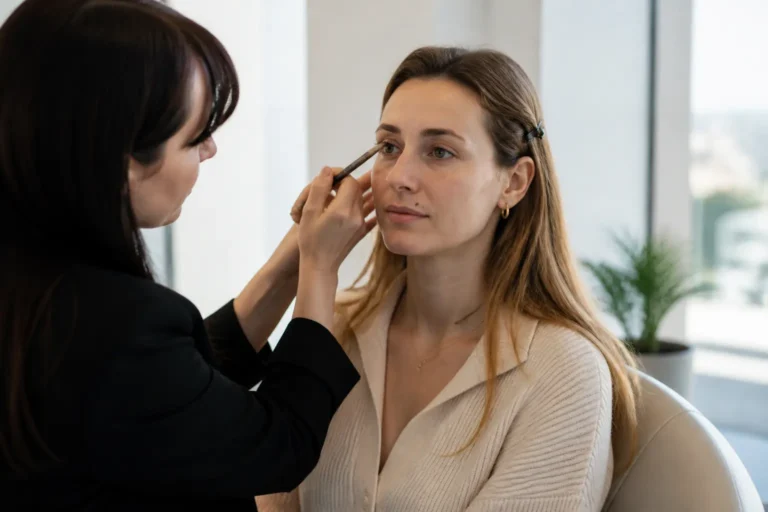
At a professional brow appointment, this begins with looking at your brows as they grow naturally, not trying to force them into an identical template. Thoughtful threading and brow design can help create a cleaner outline while respecting the way your individual hairs behave.
What is an eyebrow cowlick?
An eyebrow cowlick is a patch of brow hair that grows in a noticeably different direction from the rest of the eyebrow. It may appear at the front of the brow, around the arch, through the tail, or in more than one place. Some cowlicks are subtle and only show when the hairs are brushed up. Others create a visible split, a lifted section or a portion that repeatedly falls out of place.
It is simply part of your natural hair growth. Like a cowlick at the crown of the head, it can make certain styling approaches easier and others less effective. It may also become more noticeable when brow hairs are longer, when the brow is sparse around that point, or when make-up is applied without first brushing the hairs into place.
Most importantly, a cowlick does not mean your brows are unsuitable for professional shaping. It means the design should be adapted to your growth pattern.
Why cowlicks can make brows feel uneven
Eyebrows are naturally sisters rather than identical twins. Bone structure, muscle movement and hair growth vary from side to side. A cowlick can make that natural difference feel more obvious because it changes the direction, volume or edge of one section.
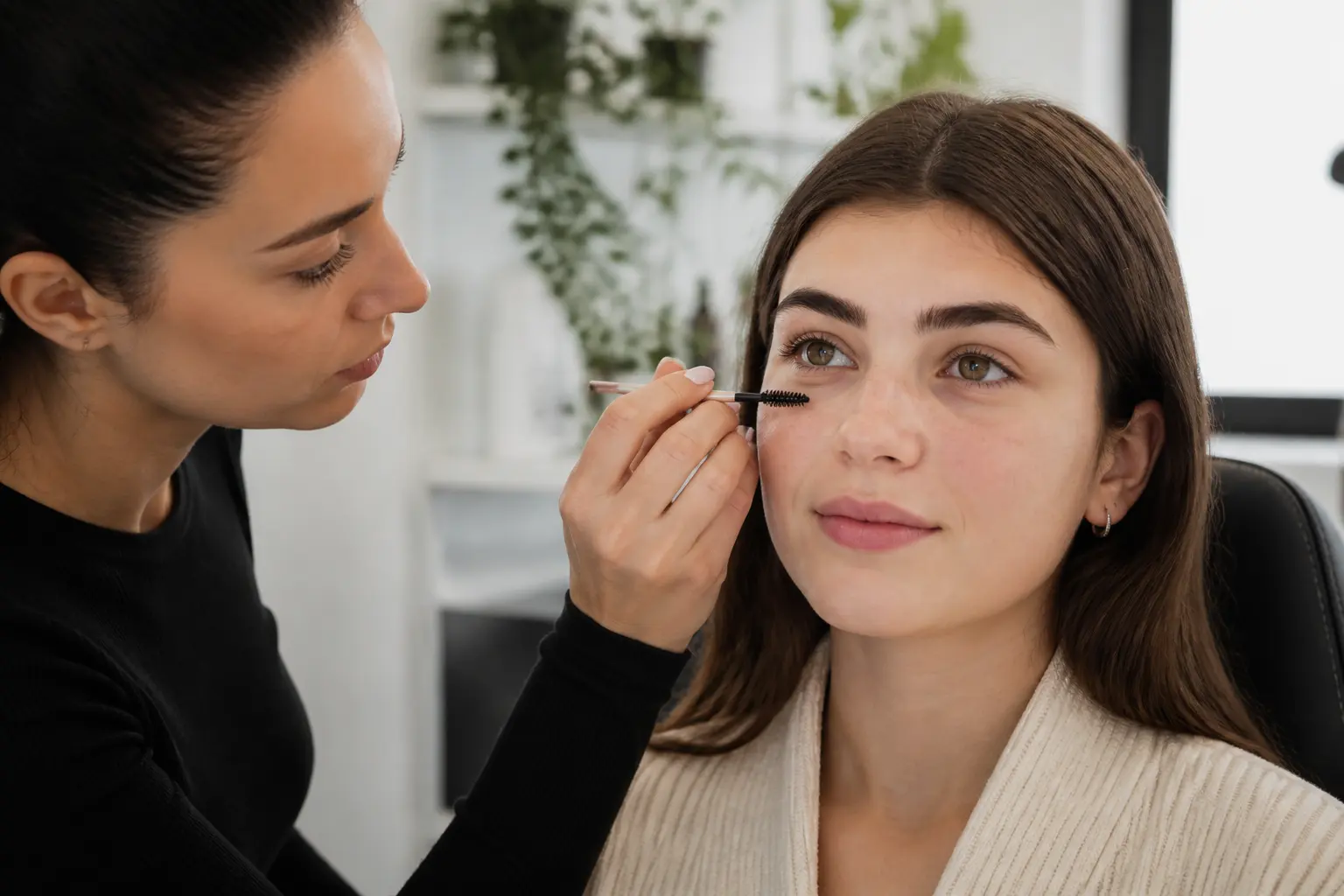
Common concerns include:
- A front section that stands up while the rest of the brow lies flatter.
- Hairs at the arch that separate, creating a small gap in the shape.
- A tail that points downwards or outwards despite brushing.
- One brow that looks fuller because its hairs overlap, while the other looks lighter.
- Make-up that appears patchy because product catches differently around the changing hair direction.
These concerns are understandable, but they do not always call for removing more hair. Over-plucking near a cowlick can leave the area with less support and make the directional change stand out even more. A better strategy is often to work with the existing density and refine the surrounding outline.
Start by observing your natural growth pattern
Before reaching for tweezers, pencil or styling gel, take a close look at your brows in clean daylight. Brush each brow gently in several directions, then let the hairs settle without product. This reveals where the cowlick starts, which way it naturally moves, and whether the issue is direction, length, density or a combination of all three.
Look for the point where the direction changes
Many people describe the whole eyebrow as unruly when the real challenge is only a small area. You may find that the first few hairs at the brow front need a different brushing direction, or that the tail becomes uneven only after a particular point. Identifying this transition helps you avoid treating every hair in the same way.
Notice whether length is adding to the problem
Longer hairs can exaggerate a cowlick because they lift away from the skin or cross over neighbouring hairs. That does not automatically mean they should be cut short. Trimming needs restraint, especially in brows with uneven density. A professional can assess whether a few carefully selected hairs would benefit from a small adjustment, or whether styling and shape work would be the more suitable option.
Consider your usual facial expressions
Brows move with the face. If a cowlick sits above an active brow muscle, it may look different when you are relaxed, speaking, smiling or raising your eyebrows. A shape that appears perfectly level in a still photo may not feel as natural in everyday movement. Good brow design considers the brow at rest and in expression.
Styling strategies for eyebrow cowlicks at home
Daily styling is often enough to make a cowlick feel more manageable between appointments. The goal is not to flatten every hair into the same direction. Instead, create soft control, then add definition only where it is genuinely needed.
Brush first, then decide what needs product
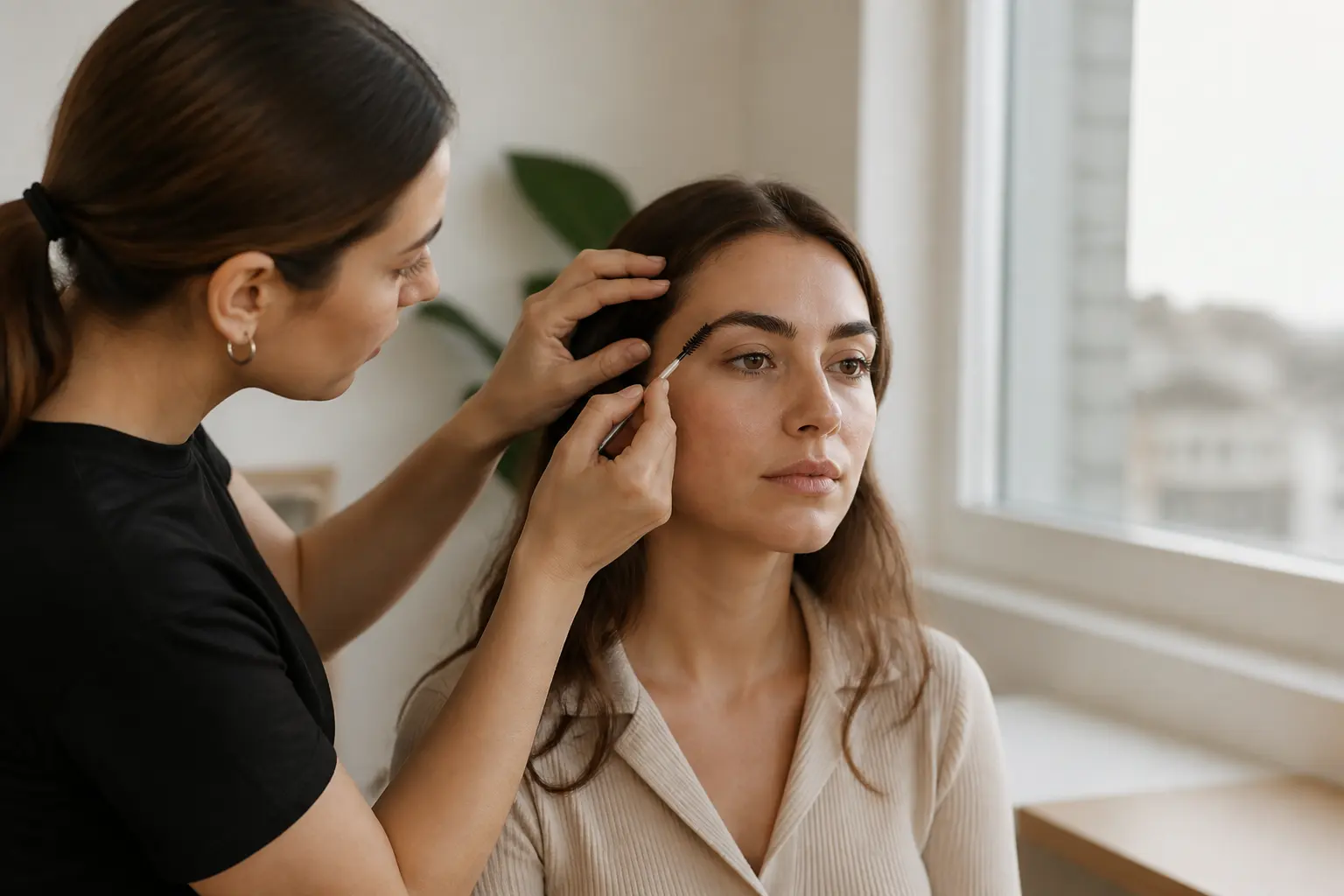
Use a clean spoolie to guide the brow hairs into their preferred direction. At the front, that may mean brushing slightly upward and outward. Through the middle, use a more sideways motion that follows the line of the brow. At the tail, brush along the natural taper rather than pulling the hairs sharply down.
Once you have brushed the hairs, pause before adding product. You may find that only the cowlick section needs a small amount of hold, while the rest of the brow already has a pleasing shape.
Use a light hand with brow gel
A clear or tinted brow gel can help hold a changing growth direction in place. Wipe excess product from the wand first, then work in short strokes. Applying too much gel can create clumping, shine or a stiff finish, particularly where hairs already cross or lift.
For a cowlick at the front, try brushing the hairs upward first and then gently pressing them into a soft outward angle with the spoolie. For a cowlick in the arch or tail, guide the hair in the direction that creates the smoothest visual flow into the rest of the brow.
Fill the skin, not every hair
If a cowlick exposes a little more skin, it can be tempting to draw over the hairs heavily. This often makes the area look darker and more obvious. Instead, use a fine brow pencil or a small angled brush to place a few soft strokes in the spaces where skin shows through. Follow the natural direction of the hairs in that specific section.
Keep the pressure light and step back from the mirror regularly. A little correction can make the brow feel more balanced. Too much can make the cowlick look like a hard block of colour.
Choose a flexible finish for everyday wear
Very sharp, highly sculpted brows can draw attention to small differences in hair direction. If your cowlick is noticeable, a softly defined brow is often easier to maintain and can look more natural in changing light. This does not mean giving up definition. It means choosing an outline that supports your features without demanding that every hair behaves identically.
How professional eyebrow shaping can help
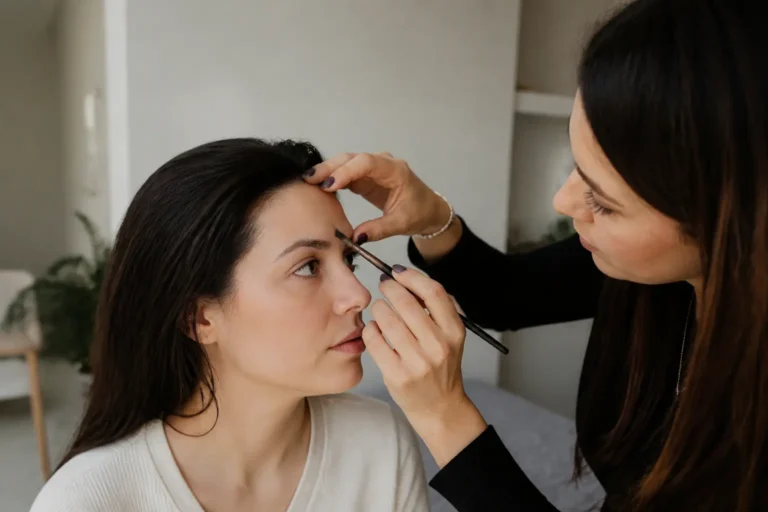
Professional shaping is not about imposing one fashionable brow shape on everyone. It is about assessing facial proportions, natural density, hair direction and the way your brows sit in relation to your features. For someone with a cowlick, that personalised assessment matters even more.
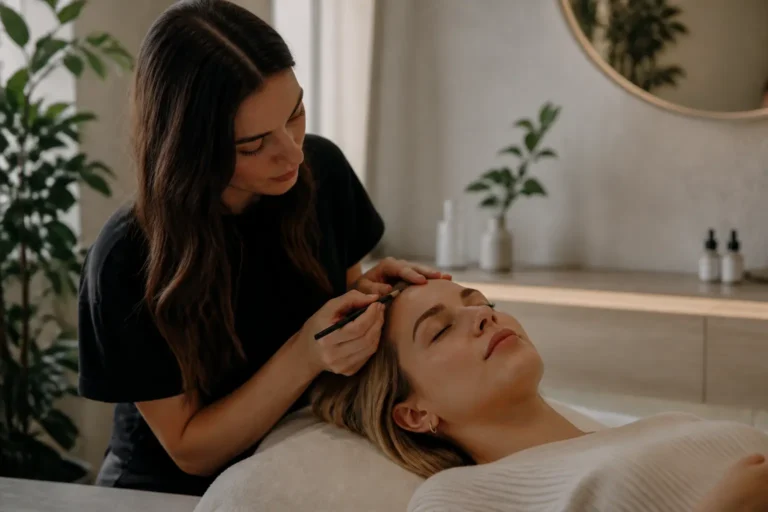
At Becammo, brow threading and design can refine unwanted hairs around the natural brow line while keeping the main structure intact. Threading uses a single-use thread to remove selected hairs with precision. This makes it possible to clean the outline without relying on broad removal across an area where hair direction is already challenging.
A brow artist can also help you understand which hairs are contributing positively to the shape. Sometimes the hair that seems inconvenient when brushed in one direction becomes useful when incorporated into a softer arch or a slightly fuller front. The aim is a brow that works in real life, not just immediately after styling.
Preserving structure around the cowlick
Removing hairs directly around a directional change can sometimes create a gap or break up the visual line of the brow. A careful design may instead preserve key hairs and clean the areas above, below or beside them. This gives the brow a more deliberate outline while allowing the cowlick to remain part of the natural texture.
Balancing the two brows without forcing symmetry
If one brow has a stronger cowlick, the other brow may need a slightly different styling approach. The goal is visual harmony, not mathematical sameness. A professional can map the brows in relation to your face and make small adjustments that help them look balanced when you are speaking, smiling and moving normally.
Creating a maintenance plan that feels realistic
Cowlicks tend to be easier to manage when the brow shape is maintained before stray hairs blur the outline. Your ideal timing will depend on how quickly your brow hair grows and the level of definition you enjoy. At your appointment, ask what to leave alone at home and which areas, if any, are safe to tidy between visits.
Should you consider brow lamination for an eyebrow cowlick?
Brow lamination may be worth discussing if you want a more styled, brushed-up appearance and your brow hairs are suitable for the service. It can help make the direction of the hairs look more uniform for a period of time, which may be useful when a cowlick regularly disrupts your preferred styling pattern.
However, brow lamination is not automatically the right answer for every cowlick. The result depends on the condition of the brow hairs, your desired finish and where the directional change sits. A very strong cowlick may still need thoughtful daily brushing, and the service should suit the overall health and feel of your brows.
If you are considering it, explain exactly what happens at home when you style your brows. Mention whether the hairs split, stand up, fall down or expose a sparse patch. That gives the brow artist useful context for discussing whether lamination or a tailored threading and styling routine is the better starting point.
What to avoid when managing a cowlick
- Do not over-pluck the difficult section. Removing too much hair can make the area look sparser and harder to blend.
- Do not trim across the brow in one straight line. This can remove natural texture and leave blunt ends that stick out more visibly.
- Do not use heavy product to force the hairs flat. Thick layers can create flakes, stiffness and unwanted shine.
- Do not copy a brow map from someone else. Your cowlick, density and facial structure are individual.
- Do not judge the shape only up close. Check your brows from a normal distance and in different lighting before making further changes.
A simple routine for cowlick-prone brows
- Begin with clean brows and gently brush them into their natural direction.
- Identify the cowlick area and guide it into the smoothest direction, rather than forcing it against its growth.
- Apply a small amount of brow gel only where hold is needed.
- Use fine, hair-like make-up strokes on exposed skin if you want added definition.
- Assess the overall brow from arm’s length, then soften anything that looks too dark or sharp.
- Book professional shaping when the outline starts to feel unclear or styling becomes more time-consuming.
This routine takes only a few minutes once you understand your own growth pattern. It also makes professional appointments more productive because you can clearly describe what your brows do between visits.
Conclusion
Living with an eyebrow cowlick is less about achieving total control and more about finding a shape and styling method that respects your natural hair direction. Small choices, such as preserving the right hairs, using light product and avoiding over-plucking, can make a meaningful difference to how balanced your brows look each day.
If your cowlick makes your brows difficult to shape, a personalised threading and design appointment can help you see what is possible without forcing a one-size-fits-all result. Choose the Becammo location in Sliema or Swieqi that suits you, and book a brow service to discuss your natural growth pattern with a professional.
Frequently asked questions
Can an eyebrow cowlick be permanently changed?
A cowlick is a natural direction of hair growth, so it should be approached as something to style and work with. Shaping, grooming products and some brow services may change how it looks, but the most suitable approach depends on your individual brows.
Should I pluck hairs that grow in the wrong direction?
Not necessarily. Those hairs may still support the brow’s density and overall shape. It is usually safer to have the area assessed during a professional brow appointment before removing hairs around a cowlick.
Can threading work on brows with cowlicks?
Yes. Threading can be used to refine the brow outline with precision while respecting the natural hair direction. The design should be personalised so the cowlick is considered rather than ignored.
Will brow gel keep an eyebrow cowlick in place all day?
It can provide useful hold, but performance varies with the product, your hair texture, skin type and the strength of the cowlick. Use a light layer and focus it on the section that needs support.
Is brow lamination suitable for every eyebrow cowlick?
Not always. Brow lamination may suit some people who want a more uniform brushed-up look, but suitability should be considered individually, including the condition of the brow hairs and the finish you want.
How often should I have cowlick-prone brows professionally shaped?
Timing varies according to your growth rate and preferred level of definition. A brow artist can recommend a maintenance rhythm after assessing your brows and discussing how you like to style them at home.