Health Questions Before Semi-Permanent Make-Up
Brenda Cammo Team

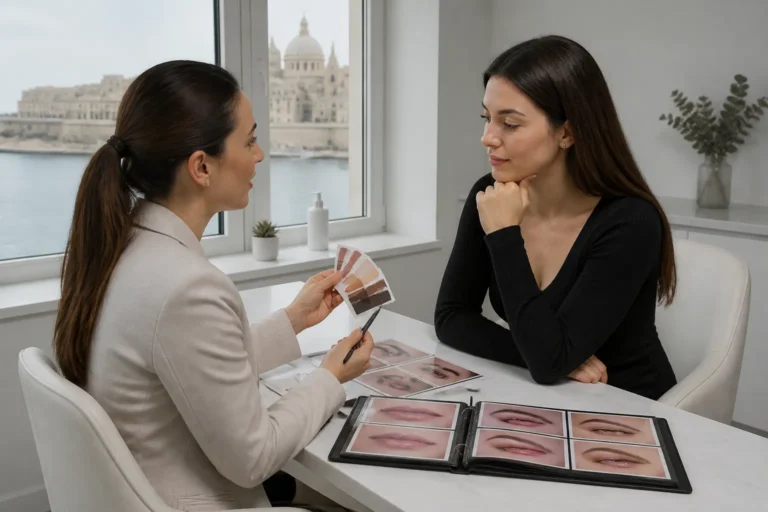
Before semi-permanent brows or lip colour, a professional artist should do more than discuss shape, pigment and reference photos. They should also ask careful health and skin-history questions. This conversation is not a medical diagnosis, and it is not there to make an appointment feel intimidating. It helps the artist understand whether the treatment is appropriate to proceed with on that day, whether extra information is needed, or whether it is wiser to postpone.
Semi-permanent make-up involves working in the skin with pigment, so your answers can influence planning, comfort, hygiene and aftercare. In Malta, semi-permanent tattooing services are subject to safety and hygiene standards and licensing requirements. A thoughtful consultation is one visible part of that wider professional responsibility. Malta’s standards for tattoo and semi-permanent tattooing services set out the importance of safe practice.
Here is what those health questions usually cover, why they matter, and how to arrive prepared for your semi-permanent make-up consultation.
Why artists ask health questions before semi-permanent make-up
Whether you are considering microblading, microshading, nanoblading or lip micropigmentation, the consultation needs to look beyond the desired finish. Your artist needs a clear picture of the area being treated, your previous experiences and anything that could affect the decision to go ahead.
Permanent make-up is a form of cosmetic tattooing. Like other procedures that introduce pigment into the skin, it carries potential considerations including irritation, infection and allergic-type reactions. These risks are not a reason to assume that a problem will occur. They are a reason for good hygiene, careful screening and open communication. The FDA’s tattoo and permanent make-up fact sheet also highlights infection, allergic reactions and scarring as risks people should understand before choosing tattoo-based cosmetic services.
A responsible artist uses the answers to decide what can be planned safely within their professional role. They may adjust the timing, suggest a patch test where appropriate, ask you to seek advice from your usual healthcare professional, or explain that the service should wait until a skin concern has settled.
The health questions you may be asked
Do you have any current skin irritation, injury or infection near the treatment area?
Your artist may ask whether the brow or lip area is currently sore, inflamed, broken, sunburnt, peeling, swollen or affected by a visible rash. They may also ask about spots, cuts, cold sores around the mouth, recent cosmetic treatments or anything else that has changed the skin recently.

This is a present-moment check. Skin can look and feel different from one week to the next, particularly after sun exposure, a new skincare product or an active breakout. If the treatment area is not calm and intact, postponing can be the more sensible option. It protects your comfort and allows the artist to assess a more stable starting point later.
Have you had reactions to pigments, cosmetics, skincare or anaesthetic products?
Artists commonly ask about known allergies or past reactions to make-up, skincare, hair dye, latex, metals, topical numbing products, pigments or other cosmetic ingredients. Be specific where you can. “Sensitive skin” is useful to mention, but it helps even more to describe what happened, such as itching, swelling, a rash or a reaction that required medical attention.
This does not mean an artist can predict every possible reaction. Allergic-type reactions are not always straightforward, and pigment is intended to remain in the skin. That is why a history of reactions deserves an honest, individual conversation rather than a rushed booking decision. If a patch test is offered or recommended, follow the studio’s timing and instructions carefully.
Are you taking any medicines or using any products that could be relevant?
You may be asked about prescribed medicines, over-the-counter products, supplements and topical skincare. The point is not for the artist to tell you to alter medication. Never stop or change a prescribed medicine for a beauty appointment without advice from the clinician who prescribed it.
Instead, tell the artist what you use and why it was prescribed, as far as you are comfortable sharing. Some medicines and active skincare products can be relevant to skin sensitivity, healing or bleeding tendencies. Your artist can then decide whether a treatment needs to be delayed or whether you should speak with your healthcare professional before confirming the appointment.
Do you have a medical condition that could affect your appointment?
A consultation form may ask about health conditions, immune-related concerns, skin conditions, diabetes, blood disorders, a history of unusual scarring or other matters that could affect suitability. These questions are not an invitation to disclose every detail of your medical history. They are focused on information relevant to a procedure involving the skin.
Answer accurately, even if you are unsure whether something matters. You do not need to decide that alone. The artist can explain what information they need, and may ask you to obtain medical clearance or further advice when that is the appropriate next step. A professional consultation recognises its limits and does not replace individual medical care.
Are you pregnant, breastfeeding or trying to conceive?
This is another common question because studio policies can differ and suitability should be assessed cautiously. If you are pregnant, breastfeeding or trying to conceive, mention it before booking rather than arriving on the day with uncertainty. The studio can explain its current policy and whether postponing is the most suitable route for you.
A delay does not mean you have lost the opportunity to have semi-permanent brows or lips. It simply gives you the chance to plan the treatment for a time that feels clearer and more comfortable.
Have you had semi-permanent make-up, a tattoo or removal work in the area before?
Previous work is both a design and a health-history question. Tell your artist if you have had old microblading, microshading, brow tattooing, lip blush, colour correction or laser removal, even when it looks very faded. Share when it was done, how it healed and whether you experienced any unexpected reaction.
Older pigment may affect the visible colour, placement and technique options. It can also mean that an in-person assessment is especially valuable before any new work is booked. Clear photographs in natural light can be helpful for an initial conversation, but they do not replace seeing the area properly.
Have you ever developed raised or unusual scars?
Some consultation forms ask about a personal tendency towards raised or unusual scarring. This is relevant because semi-permanent make-up creates controlled trauma in the skin. If you have had scars that healed in an unexpected way, tell the artist where they occurred and what you were advised at the time.
Do not minimise this information because the previous scar came from a different type of injury. It may still be relevant to the decision-making process. The safest outcome may be a further conversation with an appropriate healthcare professional before proceeding.
Why honesty matters more than finding the “right” answer
It can be tempting to leave out a medication, a recent skin reaction or an old brow tattoo because you want to keep your appointment. In practice, withholding information makes personalised planning harder. A good artist is not looking for reasons to judge you. They are looking for the information needed to approach the appointment responsibly.
There is no prize for appearing to have “perfect” skin or a completely uncomplicated history. Many clients have sensitive skin, previous cosmetic work or a medication routine. What matters is giving the artist an accurate starting point.
Good consultation answers are not about passing a test. They are about making a considered decision together.
How to prepare before your consultation
A few minutes of preparation can make your consultation more useful and less stressful. Bring or have ready:
- A list of prescribed medicines, regular supplements and topical products you use around the face.
- Details of known allergies and previous cosmetic or pigment reactions.
- Information about any current skin issue near the brows or lips.
- Photos of previous semi-permanent make-up, especially if it has faded significantly.
- Reference images that show the colour or softness you like, while staying open to an approach tailored to your features and existing pigment.
- Questions about healing, aftercare, touch-ups and how the treatment may fit around holidays, events or other beauty appointments.
If you are uncertain about a health matter, contact the studio before your appointment rather than guessing. It is usually easier to adjust plans in advance than to discover an important consideration once you are in the chair.
What happens if an artist recommends waiting?
Being asked to wait can feel disappointing, especially if you have planned your appointment around travel, work or a special occasion. Yet a recommendation to postpone is often a sign that the artist is taking your wellbeing and the quality of the process seriously.
The next step depends on the reason. You may need time for skin irritation to settle, a patch test, clarification from a healthcare professional, or simply a new appointment date after another treatment or holiday. Your artist should explain the practical reason for the recommendation in clear language and help you understand what can happen next.
It is also worth remembering that semi-permanent make-up is not a last-minute beauty decision. Allowing time for consultation, treatment and aftercare is part of choosing it thoughtfully.
Questions you should ask your artist in return
A professional consultation should be a two-way conversation. Once you have shared your health and skin history, you can ask how the studio approaches hygiene, patch testing, aftercare and individual suitability.
- What information do you need from me before the appointment?
- Could anything in my current skin routine affect the timing?
- Would a patch test be appropriate in my circumstances?
- What should I do if I notice a concerning reaction after the service?
- How should I prepare the brow or lip area before my appointment?
- When should I book a review or touch-up, if one is part of my treatment plan?
At Becammo, a consultation for semi-permanent make-up is the right place to discuss these questions before deciding on brows or lips. The aim is not to rush you into a procedure, but to give you a clearer basis for your choice.
Conclusion
Health questions before semi-permanent make-up are a practical part of responsible artistry. They help your artist understand your skin, previous experiences and the right timing for your appointment. Be open about medicines, allergies, skin changes and previous work, and do not hesitate to ask for clarification when something is unclear.
If you are considering semi-permanent brows or lips in Malta, book a consultation first. It gives you space to discuss your goals, share relevant information and decide on the most appropriate next step with confidence.
Frequently asked questions
Do I need to tell my artist about every medication I take?
Tell them about prescribed medicines, regular supplements and topical products that may be relevant to a skin procedure. Do not stop or change prescribed medication without advice from the clinician who prescribed it.
Can I still have semi-permanent make-up if I have sensitive skin?
Sensitivity does not automatically answer the question either way. Explain what products or situations have caused reactions in the past so the artist can assess the information and discuss whether a patch test, extra caution or postponement is appropriate.
Why does my artist need to know about old microblading?
Even faded work can influence the visible colour, shape options and planning for new semi-permanent brows. Photos and an in-person assessment help the artist understand what is already present in the skin.
What if I have a cold sore before a lip micropigmentation appointment?
Tell the studio as soon as possible. An active cold sore or irritation around the mouth is important information for planning, and your appointment may need to be moved. For personal medical advice, speak with your healthcare professional.
Will a patch test guarantee that I will not react?
No test can provide an absolute guarantee. A patch test can be one useful part of the pre-appointment assessment when the artist considers it appropriate, but it does not replace sharing your full history and following professional advice.