Nude, Pink or Rose? A Semi-Permanent Lip Colour Guide
Brenda Cammo Team
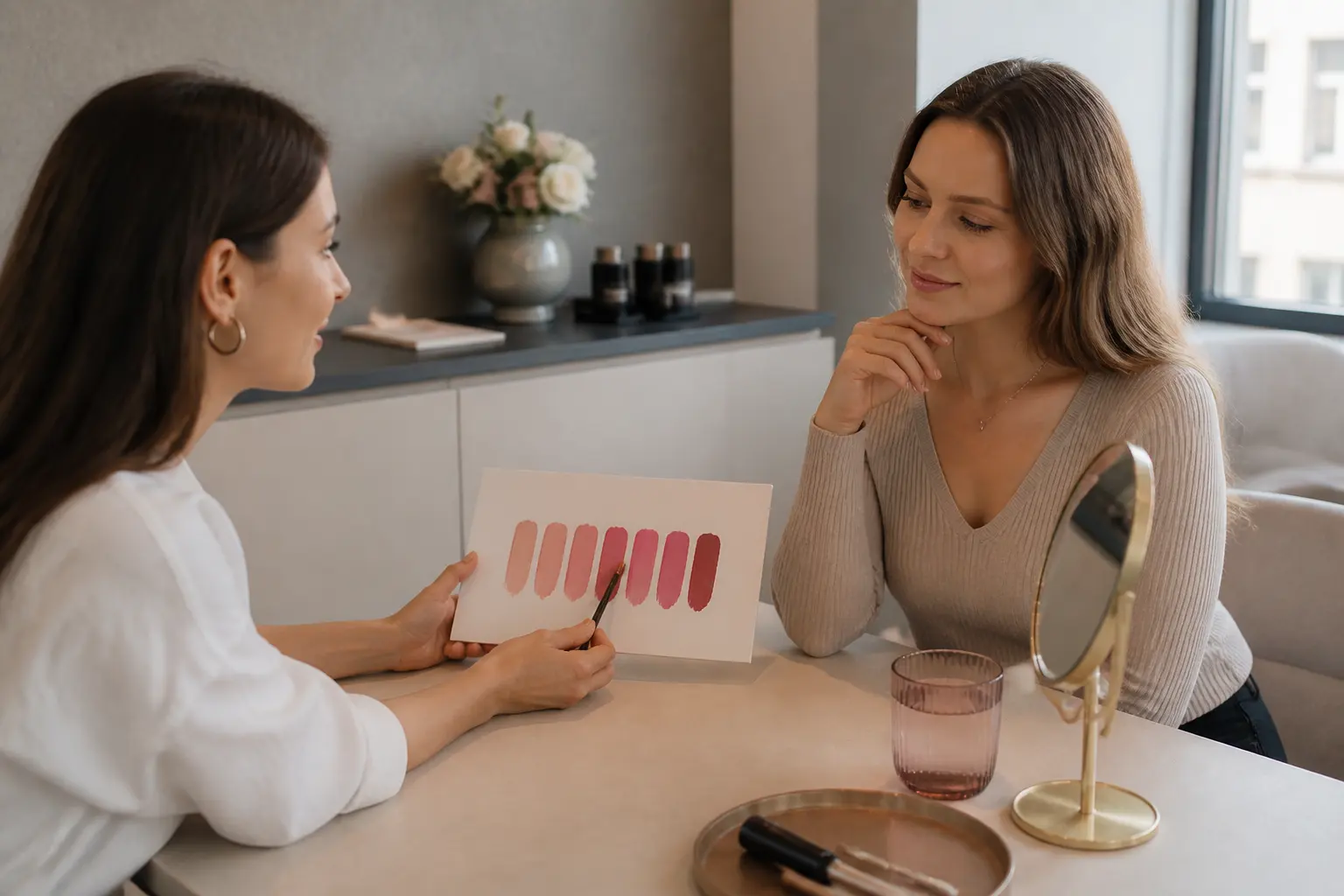
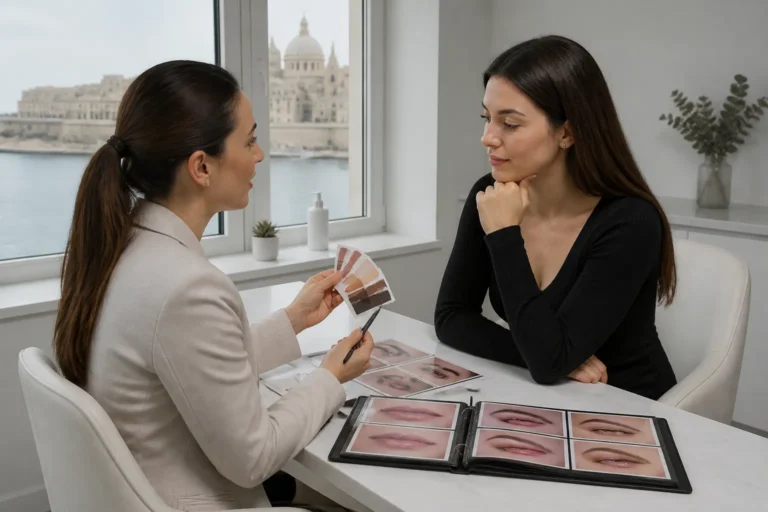
Choosing a colour is often the most personal part of semi-permanent lip treatment. You may like the idea of a soft nude, a fresh pink or a deeper rose, but the best choice is rarely about copying a shade seen on someone else. It is about finding a tone that works with your natural lip colour, skin tone, features and the level of definition you genuinely want to wear day to day.
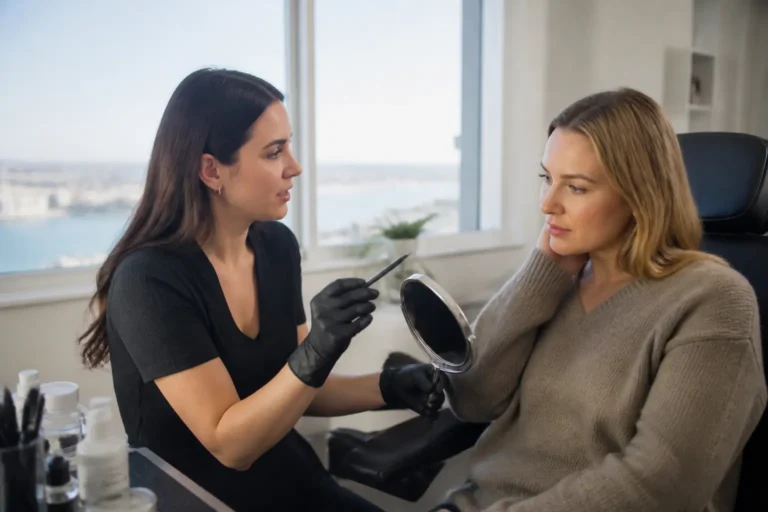
At a professional studio, lip micropigmentation is not approached as permanent lipstick in one fixed colour. It is a personalised colour service. The aim is to discuss the finish you would feel comfortable seeing in the mirror on an ordinary workday, on holiday in Malta and without relying on a full face of make-up.
This guide explains the character of nude, pink and rose shades, what can influence the final result, and how to arrive at your consultation with a clearer idea of what suits you.
Start with the result you want, not the colour name
Words such as “nude”, “pink” and “rose” are useful starting points, but they are not universal formulas. One person’s nude may be a warm beige-pink, while another person may find that the same tone looks pale, greyish or too light against their natural lip tone. A pink can range from barely-there and neutral to bright and playful. Rose can mean a muted dusty tone, a berry-leaning pink or a richer shade with more depth.
Rather than asking only, “Which colour is best?”, begin with a few practical questions:
- Do you want your lips to look more defined while still appearing understated?
- Would you like a little more warmth or freshness in your natural lip colour?
- Do you usually choose neutral, pink or berry-based lip products?
- Do you want the result to complement minimal make-up, stronger eye make-up, or both?
- Do you prefer a shade that looks close to your own lips, or one with clearer colour presence?
Your answers give the practitioner a more useful brief than a single photograph or lipstick name. They also help distinguish a colour preference from a colour expectation. A reference image can be helpful, but it should be treated as inspiration, not as a promise of an identical result on different lips.
What semi-permanent lip colour is designed to do
Lip micropigmentation introduces colour gradually to enhance the appearance of the lips. Depending on the chosen approach and individual assessment, the focus may be on soft colour, a more even-looking tone, gentle shape definition or a combination of these elements. It does not add physical volume, replace lip filler or create the texture of glossy lipstick.
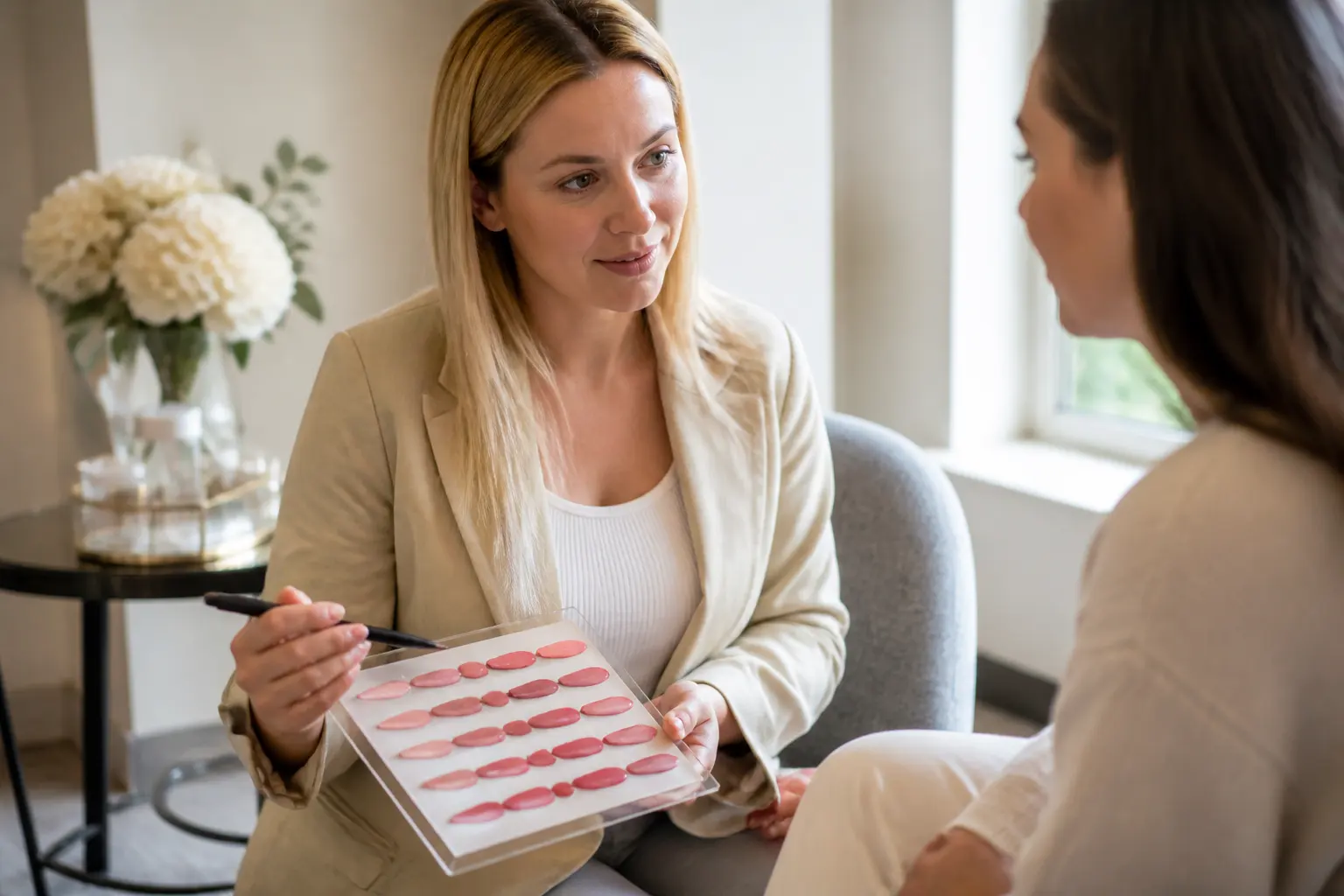
This matters when choosing a shade. A very pale nude may look elegant in a lipstick tube, but may not deliver enough visible contrast for someone who wants noticeable definition. Equally, a vivid pink may feel exciting in a photograph but less aligned with someone who normally wears only balm and wants a subtle everyday finish.
Semi-permanent pigment also changes as it settles and fades over time. Colour retention can vary between individuals, and an exact match to a photo or a natural lip shade cannot be promised. This is why consultation, realistic expectations and appropriate aftercare are part of responsible professional practice. The NHS guidance on permanent make-up also highlights the importance of discussing the procedure and completing a consultation before treatment.
Nude lips: soft, neutral and quietly polished
Nude is often chosen by clients who want their lips to look more balanced without appearing obviously coloured. It can be an excellent direction if you favour natural make-up, groomed brows and a clean, polished appearance.
What “nude” can mean in practice
A successful nude shade is not simply a pale beige. It usually needs enough warmth, pinkness or depth to work with your own natural pigmentation. The most flattering nude result often looks like a healthier, more even version of your lips rather than a colour that erases them.
For some clients, a peachy nude feels most natural. For others, a rosy beige or neutral pink-brown may be more harmonious. The right balance depends on the starting tone of the lips and the overall contrast of your complexion, hair and features.
Who may enjoy a nude direction?
- People who usually wear lip balm, gloss or neutral lipstick.
- Clients looking for a refined, low-maintenance appearance.
- Those who want their brows, lashes or eye make-up to remain the strongest feature.
- Anyone who prefers colour that works comfortably from daytime meetings to evening plans.
Points to discuss at your consultation
If you are drawn to nude, explain whether you mean “barely visible”, “warm and peachy”, “soft beige-pink” or “my lips but more even”. These descriptions are much more precise than simply saying you want something natural.
It is also worth discussing how much definition you would like around the lip border. A soft nude with subtle definition can look very different from a nude shade that is intended to create more contrast. Neither is automatically better. The right option depends on your personal style and the result you hope to maintain.
Pink lips: fresh colour with everyday versatility
Pink is a broad family of shades and one of the most flexible choices for semi-permanent lips. It can look delicate and neutral, warm and peach-toned, or clearer and more lively. The key is finding a pink that enhances rather than competes with your natural colouring.
Soft pink versus brighter pink
A soft pink can create the impression of rested, naturally coloured lips. It is often a good option for someone who wants more freshness than a nude but still values a subtle finish. A brighter pink may suit clients who enjoy a more visible lip look and regularly reach for pink lipstick or tinted balm.
Neither option needs to be overly sweet or youthful. Pink can be tailored to feel sophisticated, warm, cool, muted or modern. The shade should be selected with the client’s natural lips in mind, not based on the assumption that one type of pink suits everyone.
When pink can be a useful choice
- You want a little more colour than a neutral nude provides.
- You often choose blush-pink, coral-pink or rose-pink make-up.
- You would like your lips to look brighter alongside natural brows and minimal foundation.
- You want an easy everyday shade that can still sit well under gloss or lipstick.
A practical example
Imagine you normally wear a sheer pink balm and like the effect, but find that the colour disappears after lunch or swimming. A soft pink direction may align with your style more closely than a nude. On the other hand, if you reserve pink lipstick for occasions but prefer a neutral face most days, a muted rose-nude may be the more comfortable choice.
Rose lips: balanced depth without a dramatic look
Rose sits beautifully between understated nude and more apparent pink. It often combines a pink base with a little more depth, making it a popular choice for clients who want a refined colour that still has presence.
Rose shades can lean warm, cool, dusty, mauve or berry-inspired. A muted rose may look natural and elegant, while a richer rose can offer greater contrast and definition. This versatility makes rose a useful family of shades for many different personal styles.
Why clients often choose rose
- It can give more visible colour while remaining wearable every day.
- It often complements both neutral and slightly more polished make-up looks.
- It can feel less pale than nude and less bright than a clear pink.
- It gives room to personalise warmth, coolness and depth during colour planning.
Rose is not one fixed shade
When you say you want rose, think about the version you mean. Do you picture a faded petal pink, a soft mauve, a warm rosewood tone or a deeper berry rose? Bringing a few examples can help communicate the mood you like. Your practitioner can then explain what is realistic for your own lips and advise on a direction that remains balanced.
How natural lip tone affects the colour conversation
Your natural lip tone is one of the most important parts of colour selection. It is not something to cover up or judge. It is the starting point for a personalised plan.
Natural pigmentation can vary across the lips themselves. Some people have a deeper border, a lighter centre, warmer tones, cooler tones or areas with uneven-looking colour. These details may affect which pigment family is considered and how the desired result is planned.
This is why a professional should assess your lips in person rather than choose solely from an online message or a filtered selfie. Lighting changes colour considerably, and phone cameras can alter warmth, contrast and saturation. A shade that looks perfect on screen may not translate in the same way in real life.
During your appointment, be open about whether you want to keep your natural depth visible, gently soften the overall appearance, or choose a more defined finish. The conversation should be collaborative. You should feel able to ask why a certain direction is being suggested and what level of change is realistic.
Choose with your lifestyle in mind
The most satisfying shade is usually one you will still enjoy on an ordinary Tuesday. Think beyond special occasions and consider how you dress, how often you wear make-up and how much visible colour feels like you.
If you wear little or no make-up
A subtle nude, neutral pink or soft rose may offer enough enhancement without making the lips feel separate from the rest of your face. The aim can be a calm, put-together look that still feels recognisably you.
If you love polished make-up
A rose or more distinct pink may give you a stronger base for everyday definition. You can still wear other lip products when you choose. Semi-permanent colour does not mean your make-up options are limited to one look.
If you are choosing for a wedding or holiday
Try not to make the decision only for one event. Consider the photographs, certainly, but also ask whether you will appreciate the shade after the event has passed. A colour that feels authentic to your usual style is often the most timeless choice.
What to bring to a colour consultation
You do not need to arrive with a perfect answer. A thoughtful consultation exists to help you make the decision. Still, a little preparation can make the conversation clearer.
- Save two or three unfiltered reference images that show the overall finish you like.
- Bring or photograph lip products you wear often, especially shades you repeatedly repurchase.
- Say which colours you dislike, such as peachy tones, very pale nudes or blue-based pinks.
- Be honest about how visible you want the outcome to be.
- Ask how your natural lip tone may influence the plan.
- Share relevant health information, allergies and previous cosmetic tattooing during the studio’s consultation process.
Good colour selection should never feel rushed. Professional standards for semi-permanent skin colouring place importance on a completed questionnaire, client records, consent and aftercare advice. Derby City Council’s guidance is one example of the hygiene, consultation and record-keeping principles expected in responsible practice.
Questions worth asking before you book
Colour is only one part of deciding whether lip micropigmentation is right for you. Before booking, ask how the studio approaches assessment, hygiene, pigment planning, the expected appointment flow and aftercare. You may also want to ask about the follow-up process and what can affect how colour settles over time.
A responsible practitioner should not offer a guaranteed outcome or claim that one shade will look identical on every client. Instead, they should talk openly about variables, listen to your preferences and help you choose a colour direction that makes sense for your features and routine.
Conclusion: the right shade should still feel like you
Nude, pink and rose are not competing choices. Each can be beautiful when selected thoughtfully. Nude offers quiet polish, pink brings freshness and rose gives balanced depth. The best option is the one that respects your natural lip tone and feels comfortable in your everyday life.
If you are considering semi-permanent lips in Malta, book a lip micropigmentation appointment with Becammo or get in touch with your questions before making your choice. A professional colour conversation is the most reliable way to move from a broad shade idea to a personalised plan.
Frequently asked questions
Which semi-permanent lip colour looks most natural?
There is no single most natural shade. A natural-looking result depends on your original lip tone, the amount of contrast you prefer and how much colour you usually wear. For some people, that will be a nude. For others, a muted pink or soft rose will look more harmonious.
Can I bring lipstick photos to my appointment?
Yes. A small selection of reference images or photos of lip products you already enjoy can be helpful. They should guide the conversation rather than act as an exact colour guarantee, because every client starts with different natural lip pigmentation.
Is nude lip micropigmentation always beige?
No. Nude can include soft peach, beige-pink, rose-beige or neutral brown-pink directions. The most suitable nude usually has enough warmth and depth to complement your natural lips.
Should I choose pink or rose if I want more definition?
Either may be appropriate. A rose shade often offers more depth, while pink can range from very subtle to more noticeable. Your practitioner can discuss the level of definition you want and recommend a direction based on your natural lip tone.
Will the final colour look exactly like it does on the day?
Colour can appear different as it settles, and retention varies between individuals. A professional consultation should include realistic guidance about this, as well as the importance of following aftercare instructions.