Brow Symmetry Myths: Why Identical Eyebrows Are Not the Goal
Brenda Cammo Team
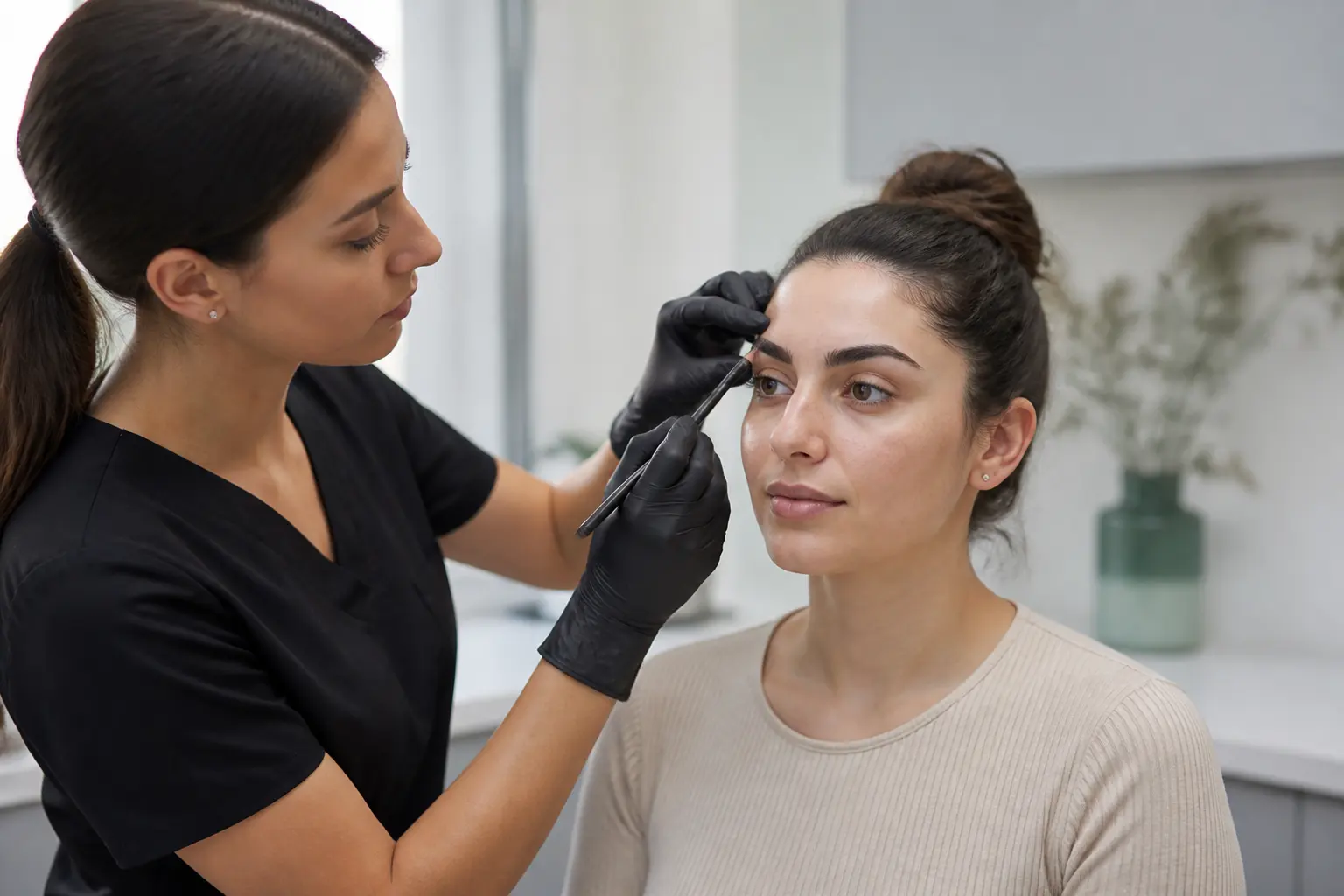
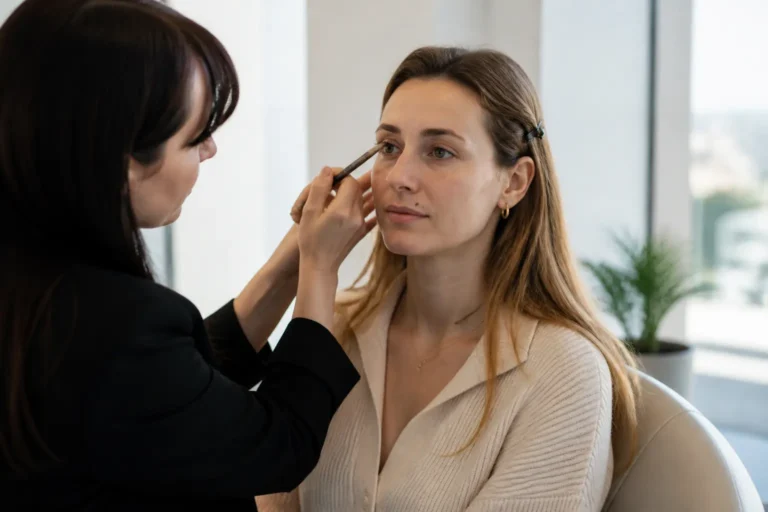
Many people arrive at a brow appointment with the same request: “Can you make them exactly the same?” It is an understandable goal, especially when you notice one brow sitting slightly higher, growing more densely or arching differently in photos. Yet perfectly identical eyebrows are rarely the most natural, flattering or realistic outcome.
Professional eyebrow design is not about copying one brow onto the other. It is about creating balance between the brows while respecting your bone structure, facial expressions, natural hair growth and personal style. At Becammo, brow shaping with threading begins with looking at the whole face, not just measuring two isolated lines.
This guide separates the common myths from what eyebrow symmetry really means, so you can approach your next appointment with clearer and kinder expectations.
What eyebrow symmetry actually means
Eyebrow symmetry means that the brows feel balanced together. Their starting points, height, thickness, arch placement and tails should work in harmony with each other and with your face. It does not mean that every hair, angle and curve must be a mirror image.
Faces are naturally asymmetrical. One eye may sit a little higher, one side of the forehead may be more expressive, and one brow may have a different growth pattern from the other. These small differences are normal. Trying to force absolute matching can lead to removing too much hair from the fuller brow or making both brows look overly thin and unnatural.
Balanced brows should support your features, not compete with them.
A skilled brow artist works towards visual harmony. This can involve refining the outline, softening a tail, tidying density or making careful adjustments over several appointments. The aim is a shape that looks considered from normal conversational distance, in movement and in your everyday life.
Myth 1: Your eyebrows should be identical twins
This is perhaps the most persistent brow myth. In reality, eyebrows are often described as sisters rather than twins. They belong together, but they do not have to be identical.
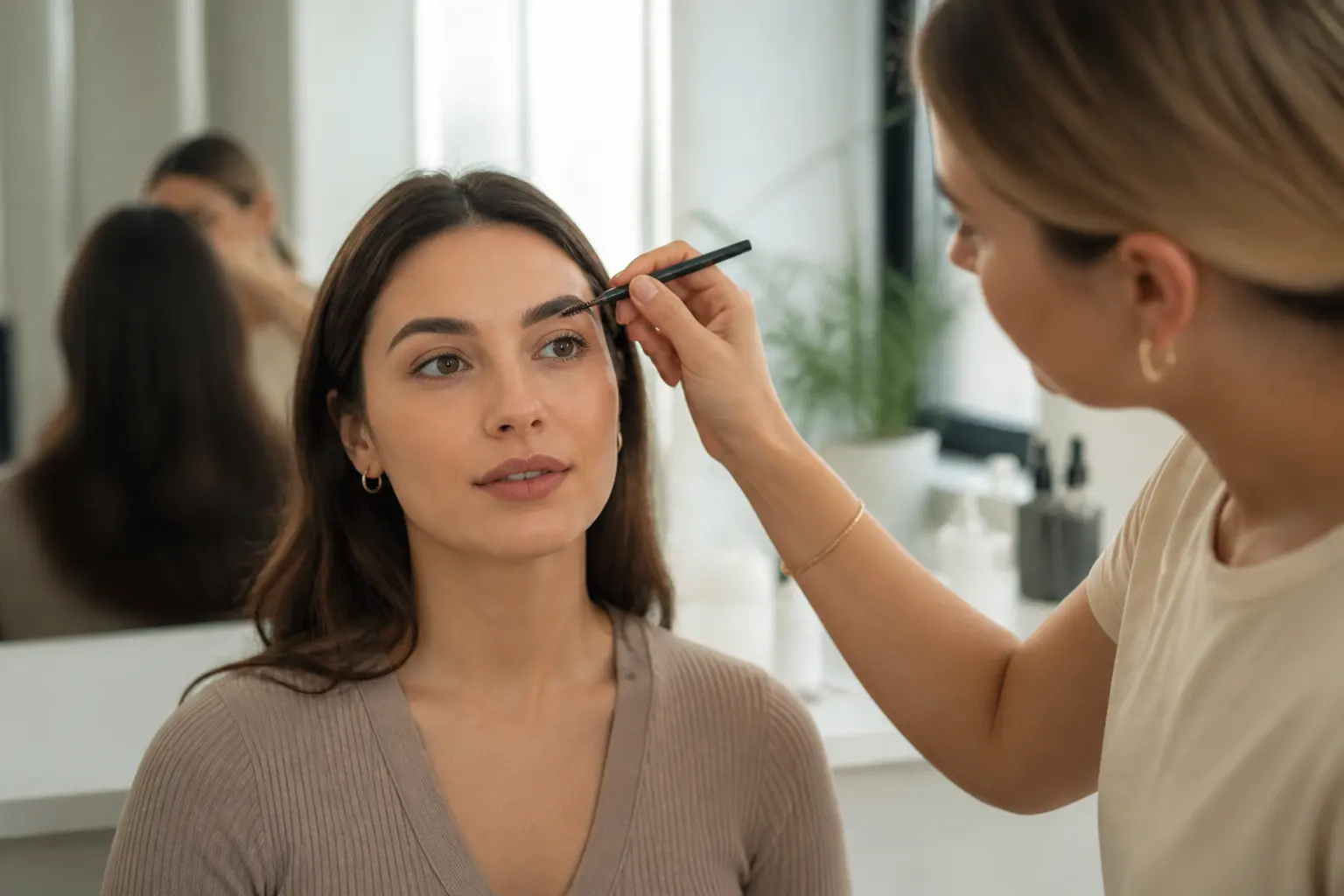
One brow may naturally have a higher arch, while the other may be straighter. One may have a sparse patch from past over-plucking, a scar or simply a different hair-growth direction. Your facial muscles can also lift one side more strongly when you speak, smile or raise your eyebrows.
If a brow artist attempts to make both brows identical by repeatedly taking hair from the stronger brow, the result may be less balanced, not more. The fuller brow can lose its shape, and the more delicate brow may still not gain the density it lacks. Good design considers what is available and chooses the most flattering direction from there.
Myth 2: The highest arch always creates the best shape
A high arch can be striking on some faces, but it is not a universal beauty rule. Raising an arch too much may make the brows look surprised, severe or disconnected from your natural expression. It may also require removing hair that would otherwise support a fuller, softer shape.
Arch placement should follow your individual brow structure and the way your features sit together. A professional assessment looks at the brow’s natural peak, its density and the relationship between the brow, eyes and forehead. Sometimes the most effective adjustment is subtle: cleaning the underside, defining the top line carefully or refining the tail rather than dramatically changing the arch.
Threading is especially useful for detailed shaping because it can remove hairs precisely along the intended outline. That precision helps create clean edges while allowing the artist to preserve the hair that contributes to your natural structure.
Myth 3: Mapping alone can make brows perfectly even
Brow mapping is a valuable part of professional eyebrow design. It creates reference points for where each brow may begin, peak and end, helping the artist plan a proportionate shape. However, mapping is a guide, not a promise that natural brows will become geometrically identical.
Your brow hairs may not grow evenly within those reference points. One tail may be naturally lighter, one front may grow more upright, or one brow may have a fuller underside. Facial movement also changes how brows appear. A design that looks mathematically matched while your face is completely still may not look its best once you start talking and smiling.
The best use of mapping is to support thoughtful decisions. It helps establish direction and balance, while the final shaping still responds to real hair growth and facial proportions.
Myth 4: Removing more hair always improves uneven brows
When one brow appears stronger than the other, it can be tempting to thin it until both look equal. This is not always the right solution. Hair removal can improve an outline, but it cannot instantly add fullness where hair is sparse.
Over-correcting is one of the main reasons brows can gradually lose their natural shape. It may leave both brows narrower than intended, reduce their ability to frame the face and make future adjustments more difficult. A more considered approach may be to tidy the fuller brow while preserving its useful density, then shape the other brow in a way that brings the pair closer visually.
Depending on your preferences, a brow artist may also discuss options such as tint or henna alongside threading and design. These services can help define the appearance of the brow without requiring extra hair removal. The right choice depends on the look you want, your skin, your brow hairs and an individual assessment.
Myth 5: One appointment fixes every asymmetry permanently
Some differences can be improved noticeably in one appointment, particularly when unevenness comes from stray hairs or an unclear previous shape. Other concerns need patience. If one brow has been over-plucked for years, has a different growth cycle or has a sparse area, the best result may develop gradually as hair is allowed to grow in and the design is refined over time.
Regular appointments can be helpful because they allow your brow artist to observe recurring growth patterns. Instead of reshaping from scratch each time, they can maintain the stronger parts of your design and make small, careful refinements as new hairs appear.
This is also why it is useful to avoid tweezing random hairs between appointments. A hair that seems out of place at home may be part of the longer-term plan for improving balance. If you are unsure, leave it and ask at your next visit.
How professional brow shaping works at a studio
A professional brow appointment should start with listening. Your brow artist needs to understand whether you want a natural tidy-up, a more defined shape, a soft arch, a fuller-looking finish or help managing uneven growth. Bringing up previous over-plucking, sensitivity, brow products you use or a recent semi-permanent brow procedure is also useful.
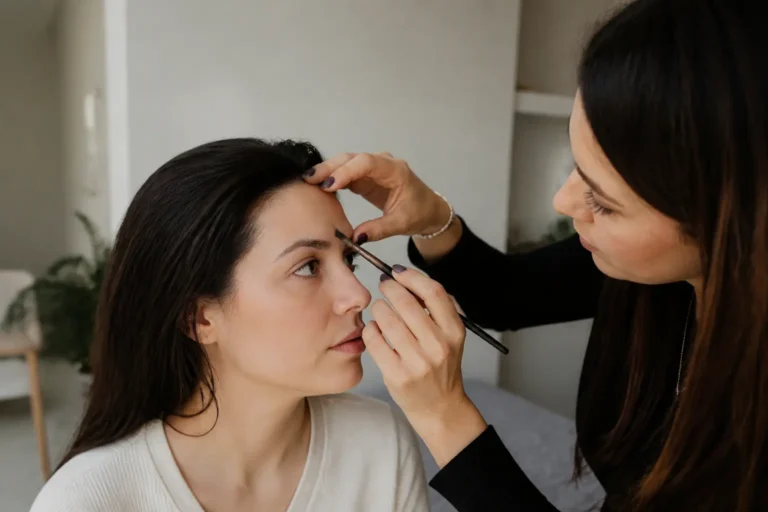
At Becammo, threading and brow design are approached as a personalised service. The artist assesses the natural brow shape, hair direction, density and how both brows relate to your facial features. Threading uses a fine thread to lift and remove unwanted hairs with control, helping to create a neat outline without treating the brows as identical templates.
What your brow artist may assess
- The natural starting point and tail of each brow.
- Where each brow naturally reaches its highest point.
- Hair density, gaps and different growth directions.
- Your face at rest and your usual facial expressions.
- The amount of hair that can be removed without compromising the overall shape.
- Your preferred finish, from softly natural to more defined.
This approach matters for clients from all backgrounds. Brow texture, density and growth patterns vary widely, and there is no single ideal brow shape for every face. A personalised design should enhance your own features rather than impose a trend.
How to prepare for a brow symmetry appointment
You do not need to arrive with perfectly grown-out brows, but a few simple steps can help your artist see your natural pattern more clearly.
- Avoid last-minute plucking. If possible, let the brow area grow naturally before your appointment so there is enough hair to assess.
- Come with your usual preferences in mind. Think about whether you prefer a fuller, straighter, more sculpted or barely-styled look.
- Show reference photos carefully. Images can communicate the finish you like, but they should be used as inspiration rather than a shape to copy exactly from someone else’s face.
- Share relevant brow history. Mention any past over-plucking, cowlicks, sensitivity, tinting or semi-permanent brow work.
- Give feedback during the appointment. If you are worried about taking off too much or want to preserve fullness, say so before shaping begins.
Clear communication gives your brow artist the best chance to create a result that feels like you, only more polished.
When uneven brows may need a different conversation
Sometimes brow asymmetry is mainly about hair shape and can be addressed through careful design. At other times, it may be more noticeable because of facial expression, muscle movement, skin texture or sparse growth. In these cases, it is important to set realistic expectations.
A brow artist can explain what shaping can achieve with your existing hairs and suggest appropriate cosmetic options within the studio’s services where relevant. They should not promise that every difference can disappear. A good appointment leaves you with brows that look balanced, intentional and appropriate for your natural features, not artificially identical.
Keeping brows balanced between appointments
Once you have a shape you like, maintenance is often simpler than a complete redesign. Let the main outline guide you, and resist the urge to chase perfection in a magnifying mirror. Brows can look different under changing light, after sleep, during facial movement or when viewed extremely close up.
If you use brow pencil, powder or gel, apply products with a light hand. You may need slightly more product on one side, and that is completely normal. The goal is to create visual balance, not to prove that both brows have received identical strokes.
Book your next threading appointment when regrowth begins to blur the outline or when you feel the shape no longer reflects the look you want. Your artist can then tidy the growth while protecting the structure you have built together.
Conclusion: choose harmony over perfection
Perfectly identical eyebrows are not the standard you need to meet. Natural faces have character, movement and small asymmetries, and your brows are part of that individuality. The most successful brow design respects those differences while creating a cleaner, more balanced overall impression.
If you would like help finding a shape that feels polished but still natural, book a threading and brow design appointment at Becammo in Sliema or Swieqi. A professional assessment can help you understand what your brows can realistically achieve and how to maintain a shape that suits you.
Frequently asked questions
Can threading make my eyebrows more symmetrical?
Threading can help improve visual balance by removing selected hairs precisely and refining the outline of each brow. The result depends on your natural density, hair growth and facial structure, so identical brows are not a realistic or necessary goal.
Why is one eyebrow higher than the other?
It is common for brows to sit differently because faces are naturally asymmetrical. Differences in bone structure, muscle movement, hair growth and previous hair removal can all affect how high or arched each brow appears.
Should I grow my brows out before a shaping appointment?
Allowing some regrowth can help an artist assess your natural shape and see which hairs may support a more balanced design. Avoid plucking immediately before your appointment if you want advice on improving unevenness.
Can brow tint or henna help uneven eyebrows?
Tint or henna may help create a more defined appearance, particularly where brow hairs look lighter or less noticeable. Whether either option suits you depends on your desired finish and an individual assessment.
How often should I have my eyebrows threaded?
The ideal timing varies with your hair growth and how defined you like your brows to look. Regular maintenance appointments can help preserve the shape while allowing your artist to make careful adjustments over time.