Head, Neck and Shoulder Massage for Busy Days
Brenda Cammo Team
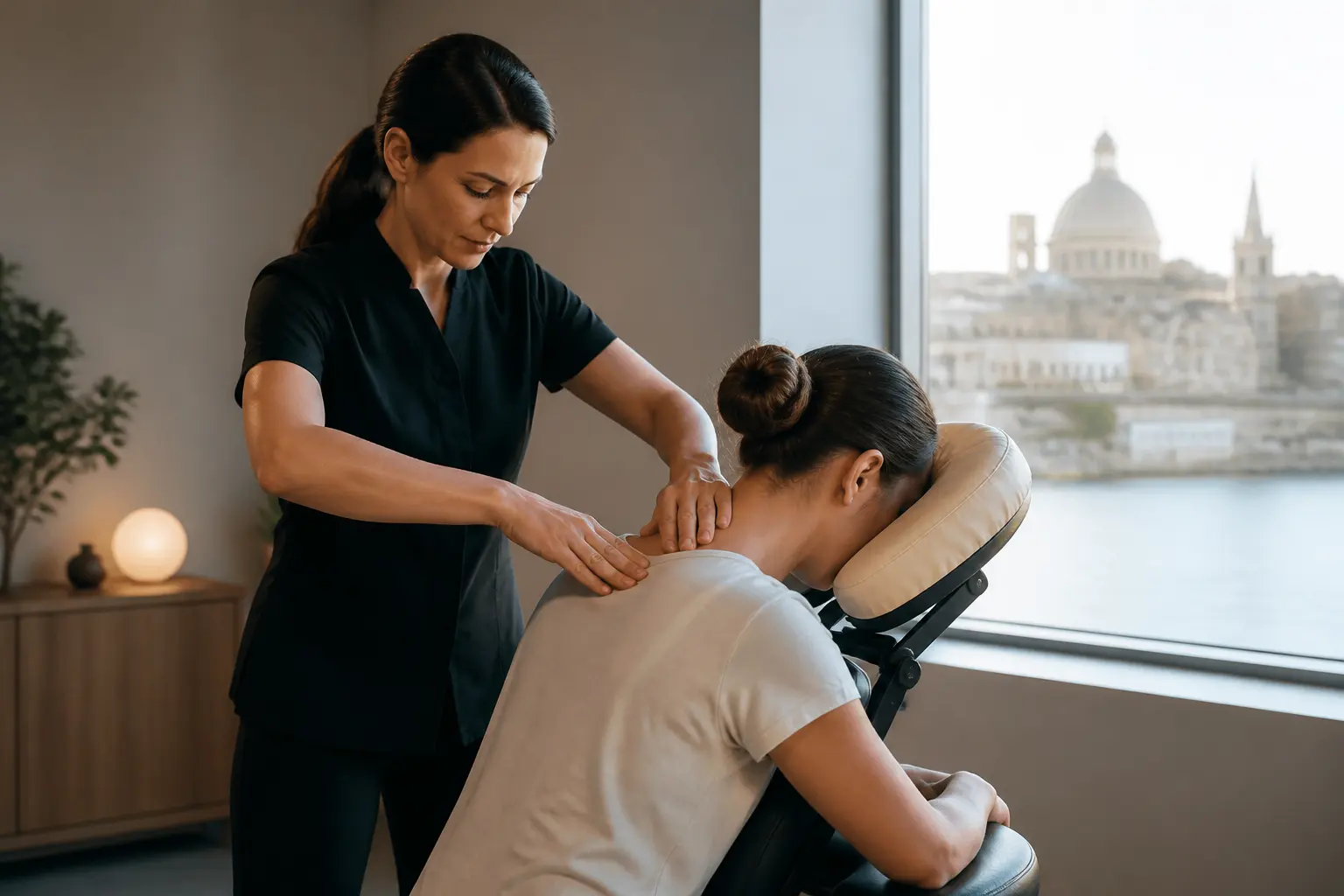
When your day is shaped by screens, commutes, deadlines and a constantly full to-do list, the head, neck and shoulders are often the first places to feel the strain. A head, neck and shoulder massage offers a focused pause for the areas that can feel tight or tired after long periods of sitting, driving, studying or looking down at a phone.
It is not about trying to solve every source of discomfort in one appointment. It is about creating time to slow down, receive professional touch in a comfortable setting and leave with a greater sense of ease. For people balancing work, family, travel or busy social calendars in Malta, a targeted massage can be a practical form of regular self-care rather than an occasional luxury.
Why the head, neck and shoulders hold everyday tension
The upper body works hard throughout the day. You may hold your phone between your shoulder and ear, lean forwards at a laptop, tense your jaw while concentrating or carry bags on one side. Even when you are not consciously stressed, these habits can make the neck and shoulders feel less relaxed.
Many people notice this as a feeling of heaviness across the upper back, stiffness when turning the head, tired shoulders or a desire to rub the temples and base of the neck at the end of the day. These sensations can have many causes, so a massage should not be treated as a replacement for medical assessment. However, for everyday muscular tension and the need to switch off, a professional massage session can be a welcome reset.
A focused appointment gives attention to the areas that busy routines often neglect. Instead of asking your body to keep going without a break, you create a dedicated moment to lie back, breathe and let the therapist work thoughtfully around your priorities.
What a head, neck and shoulder massage usually focuses on
A head, neck and shoulder massage is designed around the upper body. Depending on the service format and your comfort, the therapist may work across the shoulders, upper back, neck, scalp and areas around the temples. The approach should be adapted to how you feel on the day, including whether you prefer a lighter, soothing touch or more focused work on areas that feel particularly tense.
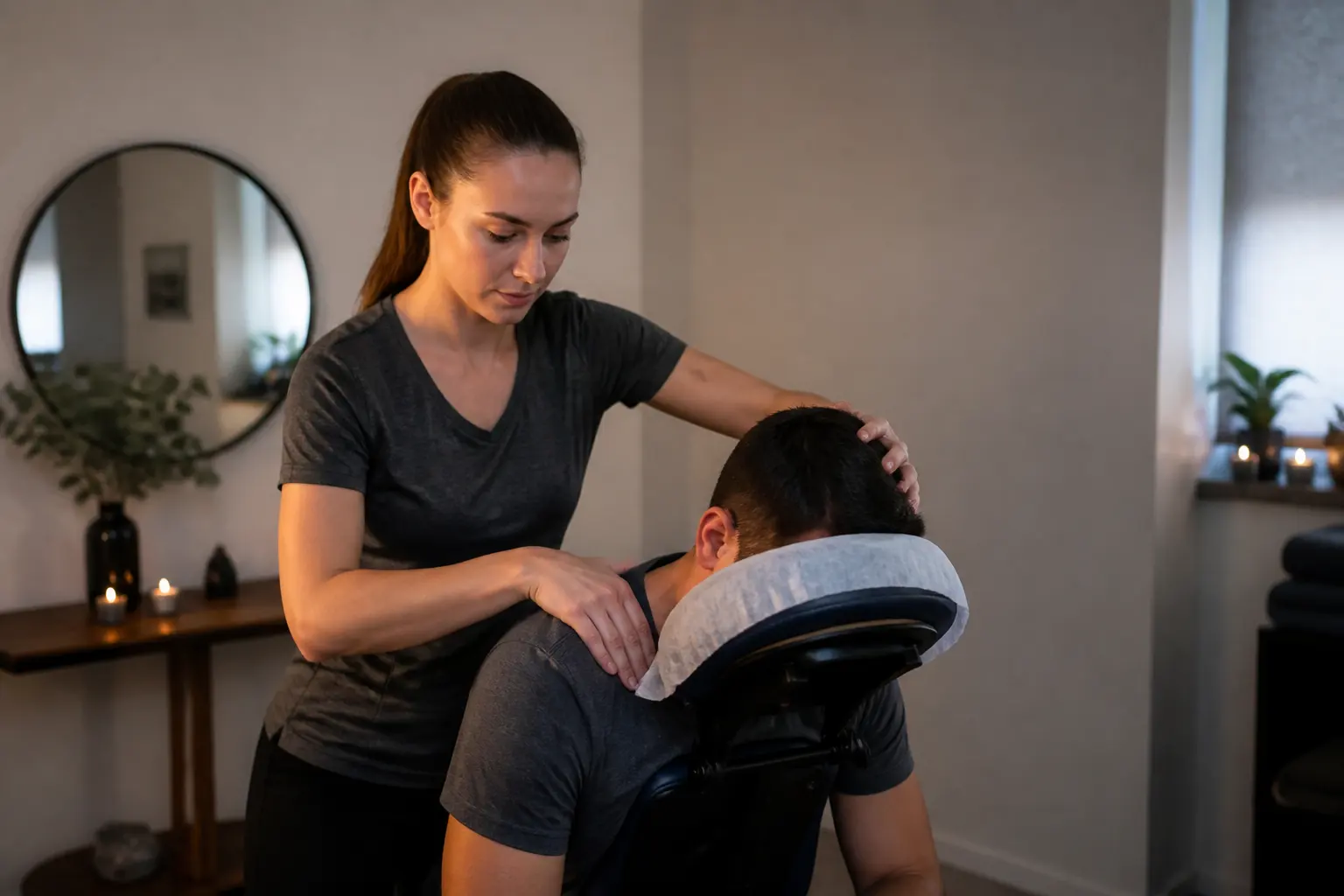
At a professional studio, communication is part of the service. Before the massage begins, it helps to explain what has brought you in. Perhaps you have spent a week at your desk, travelled recently, carried a child often, trained at the gym or simply feel mentally overloaded. You do not need to diagnose yourself. Describing what feels uncomfortable, and what you hope to get from the appointment, gives the therapist useful direction.
The head and scalp
Scalp massage can feel deeply calming because it invites you to stop concentrating on the outside world. Gentle, controlled movements across the scalp may be especially appealing after a day of meetings, travelling or sustained screen use. If you have a sensitive scalp, hair extensions, a recent colour service or any concern about products, mention it before the session so the approach can be adjusted.
The neck
The neck is a sensitive area, so professional technique and clear feedback matter. A therapist can work carefully around the muscles that connect the shoulders and upper back to the neck, while respecting your range of movement and comfort. Tell them if a certain position feels awkward, if you have recently had an injury or if you would rather avoid a particular area.
The shoulders and upper back
Shoulders can feel overloaded after desk work, driving, lifting or repetitive movements. This part of the massage often uses steady, considered contact to help you feel less held up through the upper body. You may find it easier to notice how much you have been bracing once you are given permission to relax.
What makes a professional appointment different from a quick self-massage
Rubbing your own shoulders at home can be comforting, but it is difficult to reach the upper back and neck without twisting or tensing elsewhere. A professional session offers a more supported position, an uninterrupted environment and a therapist who can adapt their technique as they work.
It also gives you a rare period without multitasking. Rather than checking messages while trying to stretch between tasks, you can settle into the appointment and let someone else take care of the pace. For many clients, that protected time is as valuable as the massage itself.
A studio appointment should also include sensible boundaries. You can ask questions before the massage starts, request an adjustment at any point and say if something does not feel right. Massage should never be something you simply endure. The aim is to create a comfortable experience that suits your needs on that day.
How to fit massage into a genuinely busy week
The easiest way to make space for massage is to stop treating it as something that requires a completely free day. A focused session can work well before an evening at home, on a quieter lunch break where your schedule allows, after a demanding work period or at the start of a weekend.
Think about the moments when tension tends to build for you. If Friday evenings leave you exhausted, an earlier appointment may help you enter the weekend feeling more settled. If you spend several days travelling between meetings, book after that period rather than waiting until you feel completely worn down. If you are planning a special event, avoid leaving self-care until the final hour. Give yourself time to enjoy the calm afterwards.
Useful times to consider booking
- After a week of concentrated desk work or studying.
- Following a long journey, especially if you have been sitting for extended periods.
- Before a quieter evening, when you can avoid rushing straight into another demanding task.
- At the beginning of a weekend, to create a more intentional pause from work.
- As part of a regular wellbeing routine, based on your schedule and personal preference.
There is no single ideal frequency for everyone. Your routine, activity level, budget and reasons for booking all matter. Some people enjoy occasional appointments when life becomes particularly busy, while others prefer a more consistent rhythm. A professional therapist can help you think about what is realistic without making promises about a particular outcome.
How to prepare for your appointment
Preparation can be simple. The goal is to arrive comfortably and give the therapist the information they need to personalise the session.
- Arrive a little early. A few calm minutes make it easier to settle in and complete any consultation questions without feeling rushed.
- Wear comfortable clothing. Choose something easy to change out of or adjust, depending on the service arrangement.
- Share relevant information honestly. Mention recent injuries, skin sensitivity, pregnancy, health concerns, allergies or anything else that could affect your comfort. The studio may advise postponing or seeking appropriate medical guidance in some circumstances.
- Say what feels tense. Simple details are useful, such as “my right shoulder feels tighter after driving” or “I have spent all week at a laptop”.
- Set your phone aside. If possible, let the appointment be a short break from alerts and notifications.
You also do not need to arrive already relaxed. Many people book precisely because they feel rushed or tense. The important part is allowing enough time to arrive, communicate and settle into the session.
Small habits that can support the feeling afterwards
Massage is one moment in your wider routine. The feeling of relaxation may be easier to carry forward when it is paired with small, manageable habits rather than an unrealistic plan to change everything overnight.
- Take a few slow breaths before returning to emails or driving away.
- Drink water if you are thirsty and have a normal meal when it suits your routine.
- Adjust your screen height or seating position where possible.
- Take brief movement breaks during long periods of desk work.
- Notice whether you clench your shoulders or jaw when concentrating, then gently reset your posture.
- Plan a calmer evening after the appointment if your diary allows.
These are not rules, and they do not need to be perfect. They are practical ways to give yourself a little more space between one demanding task and the next.
When to pause and ask for professional advice
Massage is not suitable for every situation, and a reputable studio should take your wellbeing seriously. Let the therapist know about acute pain, a recent accident, unexplained swelling, fever, active skin irritation, a severe headache, dizziness, numbness or any condition that makes you unsure whether massage is appropriate.
If you have persistent neck pain, pain that follows an injury, weakness, tingling, severe headaches or symptoms that worry you, seek advice from an appropriately qualified healthcare professional. A massage appointment can be a valuable wellbeing experience, but it should not delay care when medical assessment is needed.
Choosing a massage experience that feels right for you
The best appointment is not necessarily the longest or most intense one. It is the one that matches your comfort, your schedule and what your body needs that day. When choosing a studio, look for clear communication, a hygienic and welcoming environment, time for consultation and a therapist who listens rather than assumes.
At Becammo, the focus is on helping clients make time for care in a professional setting. If your days are full and your upper body is asking for a break, a head, neck and shoulder focused massage can be a simple way to step out of the rush for a while. You can choose the most convenient Becammo location in Sliema or Swieqi, ask any questions before booking and share your preferences with the therapist on the day.
The final banner below is a useful next step when you are ready to explore the massage and spa options available. Booking a dedicated pause in your week may be easier than waiting for the perfect free day to appear.
Frequently asked questions
Can a head, neck and shoulder massage help after desk work?
It can be a relaxing choice after prolonged desk work, particularly if your shoulders and neck feel tired from sitting or concentrating. Tell the therapist about your routine so the session can be tailored to your comfort. Persistent or severe pain should be assessed by an appropriate healthcare professional.
Will the massage be painful?
Massage can involve pressure on areas that feel tight, but you should always be able to communicate about comfort. Tell your therapist straight away if the pressure feels too strong, too light or uncomfortable.
Do I need to book a full-body massage for neck and shoulder tension?
Not necessarily. A focused head, neck and shoulder massage may suit you well when these are the areas you most want to prioritise. The right choice depends on your time, preferences and the service options available.
Should I book a massage if I have a headache?
It depends on the type and severity of the headache and on any accompanying symptoms. If your headache is severe, unusual, follows an injury or comes with symptoms that concern you, seek medical advice rather than booking a massage. Always mention headaches during your consultation.
What should I tell the therapist before the session?
Share any relevant health information, recent injuries, skin sensitivities, pregnancy, areas you would like prioritised and anything you would prefer the therapist to avoid. Honest communication supports a more comfortable, personalised appointment.