Why Some Clients Need a Patch Test Before Brow Lamination
Brenda Cammo Team
Brow lamination can be a lovely option when you want your natural brow hairs to look more lifted, organised and easier to style. Before the transformation, however, there is one small step that may be important for some clients: a patch test.
If you have booked beauty services before, you may already know the idea. A small amount of the relevant product is used on a discreet area of skin before the full appointment, allowing time to check for an unwanted skin reaction. It is a sensible part of professional preparation, especially when a service involves products that stay close to the eye area.
A patch test before brow lamination is not an inconvenience or a judgement about your skin. It is an opportunity to make a more informed decision, share your history openly and give your brow artist the information needed to plan your appointment responsibly. Here is why it matters, who may be asked to have one and what the process usually involves.
What is brow lamination?
Brow lamination is a professional brow service designed to redirect and set the natural eyebrow hairs into a more groomed position. It can help create the appearance of fuller, more even or more lifted brows, depending on your natural hair pattern and the shape agreed during the appointment.
The service is not about forcing every client into one brow trend. Some people prefer a softly brushed finish, while others like more definition through the front of the brow or a tidier direction across the arch and tail. A skilled brow professional assesses the natural growth pattern, hair condition, facial balance and your preferred level of styling before proceeding.
Because lamination uses professional solutions to alter the direction and set of the brow hairs, it deserves the same thoughtful preparation as any other product-led beauty service. This is where a patch test can play a useful role.
Why might a patch test be needed before brow lamination?
Everyone’s skin history is different. Many clients use beauty products regularly without a problem, while others know that their skin can react to cosmetics, adhesives, hair colouring products, fragrances or particular ingredients. A previous reaction does not automatically mean brow lamination is unsuitable, but it is information that should be discussed before booking.
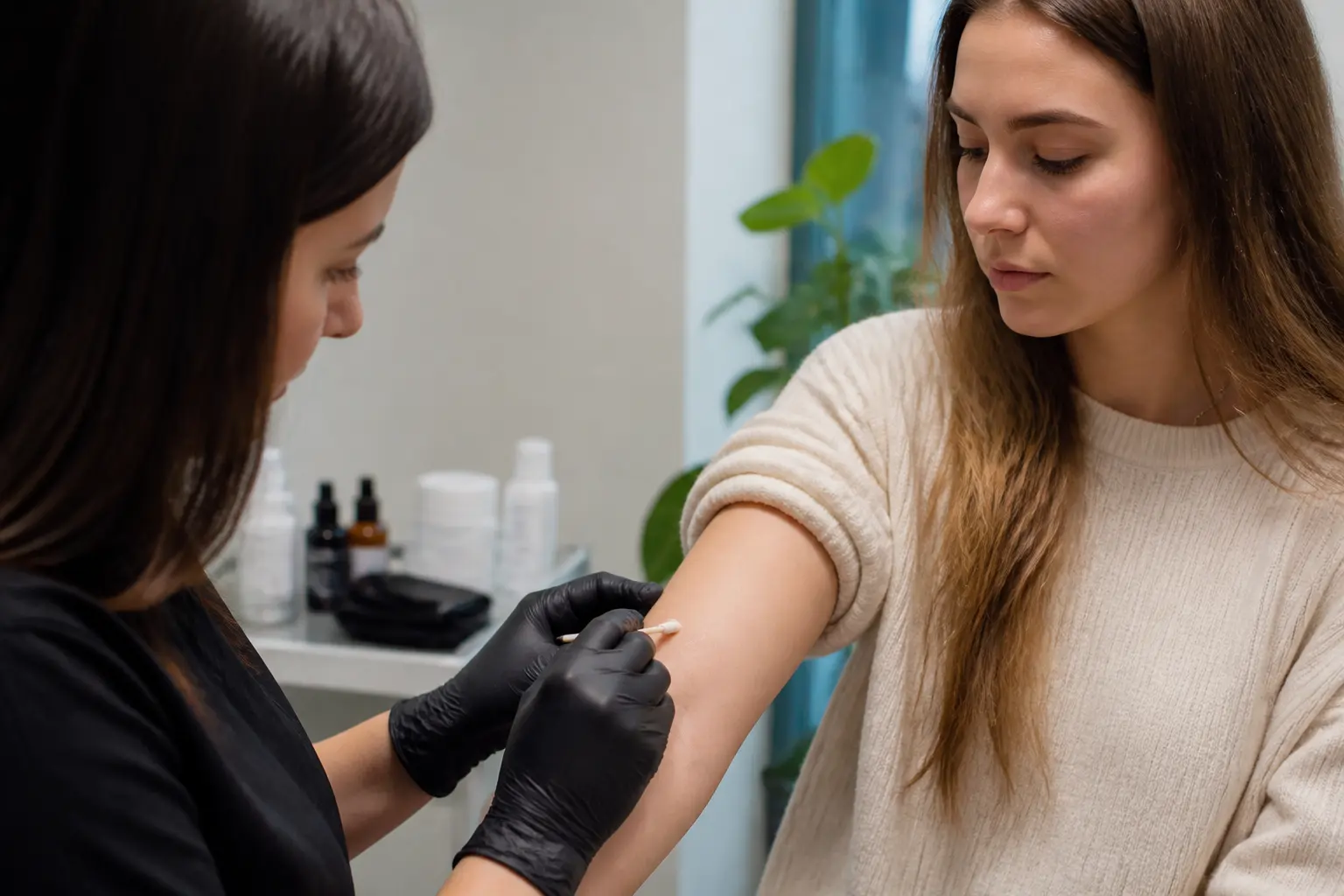
A patch test may be particularly appropriate if you have had irritation, redness, swelling, itching or a rash after a cosmetic product in the past. It may also be requested if you are new to brow lamination, have experienced a reaction during a previous lamination service, have a history of sensitive or reactive skin, or are unsure which product caused a previous issue.
Contact allergy is a reaction associated with something touching the skin. In clinical dermatology, patch testing is used to investigate whether particular substances that contact the skin could be contributing to a reaction. The NHS explains that allergic contact dermatitis reactions may take time to develop, which is one reason a professional patch-test process includes an observation period rather than an immediate decision. NHS guidance on contact dermatitis diagnosis (nhs.uk)
In a brow studio, a pre-service patch test is more limited than a medical dermatology patch test. It is a practical compatibility check using the products intended for your beauty service. It cannot diagnose every allergy, predict every skin response or replace advice from a pharmacist, GP or dermatologist. It can, however, help identify an obvious concern before products are used across the brow area.
Who should tell their brow artist about their skin history?
Honest consultation makes the appointment safer and more personalised. Tell your brow artist before booking, or as soon as possible afterwards, if any of the following apply to you:
- You have reacted to brow, lash, hair or skincare products before.
- You have had a previous reaction to brow lamination, lash lifting, tinting or an adhesive.
- You currently have broken, sore, inflamed or irritated skin around the brows.
- You are managing eczema, dermatitis or another ongoing skin concern that affects the face.
- You are using a new skincare product and have noticed increased sensitivity.
- You have a known sensitivity to a cosmetic ingredient, fragrance, dye or preservative.
- You have had a strong reaction to plasters or adhesive products in the past.
This is not about self-diagnosing. It is about giving the professional enough context to decide whether a patch test, a postponed appointment or further medical advice may be the most sensible next step. If there is any uncertainty, asking before you travel to the studio is always better than hoping for the best on the day.
How a brow lamination patch test usually works
The exact process should follow the product manufacturer’s instructions and the studio’s hygiene protocol. Your brow artist will explain what is being tested, where it will be placed and when you should check the area or return for assessment.
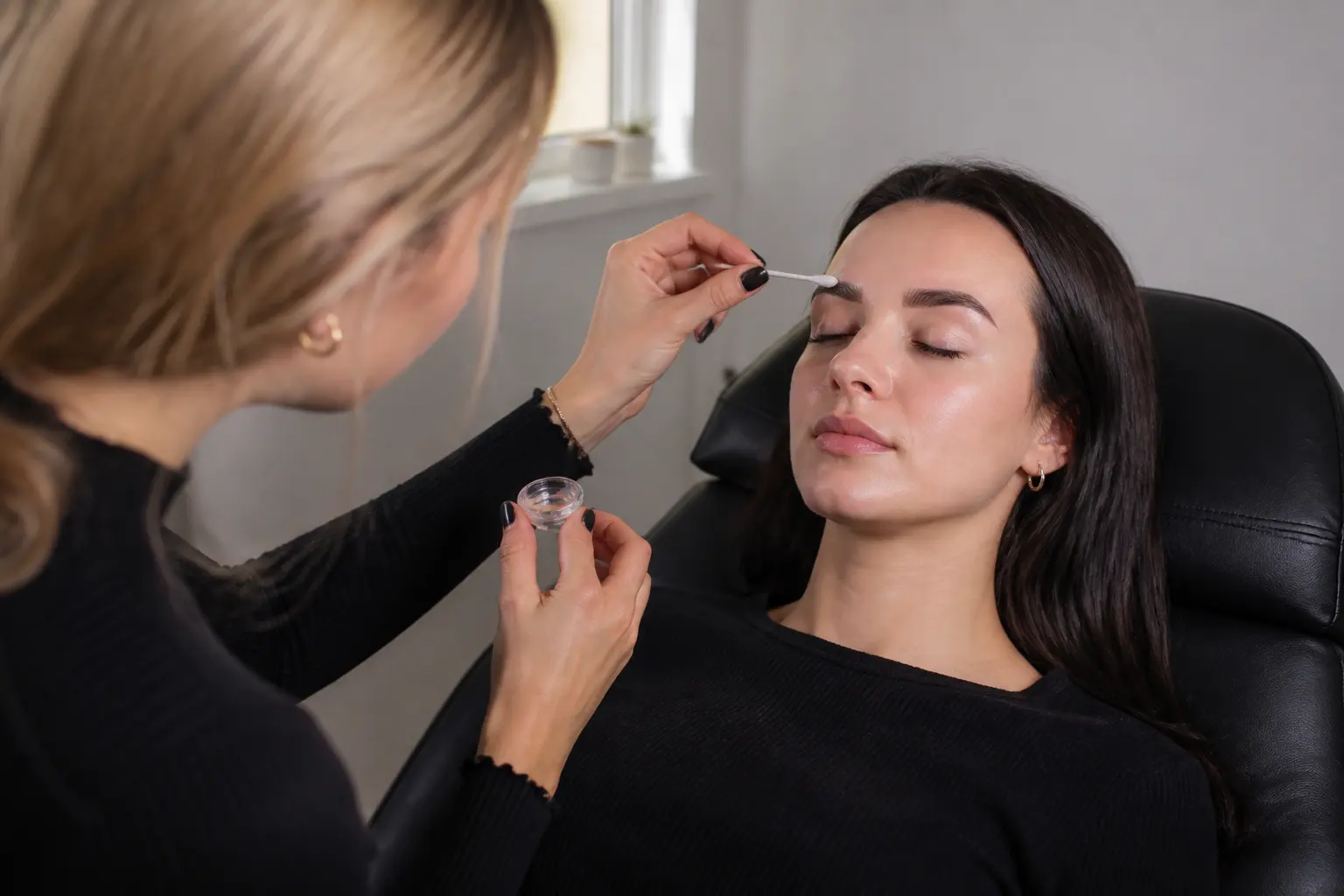
Usually, a small amount of the relevant lamination product is applied to a discreet patch of skin, often away from the brow area. The purpose is to expose only a small area before carrying out the full service. Depending on the products planned, this may include more than one formula used within the lamination process. If tinting is part of your intended appointment, ask whether that product also needs to be included in the patch test.
After application, you will be asked to leave the area alone and monitor it for the timeframe specified by the professional. Do not rub, scratch, apply additional products or assume that a lack of an immediate reaction gives a final answer. Some contact reactions are delayed. Medical patch testing in dermatology commonly involves readings after several days because delayed reactions can occur, although that clinical process is different from a salon compatibility test. Royal Free London information on skin allergy patch testing (royalfree.nhs.uk)
At the agreed check-in point, the artist will ask whether you noticed any discomfort or visible changes. A clear test area does not create a guarantee that a reaction will never happen, but it provides useful information when considered alongside your consultation and product history.
What should you look out for after a patch test?
Follow the instructions you receive from the studio, as product guidance can differ. In general, contact the studio before proceeding if you notice notable redness, itching, swelling, soreness, burning, a rash or blistering where the test was applied. If you feel unwell or experience symptoms that go beyond a local skin response, seek appropriate medical help promptly rather than waiting for a beauty appointment.
Try not to dismiss a reaction because it seems small. The skin around the eyebrows is delicate, and a full treatment exposes a larger area. Sharing a clear photo of the test site, along with when you first noticed the change, can help the studio advise whether your lamination appointment should be postponed.
Equally, do not try to repeat the test yourself using leftover products or substitute products at home. Professional formulas need to be used according to their instructions, and a qualified artist can ensure that the correct products and process are considered.
A negative patch test is useful, but it is not a promise
It is understandable to want a simple yes-or-no result. In reality, skin responses are more nuanced. A patch test can reduce uncertainty, but it cannot guarantee that you will never experience sensitivity during or after a future service.
Skin condition can change with seasons, stress, illness, new medication, skincare changes and repeated exposure to ingredients. It is also possible to react to an ingredient that was not included in a particular test, or to experience irritation rather than an allergy. Dermatology services make a similar distinction: clinical patch testing helps investigate contact allergy, but it does not test every possible substance or every type of reaction. University Hospital Southampton guidance on skin contact allergy (uhs.nhs.uk)
That is why consultation still matters even after a clear patch test. Let your brow artist know about changes since your last visit, including a new reaction to another cosmetic product or active irritation around the brow area.
Patch testing and sensitive skin are not the same thing
“Sensitive skin” is a useful description of your experience, but it is not a single diagnosis. One client may flush easily after heat or exercise. Another may find fragranced products uncomfortable. Someone else may have a confirmed contact allergy. These situations call for different considerations.
A patch test is most relevant to the risk of a contact reaction to the products being used. It does not automatically explain dryness, temporary redness from hair removal, an existing skin flare-up or every form of skin discomfort. This is another reason to avoid guessing. A professional consultation should identify what you have experienced, when it happened and whether the service should go ahead.
If your skin is actively irritated around the eyebrows, it may be wiser to wait until it has settled and seek medical advice where needed. A brow appointment should feel like considered self-care, not a reason to push through discomfort.
How to prepare for your patch test and appointment
A little planning makes the process straightforward. Use this checklist before your brow lamination booking:
- Book early enough. Ask about patch-test requirements before selecting your treatment date, so you allow the required observation time.
- Share previous reactions. Mention any issue with brow tint, hair colour, lash treatments, adhesives, skincare or cosmetics, even if it happened years ago.
- Bring product information if helpful. If you know the name or ingredient list of a product that caused a reaction, it may provide useful context.
- Arrive with the brow area calm. Avoid booking a lamination session when the skin around the brows is sore, sunburnt or visibly irritated.
- Do not add last-minute treatments. Tell your artist if you are also considering tinting, threading or another brow service, as this can affect the plan and patch-test discussion.
- Follow the studio’s after-test instructions. The correct timing and products depend on the formulas used, so studio guidance should take priority over generic advice online.
Why professional consultation matters in brow lamination
The best brow result is not simply a lifted effect. It is a finish that works with your natural brow density, direction, face and everyday styling habits. Safety, comfort and realistic expectations belong in that conversation too.
At a professional studio, the consultation creates space to discuss whether brow lamination suits your goals, whether a patch test is appropriate and whether another brow service may be a better fit for now. For example, precise threading and brow design may help create a cleaner shape without choosing lamination at that visit. There is no need to commit to a service before your questions have been answered.
Becammo works with a diverse international clientele in Malta, and brows are approached as individual features rather than a template. If you are considering brow lamination in Sliema or Swieqi, ask about patch testing as part of your booking conversation. A few minutes of preparation can make the day of your appointment feel far more relaxed.
Conclusion
A patch test before brow lamination is a practical precaution for clients with a relevant history, those who are new to the service or anyone advised by the studio to have one. It involves a small, controlled check before the full treatment, but it should not be confused with a medical diagnosis or a guarantee.
The most helpful step is to communicate openly. Share past reactions, ask what products will be considered and allow enough time before your appointment for the studio’s recommended process. If you are unsure whether brow lamination is right for you, the Becammo team can help you understand the options and plan your brow appointment with care.
Frequently asked questions
Do I need a patch test every time I have brow lamination?
Requirements can depend on your treatment history, any changes in products, the studio policy and whether you have experienced sensitivity before. Ask the studio before booking, particularly if it has been a long time since your last lamination or you have had a reaction to another cosmetic product.
Can I have brow lamination if I have had a reaction to hair dye?
Tell your brow artist before booking. Hair dye reactions can involve different products and ingredients, so it is important not to assume that one experience predicts the outcome of another. The studio may recommend a patch test or advise that you seek medical guidance first.
How long before brow lamination should I have a patch test?
The appropriate timing depends on the product instructions and the studio’s protocol. Contact Becammo before choosing your treatment slot so there is enough time to complete the recommended process and observe the test area properly.
Does a clear patch test mean I cannot react to brow lamination?
No. A clear result is helpful information, but it is not a guarantee. Reactions can be delayed, skin can change over time and a salon patch test is not the same as specialist medical allergy testing.
What if my patch-test area becomes red or itchy?
Do not proceed with your brow lamination without contacting the studio. Share what you noticed and when it appeared. If your symptoms are severe, spread beyond the test area or affect your general wellbeing, seek medical help promptly.
Can I book threading instead if I am not ready for lamination?
Yes. Threading and brow design focus on shaping and removing unwanted hair with precision. Your artist can discuss whether it suits your current brow goals, particularly if lamination needs to be delayed while you clarify a skin concern.