Nail Appointments During Pregnancy: Comfort and Care
Brenda Cammo Team
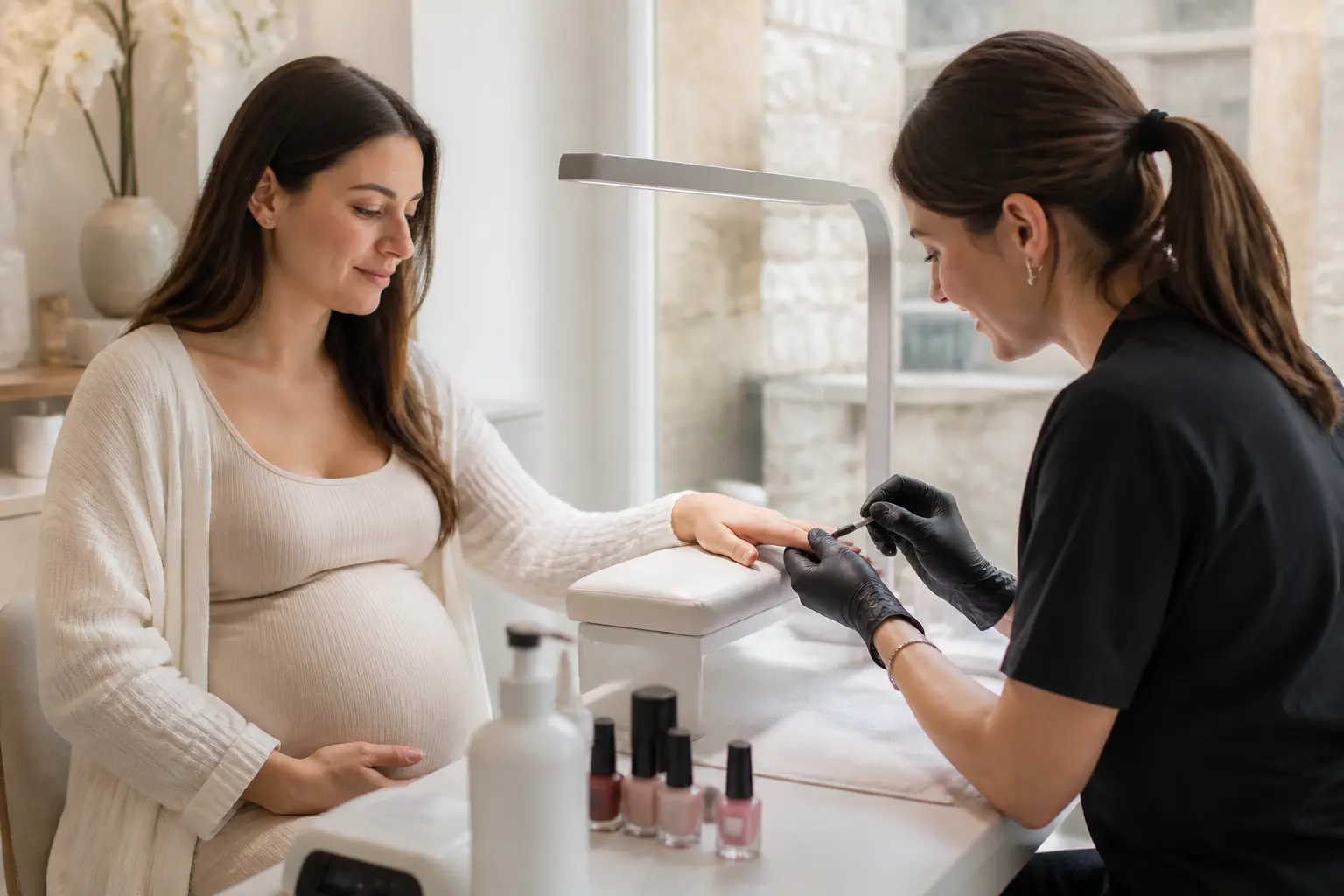
Pregnancy can make a regular manicure or pedicure feel like a small but welcome moment of care. It can also bring new questions. Will you be comfortable in the chair? Should you mention pregnancy when booking? What if your skin, nails or sense of smell feel different from usual?
For many people, a nail appointment during pregnancy is simply about choosing a professional setting, communicating openly and making practical adjustments around comfort. There is no single experience of pregnancy, and what feels easy in one trimester may feel less appealing in another. If you have a health concern, a high-risk pregnancy, a current skin or nail condition, or advice from your maternity team, check with your midwife, pharmacist or doctor before booking.
This guide focuses on the questions worth considering before a manicure, pedicure, gel polish or other nail appointment. It is designed to help you make an informed, relaxed choice, rather than turn a beauty appointment into something complicated.
Can you have a manicure or pedicure while pregnant?
A professional nail appointment may be part of your usual self-care routine during pregnancy, provided it suits your individual circumstances and you feel well enough to attend. The most useful starting point is to tell the salon that you are pregnant, especially if you are sensitive to smells, need more frequent breaks, find certain seating positions uncomfortable or have been given personalised health advice.
Pregnancy itself can change how nails behave. The NHS notes that nails may become harder, softer or more brittle during pregnancy. This means the finish you normally choose may wear differently, and nails may need a gentler approach than usual. It does not mean that every change needs a salon solution. Sudden, painful or unexplained nail changes should be discussed with an appropriate health professional rather than covered up with polish.
For routine beauty care, the key considerations are comfort, hygiene, product sensitivity and ventilation. A professional appointment should give you the space to discuss each of these before the service begins.
Tell your nail technician you are pregnant
You do not need to share more than you are comfortable with, but mentioning pregnancy is useful. It allows the technician to make the appointment easier to manage and gives you an opportunity to raise preferences or concerns without feeling rushed.
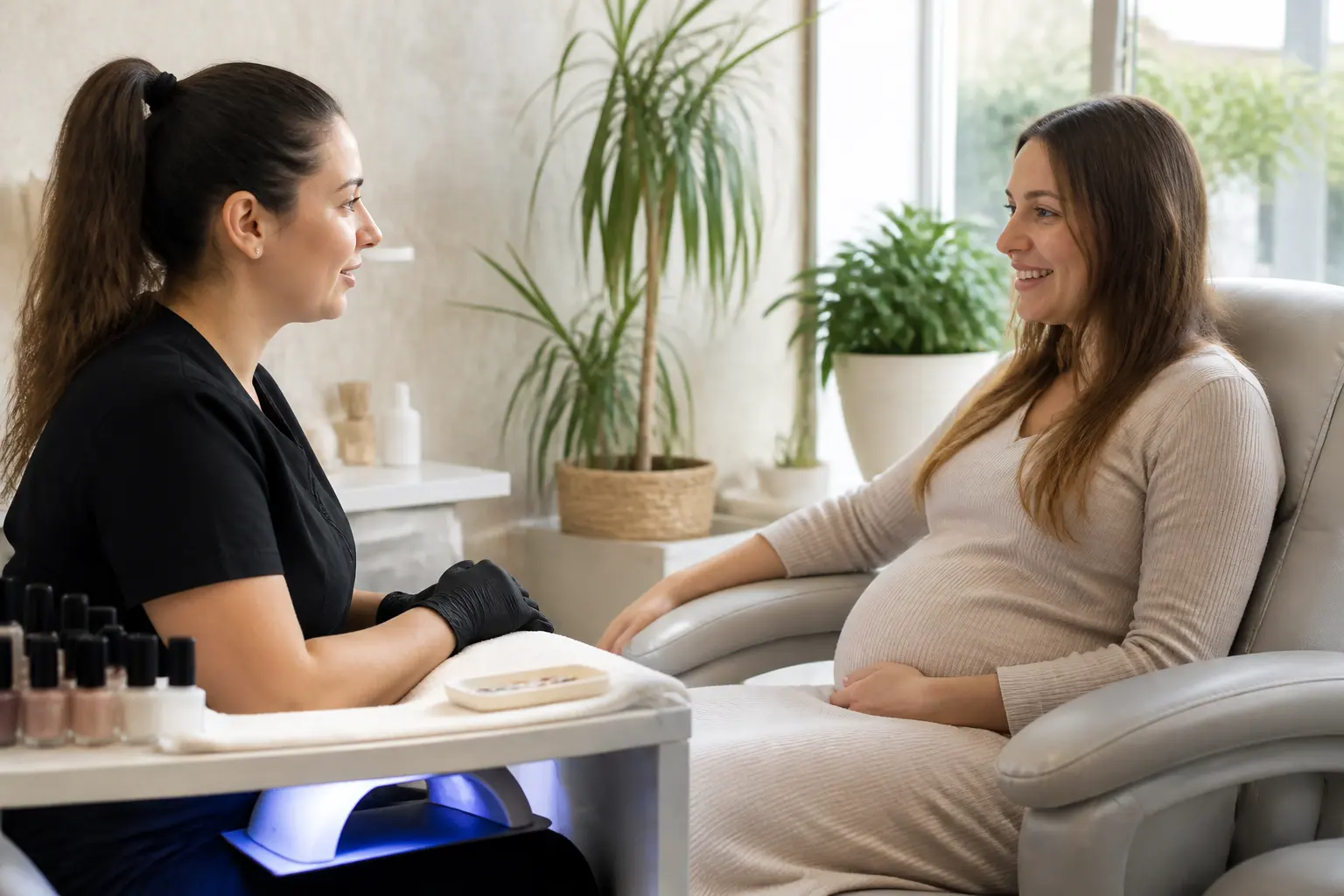
When booking, consider mentioning:
- your trimester, if you would like the appointment adapted for comfort;
- any sensitivity to fragrance, acetone or product smells;
- skin irritation, allergies or a history of reactions to nail products;
- difficulty sitting back for long periods or reaching your feet;
- swelling in your hands, ankles or feet;
- any advice from your midwife or doctor that affects salon appointments.
A good consultation is not about making assumptions. It is about choosing a service and pace that feel appropriate for you that day. You can also ask what products will be used and whether the salon can keep the appointment simple, such as a tidy manicure with regular polish instead of a longer enhancement service.
Comfort matters more as pregnancy progresses
Comfort is often the most immediate consideration, particularly later in pregnancy. A position that once felt ordinary can become tiring after twenty minutes. You may prefer a shorter appointment, a chance to stand and stretch, extra back support or a pedicure setup that does not require you to lean forward.
Choose a time when you tend to feel your best
If morning sickness, fatigue or food-related nausea is part of your day, book around the time you are usually most comfortable. Some clients prefer an earlier slot, while others feel better after they have eaten and had time to settle. There is no universal best time. The aim is to avoid adding pressure to an already demanding day.
Ask for a comfortable seated position
For a manicure, ask whether you can sit with good back support and room to adjust your posture. For a pedicure, let the technician know if you need help getting comfortable or if a position puts pressure on your lower back, hips or legs. It is perfectly reasonable to request a pause, reposition yourself or stop early if you begin to feel unwell.
Build in extra time
Pregnancy can make everyday movement slower, and toilet breaks may be more frequent. Arriving with a little time in hand can make the appointment feel calmer. If you are booking a pedicure, wear shoes that are easy to put back on afterwards and that will not press against freshly finished toenails.
Ventilation and product smells at a nail appointment
Smells that never bothered you before may feel much stronger during pregnancy. Nail polish remover, gels, acrylic systems and filing dust can be unpleasant for some people, particularly if nausea is already an issue. You do not have to push through discomfort for the sake of an appointment.
Ventilation is an important part of a responsible nail environment. The UK Health and Safety Executive explains that some beauty-product ingredients can irritate skin, and that artificial-nail liquids, powders, fumes and dust need appropriate controls. Its guidance highlights good ventilation and local extraction for nail work. Read the HSE guidance for beauticians.
As a client, practical choices include:
- choosing a salon that feels clean, airy and professionally organised;
- asking to be seated away from strong product fumes where possible;
- choosing a simpler service if strong smells make you feel nauseous;
- speaking up if you feel dizzy, headachy or unwell during the appointment;
- rescheduling if you are having a particularly difficult day.
A well-ventilated setting benefits everyone. It is especially relevant when services involve more filing, removers or artificial nail products.
Manicure, pedicure, gel or extensions: choosing what feels right
There is no requirement to change your nail style simply because you are pregnant. However, this can be a good time to think about what is practical, comfortable and easy for you to maintain.
Regular manicure and pedicure
A traditional manicure or pedicure can be a straightforward choice when you want neat nails, cuticle care and colour without committing to a longer service. If your nails are more brittle than usual, let the technician know so they can assess the current condition and avoid overly aggressive filing or removal.
Gel polish
Gel polish can suit clients who enjoy longer-lasting colour, but removal should be handled carefully and professionally. Avoid picking, peeling or forcing product off at home. That can take layers from the natural nail and leave it weaker, which may be particularly frustrating if your nails are already changing during pregnancy.
If you work in a clinical setting or are preparing for a hospital procedure, ask your medical team whether nail polish or gel should be removed beforehand. Some NHS services ask patients to arrive without nail varnish for certain procedures or monitoring, so it is worth checking your specific instructions rather than guessing.
Artificial nails and longer lengths
Extensions and structured nail services can be a personal style choice, but consider daily comfort. If your hands are swollen, your nails feel more sensitive, or you are preparing for a busy newborn period, a shorter length may be easier to manage. The best option is the one that fits your routine and lets you keep your nails clean and comfortable.
Skin sensitivity, allergies and patch testing
Pregnancy can be a time when your skin behaves differently. A product you have used before may feel irritating, and a new product may not suit you. That is why it is important to tell your technician about any previous reaction to polish, gel, adhesive, remover, fragrance or hand products.
Do not ignore itching, redness, soreness, swelling, burning or a rash around the nails or fingertips. These symptoms are not something to cover with another layer of product. Stop using the suspected product and seek advice from a pharmacist, midwife or doctor, particularly if symptoms are severe, persistent or spreading.
It is also wise to be cautious with heavily fragranced add-ons if scent sensitivity is affecting you. A simple service can still feel polished and restorative. Personalisation sometimes means doing less, not adding more.
Hygiene should be non-negotiable
Pregnancy is a good reminder to choose nail care that prioritises hygiene, whatever service you select. At a professional studio, do not be afraid to ask how tools are cleaned, what is disposable and how work areas are prepared between clients.
Look for practical signs of good standards:
- a visibly clean workstation and pedicure area;
- fresh, properly prepared tools;
- single-use items where appropriate;
- clean towels and a tidy treatment setup;
- a technician who assesses the nails before starting;
- a willingness to postpone a service if there are signs of irritation, broken skin or a possible infection.
Do not book a cosmetic nail service over painful, inflamed or visibly infected skin. The NHS advises seeking medical advice if skin around a nail is sore, red, swollen and warm, as this may signal an infection. It also recommends professional advice for nail changes that are unexplained. See NHS advice on nail problems.
When to postpone your nail appointment
There is nothing wrong with deciding that today is not the day for a manicure or pedicure. Rescheduling can be the most comfortable and sensible option if you feel unwell or if there is a concern that needs individual advice first.
Consider postponing and checking with your maternity team or another appropriate health professional if you have:
- significant swelling, pain, redness or heat around the nails or feet;
- open cuts, bleeding skin or a suspected infection;
- a known or suspected allergic reaction to nail products;
- severe nausea, dizziness, headache or a feeling of faintness;
- new symptoms that concern you during pregnancy;
- specific instructions to avoid or delay beauty appointments.
This is not about alarm. It is about recognising that a beauty service should feel calm and supportive. If you are not feeling well, you deserve the option to rest and return another day.
How to prepare for a comfortable appointment
- Book the right service. Choose something that matches your energy level and time available. A shorter tidy-up may be ideal on some days.
- Tell the studio you are pregnant. Mention any sensitivities, mobility needs or preference for breaks when you book.
- Eat and drink as you normally would. Arriving hungry or dehydrated can make any appointment less comfortable.
- Wear comfortable clothing. Loose clothing and easy-to-remove shoes can make a pedicure simpler.
- Bring your questions. Ask about the service, products and aftercare before it begins.
- Listen to your body. Ask to change position, take a break or stop if you feel uncomfortable.
Nail care between appointments during pregnancy
Between salon visits, keep the routine uncomplicated. Use hand cream regularly, wear gloves for cleaning or prolonged contact with water, and avoid using your nails as tools. These small habits can be helpful if your nails are dry, peeling or breaking more easily.
For toenails, choose footwear with enough room for your feet. If reaching your feet becomes difficult, do not force awkward positions to trim nails at home. A professional pedicure can help with grooming, but it is not a substitute for medical or podiatry advice when there is pain, an ingrown nail or a suspected fungal issue.
Most importantly, avoid picking at gel, peeling polish or cutting into the sides of toenails. The NHS advises trimming toenails straight across rather than cutting down the edges, which can help reduce the risk of ingrown nails.
A calm approach to nails during pregnancy
A nail appointment during pregnancy can remain a simple part of your routine when it is centred on your comfort, preferences and current wellbeing. Choose a professional setting, communicate openly, keep an eye on changes in your nails or skin, and give yourself permission to choose a shorter service or reschedule when needed.
If you are in Malta and would like a neat, considered manicure or pedicure, the Nails service at Becammo is available exclusively at the Sliema studio. When you book, share any comfort needs or questions in advance so the appointment can be planned around you.
Frequently asked questions
Should I tell the nail salon that I am pregnant?
Yes. It helps the technician adapt the appointment around comfort, scent sensitivity, seating preferences and any need for breaks. You can keep the details brief and share only what feels relevant.
Can pregnancy make nails brittle?
It can. The NHS notes that nails may become harder, softer or more brittle during pregnancy. If you notice painful, sudden or unexplained changes, seek advice from an appropriate health professional.
What if nail product smells make me feel sick?
Tell the technician straight away. Ask for a break, move to a better-ventilated area if possible, choose a simpler service or reschedule. You do not need to continue an appointment while feeling unwell.
Can I have gel polish while pregnant?
Your choice should be based on your individual comfort, nail condition and any advice from your maternity team. Tell the technician about sensitivities and have gel removed professionally rather than peeling it off yourself.
When should I avoid a manicure or pedicure?
Postpone the appointment if you have broken skin, painful swelling, redness, warmth, a suspected infection, a product reaction or symptoms that make you feel unwell. Ask a pharmacist, midwife or doctor for guidance if you are unsure.
Where can I book nail care at Becammo?
Nail services are offered exclusively at Becammo Sliema. Choose the Nails service when booking and let the studio know if you would like to discuss comfort or product considerations before your appointment.