Does Eyebrow Threading Hurt? An Honest Guide to Comfort
Brenda Cammo Team
If you are thinking about booking eyebrow threading for the first time, it is natural to ask one simple question: does eyebrow threading hurt?
The honest answer is that it can feel uncomfortable, but the sensation is usually brief and manageable for many people. Threading removes hairs from the root using a fine twisted thread, so you may notice a quick tugging feeling as the artist works across the brow area. Some people describe it as a series of fast pinches, while others find it more like a light sting that comes and goes.
Your own experience can vary according to your skin, hair growth, sensitivity on the day and the area being shaped. A professional appointment should never rely on pretending that everyone feels exactly the same. Instead, your brow artist should explain what is happening, work with care and give you the space to mention anything that may affect your comfort.
At Becammo, eyebrow design is approached as a personalised service. The aim is not to force one brow shape or one standard experience, but to create balanced definition while considering your natural brow pattern, facial features and comfort throughout the appointment.
What does eyebrow threading actually feel like?
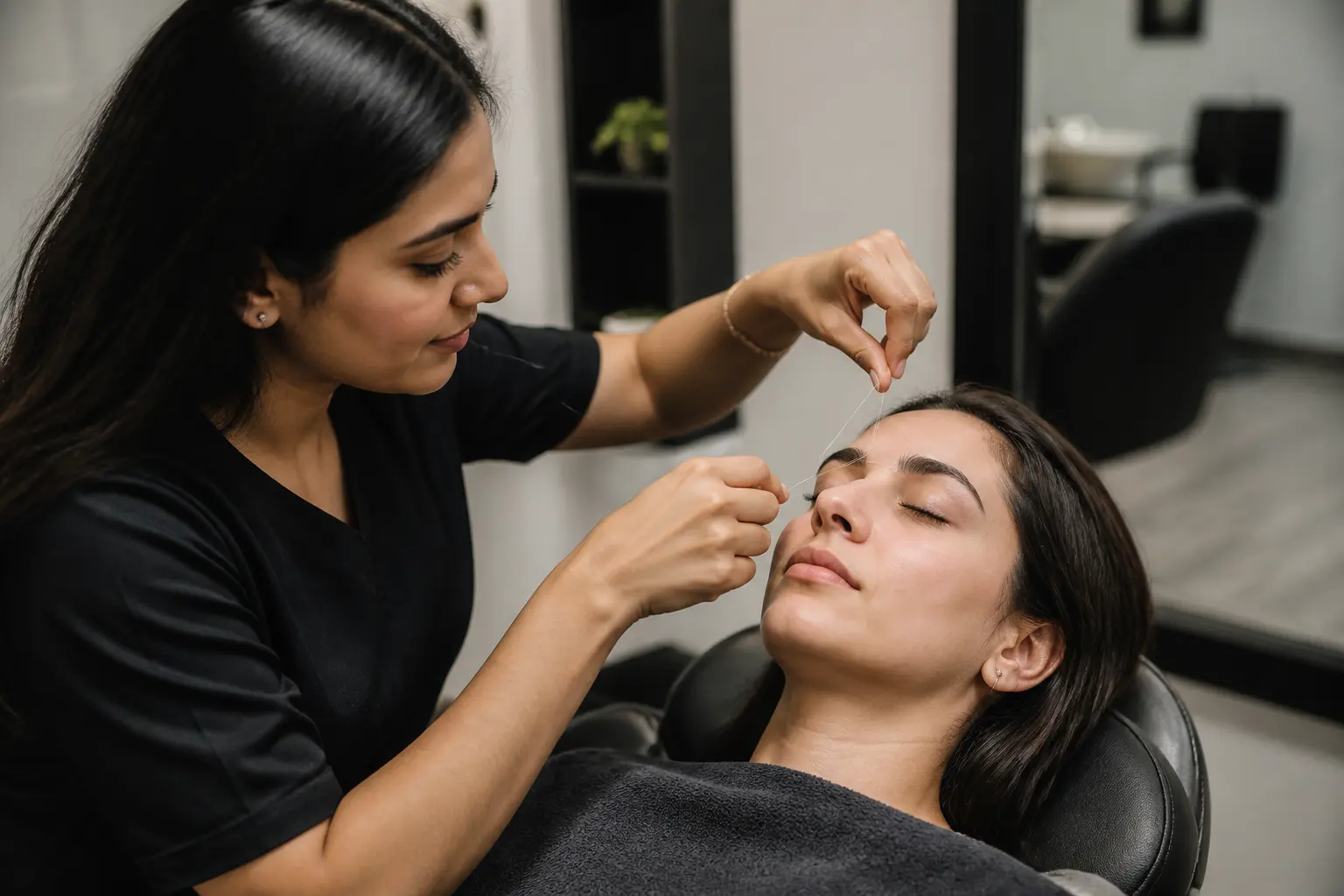
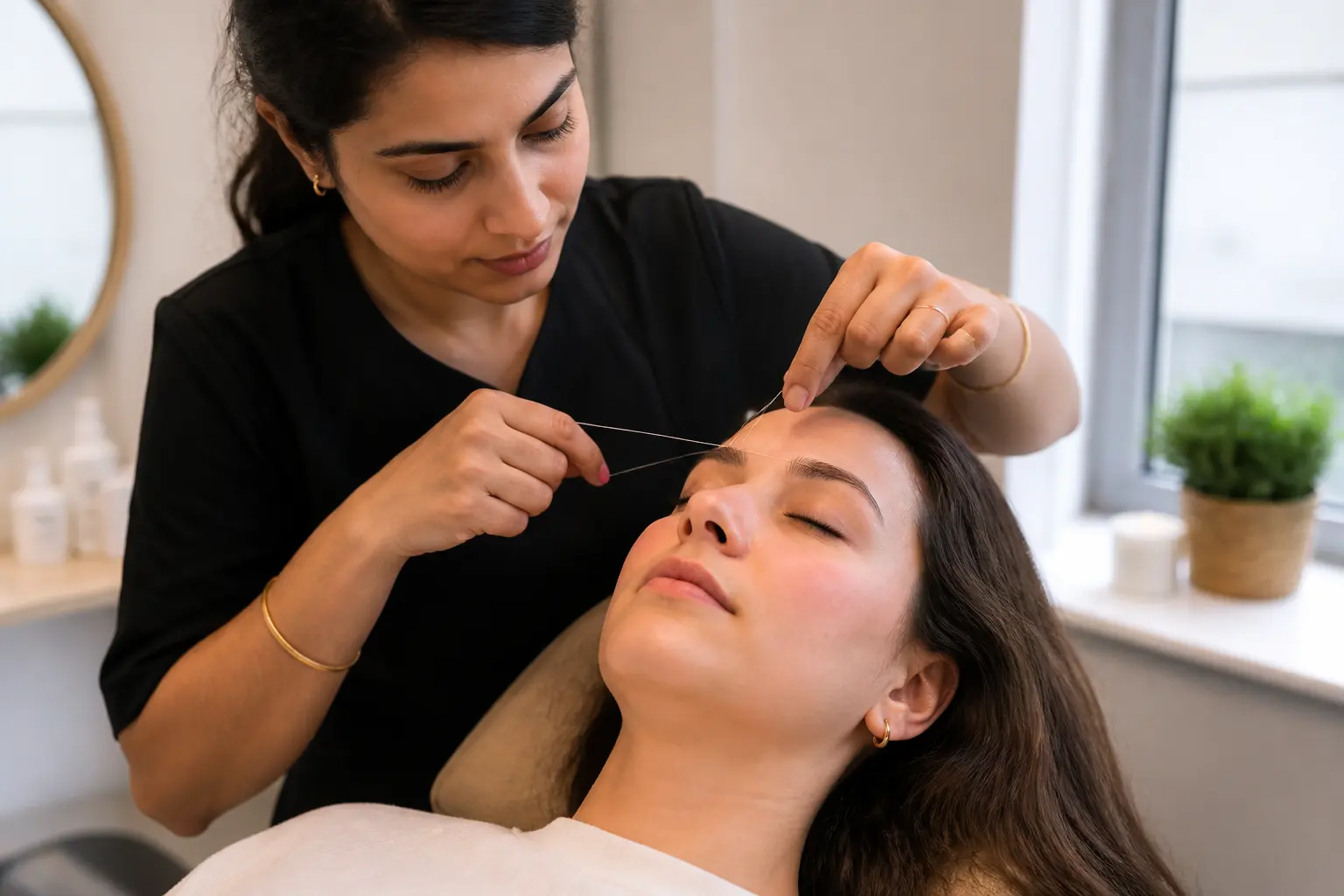
During threading, the artist twists a clean thread and rolls it over the skin to catch and remove unwanted hairs. The movement is precise and fast. Because several fine hairs can be removed in one pass, the feeling tends to be short rather than drawn out.
Most clients notice the sensation most clearly in areas where the skin is delicate or where hairs are finer. This can include:
- Under the brow, particularly close to the arch
- Between the brows
- Above the brow line
- The upper lip, if this is added to the appointment
The sensation often changes from one part of the eyebrow to another. For example, removing a few coarse hairs from the centre of the brow may feel different from refining soft hairs underneath the arch. If your brows have not been tidied for a while, there may also be more hair to remove at the first appointment. That does not mean every future visit will feel identical.
Threading is not a relaxing facial massage, and it is best to be realistic about that. Yet it is also a quick, focused technique. Many clients find that the brief nature of each pass makes the appointment easier to manage than they expected.
Why can the feeling vary so much?
There is no single pain scale that applies to every person. Your perception of threading can change from appointment to appointment, even when the same area is being shaped. Several practical factors can influence how it feels.
Your natural sensitivity
Some people are naturally more sensitive around the eye area, while others barely react to brow hair removal. If you have had waxing, tweezing or threading before, that may give you a useful reference point, but it still will not predict every appointment exactly.
The amount and type of hair
Brows with dense growth, coarse hairs or a longer period between appointments may need more tidying. Fine new growth can also be noticeable when it is removed. A skilled artist works methodically, but the sensation depends partly on what is present in the brow area that day.
Your skin on the day
Skin can feel more reactive when it is dry, irritated, sun-exposed or already sensitive. It is important to arrive with clean brow skin and to tell your artist about relevant skincare products or recent changes in your routine. This helps the studio consider whether threading is appropriate to carry out as planned or whether another timing would be more comfortable.
Stress, tiredness and expectations
When you feel rushed, tense or worried about the unknown, small sensations can seem stronger. First-time clients sometimes hold their breath or tighten the muscles around their eyes without noticing. Knowing what will happen, and allowing a little time for the appointment, can make a genuine difference to how settled you feel.
The artist’s technique
Threading is a technique that requires control, positioning and attention to detail. A trained artist keeps the skin supported, works in small areas and checks the developing brow shape rather than removing hair without a plan. This supports both precision and a more considered experience.
Is threading more uncomfortable than waxing or tweezing?
There is no universal answer because each person responds differently. Waxing removes hair with a quick pull, while tweezing removes individual hairs one at a time. Threading uses the movement of the twisted thread to remove hairs precisely from the chosen area.
For some people, threading feels easier because the pulling sensation is fast and localised. Others find the repeated movement more noticeable, especially during their first visit. The best method is not simply the one that feels least noticeable in theory. It is the one that fits your skin, brow goals, preferences and the way you want your brows to be shaped and maintained.
Threading can be particularly helpful when you want detailed work around the natural brow line. Rather than treating the eyebrow as a fixed template, the artist can assess the direction of growth, fullness, asymmetry and the amount of definition you would like. This is important because balanced brows do not need to be identical brows.
How a professional threading appointment supports comfort
Comfort begins before the first hair is removed. At a professional studio, the conversation around your brows matters. You should be able to say whether it is your first threading appointment, whether you are feeling nervous and whether you prefer a softer clean-up or a more defined shape.
A careful appointment may include the following:
- A short consultation. Your artist looks at your natural brow growth, discusses the result you want and checks for relevant concerns before beginning.
- Clear positioning. You will be guided on how to sit or lie comfortably and how to help keep the skin taut when needed.
- Controlled, precise work. The artist shapes in considered sections instead of rushing through the brow area.
- Communication throughout. If a particular area feels sharp or you need a short pause, you can say so.
- Clean, single-use materials. At Becammo, the thread is single-use and discarded after each client. Cotton is the usual material, while polyester can be considered for clients with a relevant material sensitivity.
These steps do not remove every sensation from a hair-removal service. They do make the experience more transparent, hygienic and tailored to you.
Practical ways to make eyebrow threading feel more comfortable
You do not need to arrive perfectly prepared, but a few simple choices can help you feel more at ease.
Tell your artist it is your first time
There is no benefit in pretending you already know what to expect. Let the artist know that you are new to threading or that you are anxious about discomfort. They can explain the process before they begin and check in as the appointment progresses.
Give yourself enough time
Try not to book your brow appointment in the middle of a tightly packed day. Arriving flustered can make it harder to relax. A little breathing room before and after your visit gives you time to settle and allows for any temporary redness to calm before an event or photograph.
Come with clean skin around the brows
Heavy make-up, brow products and rich skincare can make it harder to assess the natural shape and prepare the area. Clean skin helps your artist see the brow growth clearly. If you are unsure about a product you use, mention it when booking or at the start of the appointment.
Avoid experimenting just before your booking
It is usually wise not to try a new strong skincare product immediately before a brow appointment. If your skin feels unusually irritated, sore or reactive, do not ignore it. Contact the studio to discuss your situation rather than assuming the appointment should go ahead unchanged.
Use simple breathing techniques
Slow breathing can help more than you might expect. Focus on exhaling during the brief threading passes, keep your shoulders relaxed and avoid clenching your jaw. The artist may also ask you to hold the skin gently in a certain position. Following that guidance helps create a smoother working surface.
Ask for a pause if you need one
A short pause is completely reasonable, especially at a first visit. Good communication is part of a personalised beauty appointment. You do not have to endure an uncomfortable moment silently.
What should you expect after eyebrow threading?
It is common for the brow area to look a little pink immediately after threading, particularly if your skin is sensitive. This is one reason it can be useful to plan ahead before a major event. Avoid picking at the area or applying lots of new products straight away.
Your artist can give you appropriate aftercare guidance based on how your skin looks after the service. Keep the area clean, avoid unnecessary friction and be gentle when applying make-up or skincare around the brows. If you use active skincare ingredients or have a known sensitivity, make sure this is raised before your appointment rather than after the service has begun.
Threading appointments can also become more familiar over time. Once you know the rhythm of the technique, understand how your own skin responds and maintain your preferred shape regularly, you may feel more confident about each visit. Maintenance is personal, though, so there is no need to follow a rigid schedule that does not suit your natural growth or lifestyle.
When is it worth speaking to the studio before booking?
It is always sensible to ask questions if you are uncertain. Contact the studio before booking if you have active irritation around the brow area, use skincare that may affect your skin’s sensitivity, have a material sensitivity or simply feel nervous about trying threading for the first time.
Sharing this information is not about making the process complicated. It gives the artist useful context and helps you make a more informed decision about timing. A professional brow service should feel collaborative, not rushed.
Frequently asked questions
Does eyebrow threading hurt more the first time?
A first appointment can feel more noticeable because the sensation is unfamiliar and there may be more hair to tidy. However, experiences vary. Knowing what to expect and communicating with your artist can make a first visit feel more manageable.
Can I ask the brow artist to go slowly?
Yes. Let your artist know if you are nervous or need a moment to settle. Threading is naturally a quick technique, but clear communication and short pauses can help you feel more comfortable.
Will my eyebrows be red after threading?
Some temporary redness can happen, especially on sensitive skin. Consider booking ahead of an important occasion where possible, and follow the aftercare guidance provided by your artist.
Should I take pain relief before eyebrow threading?
For personalised health advice, speak with an appropriate healthcare professional. For the appointment itself, tell the studio about relevant products, skin sensitivity or concerns so your artist can advise on booking considerations.
Can threading be done if I use active skincare?
It may affect how sensitive your brow area feels, so it is important to mention the products you use before the service. The studio can then consider the most suitable approach and timing for your appointment.
How can I make my next threading appointment easier?
Arrive with clean brow skin, avoid rushing, explain your preferred brow look and tell the artist if any part of the process feels intense. Familiarity and a regular, personalised maintenance plan can also help you feel more confident over time.
A comfortable brow appointment starts with an honest conversation
Eyebrow threading can involve brief discomfort, but it should not feel mysterious or intimidating. The technique is precise, the sensation is short-lived for many clients and your experience deserves to be taken seriously from the moment you book.
If you are considering eyebrow threading in Malta, choose the Becammo location in Sliema or Swieqi that is most convenient for you, select your preferred eyebrow service and share any questions when arranging your appointment. A clear conversation before you begin can help you feel more prepared, comfortable and confident about your brow design.