What Happens During a Semi-Permanent Make-Up Consultation?
Brenda Cammo Team

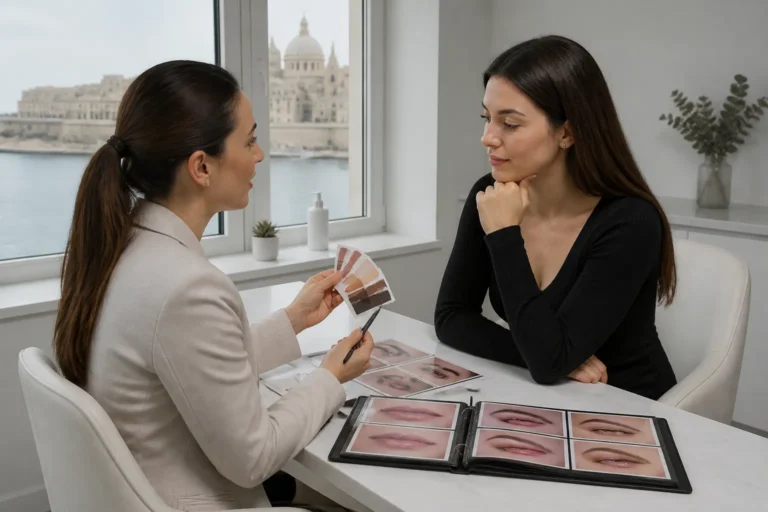
Booking semi-permanent make-up is a more considered decision than booking an everyday beauty appointment. Whether you are thinking about microblading, microshading, nanoblading or lip micropigmentation, the result is designed to stay with you beyond one occasion. That is why a professional semi-permanent make-up consultation matters.
At Becammo, the consultation is a dedicated opportunity to discuss your goals, look at the area you would like to enhance and decide whether the procedure feels right for you. It is not a rushed sales conversation, and it does not mean that you are obliged to go ahead. Its purpose is to help you make an informed, comfortable choice before booking a full procedure.
If you are in Malta and wondering what you will actually be asked, what you can bring up and what happens after the appointment, this guide takes you through the process step by step.
Why a consultation comes before semi-permanent make-up
Semi-permanent make-up involves placing pigment into the skin to create the appearance of fuller brows, hair-like strokes, soft shading or enhanced lip colour. Because skin, facial features, natural hair growth, lifestyle and colour preferences vary from person to person, a one-size-fits-all approach is not appropriate.
A consultation creates space for individual planning. It allows the artist to understand the look you hope to achieve, explain what can reasonably be planned and identify questions that should be considered before treatment. It is also the right time to discuss the fact that pigment can settle and fade differently from one person to another, so a precise outcome cannot be promised in advance.
Informed decision-making is especially important with permanent make-up. The FDA’s consumer guidance on tattoos and permanent make-up notes that pigments, skin reactions and the difficulty of removal are all important factors to understand before proceeding. A good consultation keeps the conversation practical, transparent and centred on your individual circumstances.
What happens during a semi-permanent make-up consultation?
A consultation for semi-permanent make-up at Becammo is scheduled as a short, focused appointment. It is designed to help you decide, rather than to complete the procedure itself. While the exact conversation depends on whether you are considering brows or lips, most consultations include the following areas.
1. You explain what you would like to change or enhance
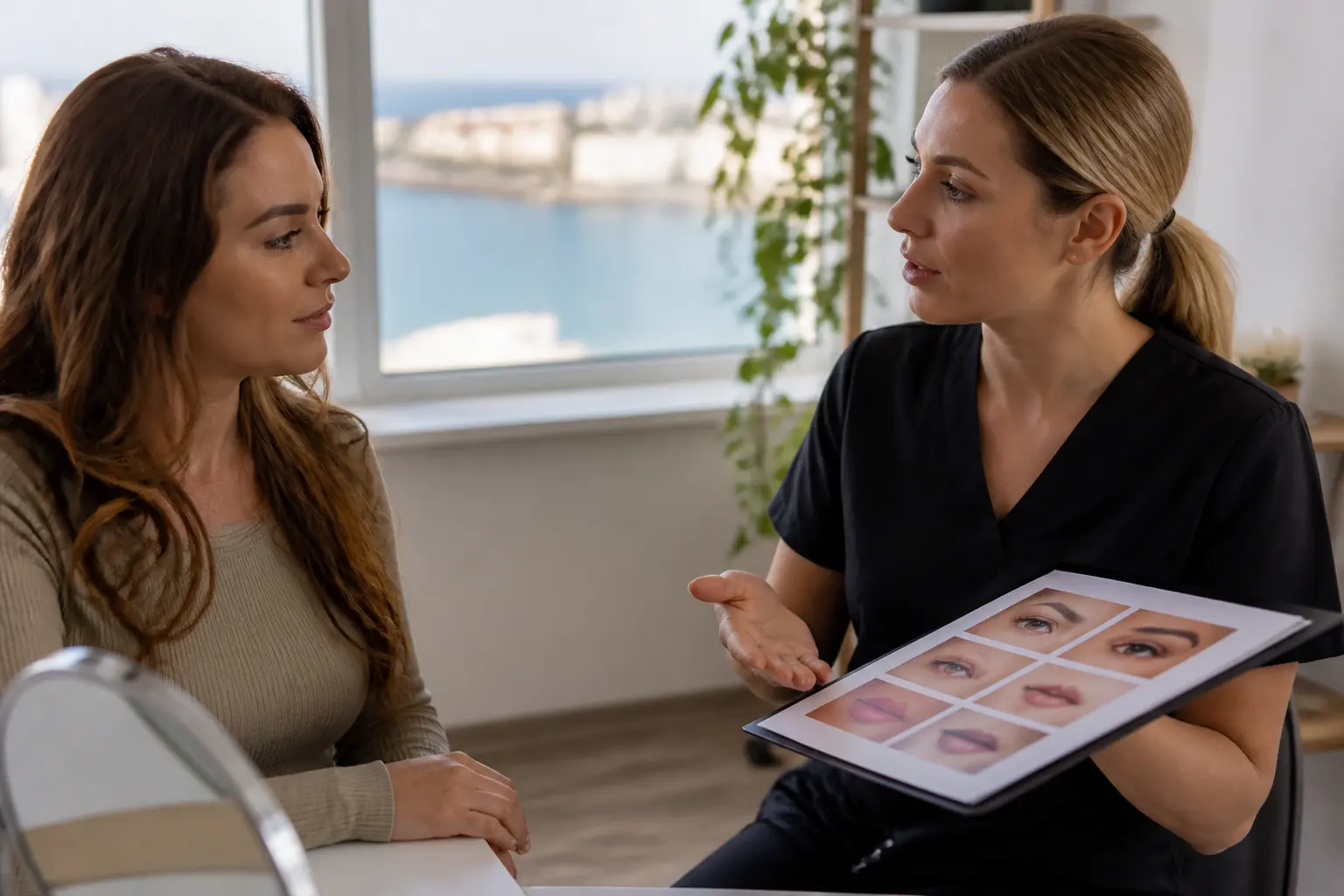
The consultation usually begins with your own priorities. You may want brows that look more balanced in photographs, a softer outline where hair has become sparse, extra definition without drawing them in every morning, or lip colour that appears more even as it settles into your everyday routine.
Try to describe the result in everyday language. For example:
- “I want my brows to look fuller, but still soft.”
- “I usually fill in this area with pencil.”
- “I like a natural lip colour rather than a strong lipstick effect.”
- “I have an old brow shape and I am unsure whether it can be worked with.”
- “I want to spend less time applying make-up before work.”
You do not need to know the name of the technique before arriving. The consultation is where you can explain the visual goal, then ask whether microblading, microshading, nanoblading, lip micropigmentation or another approach is worth considering.
2. Your natural features are assessed
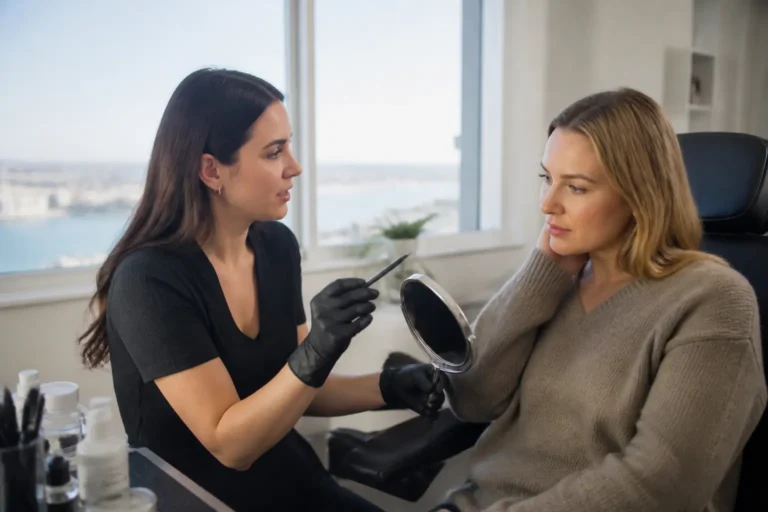
Your artist will look at the relevant area as it is now. For brows, that may include natural hair density, growth direction, existing shape, symmetry and the way your brows sit in relation to your facial features. For lips, the conversation may focus on natural tone, outline and the level of colour definition you are hoping for.
This is not about forcing your face into a trend or copying somebody else’s result. A brow or lip shape that suits one person may not suit another. The aim is to identify an approach that works with your own features, preferences and level of maintenance.
At Becammo, personalised brow design is particularly important because clients in Malta come from many backgrounds and have a wide range of brow hair textures, densities and natural shapes. A consultation should make room for that diversity rather than treating one brow style as the standard for everyone.
3. You discuss your make-up habits and preferred style
Your normal routine gives useful context. Someone who wears minimal make-up most days may prefer a lighter, softer plan than someone who regularly creates a more defined brow or lip look. Neither preference is better. The important point is that the proposed direction should feel workable when you leave the studio and return to real life.
You may be asked about:
- how you currently shape, fill or colour your brows;
- whether you use brow tint, henna, brow lamination or other beauty services;
- the lip colours you tend to choose;
- whether you want a subtle everyday finish or clearer definition;
- how much time you would like to spend on make-up after the area has healed.
Bringing a few reference photos can be helpful, particularly if they show styles you like and styles you definitely do not want. They should be used as a starting point for conversation, not as a promise that the same result can be reproduced on different skin and facial features.
4. Relevant health, skin and treatment information is reviewed
A responsible consultation includes questions about information that may affect whether it is suitable to proceed, whether timing should be adjusted or whether further advice is needed first. Be open about relevant skin concerns, sensitivities, allergies, medication, previous cosmetic tattooing and recent or planned facial procedures.
This part of the process protects you from making a decision without the full picture. It also helps the artist plan responsibly. If you have had previous microblading or micropigmentation, mention it even if it has faded significantly. Existing pigment can influence what may be possible and whether removal, fading or a different plan should be considered before a new procedure.
A consultation is not a medical appointment or a diagnosis. If a concern needs medical input, you should speak with an appropriate healthcare professional before arranging cosmetic treatment. You should also share any relevant advice you have already received from your clinician.
5. The artist explains the procedure and the commitment involved
Once your aims and relevant information have been discussed, you can ask how the proposed procedure works. This is the time to understand the difference between techniques, the general healing process, aftercare expectations and the possibility of a touch-up plan.
Useful questions include:
- Which technique best matches the look I am trying to achieve?
- Why is that technique being suggested for my natural brows or lips?
- What should I expect during the healing period?
- How might the colour look while it is settling?
- Will I need a touch-up, and when is it normally reviewed?
- What should I avoid before and after the procedure?
- What could affect how pigment settles or fades over time?
A professional should answer clearly without making absolute claims. Skin response and pigment retention can vary, so the consultation should set realistic expectations rather than presenting semi-permanent make-up as maintenance-free or identical for every client.
6. Colour, shape and treatment direction are discussed
For brow procedures, the discussion may cover whether you are drawn to hair-like strokes, soft shading or a combination effect. For lips, it may focus on how much colour presence and outline definition feels right for you. The artist can explain how choices are tailored to your features and current colouring.
This is also a useful point to say what you want to avoid. Perhaps you do not want an overly dark brow, a sharp front edge, a highly arched shape or a lip tone that feels too bold for everyday wear. Clear preferences help shape the plan.
You do not need to leave the consultation with every tiny detail fixed. What matters is that you understand the overall direction, feel heard and know what will be considered before the procedure begins.
7. You agree the next step, or decide to wait
At the end of the appointment, you may decide that you are ready to book, that you would like time to think or that another service better suits your current goal. All three are valid outcomes.
For some people, a consultation confirms that semi-permanent make-up fits their routine. For others, it highlights that they would rather begin with threading, tinting, henna or brow lamination. Choosing a less permanent option first can be a sensible way to explore definition and shape before making a longer-term commitment.
How to prepare for your consultation
You do not need extensive preparation, but a little thought beforehand can make the appointment more useful.
- Arrive with clean, familiar brows or lips. If possible, avoid making a major shape change immediately before the consultation. Your natural starting point helps the artist assess the area.
- Take note of your usual products. Be ready to mention brow products, skincare actives, lip products and any recent beauty treatments that may be relevant.
- Bring reference images thoughtfully. Choose images that communicate the softness, colour depth or level of definition you like. Include a photo of yourself with make-up you have enjoyed, if you have one.
- Write down questions in advance. This is especially helpful if you have concerns about old pigment, lifestyle, timing around travel or the healing period.
- Be honest about your expectations. Say if you are nervous, if you tend to change your brow style often or if you are hoping for an extremely subtle result. Honest information supports better guidance.
What a consultation should not feel like
You should not feel pressured to select a procedure simply because you attended a consultation. You should not be told that one identical shape, colour or technique works for every face. And you should not be promised a guaranteed result, because healing and long-term appearance depend on individual factors.
Instead, the appointment should feel calm, clear and personalised. You should leave knowing what you are considering, what questions remain and what the next practical step would be if you choose to continue.
When a consultation is particularly important
Every first-time semi-permanent make-up client can benefit from a consultation, but it is especially valuable if you have previous brow or lip pigment, uncertainty about technique, a history of sensitivities, a major event coming up or a preference for a very subtle result.
It is also useful if you are choosing between microblading and microshading. These terms are often used interchangeably online, but they describe different visual approaches. A consultation gives you an opportunity to discuss the look you want and whether it aligns with your brows, skin and ongoing expectations.
Frequently asked questions
How long is a semi-permanent make-up consultation?
At Becammo, the consultation for semi-permanent make-up is a focused 15-minute appointment. It is intended for discussing suitability, goals and the most appropriate next step before you commit to a full procedure.
Do I need to know whether I want microblading or microshading before booking?
No. You can come with a general goal, such as softer fullness or more defined brows, and discuss which technique may be appropriate. The consultation is designed to help you understand the options.
Can I have a consultation if I already have faded microblading?
Yes. Tell the artist about any previous semi-permanent make-up, even if it looks very faint. Existing pigment may affect the planning process, so it is important to assess it before booking a new procedure.
Should I bring inspiration photos?
Yes, if they help you explain your preferences. Reference images are useful for discussing colour, density and overall style, but your plan should still be personalised to your own features and skin.
Will the consultation guarantee that I can have the procedure?
No. The purpose of the consultation is to review your goals and relevant information before a decision is made. In some situations, waiting, seeking further advice or considering another service may be the more suitable choice.
Can I book semi-permanent make-up straight away after the consultation?
If the discussion indicates that you are ready to proceed, you can arrange the next step through the studio’s booking system. If you would rather take time to consider the information, you can do that too.
Make the decision with clarity
A semi-permanent make-up consultation is where inspiration becomes a realistic, personal plan. It gives you time to ask direct questions, share relevant information and understand what a procedure could involve before you make a commitment.
If you are considering semi-permanent brows or lip micropigmentation in Malta, book a consultation with Becammo. You can discuss your goals in a professional setting, then decide on your next step with greater confidence.