Upper Lip Threading or Laser Hair Removal: How the Conversations Differ
Brenda Cammo Team

Upper lip threading and laser hair removal can both be part of a facial-hair routine, but they begin with two very different conversations. Threading is usually about the hair visible now: how cleanly you would like it removed, whether you have an occasion coming up, and how your skin tends to feel afterwards. Laser hair removal is more of a longer-term plan, shaped by hair colour, skin profile, sun exposure, your diary and the possibility of several appointments.
That difference matters when you are choosing a service in Malta. If your priority is a neat upper lip for this week, threading may be the more straightforward booking. If you are considering reducing the amount of upper-lip hair you manage over time, it is worth arranging a laser consultation and discussing suitability properly rather than expecting an immediate like-for-like result.
This guide explains how the two approaches differ, what each appointment conversation should cover and how to decide which question to ask first.
Upper lip threading vs laser hair removal: the short answer
Upper lip threading removes visible hairs at the surface appointment using a twisted thread. It is a focused grooming service that can suit people who want a precise result now, including before a social event, holiday or make-up appointment.
Upper lip laser hair removal uses light energy directed at the hair follicle. It is planned as a course of appointments because hair grows in cycles, and the outcome can vary with factors including hair colour, hair coarseness, skin profile and hormonal influences. The American Academy of Dermatology notes that facial laser hair removal may require ongoing maintenance because facial hair can be influenced by hormones. American Academy of Dermatology: laser hair removal overview
Neither choice is universally “better”. The useful question is: do you want to remove the hair you can see today, or are you ready to plan a series aimed at reducing the hair you manage over time?
What the upper lip threading conversation is really about
Threading is a practical option when the goal is immediate facial grooming. At Becammo, upper lip threading is carried out with a single-use thread: cotton is the standard material, with polyester available for clients with a relevant allergy. The thread catches and removes hairs with precision, without using wax.
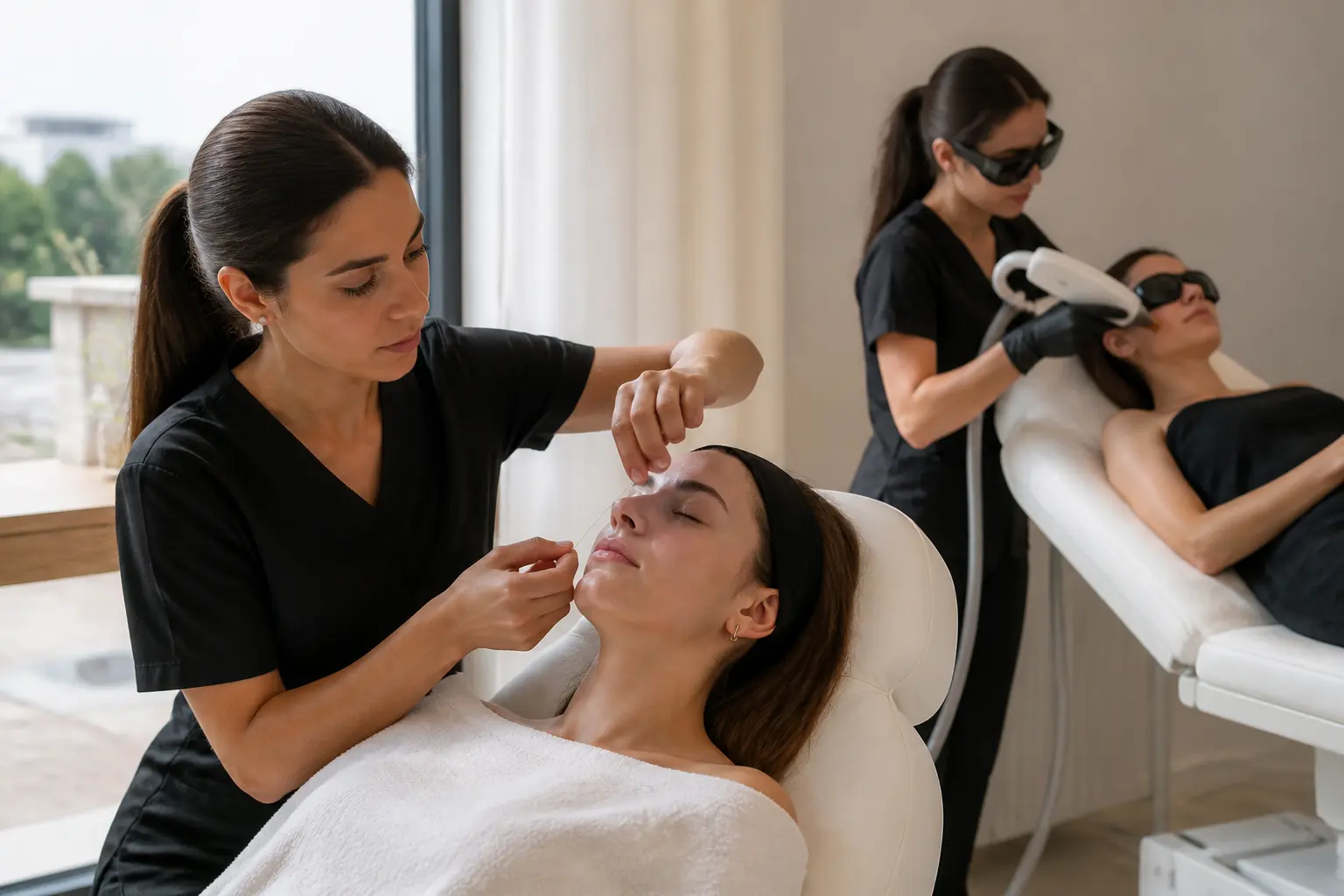
Because the upper lip is a small and visible area, a good conversation before threading is usually simple but specific. It is less about a long-term hair-reduction plan and more about comfort, timing and your preferred finish.
Questions worth raising before upper lip threading
- How recently have you removed hair from the area? Let the artist know whether you have shaved, waxed, tweezed or used a hair-removal cream recently.
- Is your skin feeling particularly reactive? Mention recent exfoliation, strong active skincare, a facial treatment, sun exposure or any irritation around the mouth.
- Do you have an occasion planned? If you are booking before photographs, an evening out or travel, allow enough time for your skin to settle in the way it normally does.
- Do you wear make-up straight afterwards? This helps you plan your appointment around the rest of your day and ask for appropriate aftercare guidance.
- Do you have a thread-material preference or allergy concern? Share this before the service begins.
The feeling during threading is individual. Some people describe brief pulling or light discomfort, especially on a sensitive area such as the upper lip. It is better to describe your previous experiences honestly than to assume your tolerance will be the same as someone else’s.
When threading often fits the brief
Threading may be a natural choice when you want a short, focused appointment; when you need visible hair removed before an occasion; when you are still deciding whether laser is right for you; or when your hair is too light for a laser-based plan to be a realistic match.
It can also be useful for people who prefer to manage facial hair appointment by appointment. Regrowth and the timing of maintenance differ from person to person, so your ideal routine should be based on how quickly you notice hair returning and how you prefer your upper lip to look.
What the upper lip laser hair removal conversation is really about
A laser appointment starts earlier than the session itself. The practitioner needs a clear picture of the area, the hair and the skin before a suitable plan can be discussed. This is particularly important on the face, where expectations need to be realistic and where maintenance may still be part of the routine.
Laser hair removal works by directing light at pigment in the hair. That is why hair colour and coarseness matter to the discussion. Traditional laser approaches do not target very light, white, grey or red hair as effectively, while advances in devices have broadened the range of skin tones that may be considered. Suitability and settings still need individual assessment. American Academy of Dermatology: options for removing unwanted hair
Questions worth raising before upper lip laser hair removal
- What is my main goal? Be clear whether you are hoping to reduce frequent grooming, make hair less noticeable or manage a particular pattern of regrowth.
- What does my hair look like naturally? Mention whether it is dark, fair, fine, coarse, sparse or dense. Avoid assuming that the area alone determines whether laser is suitable.
- Have I had recent sun exposure or used self-tan? This is essential information. The American Academy of Dermatology advises avoiding tanning and using sun protection before laser treatment, as a recent tan can affect safety planning. American Academy of Dermatology: preparing for laser hair removal
- Which skincare products and medicines am I using? Bring up active ingredients, prescription products and anything that has made your skin feel sensitive. A professional consultation is the place to establish what should be paused or reviewed.
- What is my history with pigmentation, scarring or cold sores? Do not leave this until after a session has begun. It may change the recommendation or the timing.
- How many appointments might be appropriate for me? Ask for an individual estimate, not a promise. A course is usually necessary because not every hair is in the same growth stage at once.
- Could facial maintenance be relevant later? This is an especially useful question for upper-lip hair, where hormonal changes can influence regrowth.
Laser is not a one-off equivalent of threading. The American Academy of Dermatology states that repeat sessions are commonly scheduled several weeks apart and that individual timing varies. American Academy of Dermatology: laser hair removal FAQs Think of it as a booking plan, not simply a different way to tidy the upper lip on the same day.
The biggest practical differences
| Question | Upper lip threading | Upper lip laser hair removal |
|---|---|---|
| What is the main aim? | Remove visible hair during one grooming appointment. | Plan a reduction in hair growth and grooming needs over a series. |
| What does the conversation focus on? | Current skin comfort, desired finish and timing around your day. | Hair and skin assessment, medical and skincare history, sun exposure and expectations. |
| When can it suit? | When you want a precise, immediate result. | When you are ready to commit to a longer-term appointment plan. |
| How does hair colour matter? | It does not determine whether the thread can catch visible hairs. | It is a key suitability factor because laser targets pigment. |
| How is maintenance planned? | According to your individual regrowth and grooming preference. | As advised after assessment, with possible later maintenance for facial areas. |
| What should you avoid assuming? | That every person will have the same level of sensitivity or settling time. | That one session will replace every future facial-hair appointment. |
Can you use both threading and laser in the same overall routine?
Potentially, but do not create your own schedule without asking the practitioner who is assessing your laser plan. The important distinction is that threading removes hair from the root, while laser sessions depend on the relevant hair being available for the planned treatment approach. Timing therefore matters.
Some people begin with threading because they need a quick grooming option and later decide to explore laser. Others are already following a laser plan but need guidance on what hair-removal methods to avoid between sessions. The sensible route is to say exactly what you have been doing at home and what appointments you have booked elsewhere. A clear timeline helps the team give advice tailored to the area and your plan.
This is also a reason to avoid treating laser as a last-minute addition before a special event. If your priority is looking polished for a particular date, threading can often be the more direct conversation. If your priority is changing your longer-term maintenance routine, start with a laser discussion well before the date matters.
How to choose based on your real priority
Choose the threading conversation if your priority is immediate grooming
Threading is likely to be the better starting point if you have an upcoming event, want hair removed from a small facial area now, prefer an appointment-by-appointment routine or are unsure whether your hair profile is suitable for laser.
Book with enough breathing room before an important occasion, particularly if you already know that your skin can look temporarily pink or feel sensitive after hair removal. Keep the rest of your skincare and make-up plans in mind rather than squeezing the appointment into the final hour.
Choose the laser conversation if your priority is a structured plan
Laser may be worth exploring if regular upper-lip grooming feels like an ongoing task and you would like an assessment of whether a course could suit your hair and skin profile. Be prepared to talk openly about your routine, sun exposure, previous hair removal, skincare and any relevant health information.
It is also helpful to approach the consultation without a fixed number of sessions in mind. Results can vary, and a responsible recommendation should reflect your own hair, skin and response over time rather than a generic promise.
Pause and ask for guidance if your skin is unsettled
If the area around your mouth is irritated, unusually sensitive or recently affected by another procedure, do not guess which service is appropriate. Explain what has happened, when it happened and what products you have used. For laser specifically, a recent tan and certain skin or medication factors should be discussed before treatment. American Academy of Dermatology: consultation and preparation guidance
What to say when you book
A simple, honest booking note can make the appointment more useful. For threading, you might say: “I would like upper lip threading before an event, and my skin can be sensitive after exfoliation.” For laser, you might say: “I am considering upper-lip laser hair removal and would like to discuss my hair colour, skin profile and recent sun exposure before starting.”
Those are very different requests, and that is exactly the point. One asks for a grooming service now. The other opens a consultation about a sequence of decisions. Giving that context allows the team to guide you towards an appointment that fits your actual goal.
Conclusion
Upper lip threading and laser hair removal belong in the same wider hair-removal conversation, but they answer different needs. Threading is about precision and an immediate tidy finish. Laser is about assessing whether a longer-term reduction plan is appropriate, then allowing time for a series of sessions and individual response.
If you want to make upper-lip hair removal feel simpler, begin with the goal rather than the method. Decide whether today’s visible hair or your future routine is the issue you most want to address, then book the conversation that matches it.
Frequently asked questions
Is upper lip threading better than laser hair removal?
They are designed for different priorities. Threading can suit immediate, precise hair removal, while laser may suit someone who wants to discuss a longer-term hair-reduction plan. The better option depends on your hair, skin, timetable and expectations.
Can laser hair removal remove upper-lip hair permanently?
It is important not to expect an absolute outcome. Laser hair removal can reduce hair growth, but facial areas may need maintenance because hormones can influence regrowth. Your likely plan should be discussed individually at consultation.
Does upper lip threading work on fair hair?
Threading can remove visible hairs regardless of whether they are dark or fair, provided the hairs can be caught by the thread. In contrast, hair colour is an important part of a laser suitability conversation.
Should I thread my upper lip between laser sessions?
Ask the practitioner overseeing your laser plan before doing so. Hair-removal methods and timing between appointments can affect how the laser course is planned, so personalised guidance is preferable to a general rule.
How should I prepare for an upper-lip laser consultation?
Be ready to discuss your natural hair colour and coarseness, recent sun exposure or tanning, skincare products, medicines, history of sensitivity and your previous hair-removal methods. This information helps establish whether and when laser could be appropriate.
Can I book upper lip threading before a special occasion?
Yes, but allow time based on how your skin usually responds to hair removal. If you have not had threading before, avoid leaving your first appointment until the last possible moment before an important event.