Why Your Eyebrows Can Look Different in Photos Than in the Mirror
Brenda Cammo Team
You may feel happy with your eyebrows in the mirror, then notice that one looks higher, fuller or more defined in a photo. It is a common experience, and it does not automatically mean your brow shape is wrong. Mirrors, phone cameras, lighting and facial expression all show your features in different ways.
Because eyebrows frame the eyes and sit on a naturally expressive part of the face, small differences can become more noticeable when an image is captured. Understanding why your eyebrows look different in photos can help you assess them more fairly—and have a clearer conversation when you book a brow appointment.
A mirror and a camera do not show the same view
A mirror shows a reversed, live view of your face. It is also the version you see most often, so it feels familiar. A photograph usually shows the face without that reversal. Even if the differences are subtle, an unfamiliar orientation can make one brow seem more prominent than you expect.
Photos also freeze one instant. In the mirror, you naturally make tiny adjustments: you lift your head, soften your forehead, turn slightly towards the light or change your expression. A camera can capture a moment when one eyebrow is slightly raised, your head is tilted, or a shadow falls more strongly on one side.
Neither version is necessarily more ‘correct’. They are simply different representations of a three-dimensional face.
Natural brow asymmetry is normal
Most faces are not perfectly symmetrical. One eye may sit a little differently, one eyelid may appear more open, or one side of the forehead may move more actively when you speak. Brow hairs can also grow in different directions from one side to the other.
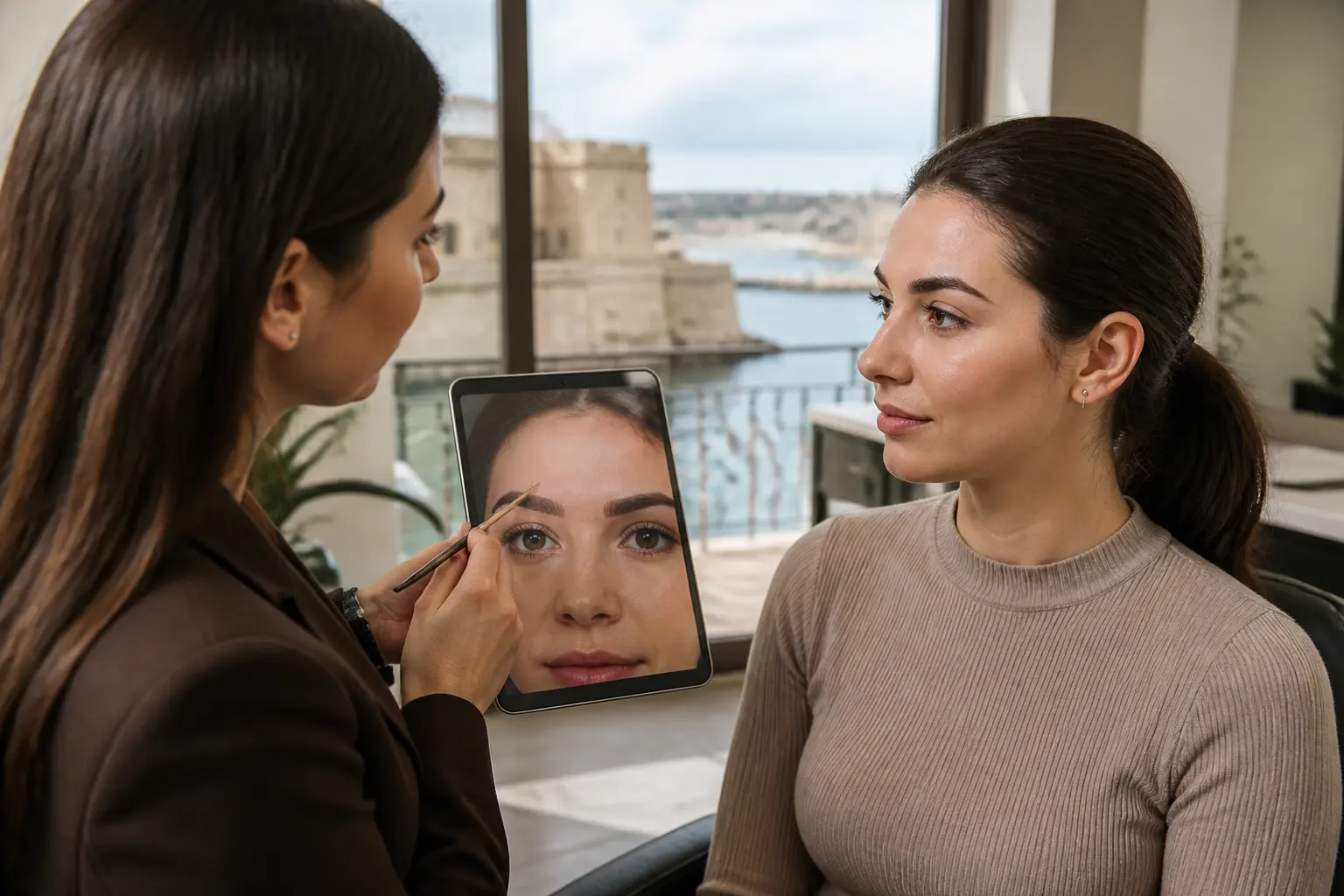
This matters because eyebrows are not separate shapes placed on a flat surface. Their position relates to the brow bone, eyes, forehead, temples and the way your facial muscles move. Trying to make both brows identical can create a result that feels stiff or less harmonious with your natural features.
A considered brow design aims for visual balance rather than copied-and-pasted symmetry. The goal is to respect your existing hair pattern and face while tidying, defining or gently refining the overall line.
Why one brow may appear higher
One side may look higher in a photo for several reasons:
- You may naturally lift one brow more than the other when concentrating, smiling or reacting to the camera.
- A slight head tilt can change the apparent height of the brows.
- The brow bones themselves may have different contours.
- One brow may have a stronger arch or a more defined upper edge.
- Lighting may create a shadow that makes one brow look heavier or lower.
These are useful observations to bring to a brow artist, but they are not instructions to remove hair quickly from the higher-looking side. A design decision should be made while considering your face at rest and in movement.
Phone cameras can change proportions
Phone photography is convenient, but the lens, distance and angle can influence how facial features appear. A close selfie can exaggerate the central part of the face and alter the relationship between your brows, eyes and nose. If the phone is held slightly above or below eye level, it can also change the apparent position of each brow.
Front-facing cameras can give a different result from rear-facing cameras, and image processing may adjust contrast, sharpness or exposure automatically. These changes are often subtle, yet brows have fine edges and individual hairs, so extra contrast can make an uneven density look more obvious.
A practical photo check
If you are trying to understand whether a photo reflects your everyday appearance, take a small set of images rather than judging one selfie. Stand in even daylight where possible, keep the camera at roughly eye level and take a step back rather than holding it very close to your face. Try a relaxed expression, then a natural smile.
Compare the photographs as a group. If a feature appears only in one angle or one lighting condition, it may be a photographic effect rather than something that needs changing.
Lighting can make brows look fuller, thinner or uneven
Light affects every part of a photograph. Direct overhead light can create shadows beneath the brow bone. Side light may illuminate one brow while leaving the other in softer shade. Bright daylight can show individual hairs clearly, while low indoor lighting may make sparse areas appear more noticeable.
Make-up, skincare and natural skin texture can affect light reflection too. A dewy product on the brow bone may highlight one side more strongly. Conversely, a matte base or powder around the brow can soften its edge in a photo.
For an occasion where photographs matter, it can be helpful to test your usual brow products in the light and setting you expect. This is more useful than making a major shape change because of a single image.
Make-up can emphasise small differences
Brow pencil, powder, tint, gel and concealer can all make a brow look more structured. That can be helpful, but the two sides may respond differently depending on hair density and growth direction.
For example, the sparser brow may need a lighter touch than expected. Filling it too heavily to match the denser side can make it look darker in photos. A strong, sharply drawn lower line can also make a naturally softer brow look lower or more angular.
Instead of trying to force matching blocks of colour, focus on the overall effect:
- Use fine, hair-like strokes in areas that look naturally lighter.
- Brush product through the hairs to soften hard lines.
- Build colour gradually, checking both close up and at normal conversation distance.
- Choose a shade that works with your hair colour and complexion rather than simply choosing the darkest option.
- Step away from the mirror before deciding whether more product is needed.
If you use brow make-up regularly, mention it during your appointment. Your usual routine can influence how much definition you want from the shape alone and where a softer finish may suit you best.
Expression changes the brow area quickly
Eyebrows are closely linked to expression. A raised brow can communicate curiosity or surprise; a slight frown can draw the brows closer together; a broad smile can change the appearance of the eyes and upper cheeks. A still photograph may capture one of these temporary movements.
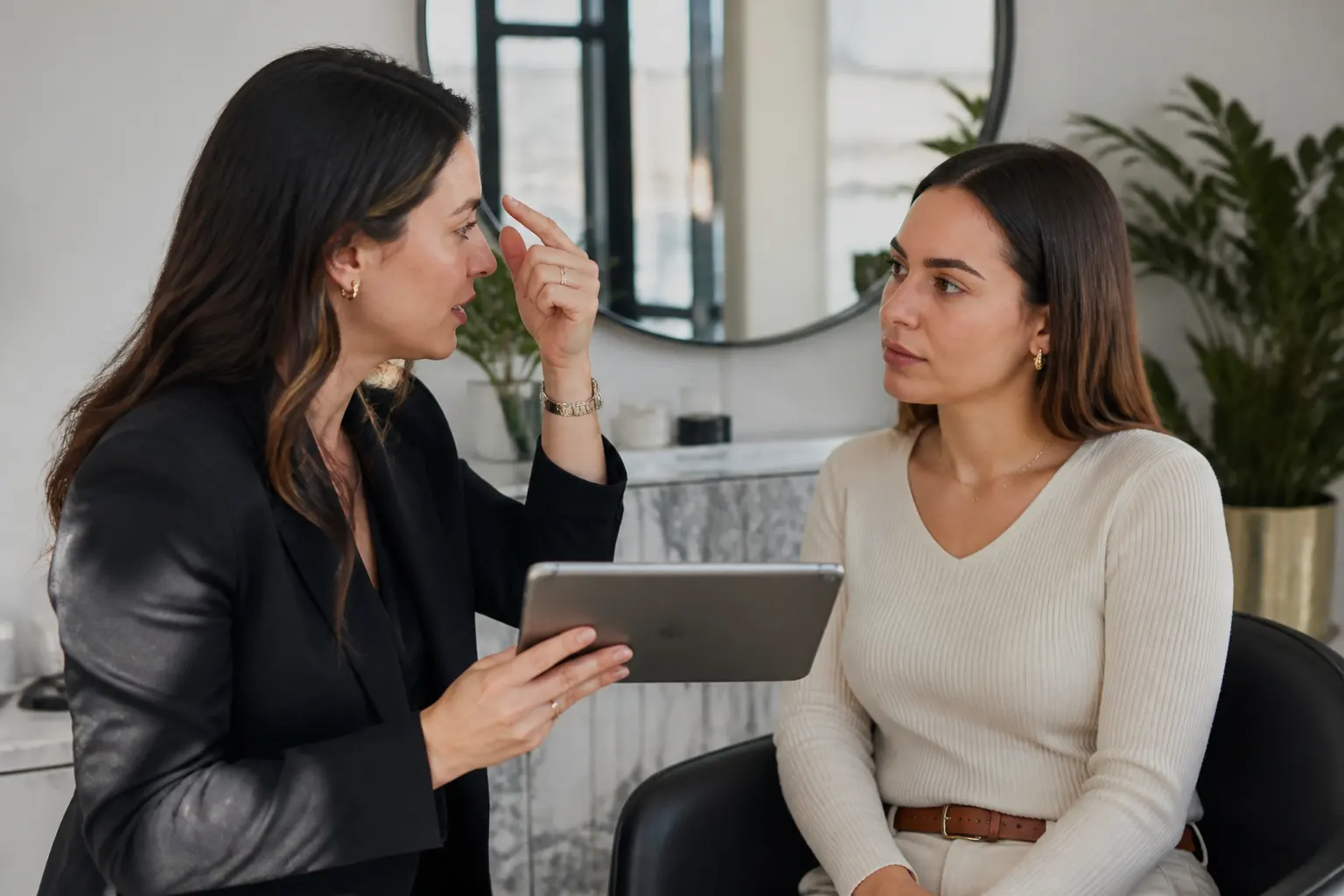
This is why a thoughtful design conversation includes more than a front-facing, neutral pose. Your brow artist may observe your face at rest, ask what you would like to enhance and consider where the hair naturally grows. The result should be designed for your real face, not only for one frozen expression.
What brow mapping can and cannot do
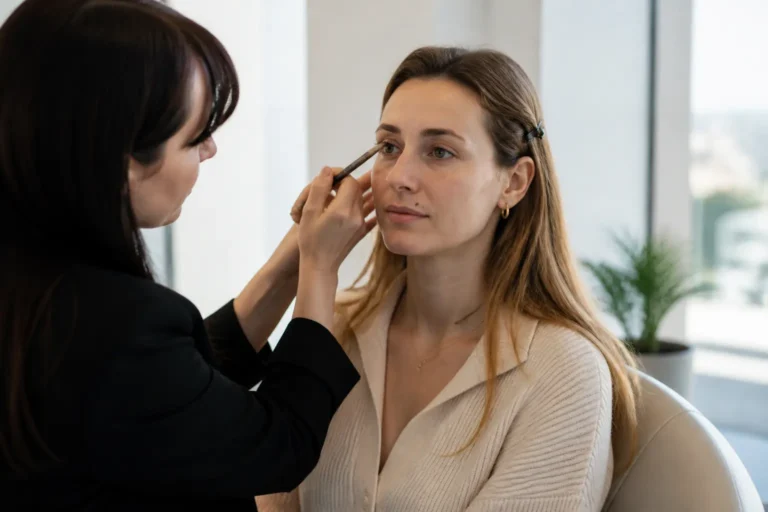
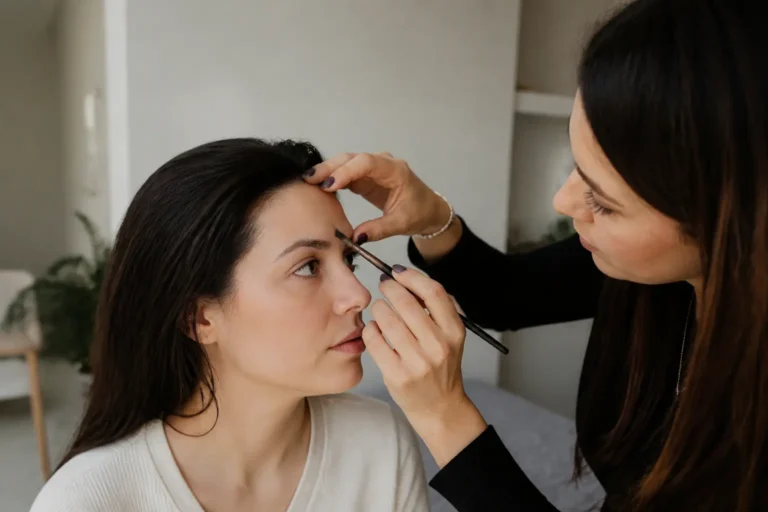
Brow mapping uses reference points on the face to guide the beginning, arch and tail of each eyebrow. It can bring structure to the design conversation and help create a more balanced outline. It is particularly valuable when you feel unsure about where your brows should start or how much length to keep.
However, mapping is not a template that produces identical brows. Faces have individual proportions, brow bones, hair density and movement patterns. The mapped lines need to be interpreted with professional judgement and adjusted to what your natural brows can support.
At Becammo, eyebrow threading and design are approached as a personalised service for different brow types and ethnic backgrounds. Threading uses a disposable single-use thread to remove selected hairs with precision. It can help tidy the surrounding area and clarify the existing shape, while preserving the hairs that contribute to your natural balance.
When a photo concern is worth discussing at an appointment
It is reasonable to bring up a recurring concern if you notice it across many photos, mirrors and lighting conditions. The most useful approach is descriptive rather than self-critical. For instance, you might say:
- “My left brow seems fuller at the front in photographs.”
- “One tail looks shorter when I smile.”
- “I like my natural shape, but I would like a cleaner outline.”
- “My brows look good in person but very strong with my usual make-up.”
- “I am growing out an area and do not want to lose more fullness.”
If you have a few photos that show a consistent concern, they can provide context. They should be a starting point for discussion, not a rigid model to recreate. A photo cannot show every detail of hair texture, facial movement or skin condition that is visible in person.
Avoid making a rushed correction
It can be tempting to pluck one brow at home after seeing a photo. This often creates a cycle of over-correction, especially if the image was affected by lens distortion, a tilted head or uneven light. Removing a few hairs can alter the line more than expected, particularly in areas with naturally sparse growth.
If you are uncertain, leave the hair in place and discuss the concern during a professional design appointment. A gradual plan is often more appropriate where the priority is maintaining fullness while improving definition.
How to prepare for a brow design conversation
Come with a clear idea of what you notice, but stay open to what works with your natural brows. Before your appointment, consider these questions:
- Do you want a cleaner outline, more visible definition, a softer shape or help growing areas out?
- How often do you wear brow make-up, and which products do you use?
- Are there areas you do not want made thinner?
- Do you prefer a subtle adjustment or are you open to a gentle shape update?
- Is there an event or photography session coming up that affects your timing?
It is also helpful to arrive without heavily drawn brow make-up when possible, so the natural hair pattern is easier to assess. If you have recently used strong skincare products around the brow area or have any sensitivity, share that information before the service so the appointment can be approached appropriately.
A better way to judge your brows
Rather than searching for exact mirror-image eyebrows, look for a shape that feels balanced with your features and manageable in your daily routine. Check the overall impression at a normal distance, in a few different lighting conditions and with your usual expression.
Good brow design does not demand that you look the same in every photograph. It gives your natural brows a clear, considered frame while leaving room for the movement and individuality that make your face yours.
Conclusion
Photos can make small brow differences seem larger because they reverse the view you know from the mirror, flatten depth, freeze expression and respond strongly to light and camera angle. Before changing your brows because of one image, look for patterns across several settings and consider how your face moves in everyday life.
If you would like help assessing shape, density or definition, a personalised threading and brow design appointment offers a calm setting to discuss what you see and what you want to maintain. Choose the Becammo location that suits you in Sliema or Swieqi, and use the final booking option to select the eyebrow service that fits your goal.
Frequently asked questions
Why do my eyebrows look uneven in selfies?
Close camera distance, lens angle, uneven lighting and a small change in expression can all make natural asymmetry more noticeable in selfies. Compare several photos taken at eye level and from a little further away before deciding that your brow shape needs changing.
Are eyebrows meant to be identical?
No. Natural brows usually differ slightly in height, hair direction, density or arch. A good design focuses on visual balance and a shape that works with your facial features rather than forcing exact duplication.
Can threading make my eyebrows look more balanced in photos?
Threading can refine surrounding hairs and make the overall outline clearer. Whether an adjustment is suitable depends on your current growth, natural brow structure and the result you want. A consultation during the appointment helps guide the design.
Should I bring photos to my brow appointment?
You can bring a few images if they show a concern you notice repeatedly. They can help explain your goal, but an in-person assessment remains important because photos do not capture every angle, expression or detail of your natural hair growth.
How can I stop over-correcting my brows at home?
Avoid reacting to one photograph or plucking immediately after applying make-up. Give yourself time to check your brows in different light and at normal viewing distance. If you are unsure, keep the hairs and discuss the area with a brow professional.