Eyebrow Threading and Retinol: What to Mention Before Booking
Brenda Cammo Team
If retinol is part of your skincare routine, it is worth mentioning before you book eyebrow threading. This is not about making your brow appointment complicated. It is about helping your brow artist understand how your skin is feeling now, what products are used around the brow area and whether your appointment timing needs a closer look.
Retinol is a type of retinoid found in many over-the-counter skincare products. Prescription retinoids, such as tretinoin or adapalene, may be used differently and can affect the skin differently too. Retinoids can be associated with dryness, flaking, redness and sensitivity, particularly while your skin is adapting to a product. DermNet explains that irritation and dryness are recognised effects of topical retinoids.
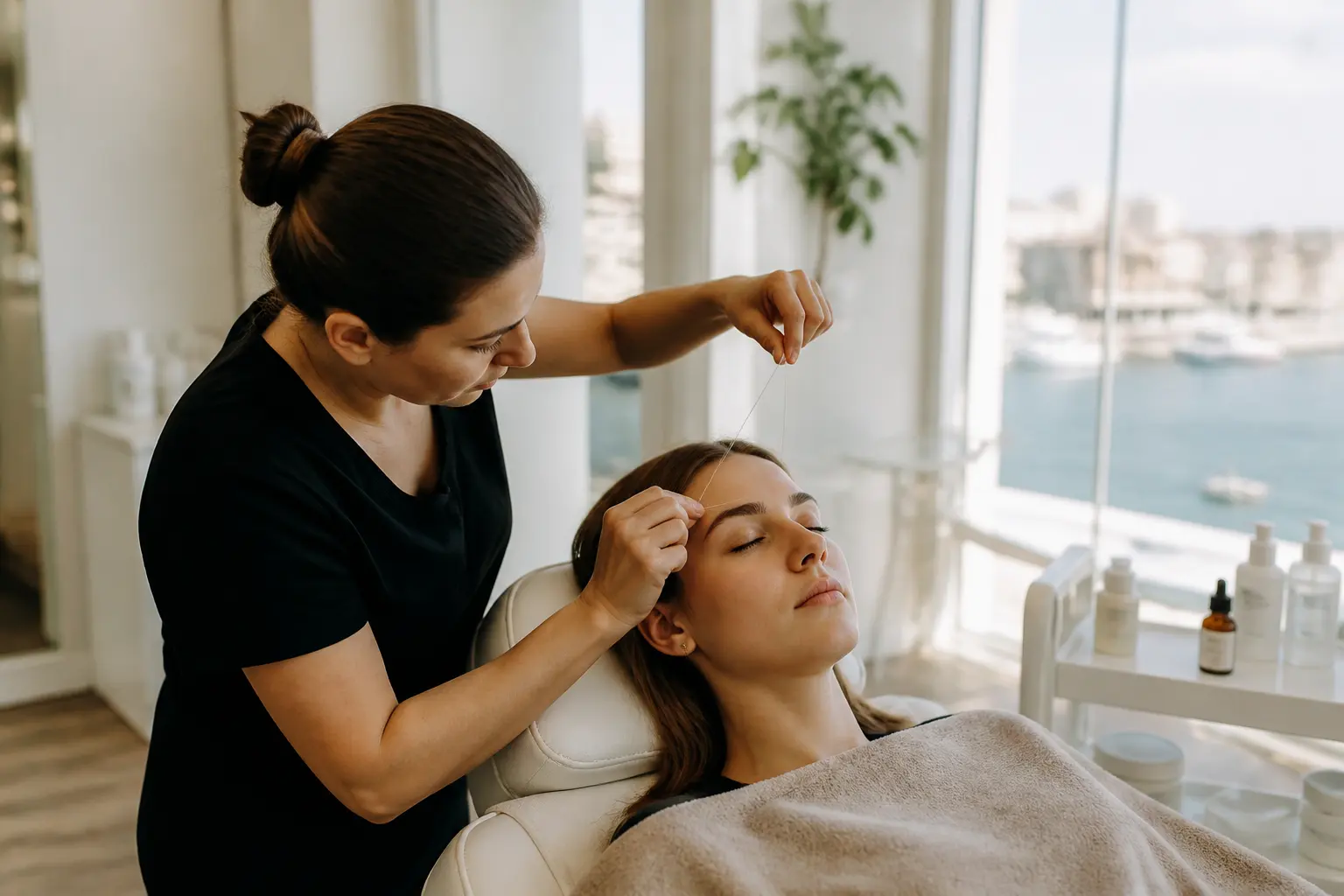
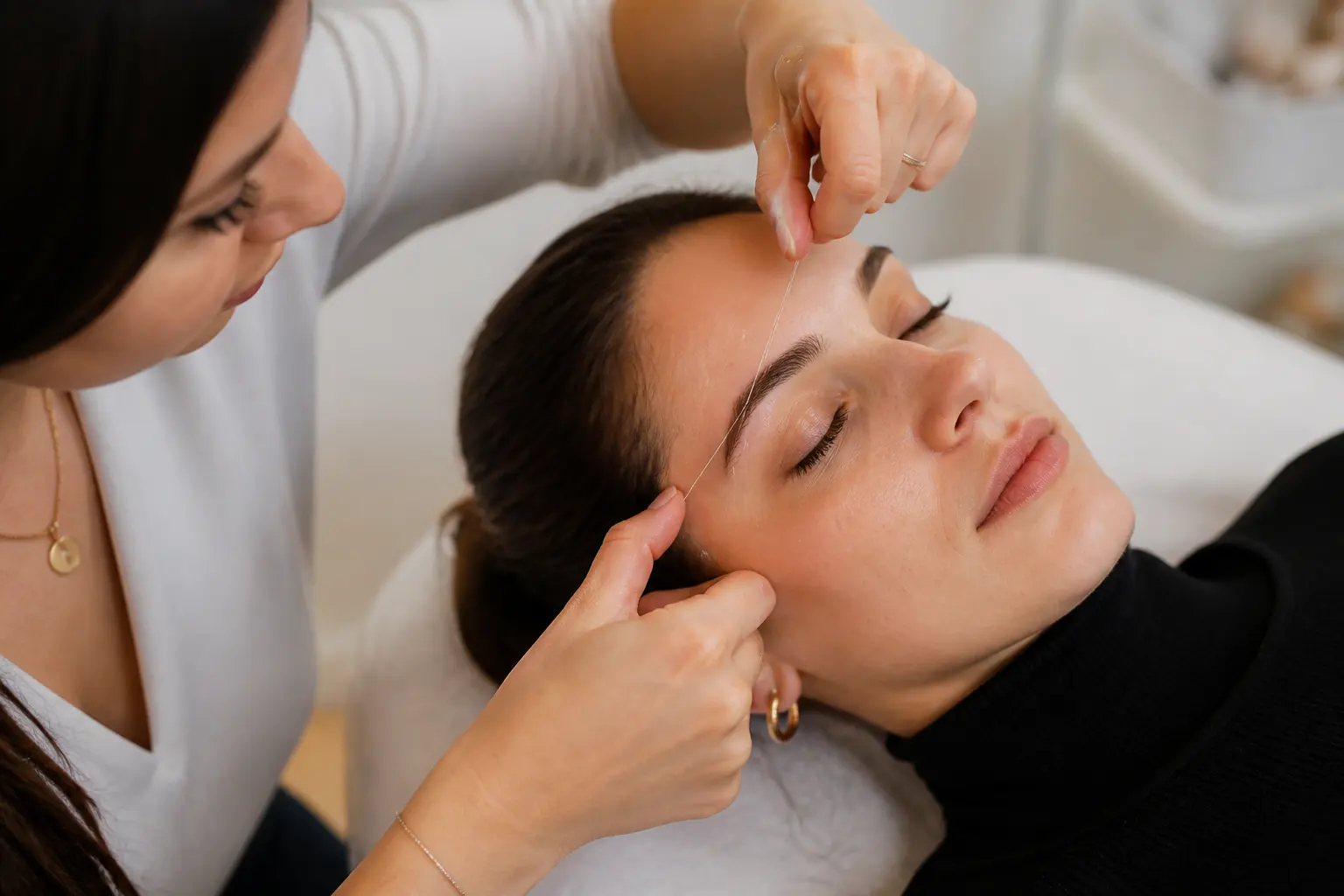
Eyebrow threading uses a single-use thread to lift unwanted hairs with precision. It does not use wax, but it is still a form of hair removal involving close contact with the skin. When the skin around your brows is dry, peeling, sore or reactive, the most helpful choice is to share that information before the appointment rather than hoping it will settle on the day.
Why retinol matters before eyebrow threading
The skin around the eyebrows is part of the face, where many people apply retinol, retinal or prescription acne products. Even if you only use a small amount, it may travel beyond the exact area where you intended to apply it, especially after moisturiser or during sleep. The brow area can also be affected by a wider routine that includes exfoliating acids, benzoyl peroxide, vitamin C or other active products.
For some people, a retinol routine causes no obvious discomfort. For others, the adjustment phase can include visible flaking, tightness, stinging or redness. Skin sensitivity is individual: it can vary with the formula, how often it is applied, the strength of the product, your wider routine, weather exposure and your own skin barrier. Retinoids can also contribute to photosensitivity, making careful daily sun protection particularly relevant in a bright climate such as Malta. The American Academy of Dermatology notes that retinol is a retinoid and that irritation can be a concern, particularly for people already experiencing dryness, redness or inflammation.
The point is not that everyone using retinol must avoid brow threading. It is that an artist cannot make an informed decision without knowing what is on your skin and how it has been responding.
What to tell your brow artist before you book
A short, clear message is usually enough. When booking, mention that you use retinol or a retinoid and share the following details where you can.
- The product name: Is it a cosmetic retinol serum, retinal product, adapalene gel, tretinoin cream or another prescribed product?
- Whether it is over the counter or prescribed: Prescription products may need more individual consideration than a low-strength cosmetic serum.
- Where you apply it: Say whether you use it on your whole face, only on the forehead, directly near the brows or only in selected areas.
- How often you use it: Nightly use, occasional use and a routine you have only just started can look very different in practice.
- How your skin feels today: Mention peeling, redness, tenderness, dryness, itching, a rash, broken skin or recent irritation.
- Other active skincare: This can include exfoliating acids, benzoyl peroxide, scrubs, peel pads or any new product that has made your skin feel reactive.
- Any recent skin procedures: If you have had a facial, dermaplaning, peel or another skin-focused service, say so when you enquire.
You do not need to diagnose your skin or provide a long product list. A simple note such as, “I use a retinol serum on my face several nights a week and my brow area is currently a little dry”, gives the studio a useful starting point.
Topical retinol is not the same as oral isotretinoin
This distinction is important. People sometimes use the word “retinol” to describe any vitamin A-related skincare or acne medicine, but topical retinol and oral isotretinoin are not interchangeable.
Topical retinol is usually a cosmetic skincare ingredient. Prescription topical retinoids are medicines applied to the skin. Oral isotretinoin is a prescription medicine taken by mouth and needs to be discussed separately with the prescribing clinician and the studio. The American Academy of Dermatology advises against waxing during oral isotretinoin treatment and for six months afterwards because of the risk of skin injury and scarring. Read the Academy’s isotretinoin guidance.
Because threading is not waxing, it should not simply be treated as the same service. However, oral isotretinoin can leave skin especially dry and sensitive, so it is essential to disclose it before arranging any facial hair-removal appointment. Do not make your own decision based on a friend’s experience, an old salon rule or a social-media post. Ask the studio what information it needs, and follow the advice of the clinician who prescribed your medication.
Should you stop using retinol before eyebrow threading?
There is no universal timetable that suits every retinol user and every brow appointment. Product formulations, skin tolerance and studio protocols differ. It is also not a good idea to stop or alter a prescribed routine without advice from the clinician who recommended it.
Instead, raise the question before booking: “I use this product around my face. What preparation do you recommend for my brow appointment?” The answer may depend on whether your skin is settled or currently irritated, whether the product reaches the brow area and whether you are combining it with other potentially drying products.
If you use a topical retinoid under medical guidance, ask the prescriber or pharmacist for personalised advice before changing how you use it. This is especially sensible if you have active eczema, rosacea, a history of contact reactions or persistent irritation. Retinoids may aggravate eczema through their drying effect, according to DermNet’s topical retinoid overview.
Signs that it may be better to postpone and ask first
An eyebrow appointment should feel like routine grooming, not something to push through when your skin is clearly unhappy. Contact the studio before travelling in if you notice any of the following around the brows, forehead or upper eyelid area:
- visible peeling or scaling;
- red, hot or inflamed-looking skin;
- stinging, burning or unusual tenderness;
- cracked, scratched or broken skin;
- a fresh rash, swelling or signs of an allergic reaction;
- recent sunburn or significant sun exposure that has left the area sore;
- a recent change to a stronger retinoid, a new active product or a prescribed acne routine.
This list is not a diagnosis. It is a practical prompt to pause, communicate and let the appointment be assessed properly. Irritant contact dermatitis can occur when the skin barrier is overwhelmed by chemical or physical irritation, and topical retinoids are among the products that may contribute to this type of reaction. DermNet’s guide to irritant contact dermatitis provides further background.
How to prepare for a calm brow appointment
Once the studio has confirmed that your appointment can go ahead, keep preparation simple. Avoid experimenting with a brand-new serum, scrub or at-home peel immediately before your visit. New products make it harder to know what has caused a reaction if your skin becomes uncomfortable.
On the day, arrive with the brow area clean and free from heavy make-up where possible. If you wear brow pencil, gel or concealer every day, that is completely understandable, but letting the artist see your natural brow growth and skin condition supports a more considered design conversation.
It is also useful to mention your usual make-up preferences. For example, if you like a soft, brushed brow rather than a highly defined arch, threading can be planned around your natural growth and personal style. Retinol use does not change the principle of good brow design: your shape should be personalised, balanced and realistic for your own facial features and hair pattern.
A practical message you can send when booking
Hello, I would like to book eyebrow threading. I currently use [product name] [how often] on [area of face]. My skin is [settled / dry / peeling / sensitive] around the brows. Could you let me know whether I should adjust the appointment timing or discuss anything else before coming in?
That message is concise, responsible and gives the studio the information needed to guide your next step.
What to expect during the threading appointment
At Becammo, eyebrow threading is approached as a design service, not simply hair removal. The artist looks at your natural brow density, growth direction, symmetry, facial proportions and the amount of definition you would like to see. Your skin condition is part of that conversation too.
Threading uses cotton thread as standard, with polyester available for clients with relevant allergies. The thread is single-use and discarded after each client. During the service, you may feel brief pulling or mild discomfort as hairs are removed. It is not accurate to promise that threading will feel the same for everyone, because sensitivity can vary from one person and appointment to another.
If you have disclosed retinol use, be ready for the artist to ask a few extra questions or to recommend rescheduling if the skin appears too reactive. That is not a setback. It is a sensible part of personalised care and helps protect the quality of both your experience and your brow result.
Aftercare: keep the brow area uncomplicated
After threading, the skin can look temporarily pink or feel a little sensitive. Keep the area clean, avoid rubbing it and follow the studio’s aftercare instructions. If you use active skincare, do not assume that your normal evening routine should automatically go straight back on the freshly threaded brow area. Ask specifically when you should return to your usual products and whether they should be kept away from the brows for a period.
Be cautious with unnecessary friction and avoid layering multiple potentially irritating products over skin that is already feeling sensitive. If you develop persistent discomfort, marked swelling, blistering or a worsening rash, seek advice from an appropriate healthcare professional rather than attempting to correct it with more active products.
For everyday maintenance, brow appointments can often be planned around your natural hair-growth cycle and your own preferred level of definition. The best rhythm is personal: some clients like to keep their brows consistently tidy, while others prefer more time to grow out areas they are reshaping. Retinol use is one more practical detail to discuss as your routine changes.
Conclusion
Eyebrow threading and retinol can be planned thoughtfully when the conversation starts before the booking is confirmed. Be clear about the product you use, where you apply it, how frequently you use it and whether your skin is currently calm or irritated. Most importantly, distinguish a cosmetic retinol routine from prescription topical retinoids or oral isotretinoin, and do not change prescribed medication without professional advice.
When your skin is settled and your brow artist has the right information, you can focus on the part that matters most: a personalised brow shape that works with your natural features, everyday routine and preferred level of definition. Use the booking option below to choose eyebrow threading at the Becammo location that suits you, and include your retinol routine in the appointment notes or enquiry.
Frequently asked questions
Can I book eyebrow threading if I use retinol?
Often, the first step is simply to disclose your retinol use before booking. Whether the appointment is suitable depends on the product, where it is applied and how your skin is responding at the time.
Do I need to tell my brow artist about over-the-counter retinol?
Yes. Over-the-counter retinol is still relevant, particularly if you apply it near the brow area or have dryness, peeling, redness or sensitivity.
Is threading safer than waxing if I use a retinoid?
Threading does not use wax, but it is still hair removal performed close to the skin. It should not be treated as an automatic alternative without discussing your product, skin condition and any prescribed medication with the studio.
What if I use tretinoin or adapalene?
Tell the studio the exact product and that it is prescribed or medicated skincare. If you are unsure how to prepare, ask the clinician or pharmacist who advises on your treatment before changing your routine.
Can I have eyebrow threading while taking oral isotretinoin?
Tell the studio before you book and seek guidance from your prescribing clinician. Oral isotretinoin requires separate consideration from topical retinol because it can make skin particularly dry and sensitive.
What should I do if the skin around my eyebrows is peeling?
Contact the studio before attending rather than trying to cover it with make-up. Describe the peeling, product use and any soreness so the appointment can be assessed appropriately.