Why a First Brow Threading Appointment Needs a Different Design Conversation
Brenda Cammo Team
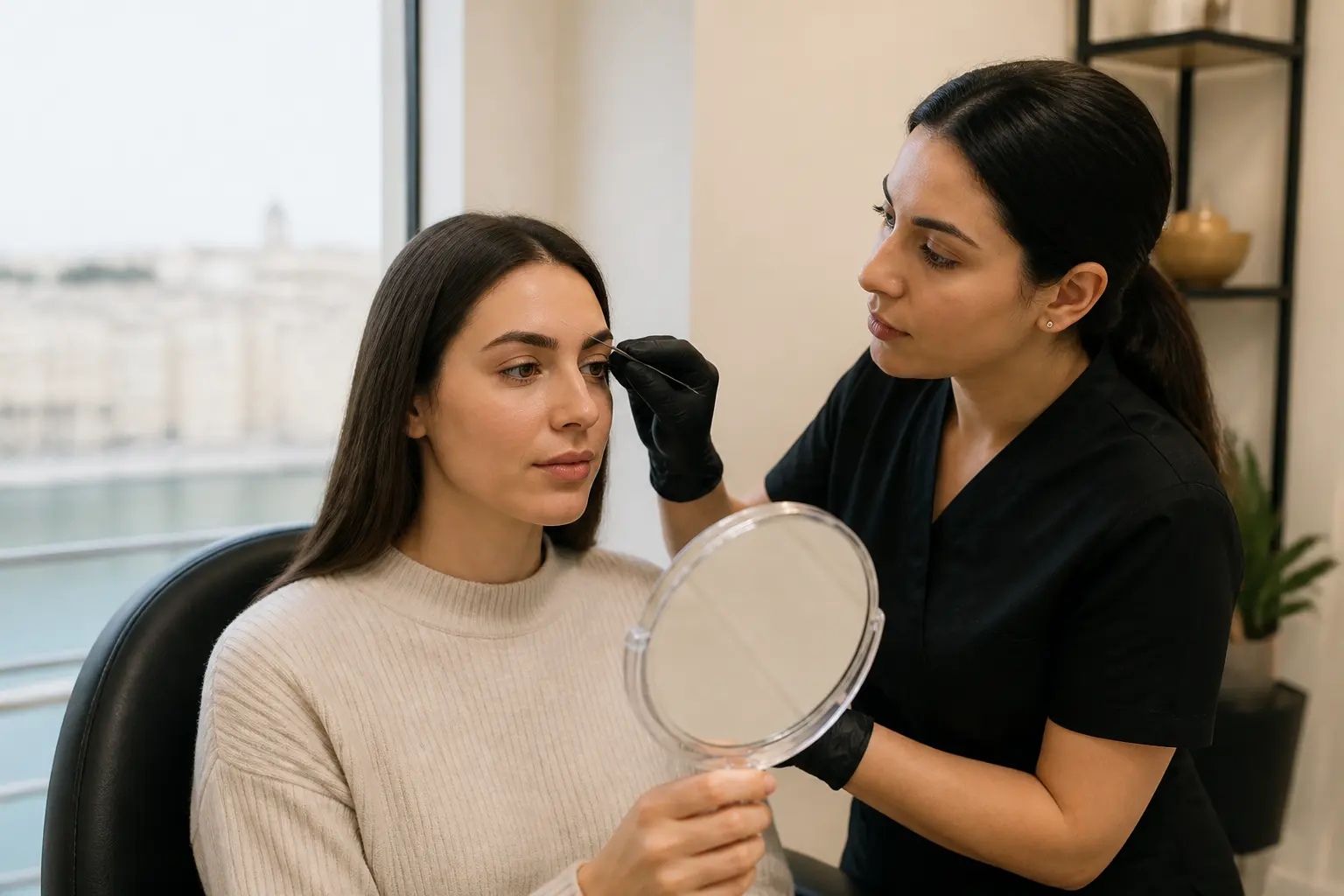
A first brow threading appointment is not simply a longer version of a maintenance visit. Both appointments can involve shaping and hair removal, but their purpose is different. At your first visit, the conversation is usually about understanding your natural brow pattern, your preferences and how much change feels right for you. At a maintenance appointment, the starting point is often an existing shape that you already know and want to preserve or refine.
This distinction matters because eyebrows are personal. The right design is not about copying one trend or creating identical brows. It is about working thoughtfully with your facial features, hair density, natural direction of growth and everyday routine. Threading can offer precise hair removal, but the design conversation helps decide where that precision should be used.
If you are booking brow threading in Malta for the first time, knowing what to discuss can make the appointment feel clearer and more relaxed. Here is why the first conversation tends to be more detailed, what changes at maintenance visits and how to communicate the result you are hoping for.
Why the first brow threading appointment starts with design
At a first appointment, your brow artist does not yet have a shared reference point with you. They may be seeing your brows after months of self-shaping, a period of growing them out, a previous treatment elsewhere or simply no regular routine at all. Even when your brows already look tidy, there are important details to establish before removing hair.
A design-led first visit creates a plan rather than assuming that every visible hair should be removed. The goal is to understand your natural framework and make considered choices about the beginning of the brow, the arch, the tail, the thickness and the overall balance between both sides.
This does not mean the appointment needs to produce a dramatic new look. In many cases, the most appropriate first design is subtle: cleaning up growth around the natural shape while protecting fullness in areas that may be slower to grow back. A careful approach is particularly helpful if you are unsure about changing your brows, have sparse sections or are trying to move away from an over-plucked shape.
Your natural brow pattern is the starting point
Brows are rarely identical, and they do not grow with equal density on both sides. One brow may sit slightly higher, have a more pronounced arch or grow in a different direction. This is normal. A first threading appointment is an opportunity to look at those differences honestly and decide how to create a harmonious result without forcing artificial symmetry.
Natural density also affects the plan. Thick brows may need refinement while keeping their character and fullness. Fine or lighter hairs may call for a more conservative clean-up so the design remains soft rather than overly narrow. Curly or downward-growing hairs can change how the brow reads from a distance. These details are much easier to assess when the appointment begins with a proper design conversation.
Your preferences need context
Words such as “natural”, “defined”, “clean” or “full” can mean different things to different people. At a first visit, it helps to explain how you normally wear your brows and how much daily make-up you like to use. Someone who fills their brows with pencil most days may want a slightly clearer outline, while someone who prefers a bare-faced routine may prioritise softness and minimal removal.
You can also mention any previous brow experiences that you liked or did not like. For example, perhaps a former shape felt too thin at the tail, too angular at the arch or too rounded at the front. This is useful information, not a criticism. It gives the brow artist a clearer sense of your boundaries and helps avoid a design that feels unfamiliar to you.
What a brow design conversation may cover
A first appointment does not need to feel formal or complicated, but it should leave room for questions and observation. At Becammo, threading and brow design are approached with personalisation in mind, including different brow types, skin tones and facial features. The aim is not to apply one template to every face.
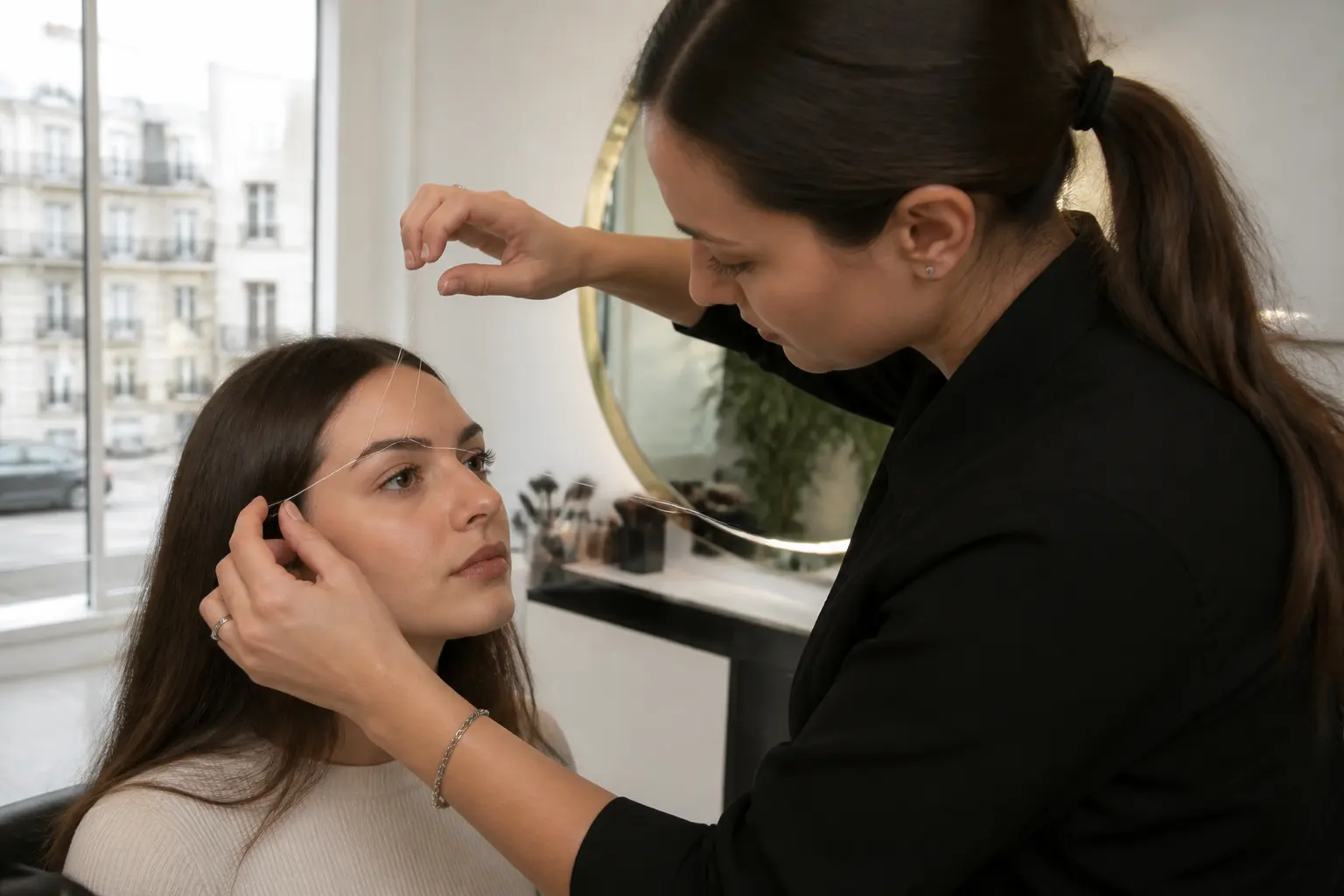
Before threading begins, a useful conversation may include the following points:
- How you currently remove or trim brow hair at home.
- Whether you are growing out a previous shape.
- How often you normally book brow maintenance, if you have done so before.
- Whether you use brow make-up, tint, henna or a brow growth product.
- Which features of your current brows you would like to keep.
- Any areas where you feel nervous about hair being removed.
- Whether you prefer a soft, structured, fuller or more polished finish.
- Any recent skin sensitivity, irritation or products that may be relevant to the area.
This discussion supports a more informed choice about the first shape. It also makes the result easier to maintain later, because you and the brow artist have agreed on the direction rather than relying on guesswork at every visit.
Mapping is a guide, not a one-size-fits-all rule
Brow mapping may be part of a first design conversation. It uses facial reference points to help consider where each brow could begin, arch and end. Used thoughtfully, it can provide structure and make the planning process easier to explain.
However, mapping should not override your natural growth pattern or personal preference. A line on the face is a guide, not a reason to remove healthy brow hair that contributes to balance and fullness. Your bone structure, the way your brow hairs grow and the density available all matter. A personalised result often comes from combining technical reference points with a realistic view of what your brows can comfortably support.
This is also why a first appointment can require more discussion than a routine tidy-up. The design needs to work in real life: when you smile, wear glasses, apply make-up, tie your hair back or look at yourself in different lighting. It should feel like your brow shape, not a shape imposed on you.
How a maintenance threading visit is different
Once a shape has been established and you are happy with it, maintenance appointments are often more straightforward. The main purpose is usually to remove regrowth around the chosen outline, tidy the brow area and keep the overall direction consistent.
The artist can work from the previous design rather than starting again from a blank page. This does not mean maintenance is automatic or impersonal. Brow growth changes over time, and your preferences can change too. But there is a shared understanding of what you are trying to maintain.
A maintenance visit may focus on:
- Removing hairs that have grown outside the established shape.
- Keeping the brow fronts soft or more defined, according to your preference.
- Refining the underside and tail without gradually making the brows thinner.
- Checking whether both brows still look balanced as hair grows back.
- Making small seasonal or style-led adjustments if you want them.
For many people, regular maintenance can make the appointment feel more predictable. You know the shape, the brow artist knows your preferences and the focus is on preserving the result rather than redesigning it each time.
Why maintenance should not slowly become over-shaping
One benefit of a clear first design is that it helps prevent gradual over-removal. When brows are threaded regularly without a defined plan, it can be tempting to remove every new hair that appears. Yet some of those hairs may be contributing to your preferred fullness, supporting a softer outline or helping an area grow in more evenly.
A good maintenance approach separates true regrowth outside the design from hair that belongs to the brow’s natural structure. This is especially relevant if you are trying to keep fuller brows, recover from years of over-plucking or avoid a shape that becomes narrower with every appointment.
If you feel your brows have been getting thinner despite booking maintenance, say so. It may be time to pause and reassess the design rather than continue with the same routine. A personalised threading plan can be adjusted as your brow hair changes.
When a maintenance visit becomes a new design conversation
Not every returning appointment is purely maintenance. There are moments when it makes sense to revisit the original plan. You may want a different shape because your style has changed, because you have begun wearing glasses daily, because you are growing out an older brow shape or because your brow density has altered.
It is also worth asking for a fresh design conversation if:
- You have not had threading for several months.
- You have been removing hair at home between appointments.
- You want to grow out the arch, tail or brow front.
- You have started using a brow product that affects your routine.
- You are considering brow tint, henna, lamination or semi-permanent brow work.
- Your skin feels more sensitive than usual or you have changed skincare products around the brow area.
- You no longer recognise yourself in the shape you have been maintaining.
There is no need to stay loyal to a shape that no longer suits your routine or preference. The useful distinction is that redesigning should be intentional. A short conversation before threading can help you decide whether you want a small refinement or a gradual change over several appointments.
How to prepare for your first brow threading appointment
You do not need to arrive with perfect brows. In fact, allowing some natural growth can make it easier to see your real shape and discuss what is possible. Avoid trying to correct uneven areas immediately before the appointment, as this can remove useful reference hairs.
Come with a simple idea of what you want, but keep it flexible. A saved image can be helpful for showing the level of fullness or definition you like, although another person’s brow shape may not translate directly to your face. It is usually more useful to identify what you like about the image: perhaps a soft front, a lifted look, a gentle arch or a fuller tail.
If you wear brow make-up every day, explain your usual routine. If possible, arriving without heavy brow products can make assessment easier. Let the brow artist know about relevant skin sensitivity, recent irritation or products you are using around the area so the appointment can be approached with appropriate care.
Questions worth asking before threading begins
Asking questions is part of a good first appointment. You are not expected to know every technical term; clear, everyday language is enough. Consider asking:
- Which parts of my natural brow shape are worth keeping?
- Can we keep the brows full while making them look cleaner?
- Which hairs are being removed to create the shape?
- Would a gradual change be better than a major change today?
- How can I maintain this shape between appointments without overdoing it?
- When should I return if I want to keep this result?
Threading uses a twisted thread to remove hairs with precision. At Becammo, single-use thread is selected according to the client’s needs, with cotton used as the standard option and polyester available for clients with relevant allergies. Even with a precise technique, your feedback remains important: design is a collaboration, particularly at the first visit.
Choosing the right appointment mindset
The most helpful way to approach a first brow threading appointment is to see it as the beginning of a shape plan, not a one-off correction. You can ask for a subtle clean-up, a fuller direction, a clearer arch or simply a professional opinion on what your natural brows can support. You do not need to commit to a dramatic change.
Once you have a design that feels like you, future maintenance can become simpler. The brow artist has a reference, you know what to expect and each visit can focus on keeping the shape polished without losing the character of your brows.
If you are ready to establish a shape or revisit one that no longer feels right, choose the eyebrow threading service and select the Becammo location that suits you in Sliema or Swieqi. A clear conversation at the start can make every maintenance visit afterwards feel more confident and consistent.
Frequently asked questions
Is a first brow threading appointment longer than a maintenance visit?
It can feel more detailed because time is needed to discuss your preferred shape, natural growth and how much hair should be removed. The exact appointment length depends on the service selected and your individual brow needs.
Should I let my eyebrows grow before my first threading appointment?
Some visible growth can be helpful because it gives a clearer picture of your natural pattern. Avoid last-minute tweezing or trimming if you want advice on creating or adjusting a shape.
Can I ask for a natural brow shape at my first appointment?
Yes. A natural result is a common preference, but it is worth explaining what “natural” means to you. You may want soft edges, fuller brows, minimal removal or simply a tidier version of your existing shape.
How often should I book brow threading maintenance?
Timing varies with your hair-growth cycle, the amount of definition you prefer and how quickly regrowth becomes noticeable to you. Your brow artist can suggest a practical rhythm after seeing how your brows grow.
What if I want to change my brow shape after several maintenance visits?
Tell your brow artist before threading starts. A change may be possible in one appointment or may be better planned gradually, particularly if you want to grow back density in a specific area.
Will both eyebrows look exactly the same after threading?
Natural brows are not identical, and the aim is usually visual balance rather than exact duplication. A personalised design works with your features and growth pattern instead of forcing unrealistic symmetry.