Threading or Brow Lamination: Which Booking Fits Your Main Brow Goal?
Brenda Cammo Team
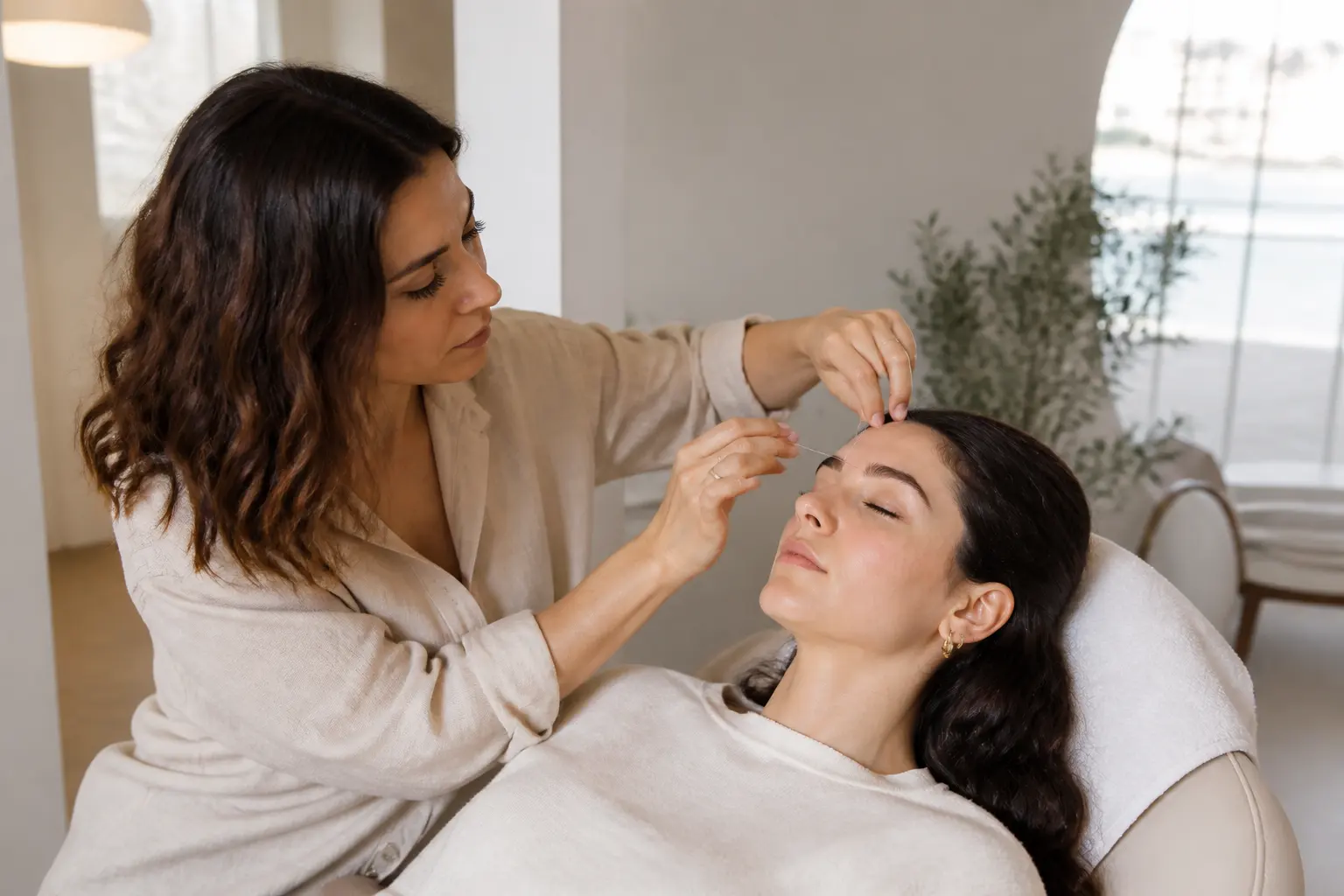
Threading and brow lamination can both make your eyebrows look more considered, but they solve different styling questions. The best booking is not necessarily the one you have seen most often online. It is the one that matches your main brow goal right now.
Would you like to remove unwanted hair and bring more definition to your existing shape? Threading may be the clearer starting point. Do you already have enough brow hair but want it to look fuller, more lifted or easier to style into place? Brow lamination may be more relevant.
The distinction matters because a neat shape and a brushed-up finish are not the same result. Understanding where your current brows are starting from can make the booking conversation more useful, whether you live in Malta, have recently moved here or are fitting an appointment into a busy visit.
Start with the question: what would you most like to change?
Before comparing the procedures, try to put your priority into one simple sentence. For example:
- “My brows have grown out and the outline looks untidy.”
- “I have fullness, but the hairs point downwards or in different directions.”
- “I want my arches to look cleaner without making my brows thinner.”
- “I want a softer, fluffier brow look for everyday make-up.”
- “My brows are naturally fine and I need help deciding what can realistically be changed.”
That answer usually points towards either hair removal and shape refinement, or hair direction and styling. In some cases, it can also reveal that you may benefit from discussing both services, planned in a way that respects your natural hair pattern and preferred finish.
Choose threading when your main goal is shape and clean definition
Eyebrow threading is a hair-removal and shaping technique performed with thread. It is often chosen when the brow outline needs refining: perhaps there is visible regrowth beneath the arch, between the brows or above the natural line, or perhaps the overall shape no longer feels balanced with your face.
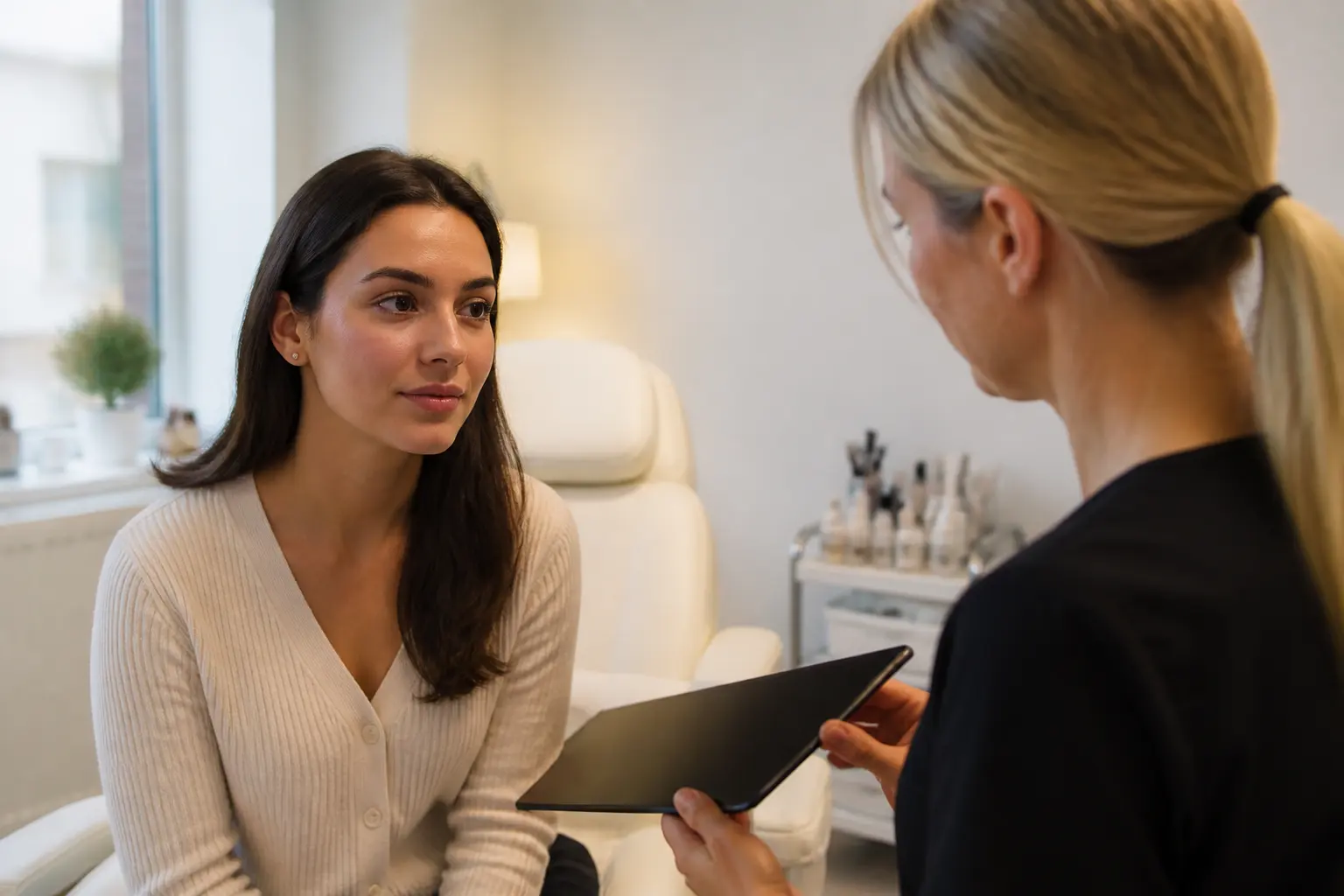
The purpose is not to force every client into the same brow template. A considered threading appointment can focus on keeping useful density while removing hairs that distract from the direction you want. This is especially important if you are growing out an over-plucked shape, have naturally thick brows or prefer a fuller look with only subtle definition.
Threading may suit your goal if you want to:
- Define the upper and lower brow lines.
- Remove visible regrowth from around the shape.
- Make your brows look more organised without changing their natural hair direction.
- Refine the space between the brows.
- Create a clearer starting point before a tint, henna or make-up routine.
- Maintain an established brow shape as hair grows back.
Threading works with the hair that is there and the shape you want to protect. During the consultation, it is useful to explain whether your priority is a soft, natural outline, a stronger arch, a straighter appearance or simply a tidier version of your current brows. Bringing up your usual make-up style, glasses or daily routine can also help make the conversation more personal.
What threading does not primarily do
Threading does not set brow hairs into a new direction. If your main concern is that the hairs are long, curly, downward-growing or reluctant to stay brushed upwards, removing hairs alone may not answer that particular goal. A beautifully threaded brow can still have hairs that need daily styling.
It is also not about removing as much hair as possible. More removal is not automatically more flattering. For many people, careful restraint is part of achieving a brow shape that still feels like their own.
Choose brow lamination when your main goal is direction, lift and a fuller-looking finish
Brow lamination is a styling service designed to help natural brow hairs sit in a more uniform direction. It is often associated with a brushed-up, airy or fuller-looking finish, but the result does not have to be dramatic. The direction can be discussed according to your hair texture, facial features and how you want your brows to look from day to day.
Rather than concentrating first on removing stray hairs, brow lamination concentrates on how the existing hairs are arranged. That makes it particularly relevant for brows that already have reasonable density but do not naturally sit where you would like them to.
Brow lamination may suit your goal if you want to:
- Encourage brow hairs to sit upwards, outwards or more consistently across the brow.
- Create the appearance of greater fullness from your existing brow hair.
- Make uneven hair direction look more orderly.
- Spend less time trying to brush resistant hairs into place each morning.
- Try a lifted, fluffy or softly groomed brow style without relying entirely on brow gel.
- See how your own brow hair can be styled before considering a more long-lasting pigment-based option.
The key phrase here is your existing brow hair. Lamination can enhance how hairs are positioned, but it cannot create hair where there is very little growth. If you have sparse areas, gaps or a shape you are trying to grow out, an honest consultation is more valuable than expecting one service to solve every concern.
What brow lamination does not primarily do
Brow lamination is not a substitute for detailed hair removal when the main issue is an undefined outline. It may make the brow hairs look more prominent, which can be lovely, but it does not automatically tidy every area surrounding the shape. Some clients choose to pair brow lamination with brow shaping so the overall result has both a deliberate direction and a clean outline.
It is also worth remembering that “fluffy” does not mean identical for everyone. The most wearable finish may be softly lifted, gently side-swept or more structured, depending on your hair growth and personal style.
Threading vs brow lamination: compare the main booking outcomes
| Your main question | Threading | Brow lamination |
|---|---|---|
| What does it focus on? | Removing selected hairs and refining shape. | Directing and styling existing brow hairs. |
| Best for | Untidy regrowth, unclear outline or shape maintenance. | Hairs that need a more lifted, uniform or fuller-looking arrangement. |
| Does it remove hair? | Yes, as part of shaping. | Not as its main purpose. |
| Does it change hair direction? | No, not as its main purpose. | Yes, this is central to the service. |
| Can the result be natural? | Yes, from very subtle clean-up to more defined shaping. | Yes, from softly groomed to noticeably brushed-up. |
| When may both be useful? | When you want shape refinement as well as styled hair direction. | When you want styled hair direction as well as a clean surrounding outline. |
A simple way to decide before you book
Use this quick decision process to identify the service most likely to match your priority.
- Look at the outline first. Are there hairs outside the shape that are bothering you more than the direction of the hairs? Start by asking about threading.
- Look at the direction next. Is the outline acceptable, but the hairs point down, curl unpredictably or refuse to stay styled? Ask about brow lamination.
- Consider density honestly. If you have plenty of hair but it looks flat, lamination may help showcase it. If there is less hair than you would like, discuss a shape plan that avoids unnecessary removal.
- Think about your usual effort. If you spend time filling gaps with make-up, cleaning up the outline may be useful. If you spend time brushing hairs into position, lamination may be closer to your goal.
- Describe the finish, not just the trend. Say whether you want polished, soft, bold, fluffy, defined or low-maintenance brows. Those words give your brow professional a more practical brief.
When booking both services can make sense
Threading and brow lamination are not competing choices in every situation. They can work together when your goal includes both a cleaner shape and a more controlled hair direction. For example, you may like the look of your brow hairs brushed upwards but still want careful refinement beneath the arch and around the centre of the brows.
However, combining services should not be treated as an automatic upgrade. The right approach depends on the condition of the brow hairs, your skin, your preferred look and the professional assessment during your appointment. If your skin feels sensitive, you have recently had another facial service or you are unsure about any products you are using around the brow area, mention this before the service begins.
A personalised conversation can also prevent a common disappointment: choosing lamination when what you really wanted was a more precise outline, or choosing threading when what you really wanted was a lifted effect from the hair you already have.
How to prepare for the consultation conversation
You do not need a complicated brief. A few clear details can help you make a better choice:
- Tell the brow professional what you like and dislike about your brows now.
- Explain whether you want to keep as much fullness as possible.
- Mention if your hairs are fine, coarse, curly, downward-growing or uneven.
- Say how much daily make-up or brow styling you normally do.
- Let them know if you have an event coming up and whether you prefer a subtle or more noticeable finish.
- Share relevant sensitivity concerns or recent beauty appointments around the face.
Photos can be useful as a reference for mood, but they should not be treated as an exact blueprint. Brow density, hair direction, bone structure and personal preferences vary. The most successful result usually adapts the idea you like to the brows you actually have.
Plan maintenance around your real routine
Both choices benefit from realistic expectations. Threading maintenance depends on how quickly your brow hair becomes noticeable and how refined you like the outline to remain. Brow lamination maintenance depends on how the styled result settles over time and how your natural hairs grow.
Instead of booking by a fixed online rule, pay attention to your own brows. If the outline starts to feel untidy, a shape appointment may be timely. If you enjoy a lifted finish but notice your hair direction returning to its usual pattern, it may be time to discuss another lamination appointment. Your brow professional can help you build a schedule that suits your hair growth, skin comfort and lifestyle.
At Becammo, brow services are available in Sliema and Swieqi, allowing you to choose the location that fits your routine. If you are still deciding between threading and brow lamination, begin with the result you want to see in the mirror: cleaner shape, more controlled direction or a considered combination of both.
Frequently asked questions
Is brow lamination better than threading?
Neither is automatically better because they have different purposes. Threading is generally the more relevant choice for hair removal and shape refinement, while brow lamination focuses on arranging the existing hairs for a lifted or fuller-looking effect.
Can brow lamination make thin brows look fuller?
It can help existing hairs look more visible by arranging them differently. The effect depends on how much natural hair is present, its texture and its direction of growth. It does not add new brow hairs.
Should I have threading before brow lamination?
It depends on your desired finish and individual assessment. Some people want both a refined outline and a styled hair direction, while others only need one service. Explain your goal during booking or at the consultation.
Can I choose a natural-looking brow lamination?
Yes. A brow lamination result does not have to look intensely brushed upwards. Discuss whether you prefer a soft, tidy direction or a more pronounced fluffy effect.
What if I am growing out my eyebrows?
Tell your brow professional before any hair is removed. Threading can be planned with the goal of preserving useful growth while keeping the overall shape from feeling neglected.
Which service is easier for a first brow appointment?
If your main concern is untidy regrowth or an unclear shape, threading is often the simplest place to start. If you already like your shape but want the hairs to sit differently, brow lamination may be the more relevant first booking.
Conclusion
Choose threading when you want to refine where your brow hairs sit around the shape. Choose brow lamination when you want to change how your existing hairs are styled within that shape. If you want both benefits, a personalised brow conversation can help you decide what to prioritise and how to keep the result aligned with your own features and routine. When you are ready, choose the brow service that reflects your main goal rather than following a one-size-fits-all trend.