Can You Thread Eyebrows After Microblading Has Faded? What to Raise at Your Appointment
Brenda Cammo Team
When old microblading has faded, it is natural to look at your brows differently. You may notice new hairs growing outside the original outline, a shape that no longer feels balanced, or pigment that is still visible but softer than it once was. That often leads to one practical question: can you have eyebrow threading after microblading has faded?
In many cases, threading can be considered once the microbladed area is fully healed and the skin is calm. However, the right decision is not simply about how faded the pigment looks. A brow professional needs to look at the condition of your skin, the remaining pigment, your natural hair growth and whether you are considering a future microblading touch-up, a colour correction or a different brow routine altogether.
The key is to treat threading as hair shaping, not as a way to remove old pigment. A thoughtful appointment can refine the surrounding hairs while respecting the existing brow work and your longer-term plans.
First, separate faded pigment from healed skin
Microblading is a form of semi-permanent make-up in which pigment is placed in the skin. Although the visible colour may soften over time, fading does not automatically mean that all pigment has disappeared. It also does not tell you, by itself, whether the skin is ready for hair removal.
For a threading appointment, the most important starting point is that the eyebrow area is completely healed. It should not be tender, flaky, scabbed, swollen or actively irritated. If you have had a recent microblading session or touch-up, follow the aftercare and timing guidance given by the practitioner who carried out that work before arranging brow shaping.
Permanent make-up involves placing pigment into the skin, so hygiene and a careful response to signs of irritation matter. The FDA’s guidance on tattoos and permanent make-up notes that reactions and infections can occur with tattooed skin. This is why an active rash, unusual swelling, increasing soreness or an unexplained skin change should not be treated as a routine beauty concern; seek appropriate medical advice before booking hair removal.
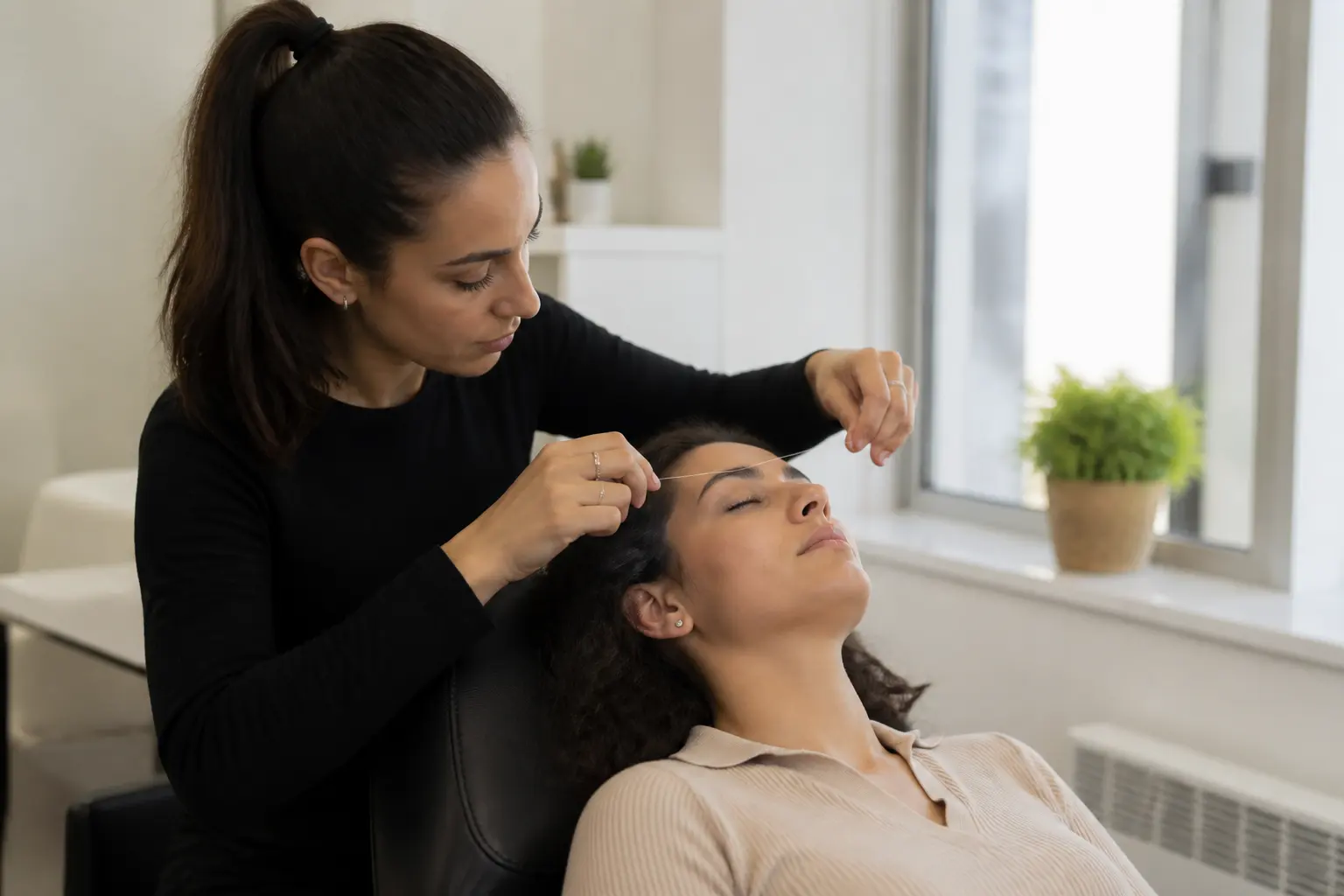
Once the skin has settled, the conversation can move from recovery to design. Threading removes unwanted hair from the root using a fine thread. It does not lift, erase or meaningfully lighten microblading pigment. Its role is to tidy the natural hair around the brow and support a shape that makes sense with what remains.
Can threading work when microblading has visibly faded?
Yes, it can often be useful, provided the skin is healed and suitable on the day. In fact, faded microblading can make a brow-shaping conversation more valuable because there are now two visual elements to consider: the residual pigment and the natural hairs growing around it.

Some people want threading because their natural brow hairs have started to sit beyond the old strokes or shaded outline. Others want to regain a cleaner frame while deciding whether to refresh their microblading. A personalised design can help make the overall brow look more intentional without rushing into another semi-permanent procedure.
That said, threading should not be used to force the natural hair into an old design that no longer suits your face, hair pattern or everyday make-up style. The most helpful aim is usually refinement: remove only the hairs that clearly sit outside the agreed shape, preserve useful fullness, and assess how the remaining pigment influences the visual balance.
When a conservative approach is usually wiser
A lighter, more cautious threading plan may be appropriate if the old pigment is uneven, if the natural brow is sparse, or if you are likely to book a microblading consultation soon. Over-removing hair can make it harder to judge the relationship between your real brow growth and the faded pigment.
Conservative shaping is also sensible when one brow has retained more colour than the other. Rather than chasing exact symmetry through hair removal alone, your brow specialist can map the brows, explain what can realistically be improved that day and leave enough natural structure for future decisions.
What to tell your brow specialist before threading
Clear information helps the appointment start in the right place. You do not need to know the exact technical name of your previous procedure, but share as much as you can remember. Bring a photo from shortly after the treatment if you have one, especially if the original shape differs from how your brows look now.
- When you had microblading: Say whether it was recent, several months ago or longer ago, and mention any later touch-ups.
- Whether the area is fully healed: Tell them about ongoing sensitivity, peeling, redness, bumps, itchiness or any reaction you have noticed.
- What technique you had: It may have been hair-stroke microblading, microshading, nanoblading or a combination. If you are unsure, describe the finish or show a photograph.
- Your previous pigment colour: Mention whether the old work now looks warm, cool, greyish, reddish or patchy. This is relevant to the visual design even though threading does not alter pigment.
- Your brow goal: Explain whether you want a tidy-up, a softer shape, more definition for make-up, or a shape that will support a future semi-permanent brow consultation.
- Your current routine: Mention brow growth serums, strong exfoliating skincare near the brow area, recent facial treatments or any product that has made your skin feel sensitive.
This is not about making the appointment complicated. It is about avoiding assumptions. A few details can help the brow professional choose an approach that suits your skin and protects the hairs that contribute most to your natural shape.
Questions worth raising at your appointment
If you are unsure how much hair should be removed, ask direct questions before threading begins. A good consultation should leave room for your preferences as well as professional observation.
“Can we map my natural brow around the remaining pigment?”
Mapping creates a shared reference point before any hair is removed. It can show where your natural brow starts, arches and ends, and whether the faded pigment still aligns with those points. The goal is not to make every brow identical. It is to create a balanced result that respects natural differences between the two sides of the face.
“Which hairs should we keep for fullness?”
This question is especially useful when your old microblading was created to add the appearance of density. The hairs you are tempted to remove may provide valuable structure as the pigment continues to soften. Ask which hairs are supporting the brow’s baseline, tail and upper line before agreeing to a sharper shape.
“Will a tidy-up make the old pigment more noticeable?”
Sometimes cleaner edges can make residual pigment look more defined; at other times, reducing stray hairs creates a softer overall impression. The answer depends on the colour, placement and amount of pigment left, as well as the density and direction of your own hairs. A professional can explain what they see rather than promise a particular visual effect.
“Should I keep the shape neutral while I decide about a touch-up?”
If you may later choose Brazilian microblading, microshading or another semi-permanent brow option, a neutral and well-maintained shape can be a practical interim plan. It keeps the brow area organised without making a permanent decision through hair removal. You can then book a separate consultation to discuss suitability, desired finish and the condition of the existing pigment.
“Can we take a gradual approach today?”
You are allowed to ask for less. A gradual first appointment after faded microblading may focus on obvious regrowth below or between the brows, leaving more of the natural top line and tail intact. You can always refine further at a later visit once you have lived with the shape in everyday light and make-up.
How threading and faded microblading serve different purposes
| Concern | What threading can address | What it cannot address |
|---|---|---|
| Hairs growing outside the desired outline | Refine unwanted hair and tidy the brow perimeter | Remove pigment beneath the skin |
| A faded brow shape | Support your natural hair pattern with a considered design | Recreate missing hair-stroke pigment |
| Uneven remaining colour | Help create a cleaner surrounding frame | Correct pigment tone or placement |
| Planning a future brow refresh | Maintain a clear, natural shape while you consider options | Replace a dedicated semi-permanent make-up consultation |
Understanding this distinction makes it easier to set realistic expectations. Threading may make the brows look neater and more coherent, but it is not a correction method for old permanent make-up. If the pigment itself is the main concern, say so from the beginning. You may need a consultation focused on semi-permanent brows or, where appropriate, on removal options rather than routine shaping alone.
When to postpone the threading appointment
Postpone and seek appropriate advice if the skin is not behaving normally. Do not book threading over fresh microblading, open skin, scabbing, a suspected infection or a significant reaction. Likewise, if you are unsure whether a recent facial treatment or skincare product has sensitised the area, let the studio know before your visit.
It is also worth postponing if your main aim is to decide whether to refresh or remove the old pigment, but you have not yet had that consultation. Removing a large amount of natural hair first may make it more difficult to assess your baseline brow growth. In that situation, a semi-permanent make-up consultation can help you clarify your next step before making a major shape change.
Planning your next brow step in Malta
For many people, the best route after microblading has faded is not an all-or-nothing choice. You may begin with a gentle threading appointment to regain order, then reassess how your brows look once the stray hairs are gone. If you still want more definition, you can discuss semi-permanent brow options separately and make a decision with a clearer view of your natural shape.
At Becammo, eyebrow design is approached with mapping, personal preference and respect for different hair textures, skin tones and brow histories. Mention your previous microblading when booking and bring any useful photos to the appointment. That gives the brow specialist a better foundation for a careful, personalised plan.
When you are ready, choose the service and Malta location that suits you, then use the final booking step to share any relevant brow history. A calm conversation before threading is often what turns a simple tidy-up into a shape you can continue to feel comfortable wearing.
Frequently asked questions
Can eyebrow threading remove faded microblading?
No. Threading removes hair from the root; it does not remove or fade pigment placed in the skin. It can refine the hairs around the old work, which may change how the brows look overall.
How long should I wait to thread my brows after microblading?
Wait until the area is fully healed and follow the aftercare advice from the practitioner who performed the microblading. If there is any doubt about healing or skin sensitivity, postpone and ask for professional guidance.
Will threading damage old microblading?
Threading is a hair-removal method, while microblading pigment sits in the skin. Once the skin is fully healed, the focus is usually on assessing the current condition and shaping carefully around the remaining pigment. Do not thread over irritated or compromised skin.
Should I thread before a microblading touch-up?
It depends on your brow growth, the existing pigment and the plan for the touch-up. A light tidy-up may be useful, but it is best to ask the semi-permanent make-up practitioner what they want to assess before your appointment.
What if my faded microblading has changed colour?
Tell the brow specialist and consider a dedicated consultation for semi-permanent make-up. Threading can organise the natural hairs, but it cannot correct the pigment colour itself.