Eyelash Extension Infill: When to Book and What to Expect
Brenda Cammo Team
An eyelash extension infill is the maintenance appointment that keeps a lash set looking balanced as your natural lashes shed and new lashes grow through. Rather than waiting until most extensions have fallen away, an infill focuses on restoring areas that have become sparse while checking that the remaining extensions are still suitable to wear.
There is no single calendar rule that fits everybody. Your natural lash cycle, everyday routine, how carefully you follow aftercare and the style of your original set can all influence when an infill makes sense. The most useful approach is to notice how your lashes look and feel, then book before the set becomes too uneven or requires a complete new application.
What is an eyelash extension infill?
Eyelash extensions are attached to individual natural lashes. Natural lashes do not all grow and shed at the same moment, so the appearance of an extension set changes gradually between appointments. As a natural lash sheds, the extension attached to it sheds too. At the same time, other natural lashes continue growing, which can move an extension further away from the lash line.
An infill appointment is designed to maintain the set during that process. A lash professional can assess the existing extensions, remove any that have grown out, twisted or are no longer sitting appropriately, and add new extensions where there are suitable natural lashes. The aim is not simply to make the lashes look fuller again. It is also to keep the set tidy, comfortable and in proportion with your current natural lashes.
Whether you wear classic lashes, volume lashes or a hybrid or mix-lash style, the principle is similar: an infill maintains a previously applied extension set. The details, including the amount of work needed, depend on the look you wear and how much natural shedding has occurred since your last visit.
When should you book a lash infill?
Many people find that an infill is useful after roughly two to three weeks, but this is only a planning guide rather than a guarantee. Some clients notice gaps earlier, while others still have enough even coverage to wait a little longer. Booking at a suitable point is usually more important than trying to follow an exact number of days.
Signs that it may be time for an infill
- Visible gaps: You can see spaces in the lash line that were not present after your full set.
- Uneven density: One eye or one area looks noticeably fuller than the other.
- Extensions sitting far from the lash line: As natural lashes grow, retained extensions can appear lower than they did initially.
- Your original styling has softened: The set no longer has the definition, texture or volume you chose at the beginning.
- Your everyday make-up routine is changing: You are reaching for eyeliner or mascara to compensate for reduced coverage.
These changes are normal. They do not necessarily mean that anything has gone wrong with your extensions. They are often simply part of natural lash shedding and growth.
Why booking before the set is very sparse can help
When there is still a reasonable amount of extension coverage, an infill can focus on refreshing the existing design. If much of the set has shed or grown out, there may be too little remaining to treat the appointment as routine maintenance. In that situation, the professional may advise a removal and a new full set instead.
It is worth checking the booking description when reserving your appointment. Studios may have their own criteria for what counts as an infill, including how much of the previous set remains and how long it has been since the original application. Being clear about your last lash appointment helps the team reserve the right service and timing.
What affects eyelash extension retention?
Retention means how well extensions remain in place between appointments. It is influenced by more than the application itself, and it can vary from one visit to the next. A good maintenance plan recognises that individual variation is expected.
Your natural lash cycle
Extensions shed with the natural lashes to which they are attached. Because each natural lash is at a different stage of its cycle, shedding can appear scattered and gradual. A temporary period of more noticeable shedding may leave your set looking lighter, even if you have been careful with your routine.
Home care and daily habits
Rubbing your eyes, sleeping with pressure directly on the lashes, using oily products around the eye area or pulling at loose extensions can affect how the set looks and feels. Water, cleanser, skincare and make-up are not inherently a problem, but the products and techniques used near the lash line matter. Follow the specific aftercare given for your set rather than relying on general online advice.
Natural lashes and lifestyle
Natural lash density, texture and growth patterns differ from person to person. Some people have many fine lashes, while others have fewer or more widely spaced lashes. A personalised lash map should work with the lashes available on the day rather than attempting to force a uniform result.
Activities such as swimming, regular exercise or a busy travel schedule can also make consistency more challenging for some clients. This does not automatically rule out extensions; it simply makes it sensible to discuss your routine and plan maintenance appointments realistically.
What happens at an eyelash extension infill appointment?
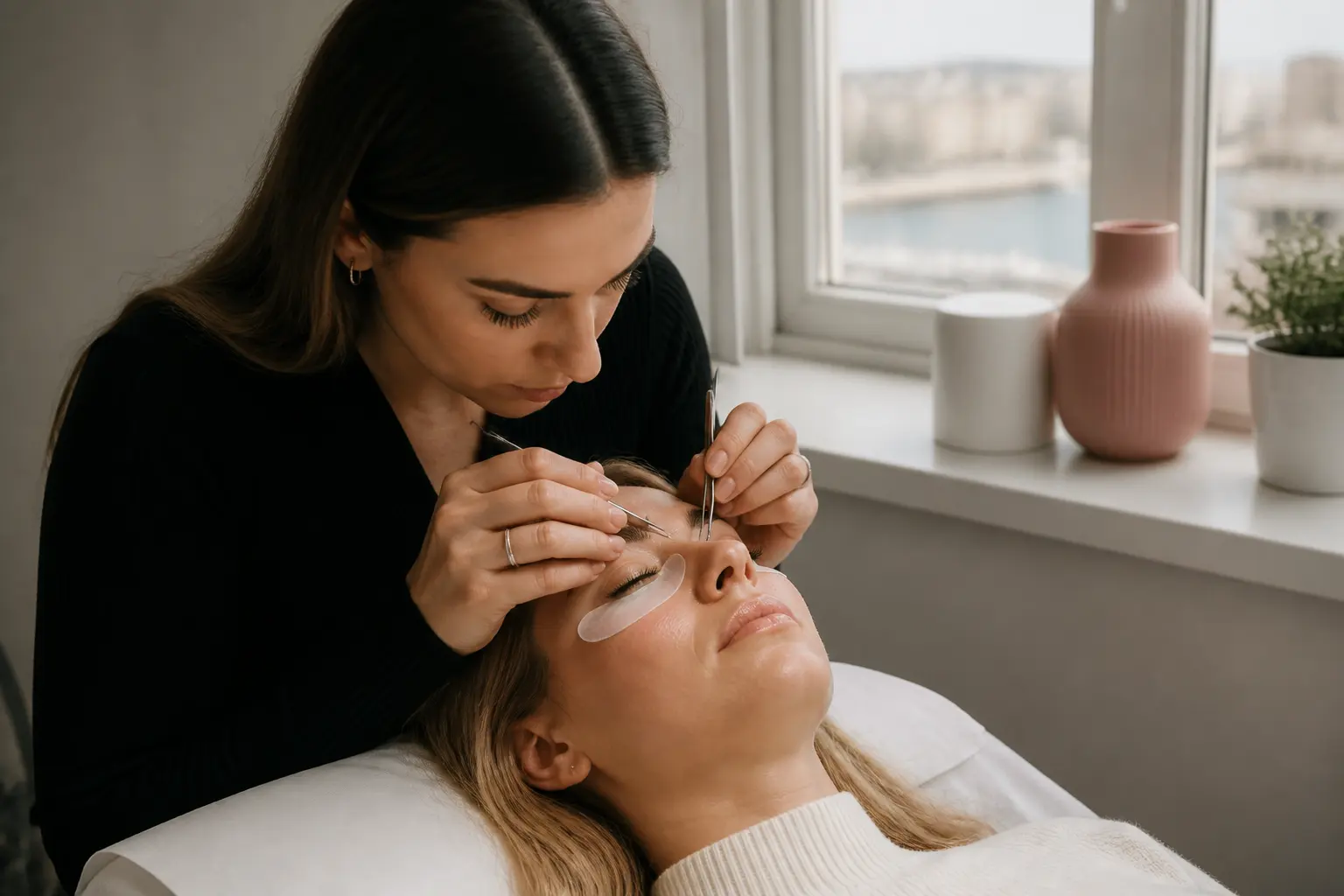
An infill should begin with an assessment of your current set. The professional will look at how the extensions have worn, the condition of the remaining attachments and whether your natural lashes appear suitable for further application. This is a useful moment to mention any discomfort, changes in your routine, reaction concerns or a change in the look you would like.
The appointment commonly includes the following stages:
- Reviewing the existing set: The lash artist checks the placement, direction and condition of retained extensions.
- Removing grown-out or unsuitable extensions: Extensions that have moved away from the lash line, twisted or no longer sit well may be removed carefully.
- Cleansing and preparation: The lash area is prepared so new extensions can be applied to appropriate natural lashes.
- Restoring the design: New extensions are added to bring back balance and the intended style, whether that is a subtle classic effect, a textured mix set or a fuller volume look.
- Aftercare reminder: You should leave knowing how to care for the refreshed set and when to consider your next booking.
The exact duration can vary. A light refresh will not require the same amount of work as an infill after substantial shedding. It also depends on the style being maintained and the condition of the remaining extensions.
How to prepare for your infill
A little preparation can make the appointment more straightforward and help the professional see your natural lashes clearly.
- Arrive with the eye area clean and free from mascara, eyeliner and strip-lash adhesive.
- Avoid applying heavy eye cream or oil-based products close to the lashes before the appointment.
- Bring up any irritation, sensitivity or changes around the eye area before the service begins.
- Tell the team if the extensions were applied elsewhere, especially if you are booking a first visit with a new studio.
- Share your preference if you want a softer, fuller, more textured or more natural-looking result than your current set.
Do not try to remove extensions yourself before an infill. Pulling, picking or using unsuitable products can put unnecessary tension on natural lashes. If you would like the set removed rather than maintained, book a professional lash removal service so the correct approach can be discussed.
What to expect after an infill
Directly after an infill, lashes should look more even and refreshed, but the result should still reflect your natural lash availability. A responsible approach does not overload lashes simply to create instant density. Your set may look slightly different at each maintenance visit because the natural lashes present, their growth stage and the amount of shedding can change.
Ask your lash professional for the aftercare that applies to the adhesive and styling used for your appointment. In general, gentle cleansing around the eye area, avoiding rubbing and resisting the urge to pick at extensions are sensible habits. If you use make-up, choose products and removal methods that are compatible with extensions, and avoid waterproof mascara unless your professional has specifically advised otherwise.
If an extension feels uncomfortable, sharp, loose or out of place, do not trim it or pull it away at home. Contact the studio for guidance. Comfort matters as much as appearance.
Infill, removal or a new full set: which appointment do you need?
The right booking depends on the condition of your existing lashes and your goal. These appointments serve different purposes.
| Appointment | Usually suitable when | Main purpose |
|---|---|---|
| Infill | You still have a reasonable amount of well-worn extensions and want to maintain the style. | Refresh coverage, remove grown-out extensions and restore balance. |
| Removal | You want to stop wearing extensions, change your routine or have a set that needs to come off. | Remove extensions professionally without pulling at natural lashes. |
| New full set | Most of the set has shed, the look has become too uneven, or you want a substantially different style. | Create a new design from a clean starting point. |
If you are unsure, choose the booking option that allows time for an assessment, or contact the studio before reserving. A clear description of your current set, when it was applied and what you would like next will make the conversation easier.
Building a practical lash maintenance routine
The most sustainable routine is one that suits your diary and your comfort with regular upkeep. Before committing to extensions, think beyond the initial full set. Ask yourself whether you can return for infills at an interval that works for you, cleanse the lash line carefully and avoid habits that make retention harder.
If your priority is enhancing your natural lashes with less ongoing maintenance, a lash lift may be a different conversation. A lash lift works with your own lashes rather than attaching extensions, so it is not an infill service. The most suitable option depends on the effect you want, the time you wish to spend on maintenance and an individual assessment.
For extensions, consistency is often simpler than waiting until the set is almost gone. Booking an infill when the lashes are beginning to look less even gives you the best opportunity to preserve the style you enjoy while keeping your routine manageable.
Conclusion
An eyelash extension infill is a maintenance appointment, not a one-size-fits-all timetable. Watch for gaps, uneven coverage and extensions that have grown away from the lash line, then book while there is still enough of your set to refresh. Arrive with clean lashes, explain any changes or concerns and let the appointment be guided by the condition of your natural lashes on the day.
If you are ready to maintain your current lash look or would like advice on the right appointment for your set, use the booking service to select the most appropriate eyelash extension option.
Frequently asked questions
How often should I get an eyelash extension infill?
Many clients consider an infill around two to three weeks after a full set or previous maintenance appointment. Your ideal timing can vary with natural lash shedding, home care, lifestyle and the style of extensions you wear.
Can I book an infill if I only have a few extensions left?
It depends on the studio’s booking policy and the state of the set. If very few extensions remain, a new full set may be more appropriate than an infill. Share when your lashes were last applied when you book.
Why do my lash extensions look uneven before my next appointment?
Natural lashes shed at different times. As extensions shed with them and others grow out, the set can lose its original evenness. This is a normal reason to plan an infill.
Should I wear mascara before a lash infill?
It is best to arrive without mascara or eye make-up so the lash area is clean for assessment and application. Follow any preparation guidance supplied by your chosen studio.
Can I change from classic lashes to volume lashes at an infill?
A change may be possible, but it depends on the remaining set, the natural lashes available and the amount of time required. Mention your preferred new style before your appointment so the appropriate booking can be considered.
What should I do if an extension feels uncomfortable?
Do not pull, cut or pick at it. Contact the studio that applied the set and explain what you are feeling so they can advise on the next step.