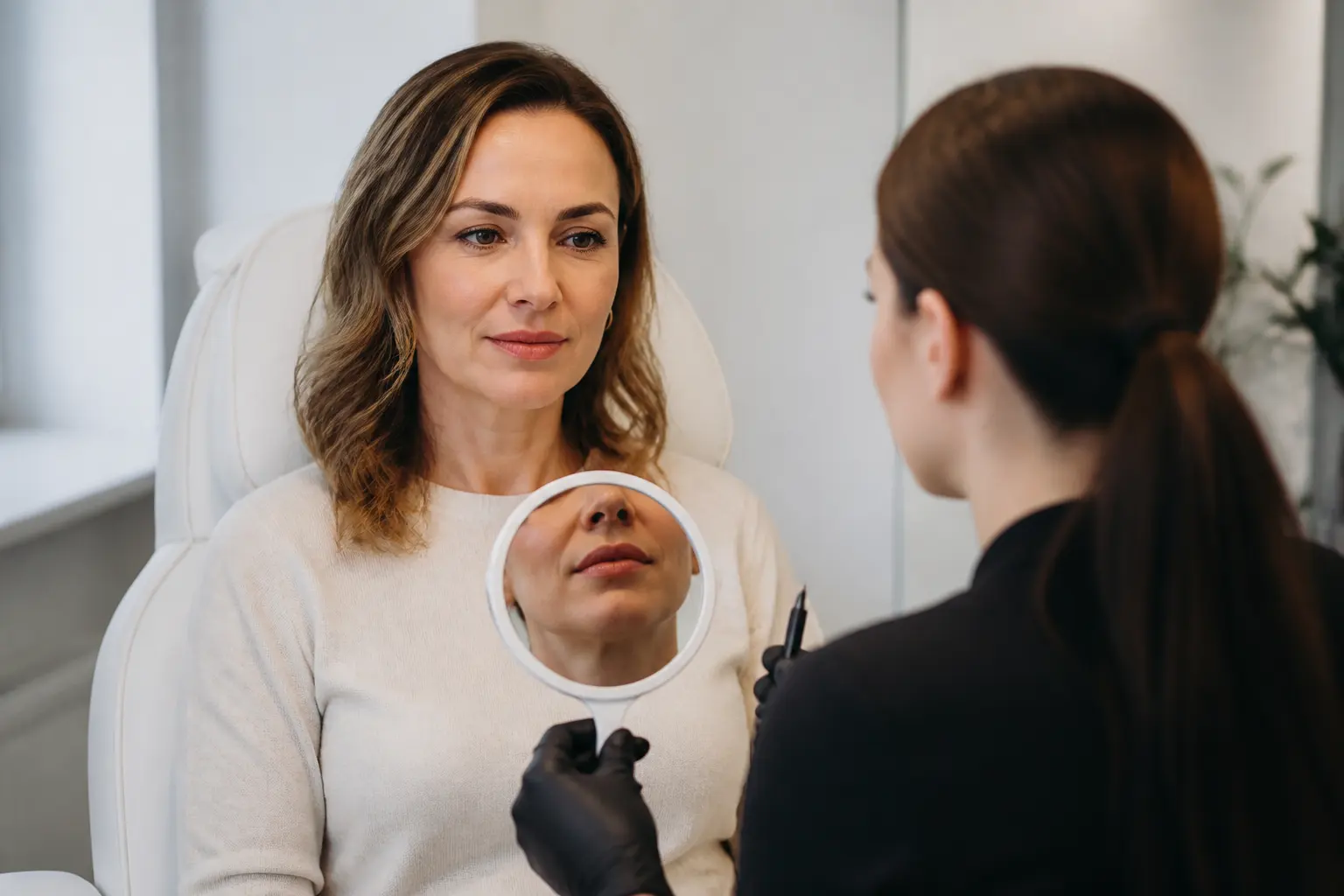
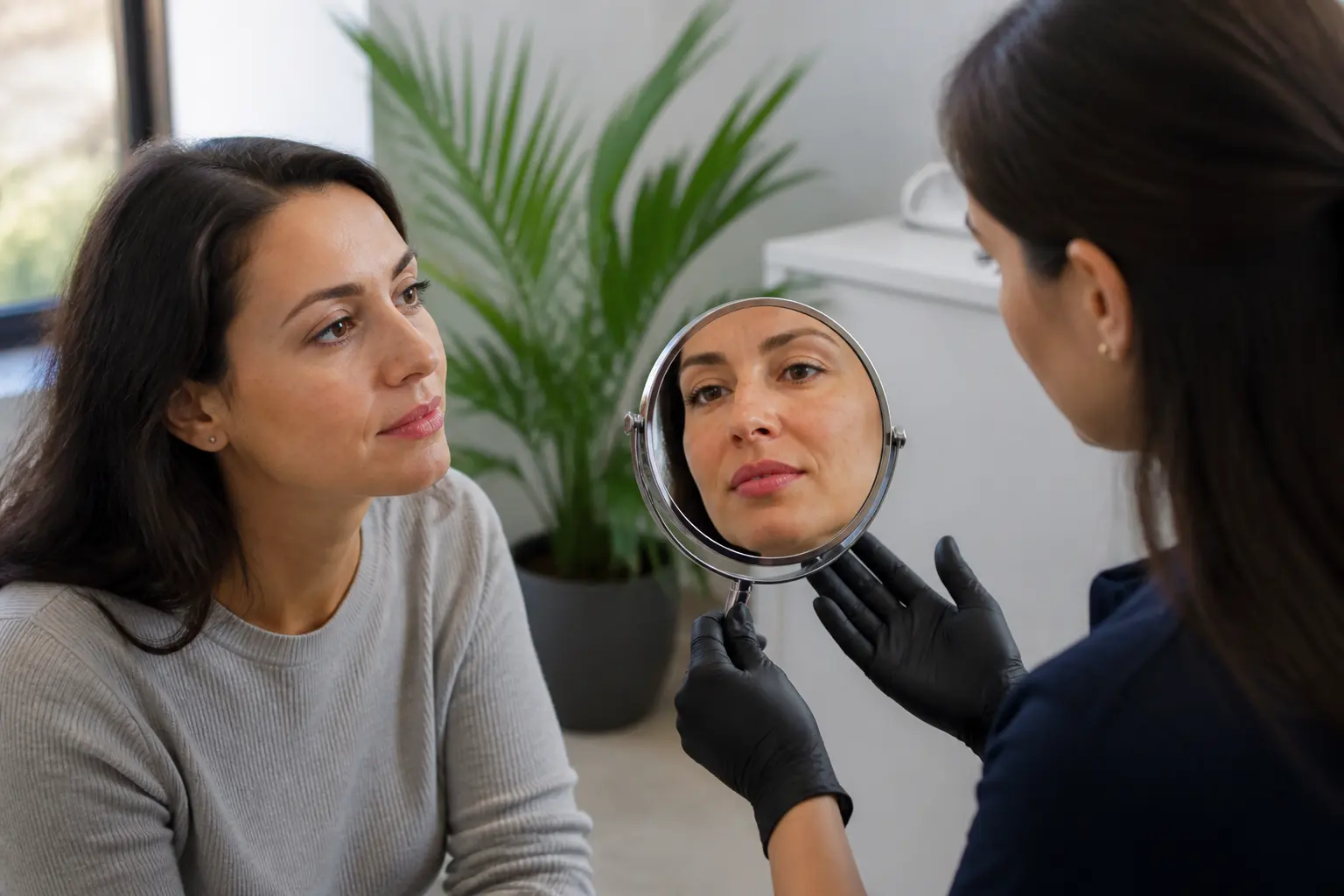
Lip colour looks different in the first days after micropigmentation because the pigment is freshly visible at the surface, temporary redness amplifies warm or bright notes and renewing skin can make the colour seem lighter or patchy. Natural lip pigmentation and lighting also change how a shade reads. These early shifts are not the settled result, so follow your aftercare and avoid judging the colour too soon.
It can be unsettling to look in the mirror after lip micropigmentation and feel that the colour is not what you expected. It may seem much brighter than your chosen shade, temporarily deeper around the border, cooler or warmer in different light, or unexpectedly pale once the first surface healing has passed.
Those early changes do not automatically represent the settled result. Lip micropigmentation works with your existing lip tone rather than behaving like an opaque lipstick applied to the surface. In the first stage after an appointment, the lips are also responding to the procedure and renewing their surface. That combination can make colour look different from one day to the next.
The useful approach is to understand what you are seeing, follow the personalised aftercare provided at your appointment, and avoid judging the final colour too soon. This guide explains the main reasons behind early colour shifts and the questions worth raising with your artist.
What does the early settling stage mean?
Micropigmentation of the lips is a form of semi-permanent make-up that places pigment to enhance lip colour and definition. It is not designed to create the solid, fully opaque effect of traditional lipstick. Instead, the intended result is usually a more even-looking, softly enhanced version of your natural lip colour.
Immediately after the session, what you see is influenced by more than pigment alone. The surface of the lips may be temporarily swollen or red, and the colour is newly visible at the surface. As the lips settle and the superficial skin renews, that first impression changes.
A respected overview from Cleveland Clinic notes that temporary swelling and redness can occur after lip blushing and that it may take time before the final result is visible. This is why a colour check made directly after your session, or during the first few days, is not the same as assessing the healed outcome.
Why can lip colour look different at first?
The colour is freshly visible at the surface
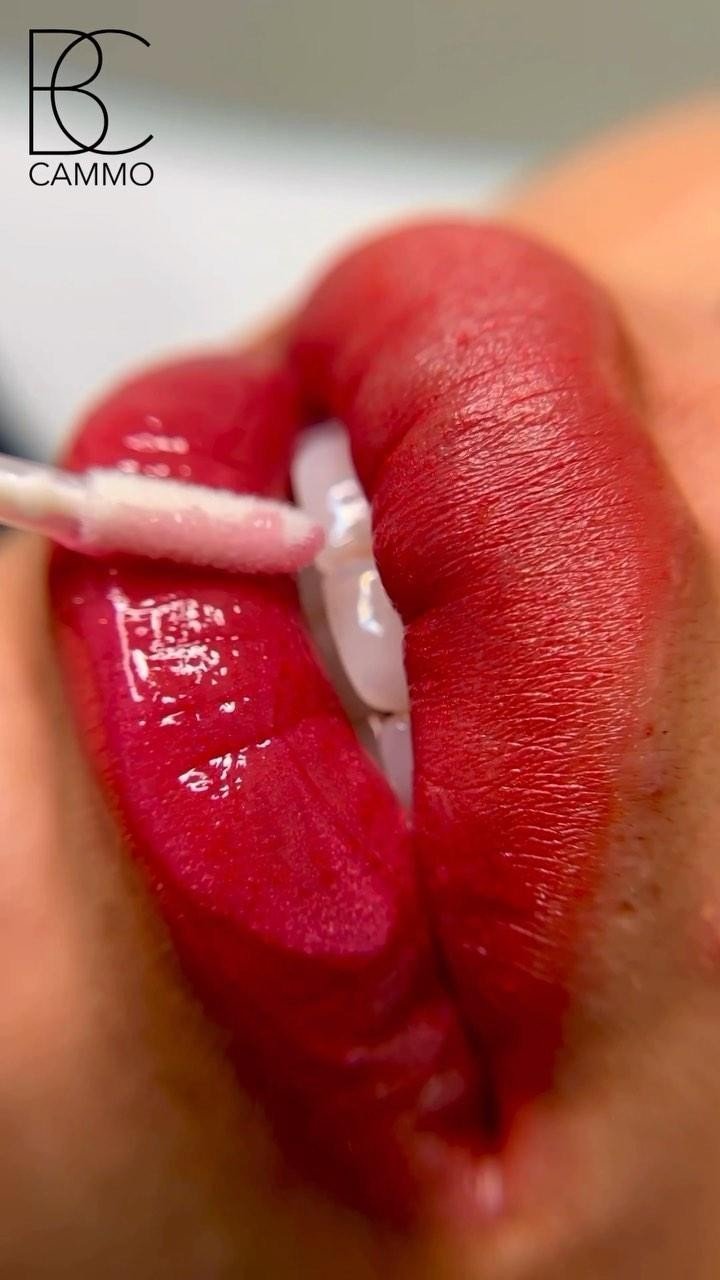
Just after micropigmentation, pigment can look more concentrated than it will once the lips have settled. The outline may appear more defined, while the centre of the lips can look stronger because there is no time yet for the colour to soften visually into your natural tone.
This is one reason a soft rosy choice can initially read as a bolder pink, red or berry tone. It does not mean that the chosen shade was necessarily wrong. It means the colour is being viewed at its most immediate stage, before the surface has completed its normal renewal.
Temporary redness can change the way a shade reads
Natural lip tone is never neutral. It already contains pink, red, brown, mauve, peach or cooler undertones, often with variation between the upper and lower lip. After an appointment, temporary redness can amplify warm or bright notes in the pigment.
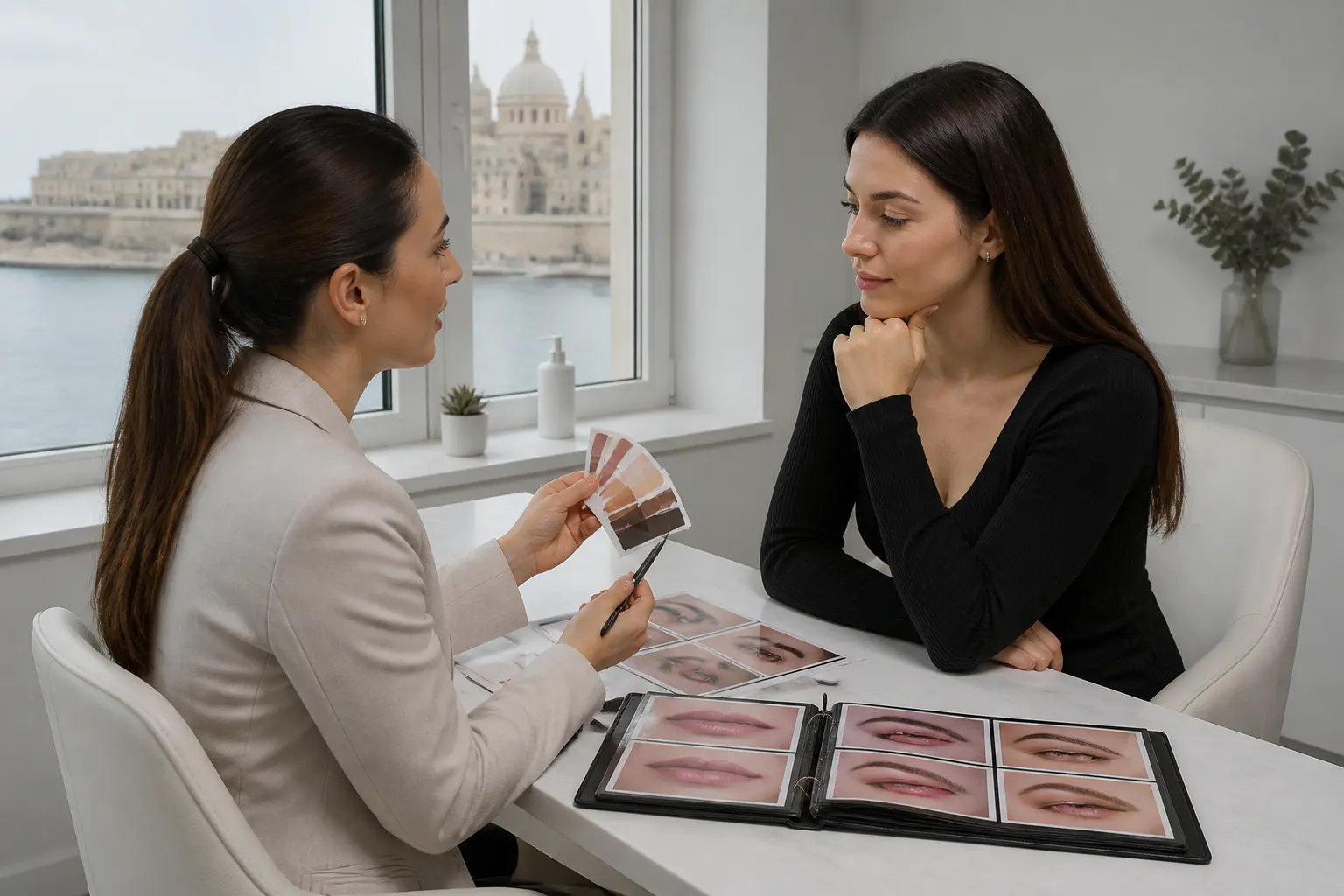
For example, a muted nude-rose may look much warmer on one person during the first stage than it does in the pigment reference. On another person, a similar shade may initially look cooler because their starting tone, lighting and surrounding skin tone alter the visual balance.
This is why colour selection should begin with your natural lips, your preferences and the level of definition you want. A reference photo can be helpful for explaining a mood or finish, but it cannot predict an identical result on every lip.
Surface dryness and flaking affect reflection
Lips naturally reflect light differently when they are smooth, hydrated, dry or beginning to flake. During early settling, patches of dryness can make the colour look uneven, duller in one area or darker around another. A more matte-looking surface may also make pigment seem deeper than it will later.
This does not mean you should exfoliate, scrub or pick at the lips to make the colour even. Removing loose skin before it is ready can interfere with the settling process. Follow the individual aftercare plan given by your practitioner, including any guidance about cleansing, hydration and the products to use or avoid.
Different parts of the lips may settle at different speeds
The upper and lower lip do not always appear to change in exactly the same way. The border, cupid’s bow, corners and centre may each look slightly different while the skin is renewing. This can create temporary contrast: perhaps the outline looks more visible than expected, or one section seems lighter.
It is sensible to notice these changes, but avoid trying to correct them at home with lip liner, tint, exfoliation or unfamiliar products unless your aftercare instructions specifically permit it. Taking clear photographs in similar daylight can be more useful than relying on memory, particularly if you need to discuss the healing journey with your artist.
Your natural lip pigmentation remains part of the result
Micropigmentation does not erase the individuality of your lips. Natural pigmentation, including areas that are deeper or lighter in tone, continues to influence how a chosen colour appears. This is particularly important where lips have a more pronounced brown, purple, cool or uneven base tone.
A skilled consultation considers this starting point rather than promising a copied version of a swatch or lipstick. In some cases, the discussion may include colour balancing or neutralisation before pursuing a particular cosmetic shade. The appropriate plan depends on the person’s lips, goals and assessment, not on a one-size-fits-all colour chart.
At BeCammo · Swieqi
Brazilian microblading in Malta
Semi-permanent brows that look like your own hair, designed for your face with the Brazilian method created by Brenda Cammo.
- from €300price
- Swieqiwhere
- ★ 5.0460+ Google reviews
How do early changes appear: darker, lighter or patchier?
There is no single day-by-day pattern that applies to everyone. However, people commonly notice a sequence of visual changes rather than one steady fade. Understanding the possibilities can make the process feel less alarming.
| What you may notice | Why it can happen during early settling | Helpful response |
|---|---|---|
| Colour looks brighter or darker than planned | Fresh pigment, temporary redness and a newly treated surface can intensify the appearance. | Allow time, protect the lips as instructed and avoid making a final judgement immediately. |
| Colour suddenly seems very light | Renewing surface skin can temporarily obscure or soften the colour underneath. | Continue with your aftercare plan and take photographs if you want to track change calmly. |
| One area seems deeper than another | Different areas can dry, flake and settle at different rates, while natural pigmentation also varies. | Do not pick or try to blend the area yourself; raise it at your planned review if needed. |
| The tone seems warmer or cooler in photos | Daylight, indoor lighting, camera processing and nearby make-up can all shift perceived colour. | Compare photographs taken in the same neutral daylight, without a filter. |
Why can lighting make the colour feel inconsistent?
Lighting is often underestimated. Warm bathroom bulbs can make lip colour look peachier, redder or more golden. Cooler daylight can reveal mauve, pink or grey notes that seemed less visible indoors. Phone cameras may also automatically adjust contrast and colour temperature, changing the image further.
If you are checking progress, use a simple method:
- Take photographs in the same place and at a similar time of day.
- Use natural, indirect daylight where possible.
- Avoid beauty filters, flash and tinted lip products.
- Photograph the full face as well as a close-up, because surrounding skin tone affects how the lip shade appears.
- Keep a short note of the date and any relevant changes, such as dryness or a day when the lips looked lighter.
This is not about monitoring every hour. It is simply a more reliable way to observe gradual change and communicate clearly if you need advice.
How does aftercare protect the settling process?
Your practitioner’s own aftercare directions should always lead, because they are based on the products used, your individual assessment and the protocol of the studio. General online advice is not a substitute for those instructions.
In practical terms, that usually means resisting the temptation to add extra products, test a new lip mask, use an exfoliating scrub or cover the lips with make-up before you have been told it is appropriate. More product is not automatically better. The goal is to keep the area cared for in the way you have been advised, without unnecessary friction, irritation or disruption.
Before booking, disclose relevant information honestly. This includes previous lip procedures, allergies, a history of cold sores, current irritation around the lips and any medication or health circumstance that could affect suitability. The Cleveland Clinic also advises disclosing a history of cold sores and following aftercare closely. A proper pre-treatment conversation helps ensure that expectations and safety considerations are discussed before pigment is placed.
When should you contact your practitioner?
A shifting shade on its own can be part of the early settling stage. However, it is appropriate to contact your practitioner if you are unsure about what you are seeing, cannot follow the aftercare plan, or develop symptoms that feel outside the guidance you were given.
Seek prompt medical advice if you have signs of a possible infection or a significant allergic reaction, such as worsening swelling, increasing pain, spreading redness, heat, discharge, fever, breathing difficulty or facial swelling. Do not attempt to diagnose or manage a suspected complication through social media or by changing products at home.
For colour concerns without urgent symptoms, send your artist clear, unfiltered photographs and explain when they were taken. They can advise whether the appearance fits the expected stage or whether it should be reviewed. A planned touch-up appointment, where included in your service plan, is also the appropriate time to assess healed retention and discuss small refinements. It is not a reason to rush the process before the lips have had time to settle.
How do you set a realistic lip colour expectation?
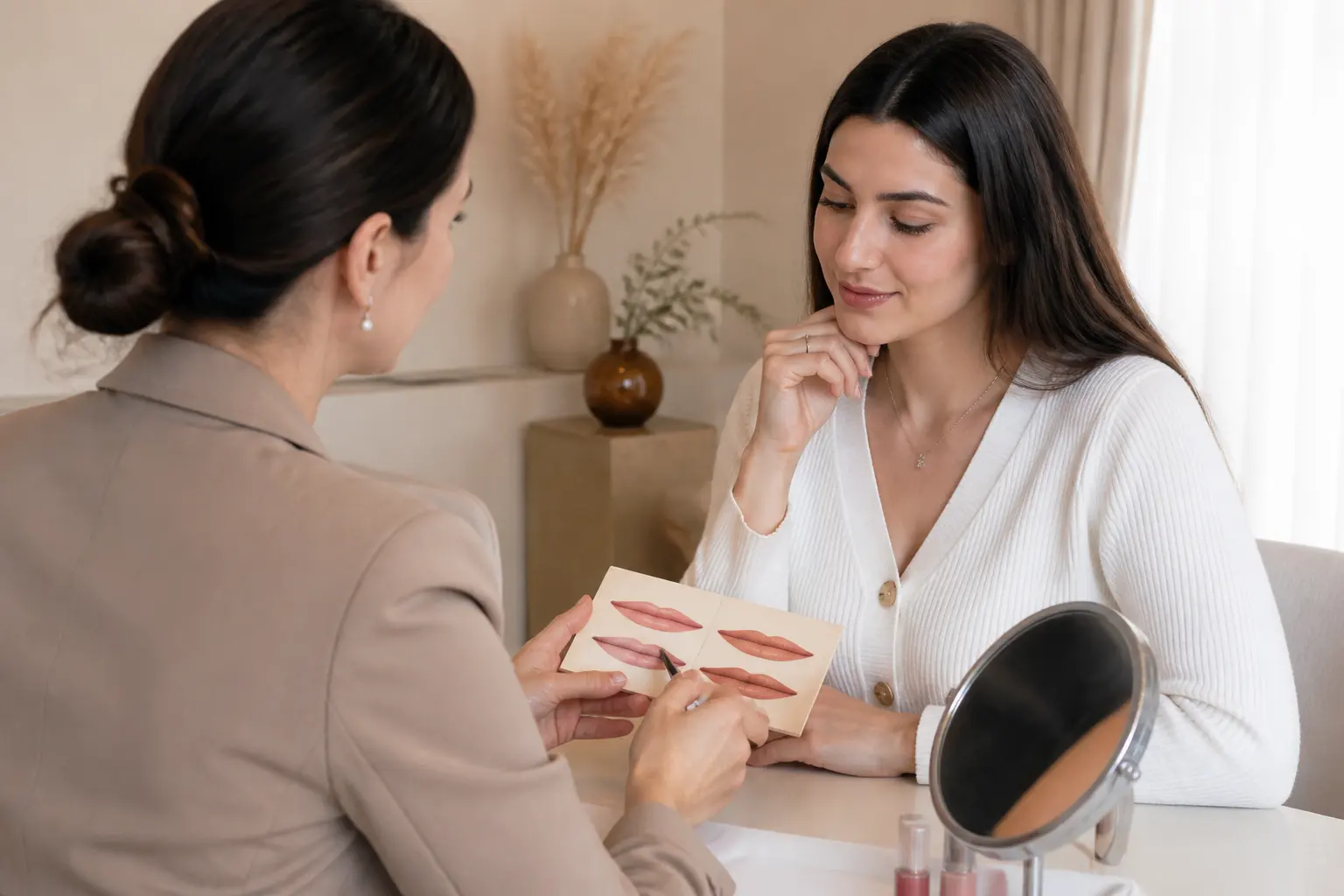
One of the best ways to feel comfortable after lip micropigmentation is to make room for the difference between an immediate result and a settled enhancement. Ask for clarity before your appointment about the desired direction: do you want a barely-there correction, more definition around the border, a warmer healthy-looking tint, or a more noticeable everyday colour?
Bring reference images if they help you describe the look, but discuss them as inspiration rather than a guarantee. It is also helpful to attend without lip colour, so your artist can assess the true base tone. A personalised plan should account for your natural pigmentation, the look you normally wear and the level of maintenance you are comfortable with.
At BeCammo, micropigmentation of lips is approached as a tailored semi-permanent make-up service. The aim is not to impose a single beauty standard, but to create a result that works with your features and everyday style. A consultation is the right place to discuss colour preferences, past procedures and questions about the healing process before making a decision.
Conclusion
Early colour changes after lip micropigmentation can be surprising, but they are often part of the transition from freshly placed pigment to a softer settled appearance. Fresh colour, temporary redness, surface renewal, uneven dryness, natural pigmentation and lighting can all affect what you see in the mirror.
Give the process the time and care it needs, follow your specific aftercare instructions, and avoid judging the final result from the first few days. If you are considering lip micropigmentation and want to discuss the right colour direction for your natural lips, use the final booking option to arrange your appointment with the appropriate service.
Frequently asked questions
Why do my lips look much darker after micropigmentation?
Fresh pigment, temporary redness and the condition of the lip surface can make the colour appear more intense immediately after the procedure. The early look is not the same as the settled result.
Can lip micropigmentation look lighter before the colour settles?
Yes. As the surface skin renews, the colour may temporarily seem softer or less visible. Avoid judging retention too early and follow the timing advised by your practitioner for a proper review.
Why does one side of my lip look darker than the other?
Different parts of the lips can settle at different speeds, and natural pigmentation is not always identical across the lips. Do not pick or attempt to correct uneven areas yourself; share clear photographs with your practitioner if you are concerned.
Will the healed colour look exactly like my chosen pigment shade?
Not necessarily. The settled colour is influenced by your natural lip tone, how the pigment heals in your skin and the personalised technique used. A pigment choice is a starting point for a tailored result, not a promise of an identical swatch.
When should I be concerned about healing after lip micropigmentation?
Contact your practitioner if you are unsure about your symptoms or aftercare. Seek prompt medical advice for warning signs such as worsening pain, spreading redness, marked heat, discharge, fever, difficulty breathing or facial swelling.