Why Laser Hair Removal Needs Multiple Sessions
Brenda Cammo Team

Laser hair removal is often described as a course of appointments, not a single beauty treatment. That is not simply a booking preference. It reflects the way hair follicles grow. At any one time, the hairs in an area of skin are at different points in their individual growth cycles, so a laser session can only work with the follicles that are in the most responsive stage on that day.
Understanding this makes the process far less frustrating. It explains why you may notice patchy shedding after a visit, why the next appointment is not booked immediately, and why your plan may differ from someone else’s. At a professional studio, the goal is to assess your skin and hair, choose appropriate settings and space each visit so the next group of actively growing hairs can be addressed safely and thoughtfully.
The short answer: hair does not grow all at once
It can look as though all the hair on your legs, underarms or face is growing at the same pace. Biologically, however, each follicle follows its own cycle. Neighbouring follicles are not perfectly synchronised, which means one hair may be actively growing while another is resting or transitioning.
Laser hair removal relies on pigment in the hair to carry heat towards the follicle. The connection between the visible hair and the structures involved in growth is most useful when that hair is in its active growth phase. This is why one appointment cannot reach every follicle at its most responsive moment.
Evidence reviews and clinical guidance consistently describe repeated treatments as part of laser hair reduction, rather than presenting it as a one-visit solution. They also underline an important point for realistic expectations: outcomes vary, and laser is associated with long-term hair reduction rather than a promise that every hair will disappear permanently. A peer-reviewed evidence review indexed by PubMed and NHS patient guidance from Leeds Teaching Hospitals both explain the role of the active growth stage and repeated appointments.
The three main hair growth phases
Hair growth is usually described in three broad phases. Knowing their names is helpful, but you do not need to memorise biology before booking. What matters is how each phase affects the timing of your appointments.
Anagen: the active growth phase
Anagen is the stage in which the hair is actively growing. During this period, there is a strong relationship between the hair shaft, its pigment and the lower part of the follicle. This makes it the phase most relevant to laser hair removal.
Only a proportion of follicles in a treatment area will be in anagen at any one appointment. Those are the hairs the session is best placed to target. The proportion differs by body area and by the person, which is one reason treatment plans should not be copied from a friend, a social-media video or a generic online timetable.
Catagen: the transition phase
Catagen is a short transition period. Hair growth slows and the follicle changes its relationship with the hair. In practical terms, it is not the main target phase for laser. A hair can still be visible at the surface, but visibility alone does not tell us that the follicle is in the ideal biological stage for the session.
Telogen: the resting phase
Telogen is the resting stage. Eventually, the existing hair sheds and the follicle later begins a new cycle. A resting follicle may not produce a visible hair at all, or the hair may be less connected to the growth structures that laser sessions aim to affect. When that follicle returns to active growth in the future, it may become relevant to a later appointment.
What happens during a laser appointment?
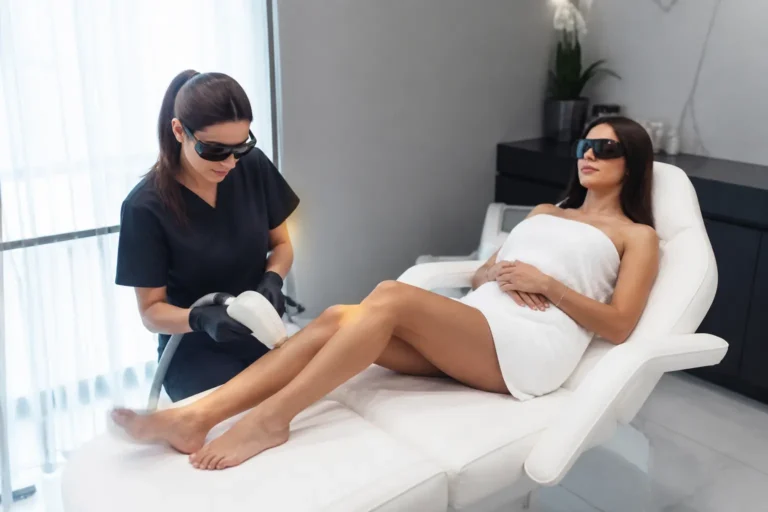
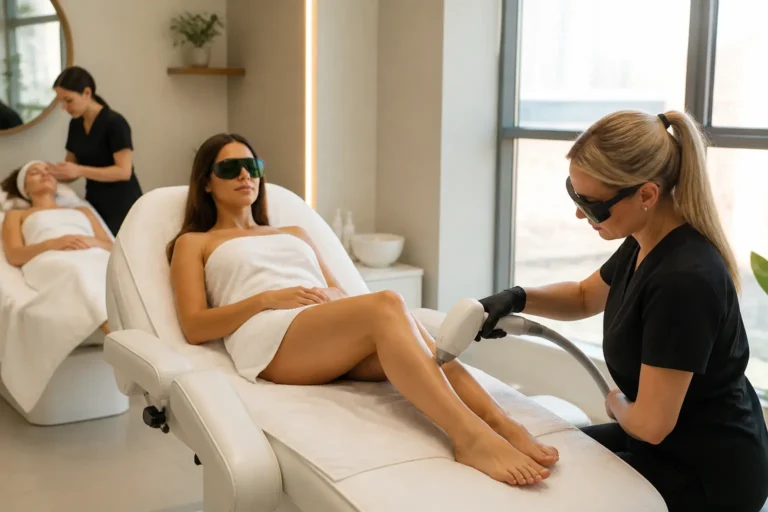
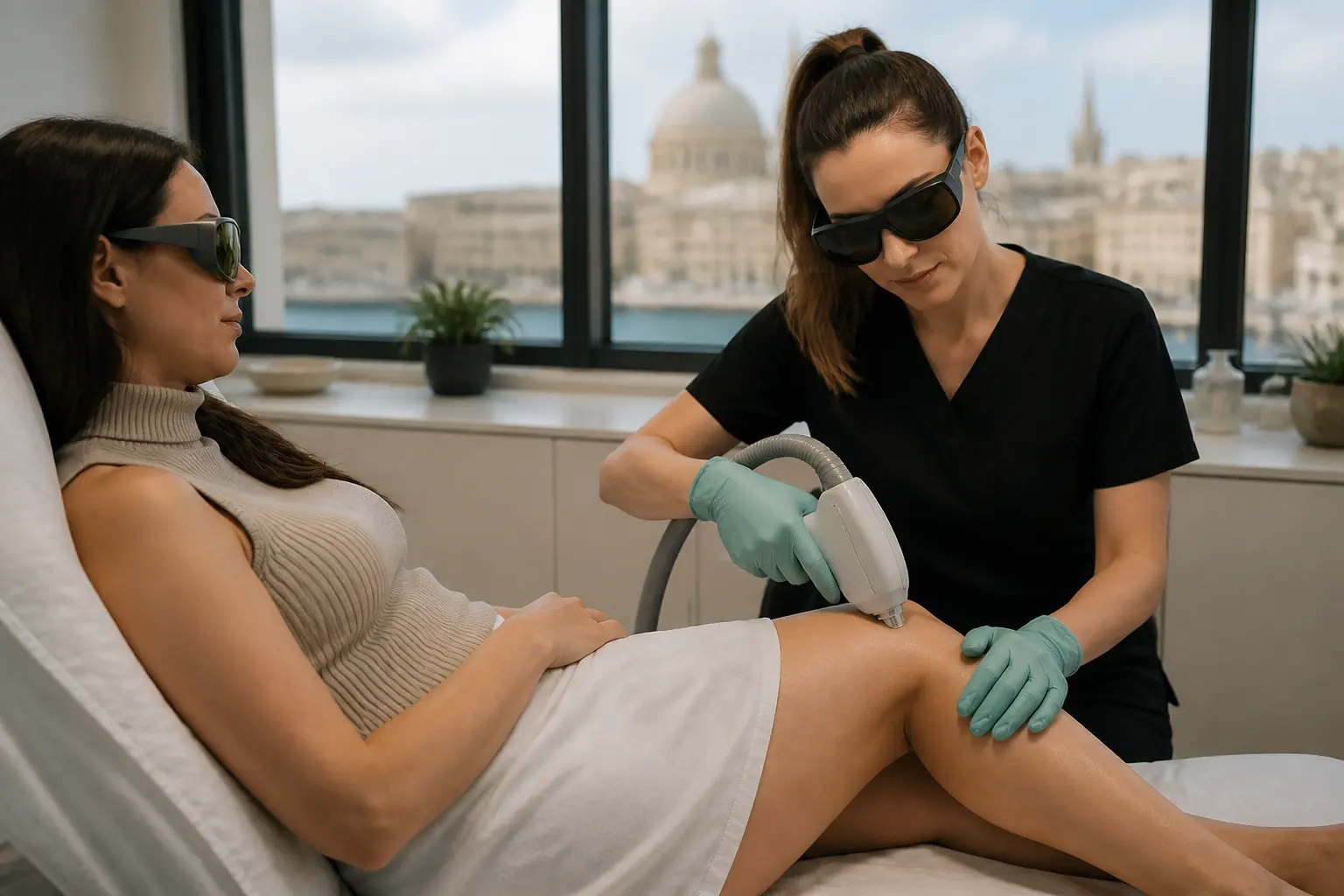
In a professional laser hair removal session, the device delivers controlled light energy to the treatment area. The pigment in the hair absorbs that energy, converting it into heat. The purpose is to affect the follicle while protecting the surrounding skin as carefully as possible.
This is why the consultation and preparation guidance matter. Skin tone, hair colour, hair thickness, the body area, recent sun exposure and relevant products or skin changes can all influence the approach. A suitable plan is not just about choosing an area such as underarms, bikini line, upper lip or legs. It is about making decisions that reflect the client’s individual skin and hair profile.
The session itself is only one point in a longer process. Following the appointment, some treated hairs may take time to work their way out. This can look like regrowth at first, but it may be part of the shedding process. Avoid judging the result day by day. Your practitioner can explain what is reasonable to expect between visits and when to get in touch if you have a concern.
Why appointments are spaced apart
The interval between sessions gives your skin time to settle and, just as importantly, allows more follicles to enter an active growth stage. Booking too frequently does not make every dormant or transitional follicle suddenly available to the laser. The timing is part of the strategy.
Different body areas have different rhythms. Facial hair may be reviewed on a different timetable from leg hair, for example. Coarser hairs and finer hairs can also behave differently. Rather than treating a gap between appointments as dead time, think of it as the period in which the next group of hairs is progressing through its natural cycle.
Your practitioner may adapt the schedule as the course develops. Early appointments can look different from later ones because the density, speed and pattern of visible regrowth may change. Consistency helps the studio assess those changes and advise whether the plan remains appropriate.
Why results vary between people and body areas
There is no honest universal answer to the question, “How many laser sessions will I need?” A course is influenced by several factors, and each one can affect the response and the timing.
- Hair colour and thickness: darker, coarser hairs generally provide a clearer pigment target than very fine or very light hairs. This does not automatically decide suitability, but it is relevant to the assessment.
- Skin tone: the device and settings need to be selected with care because pigment is also present in skin. A professional consultation is essential for choosing a cautious approach.
- Area of the body: hair on the face, underarms, bikini area and legs can have different growth patterns and density.
- Hormonal influences: changes in hair growth can sometimes be influenced by hormones. If you have sudden, unusual or distressing hair growth, it is sensible to speak with an appropriate healthcare professional as well as discussing your beauty goals with the studio.
- Your treatment history: waxing, plucking and epilation remove hair from the root, which can interfere with the visible hair needed for a laser appointment. Shaving is commonly preferred during a course because it removes hair at the surface rather than pulling it out from the follicle.
- Sun exposure and skin condition: tanning, sunburn, irritation and active skin concerns can affect whether it is appropriate to proceed on a particular day.
These variables are precisely why responsible studios avoid guarantees. A personalised plan is more useful than a dramatic promise.
What progress can look like between visits
Progress does not always mean perfectly smooth skin after the first appointment. You may notice that some hairs shed after a period of time, that regrowth appears less dense in places, or that hairs seem to return at different speeds. Patchiness can be expected because follicles are cycling independently.
It is also normal for progress to be easier to see over several appointments than in a single week. Consider taking clear photographs in similar lighting before starting and at agreed points in your course, if your practitioner recommends it. This can help you notice changes without relying only on memory.
Do not pick, tweeze or wax hairs simply because they seem loose or uneven. Follow your studio’s individual aftercare guidance. If shaving is advised for your plan, use it gently and avoid irritating the skin. The best choice depends on the treatment area and how your skin is settling.
How to support your laser course
A well-planned series of sessions works best when appointment-day habits are consistent. The exact instructions should come from your practitioner, but the principles below are useful starting points.
- Attend at the recommended interval. Your schedule has a biological purpose. If you need to move an appointment, ask the studio for advice rather than guessing the best new date.
- Prepare as instructed. Follow guidance about shaving, sun exposure and skincare products. Clean, calm skin gives the practitioner a clearer starting point.
- Be open at your consultation. Mention medication changes, recent tanning, irritation, past reactions and any change that may affect the treatment area.
- Keep your aftercare simple. Treat the area gently after a session and use the specific advice you were given. Avoid assuming that a product which suits another area of your body will suit freshly treated skin.
- Set goals around reduction, not perfection. The purpose of a course is usually to reduce unwanted hair growth and make maintenance easier over time. The pattern and degree of change remain individual.
A professional plan is more than a number of visits
It is tempting to compare packages only by the number of appointments included. Yet the value of professional laser care is also in the assessment, the choice of appropriate treatment approach, the ability to review your response and the clear aftercare support between sessions.
At Becammo, laser hair removal is approached as a personalised service. Your practitioner can discuss the area you would like to treat, look at your hair and skin profile, and explain what preparation and spacing may suit your circumstances. This is particularly valuable if you are treating a sensitive area, have recently been in the Maltese sun or are unsure whether your hair type is likely to respond as you hope.
Multiple visits are not a sign that laser has failed. They are the expected response to a cycle that is naturally staggered. Each appointment is an opportunity to address a different group of actively growing hairs, while the wider course allows your practitioner to monitor how your skin and hair are responding.
Plan your course with realistic expectations
Laser hair removal works with your biology, not against it. Because follicles move through anagen, catagen and telogen at different times, a gradual course gives the process the best chance to address hairs as they become more responsive. The exact number and spacing of visits should always be based on a personal consultation rather than a fixed promise.
If you are considering laser hair removal in Malta, book a consultation or appointment at Becammo and choose the Sliema or Swieqi location that suits you. Bring your questions about the area you want to treat, your skin history and your routine. A clear conversation before the first visit is the best way to begin with an informed, comfortable plan.
Frequently asked questions
Why does laser hair removal need more than one session?
Not all follicles are in the active growth phase at the same time. A laser session is most relevant to actively growing hairs, so repeat appointments allow later groups of follicles to be addressed as their cycles change.
Can I book laser sessions closer together for faster results?
More frequent appointments do not force resting follicles into active growth. Your practitioner will recommend spacing based on the treatment area, your hair pattern and how your skin responds. Ask before changing your schedule.
Does hair growing back after my first session mean the laser did not work?
Not necessarily. Some treated hairs can take time to shed, while other follicles may not have been in the most responsive phase during the session. Assessing progress across a course is more meaningful than judging one appointment alone.
Will every area need the same number of sessions?
No. Body areas grow differently, and results can vary with hair thickness, colour, skin tone and individual factors. Facial areas and body areas may need different schedules.
Should I wax or pluck between laser appointments?
Do not assume waxing or plucking is suitable during a course because both remove hair from the root. Ask your practitioner what method is appropriate for you. Shaving is often preferred when hair needs to be managed between visits.
Can laser hair removal remove hair permanently?
Laser hair removal is best understood as long-term hair reduction. Responses vary, and future maintenance may be appropriate for some people. Your consultation is the right time to discuss realistic goals for your chosen area.