Why Coarse Dark Hair Often Responds Well to Laser
Brenda Cammo Team
Coarse, dark hair is often considered one of the most responsive hair types for laser hair removal. That does not mean every person will have the same experience, or that a single session will deliver the final result. It does mean there is a helpful starting point: this type of hair usually gives the laser a clearer target.
If you are tired of shaving your underarms, bikini area, legs, upper lip or other areas where hair grows dark and visibly textured, understanding this principle can make the decision process much simpler. The key is to look beyond hair colour alone. Your skin tone, the area being treated, your growth cycle, recent sun exposure and your personal health history all matter too.
At a professional studio, laser hair removal should begin with a careful conversation about these details. The aim is not to make a blanket promise. It is to decide whether laser is suitable for your hair and skin profile, then plan sessions at sensible intervals.
Why dark hair gives laser a clearer target
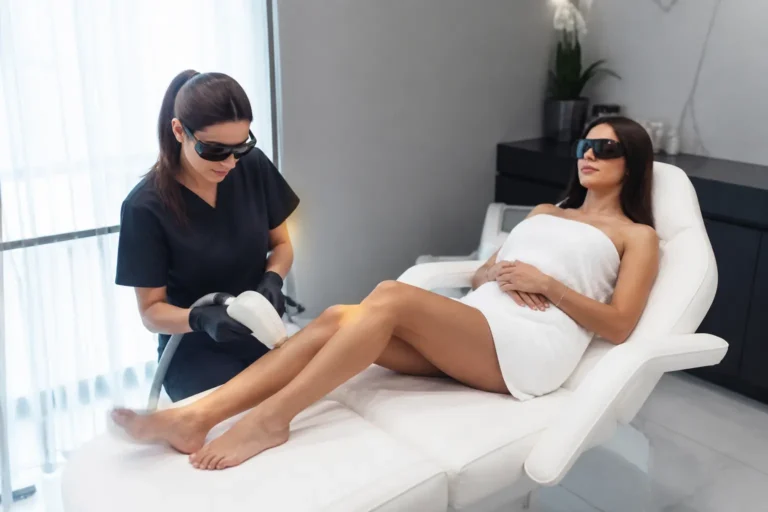
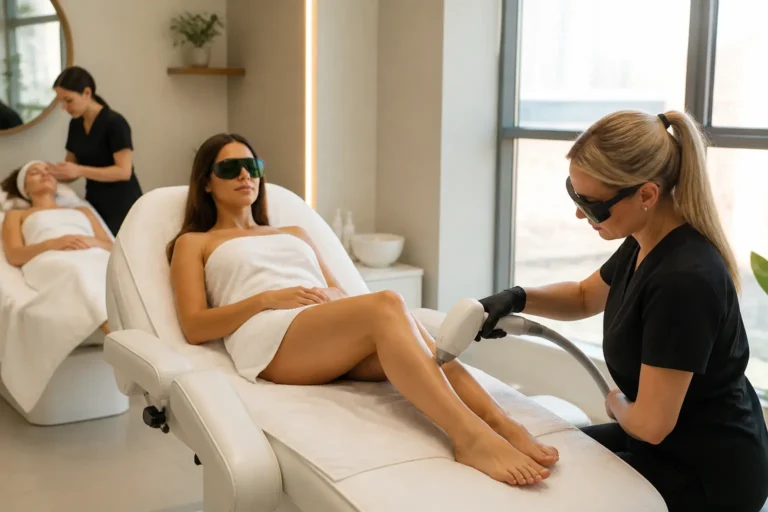
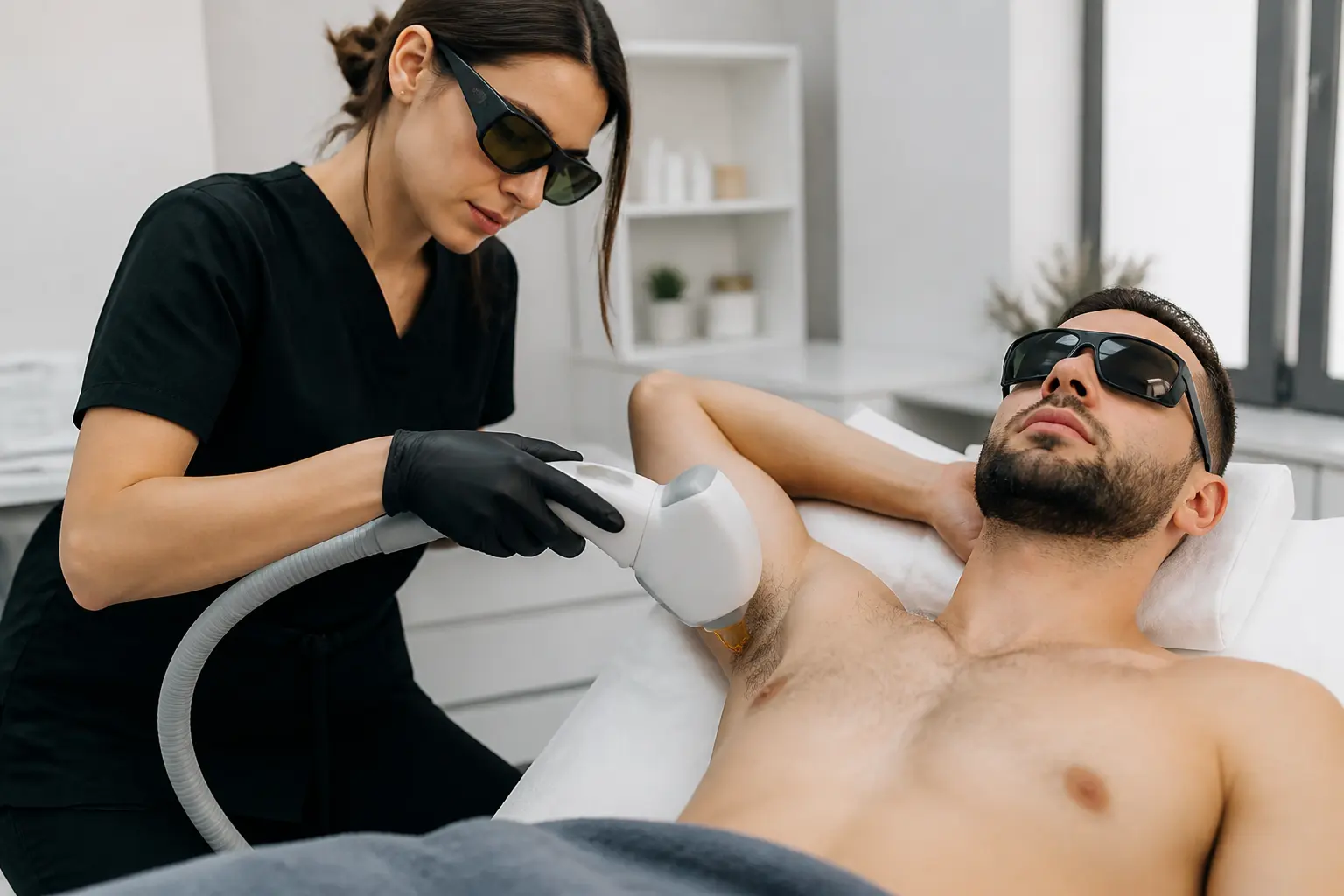
Laser hair removal works by directing light towards pigment, also called melanin, in the hair. When the hair contains more dark pigment, it can absorb the light more readily than very light hair. The energy is converted into heat below the skin’s surface, helping to disrupt the follicle’s ability to produce new hair over time.
This is why dark brown or black hair tends to be more responsive than blonde, white, grey or red hair. Lighter hairs contain less of the pigment that laser technology is designed to target, so there may be less contrast for the device to work with. The American Academy of Dermatology notes that laser hair removal cannot effectively target blonde, white, grey or red hair in the same way. American Academy of Dermatology guidance on unwanted hair removal
For someone with coarse dark hair, this pigment is usually easier to identify. That is the first reason it can respond well. However, it is only part of the picture.
Why coarser hair can be an advantage
Hair texture matters because coarse hair is often thicker and more noticeable above the skin. In laser terms, it may also contain a more substantial pigmented structure than very fine, soft hair. This can make the interaction between light and hair more efficient when the settings, device and treatment plan are appropriate.
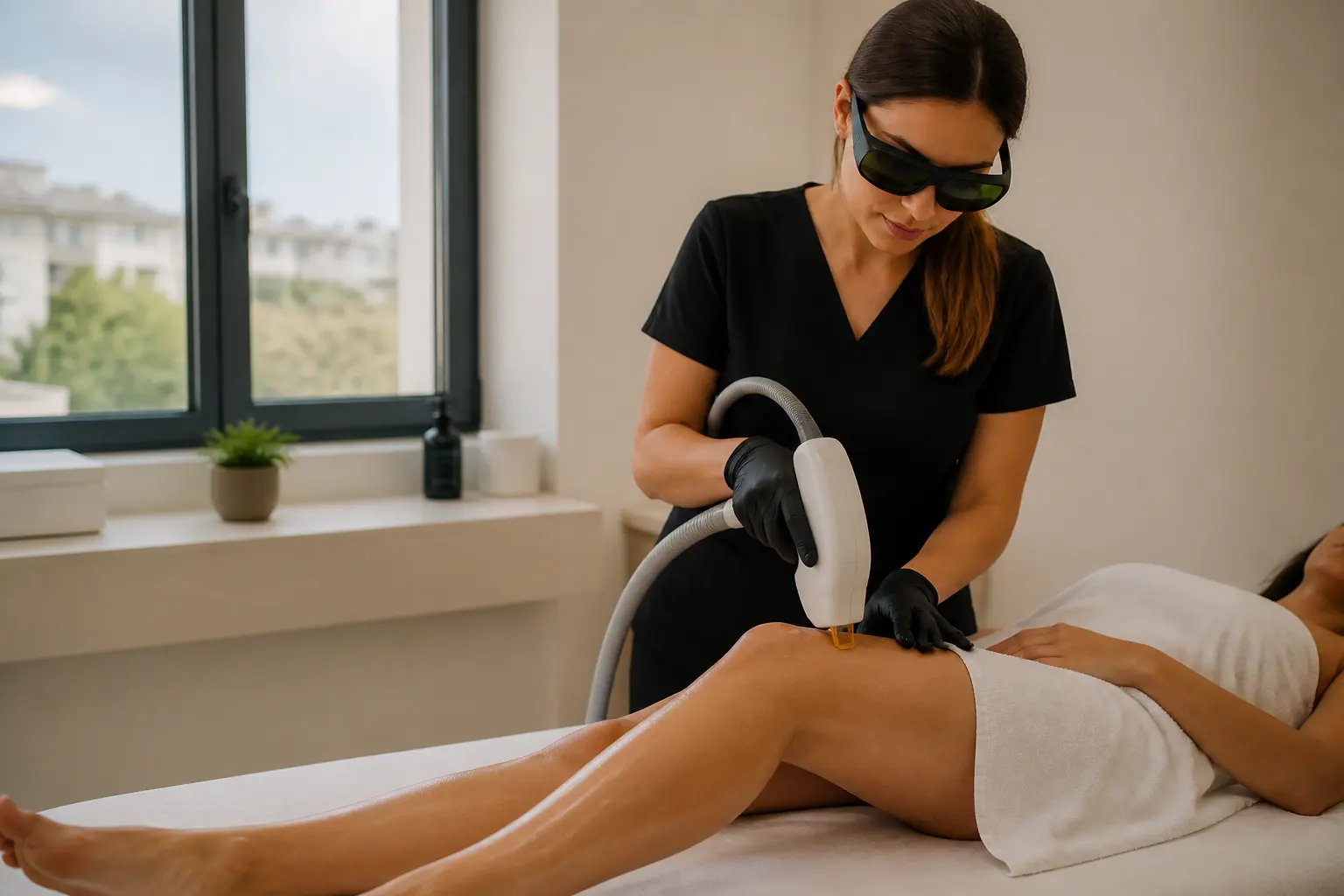
Think of it as the difference between trying to spot a bold dark thread and a pale, fine strand in bright sunlight. The bold thread is easier to see. In a similar way, dark coarse hair can provide a more defined target than pale or fluffy hair.
That is why areas with terminal hair are frequently discussed in laser consultations. Terminal hair is the mature, more pigmented and thicker hair commonly found on the underarms, legs, bikini area, upper lip, chin or body. Fine vellus hair, by contrast, is softer, lighter and less visible. It may not respond in the same way, even when it is in the same general area of the body.
DermNet notes that laser therapy can be used for dark, coarse terminal hairs, while outcomes and suitable approaches still depend on the individual skin and hair profile. DermNet information on laser therapy in skin of colour
Dark hair is helpful, but skin tone still matters
It is tempting to hear that dark hair responds well and assume that anyone with dark hair is automatically an ideal candidate. In reality, the relationship between hair pigment and skin pigment needs professional attention.
The laser is seeking pigment in the hair, but skin also contains melanin. When there is less contrast between the hair and the skin, the practitioner needs to take greater care in choosing the right approach. Darker skin is not a reason to dismiss laser hair removal. It is a reason to ensure that the person carrying out the service understands how to assess different skin tones and select settings responsibly.
Professional assessment is especially important if you have recently tanned, use self-tanning products, have a history of dark marks after irritation, or have had sensitivity following other hair-removal methods. The American Academy of Dermatology advises clients to discuss recent tanning, medicines, a tendency to scar and other relevant skin factors before laser treatment. American Academy of Dermatology laser hair removal preparation advice
At Becammo, the practical focus is on matching the appointment plan to the client rather than assuming one protocol suits every skin tone, area or hair type.
The hair growth cycle explains why you need a course of sessions
Even when hair is dark and coarse, laser hair removal is not a one-appointment process. Hair does not grow in perfect synchrony. At any given time, some hairs are actively growing while others are resting or transitioning.
Laser treatment is most productive when hairs are in an active growth phase, because the connection between the visible hair and the follicle is stronger. Since not every follicle reaches that stage on the same day, appointments are spaced over time to work with successive growth cycles.
This is also why you may notice uneven shedding or regrowth after an early session. Some hairs may appear to grow as usual at first, while others gradually shed. It does not automatically mean the session has failed. Your practitioner can help you understand what is normal for the area being treated and when it is sensible to return.
The number of sessions varies. Body area, hair density, hormones, skin tone and your own response all influence the plan. Dermatology guidance commonly describes laser hair removal as a series of treatments rather than a one-off procedure. American Academy of Dermatology laser hair removal FAQs
Which areas with coarse dark hair may be suitable?
Coarse dark hair can occur in many areas, and the practical benefits of laser can look different depending on your routine. For example:
- Underarms: A popular choice for people who want to reduce the frequency of shaving and the feel of fast regrowth.
- Bikini area: Often considered by clients who find regular hair removal time-consuming or uncomfortable.
- Legs: Suitable for those with dense, dark leg hair who want a more streamlined long-term routine.
- Upper lip and chin: These areas can be more influenced by hormonal changes, so expectations and maintenance planning should be discussed carefully.
- Face and neck: These areas need a personalised approach because hair texture can vary considerably within a small space.
The best area to start is not necessarily the area with the darkest hair. It may be the one where regular shaving, waxing or plucking takes the most effort, creates the most inconvenience, or no longer suits your lifestyle.
What a professional assessment should cover
A useful consultation is more than a quick look at the hair. It gives you a chance to ask questions, explain your concerns and make an informed choice. Before booking a course, consider discussing the following:
- Your natural hair colour and whether the hair is coarse, fine or mixed.
- Your skin tone and any recent tan or sun exposure.
- The exact area you would like to treat.
- Whether you shave, wax, thread, pluck or use other removal methods.
- Any history of irritation, pigmentation changes or scarring.
- Medicines, skin products or health information that could be relevant to suitability.
- Your desired outcome, including whether you are looking for a reduction in regular maintenance rather than an absolute outcome.
It is also reasonable to ask how your treatment schedule will be planned and what aftercare you should follow. Good questions are part of good preparation.
How to prepare if you have coarse dark hair
Dark, coarse hair can be a strong starting point, but preparation still plays a role in making each appointment as straightforward as possible. Follow the instructions provided for your service, as they may differ according to the area and your personal assessment.
Avoid tanning before your appointment
Sun exposure can change the way your skin responds to light-based treatments. Tell the studio if you have been in strong sun, have a tan or have used a tanning product. Do not assume a holiday tan is irrelevant because your hair is naturally dark.
Do not wax, pluck or thread the treatment area beforehand
Laser needs a hair structure to target. Removing hair from the root shortly before treatment can make that target less available. Ask your practitioner which method is appropriate between sessions. Shaving is often handled differently from waxing or plucking because it removes hair at the surface rather than pulling it out from the root.
Share relevant information honestly
Be open about skincare, medicines and previous reactions. This is not a formality. It helps the studio decide whether to proceed, adjust timing or advise a different next step.
Keep expectations focused on progress
A course is usually about gradual reduction and easier management, not an instant transformation. Coarse dark hair can respond very well, but your result remains individual. A thoughtful plan is more valuable than an unrealistic promise.
Common myths about coarse dark hair and laser
“If my hair is dark and thick, one session should be enough.”
No. Dark coarse hair may be a favourable characteristic, but the growth cycle still means that multiple appointments are generally needed.
“Dark hair means every laser setting will work for me.”
No. The right approach depends on your skin tone, the body area, your recent sun exposure and other individual factors. Settings should never be copied from another person’s appointment.
“Coarse hair will stay coarse while I wait for my next session.”
Not necessarily. Changes can be gradual, and hair may appear patchier or feel finer as you progress. The pattern differs from person to person.
“Laser is only for light skin and dark hair.”
That was a common assumption in the past, but technology and professional knowledge have developed. People across a range of skin tones may be considered for treatment, provided the assessment and treatment approach are appropriate. American Academy of Dermatology information on lasers and skin types
When to ask for extra advice first
If dark coarse hair has appeared suddenly, changed rapidly, or is accompanied by other changes that concern you, speak with an appropriate healthcare professional before treating it as only a cosmetic issue. The same applies if you are unsure whether a medicine, active skincare product or skin condition could affect your suitability.
A beauty appointment should feel considered, not rushed. Asking questions before you begin is a sensible part of caring for your skin.
Conclusion
Coarse dark hair often responds well to laser hair removal because it gives the laser a more visible pigment target. Its thickness can also make it easier to distinguish from very fine hair. Still, positive results depend on much more than hair colour: your skin tone, hair cycle, treatment area, preparation and professional assessment all play a part.
If you have coarse dark hair and would like to explore laser hair removal in Malta, book a consultation at Becammo and choose the Sliema or Swieqi location that suits you. A personalised conversation can help you understand whether the service fits your goals and how to plan your appointments responsibly.
Frequently asked questions
Does coarse dark hair always respond to laser hair removal?
It is often a favourable hair type because the dark pigment gives the laser a clearer target. However, results still vary with skin tone, body area, hormones, growth cycle and the treatment plan.
Is laser hair removal effective on fine dark hair?
Fine dark hair may respond differently from coarse terminal hair. A professional assessment is the best way to understand what is realistic for the specific area you want to treat.
Can I wax coarse hair between laser sessions?
Ask your practitioner for instructions. Waxing and plucking remove hair from the root, which may interfere with the hair target needed for a later laser session. Your recommended between-session routine should be based on your treatment plan.
Why does coarse dark hair grow back after an early laser session?
Hair follicles move through different growth stages, so not all hairs respond at the same appointment. A course of sessions is planned to work with those cycles over time.
Can I have laser hair removal if I have darker skin?
Many people with darker skin may be considered for laser hair removal, but a careful assessment is essential. The practitioner needs to consider the contrast between skin and hair, recent tanning and the most suitable treatment approach.