Safe Gel Nail Removal: Why Soaking Beats Peeling
Brenda Cammo Team
When a gel manicure starts lifting at the edges, it can be very tempting to pull it away. A small corner catches on a towel, you pick at it absent-mindedly, and suddenly half the colour has come off. The problem is that gel polish rarely lifts away on its own. It often takes tiny layers of the natural nail with it.
Safe gel nail removal is not simply about getting the colour off quickly. It is about protecting the nail plate underneath, keeping the surrounding skin comfortable and giving your next manicure a healthier base. For soak-off gel polish, controlled soaking is usually far gentler than peeling, scraping or forcing loose sections away.
At a professional nail appointment, removal should begin with identifying what is actually on the nail. Not every gel product is removed in the same way. Gel polish is generally designed to soften with acetone, while some hard gels and extensions need careful filing down by a trained nail technician. The important principle stays the same: removal should be deliberate, light-handed and matched to the product, not rushed by pulling.
Why peeling gel polish can damage your natural nails
Gel polish is designed to adhere firmly to the nail plate. When you peel it off, the top surface of your natural nail can come away with the product. This is why nails may feel rough, thin or unusually bendy after a peel-off moment.
The damage is not always obvious straight away. You may first notice pale, uneven patches, flaking at the free edge or a surface that no longer feels smooth. Once the nail plate has been disrupted, a new gel application may not sit as evenly either. It can be tempting to use more product to hide the roughness, but taking a short pause and focusing on gentle care may be the more sensible choice.
The American Academy of Dermatology specifically advises against picking or filing off gel polish, noting that this can significantly damage nails. Its guidance instead describes using acetone in a controlled way, with product applied only to the nail rather than soaking the whole hand.
Peeling is not the same as a product lifting
A little lifting does not automatically mean you have done anything wrong. Daily hand washing, cleaning, friction, nail growth and the natural condition of the nail can all affect how a manicure wears. But once lifting begins, it is best not to treat that edge as an invitation to remove the rest.
Rather than pulling at it, book a removal or manicure appointment. If that is not possible immediately, keep the nail short enough to reduce catching and avoid using the lifted area as a tool for opening or scraping things. This helps limit further pulling and protects the natural nail underneath.
How soak-off gel removal works
Soak-off removal works by softening the gel polish until it releases with minimal pressure. A technician may first gently reduce the shine of the top layer so the remover can reach the colour more effectively. Small, nail-sized pieces of cotton are then placed over the nails with acetone, often secured with wraps.
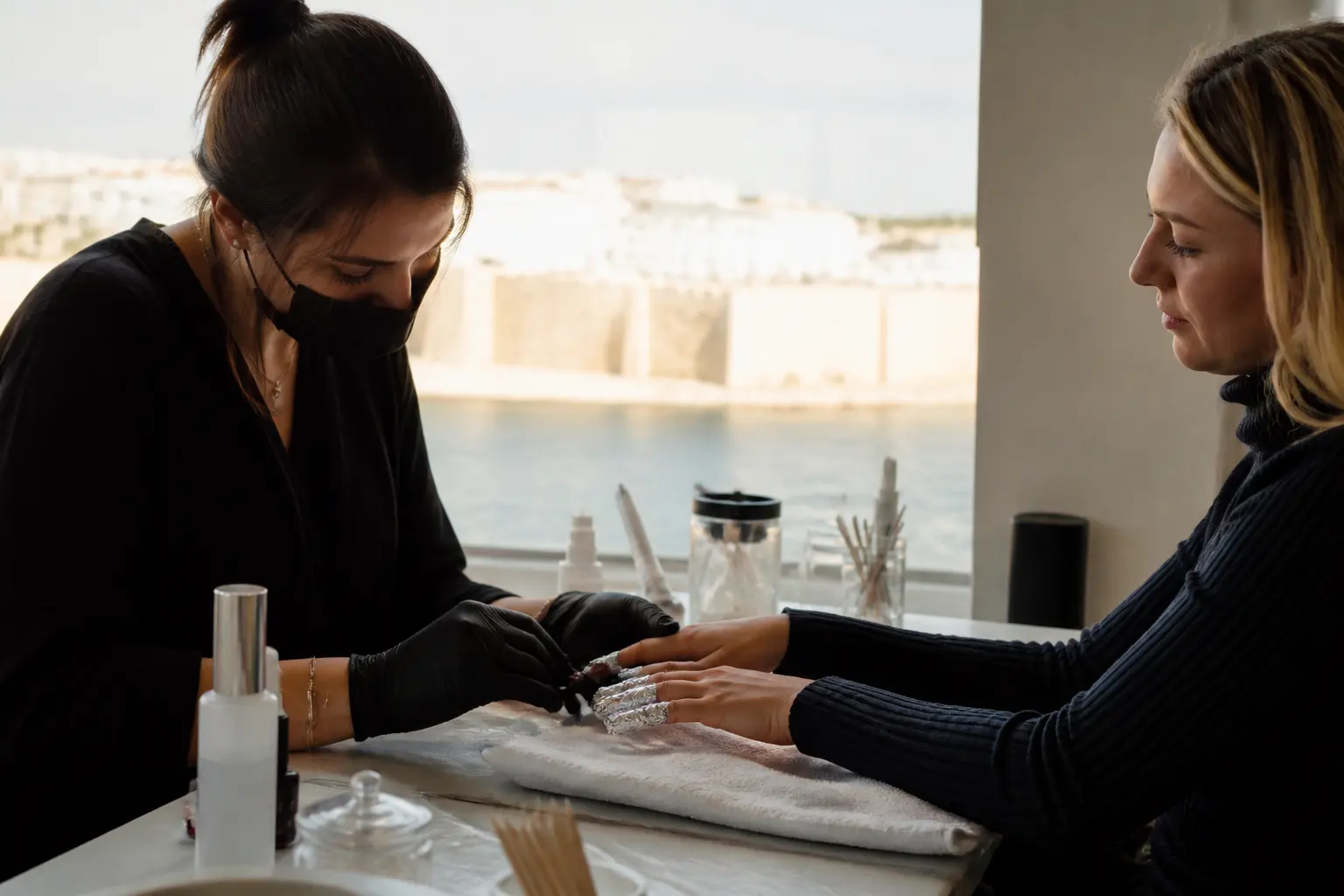
After the appropriate waiting time, the softened product is checked and eased away carefully. It should not require aggressive scraping. If the product is still firmly attached, the safer approach is usually more controlled softening, not more force.
This method may sound slower than peeling, but it is purposeful. It gives the remover time to loosen the gel rather than relying on traction against the nail plate. The British Association of Dermatologists notes that gel polish is recommended to be removed by soaking in acetone. That distinction matters because gel polish, hard gel and acrylic systems can have different removal requirements.
Why professional removal feels more controlled
A salon removal is not only about the acetone. It is also about preparation, observation and restraint. Your nail technician can see whether the product is lifting, whether there is a thicker overlay, whether the natural nail looks dry or compromised, and whether a fresh gel application is appropriate that day.
At Becammo’s nail service in Sliema, the goal is to approach removal as part of nail care, not as an inconvenient step between colours. A professional can also help you choose a practical next step, whether that is a new gel manicure, a simpler finish, a rubber base service where appropriate, or time with bare nails and nourishing care.
Not all gel products should be soaked off
The phrase “gel nails” covers more than one type of service. This is one reason home removal can become confusing. Soak-off gel polish is made to soften and release with the right remover. Hard gel, builder systems and some extensions may need to be carefully filed down instead. Trying to soak a product that is not designed to soak can lead to unnecessary waiting, repeated acetone exposure and frustration. Trying to peel or force-file any product can lead to damage.
A professional assessment is useful when you are unsure what product was used, when you have had an overlay or extension, or when the manicure has several layers. It is always reasonable to ask your technician what has been applied and how it should be removed before you leave the appointment.
There is also a difference between filing the product and filing the natural nail. For products that require file-down removal, a trained technician works gradually and avoids taking away more of the natural nail than necessary. The aim is controlled reduction of the enhancement, not a harsh shortcut.
What to expect during a professional gel removal appointment
A thoughtful removal appointment is usually calm and straightforward. While exact steps depend on the product and the condition of your nails, it commonly includes:
- A quick check of your nails and the existing product. This helps identify whether it is soak-off gel polish, a thicker enhancement or another system.
- Careful preparation. The top layer may be lightly refined when appropriate, without excessive filing of the natural nail.
- Targeted removal. For soak-off gel, remover is kept focused on the nail. For file-down products, the technician reduces the material gradually.
- Gentle finishing. Remaining product is removed without forcing it, then the nails are smoothed as needed.
- Cuticle and nail care. Hydration matters after removal because removers and frequent hand washing can leave nails and surrounding skin feeling dry.
It should not feel like a battle with your nails. Some light filing can be part of a professional service, but sharp discomfort, burning or heavy pressure should always be mentioned immediately. Your comfort and the condition of your natural nails are relevant information, not an inconvenience.
Signs you should pause before another gel manicure
Many people can enjoy gel polish as part of their regular beauty routine. Still, it is helpful to look at bare nails between appointments. This gives you a chance to spot changes rather than covering them straight away with a new colour.
Consider asking for advice before reapplying gel if you notice:
- pronounced peeling, splitting or cracking;
- tenderness around the nail or cuticle area;
- persistent redness, swelling or itchiness around the fingers;
- unusual discolouration, thickening or nail lifting;
- a nail that feels sore after removal or has been damaged by picking.
The American Academy of Dermatology recommends seeing a dermatologist for unusual changes or persistent nail problems. A beauty appointment is a good moment to notice concerns, but medical assessment is the right next step for ongoing symptoms or signs of a reaction.
Aftercare for nails after gel removal
Freshly removed nails often benefit from a quieter routine. Acetone can be drying, even when it is used carefully, so aftercare is less about complicated products and more about consistency.
Keep hydration simple
Use cuticle oil or a moisturising hand cream regularly, especially after hand washing. Massage it into the cuticle area and around the sides of each nail. The American Academy of Dermatology also advises moisturising nails and cuticles after polish removal, as removers can dry them out.
Do not use nails as tools
Opening cans, scratching labels, prising apart packaging and picking at surfaces can put extra stress on nails that are already dry or flexible. A small change in habit can make a noticeable difference while nails grow out.
Choose length with your routine in mind
If your nails are catching or splitting at the edge, a slightly shorter, smoothly filed shape may be easier to maintain. This does not mean every nail needs to be short. It means choosing a length that feels realistic for work, travel, sport and daily tasks.
Give bare nails an honest look
Before deciding on your next colour, take a moment to look at the nail surface. A short break from gel can be useful if your nails feel particularly dry or thin. The right timing will vary from person to person, and a nail technician can help you decide what is suitable for the condition of your nails.
How to avoid the urge to peel next time
The simplest solution is to plan removal before the manicure becomes heavily lifted. If you know you will be travelling, busy at work or away from your usual salon, consider booking a removal appointment in advance or choosing a finish that suits your schedule.
It also helps to understand that a chipped manicure is not a nail emergency. Covering a small chip temporarily may be possible, but peeling is rarely the answer. Keep cuticle oil nearby, avoid catching the edge, and arrange professional removal when you can.
If you have repeatedly peeled gel in the past, be open about it at your next appointment. There is no judgement in it. Sharing that habit helps your technician recommend a manicure plan and aftercare routine that feels more manageable for you.
Safe gel removal is part of a good manicure routine
Gel polish can give a polished, long-wearing finish, but the removal stage deserves just as much attention as the application. Soaking is not about making the process longer for the sake of it. It is about allowing soak-off gel to release in the way it was designed to, without pulling at layers of your natural nail.
If your gel manicure is lifting, resist the urge to peel it away. A professional removal appointment can help protect the condition of your nails, assess the product correctly and leave you with a clean base for whatever comes next. When you are ready, book a nail appointment at Becammo in Sliema and ask the team which removal and finish suit your nails best.
Frequently asked questions
Can I peel off gel polish if it is already lifting?
It is better not to. Even when gel seems loose, peeling can pull away layers of the natural nail. Trim any snagging length if needed, avoid picking, and arrange a professional removal.
Is acetone safe for gel nail removal?
Acetone is commonly used to remove soak-off gel polish, but it can dry the nail and surrounding skin. Targeted application, rather than soaking the whole hand, plus moisturising afterwards, helps keep the process more considerate of the skin.
Why is my nail rough after peeling gel polish?
The peeling may have removed part of the nail’s upper surface along with the gel. Avoid further buffing at home, keep the area moisturised and let a nail professional assess the best next step.
Can every type of gel be removed by soaking?
No. Soak-off gel polish is designed to soften with remover. Hard gel and some enhancement systems may need careful file-down removal. If you are unsure what you have, professional assessment is the safest option.
Should I have a break between gel manicures?
It depends on the condition of your nails, how often you wear gel and how removal has gone. If nails feel dry, thin or rough, a break and a gentle care routine may be helpful. Ask your technician for personalised guidance.