PCOS Hair Growth and Laser: Setting Kind Expectations
Brenda Cammo Team

Unwanted facial or body hair linked to polycystic ovary syndrome, usually known as PCOS, can be physically tiring and emotionally draining. If shaving, waxing or plucking has become a frequent part of your routine, laser hair removal may feel like a welcome option. It can help reduce the need for ongoing hair removal, but it is important to begin with expectations that are realistic, personal and kind to yourself.
Laser hair removal does not treat PCOS itself or change the hormonal factors behind hair growth. What it can do is target visible hair in selected areas, helping many people manage that part of the experience with fewer day-to-day removal methods. Because hormones can continue to influence new growth, especially on the face, a course of sessions and occasional maintenance may be part of the longer-term plan.
This guide explains how to approach PCOS-related hair growth and laser hair removal thoughtfully, what a professional consultation should cover, and how to decide whether booking is the right next step for you.
Why PCOS-related hair growth can feel different
PCOS is a hormonal condition that can affect periods, fertility, mood, skin and hair growth. One possible symptom is hirsutism, which means thicker, darker hair growing in areas such as the face, chest, abdomen, back or thighs. Not everyone with PCOS experiences this symptom, and the pattern, density and pace of hair growth can vary widely from one person to another.
Hormones called androgens are often part of the picture. Higher androgen activity, or greater sensitivity to androgens, can encourage coarse terminal hairs to develop in particular areas. This is why the hair may not behave like the fine, light body hair that many people have naturally.
If you have new or sudden coarse hair growth, changes to your periods, voice changes or other symptoms that concern you, it is sensible to speak with a GP or appropriate clinician. The NHS guidance on hirsutism notes that excess hair growth can have different causes, so it is worth understanding your individual situation rather than assuming it is simply a cosmetic concern.
Can laser hair removal help with PCOS-related hair growth?
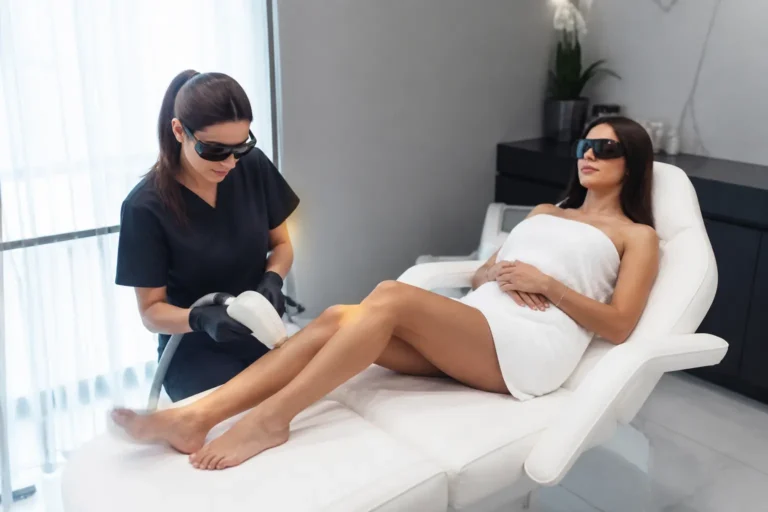
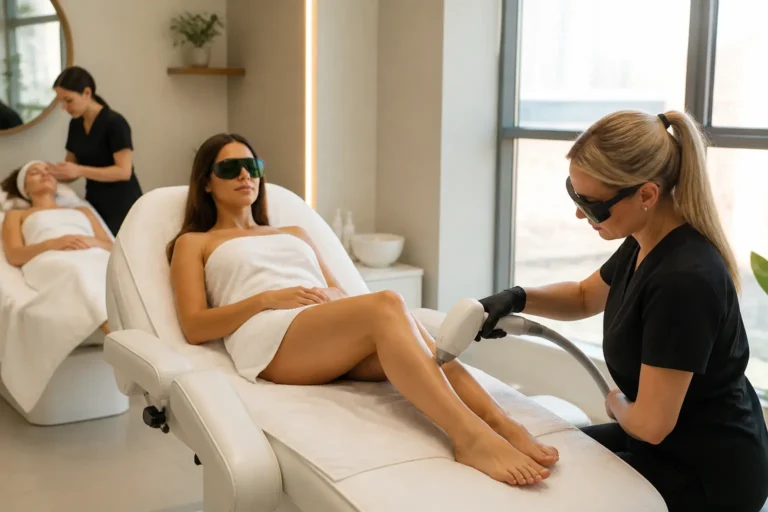
Laser hair removal can be a useful hair-management option for people with PCOS-related growth. The laser works by directing light towards pigment in the hair. The aim is to affect follicles while they are in a suitable active growth stage, which is why appointments are spaced out and why more than one session is normally needed.

For many clients, the practical goal is not a promise of never seeing another hair. A more helpful goal may be reduced density, slower regrowth, finer-feeling hair, less frequent shaving, or less irritation from repeated hair removal. The result can make everyday grooming feel simpler, particularly in areas where shaving or waxing has become a constant task.
However, PCOS can make expectations more complex. Laser can work on the hairs present in the area being treated, but it cannot stop hormonal changes from encouraging other follicles to become active later. This is particularly relevant for facial areas such as the upper lip, chin and jawline. The American Academy of Dermatology explains that hormonal influences can mean laser results on women’s faces are not permanent and repeat treatment may be needed if hair regrows.
That does not mean laser is pointless. It means it should be viewed as a management tool that may need reviewing over time, rather than a one-off answer to a hormonal condition.
Set a goal that feels useful, not impossible
When hair growth affects confidence, it is understandable to hope for a dramatic and immediate change. A supportive consultation should make space for that feeling without making unrealistic promises. Try to define what would make the service worthwhile for you in everyday life.
- Would you like to shave less often?
- Are you trying to reduce the appearance of coarse hairs in a specific area?
- Do you experience razor bumps, ingrown hairs or irritation from your current routine?
- Would having a planned schedule feel easier than managing hair removal every few days?
- Are you comfortable with the possibility of maintenance sessions if growth changes over time?
These are all valid aims. They are also clearer than expecting a single treatment course to override every hormonal change your body may experience in the future.
It can help to think in stages. The first aim may be to complete an initial plan safely and consistently. The next is to assess how the treated area responds. Only then can you and your laser practitioner discuss whether a maintenance approach makes sense for your needs.
Why several sessions are usually needed
Hair does not all grow at the same time. Each follicle moves through its own cycle, and laser is most effective when a hair is in an appropriate active stage. At any one appointment, some hairs will be more responsive than others, while other follicles may be resting and become visible later.
This is why professional laser hair removal is planned as a series rather than judged after one session. The number of sessions and the spacing between them can vary according to the body area, the hair’s colour and thickness, skin tone, the technology used and your individual response. With PCOS-related hair growth, hormone activity can add another variable. Some areas may respond very well, while others may need more patience or occasional future appointments.
Consistency matters. Frequently changing methods between sessions, missing appointments or removing hair from the root can make it harder to follow a clear plan. Your practitioner should tell you how to prepare, including when to shave and what to avoid before your visit. At Becammo, this conversation is part of helping clients approach laser with a practical routine rather than guesswork.
Face and body hair may not follow the same pattern
It is common for clients to notice that different areas behave differently. Underarms, legs, bikini areas, chest, back and facial areas each have their own hair cycles and may respond in different ways. Coarse, pigmented hair is generally easier for laser systems to identify than very light, white, grey or red hair, although suitability always needs an individual assessment.
For PCOS-related facial hair, it is especially important to allow room for maintenance in your expectations. A reduction in visible hair and a longer period between grooming can still be a meaningful improvement, even if some hairs return or new hairs develop later.
Body areas can also be influenced by hormones, but the response may feel more predictable for some clients. There is no reliable way to promise the same outcome for every person or every zone. The most useful approach is to track your own progress with the same lighting, the same angle and sensible intervals between photographs, if you choose to take them.
A professional consultation should be honest and personalised
A consultation is not simply a step before treatment. It is where you can decide whether laser fits your circumstances and whether the studio is taking your safety and comfort seriously. You should feel able to mention PCOS, any recent hormonal changes, medications, pregnancy plans, skin sensitivity, tanning, hair-removal habits and previous laser experiences.
Your practitioner may ask about:
- The area or areas you would like to treat.
- How long the hair growth has been bothering you and whether it has changed recently.
- Your natural hair colour, hair texture and skin tone.
- Any current skincare products, particularly those that may affect skin sensitivity.
- Recent sun exposure, tanning or self-tan use.
- Medical information and medications that may affect whether treatment should be delayed or discussed with a clinician.
- Your goals, including whether you are hoping for reduction, easier maintenance or support with irritation from shaving.
A good consultation should also include what laser cannot do. It should not suggest that a beauty appointment replaces medical assessment for PCOS or unexplained excess hair growth. The NHS information on PCOS lists excessive hair growth among possible symptoms and explains that care may involve different forms of support depending on the person. Laser can sit alongside medical care, but it is not a substitute for it.
Managing expectations when hormones change
Hormonal patterns are not always fixed. Changes in medication, contraception, pregnancy, postpartum periods, stress, weight, life stage and PCOS management may all coincide with changes in hair growth. This does not mean you have done anything wrong or that previous laser sessions have failed.
It means your plan may need to adapt. If you notice a change in growth after a period of improvement, book a review rather than assuming that you must start from the beginning. A practitioner can look at which areas have changed, whether the hair is similar to the original growth, and whether a maintenance session or a revised schedule is appropriate.
For some people, a combined approach feels most manageable. They may seek medical advice about PCOS while using laser to reduce the grooming burden in areas that affect their comfort or confidence. The American College of Obstetricians and Gynecologists notes that physical hair-removal methods, including laser therapy, can be part of managing hirsutism alongside wider care. Its clinical guidance on hyperandrogenism also highlights the value of individualised, multi-part management.
What to do between laser appointments
Your practitioner will give you area-specific guidance, but a few principles can help you protect both your skin and your treatment plan.
Shave rather than remove hair from the root
If you need to manage visible hair between appointments, shaving is often the preferred option because it leaves the follicle in place for future laser sessions. Avoid waxing, plucking, threading or epilating in the treatment area unless your practitioner has specifically advised otherwise. This is especially important for facial zones where it can be tempting to remove individual hairs as soon as they appear.
Take sun exposure seriously
Malta’s bright weather makes sun awareness essential. Tell the studio if you have recently tanned, used self-tan or had prolonged sun exposure. Follow the pre-treatment and aftercare guidance you are given, including sun protection where appropriate. A short delay is sometimes the more sensible choice if your skin is not ready for treatment.
Keep skincare simple around facial sessions
For upper-lip, chin or full-face appointments, disclose active skincare products and any recent exfoliating treatments. Your practitioner can advise on suitable spacing. Do not assume that a product is harmless simply because you use it regularly.
Record change without scrutinising yourself every day
Hair cycles take time. Looking closely every morning can make progress feel invisible. If tracking helps you, take a photograph at agreed intervals rather than daily, and focus on practical changes such as how often you shave or how the skin feels after grooming.
When to seek medical advice before booking
Laser hair removal can be part of a careful self-care plan, but certain signs deserve medical attention. Speak with a GP or suitable clinician if coarse hair growth begins suddenly, becomes rapidly more noticeable, or is accompanied by changes such as irregular periods, significant acne, scalp-hair thinning, a deepening voice or other symptoms that worry you.
It is also important to tell your practitioner if you are pregnant, trying to conceive, breastfeeding, starting a new medication or dealing with an active skin concern in the treatment area. The right decision may be to proceed, postpone or seek medical guidance first. A responsible studio will prioritise that conversation over rushing into an appointment.
A kinder way to think about progress
PCOS-related hair growth can be deeply personal. You do not need to minimise how it affects you in order to be realistic, and you do not need to pursue hair removal to meet anyone else’s idea of how you should look. Laser is an option, not an obligation.
If you decide it is right for you, give the process time and measure success on terms that matter in your life. Perhaps that is fewer rushed shaving sessions before work, more comfort in close-up social situations, less irritation, or simply feeling that you have a reliable plan.
For clients in Malta considering laser hair removal, the most useful first step is an open conversation about the area you want to treat, your PCOS-related concerns and the outcome you hope to see. Book a consultation at Becammo in Sliema or Swieqi, ask every question you need to ask, and let the plan be built around your skin, hair and circumstances.
Frequently asked questions
Will laser hair removal get rid of PCOS facial hair permanently?
It is not appropriate to promise that. Laser may reduce visible hair and make regrowth easier to manage, but PCOS-related hormonal activity can lead to future growth, particularly on the face. Some clients choose maintenance sessions over time.
Can I have laser hair removal if I have not been formally diagnosed with PCOS?
You can discuss your hair-removal goals with a professional studio, but unexplained, sudden or rapidly changing coarse hair growth should also be discussed with a GP or clinician. A consultation for laser does not diagnose the reason for hair growth.
How many laser sessions will I need with PCOS?
There is no single number that applies to everyone. Hair and skin characteristics, treatment area, growth cycles and hormonal factors all matter. Your practitioner can explain an initial plan, then review how your treated area responds.
Can I shave PCOS-related facial hair between sessions?
Usually, shaving is preferred to methods that pull hair out from the root, such as waxing, plucking, threading or epilating. Always follow the preparation guidance provided for your specific treatment area.
Does laser hair removal treat the hormonal cause of PCOS?
No. Laser is a cosmetic hair-management method. It does not diagnose, treat or change PCOS itself. If you need advice about hormonal symptoms or PCOS management, speak with a qualified healthcare professional.
Can I book laser during pregnancy?
Tell the studio if you are pregnant, trying to conceive or breastfeeding before booking. Your practitioner can explain the studio’s suitability process and whether treatment should be postponed.