Nail Shapes Guide: Square, Oval, Almond and More
Brenda Cammo Team
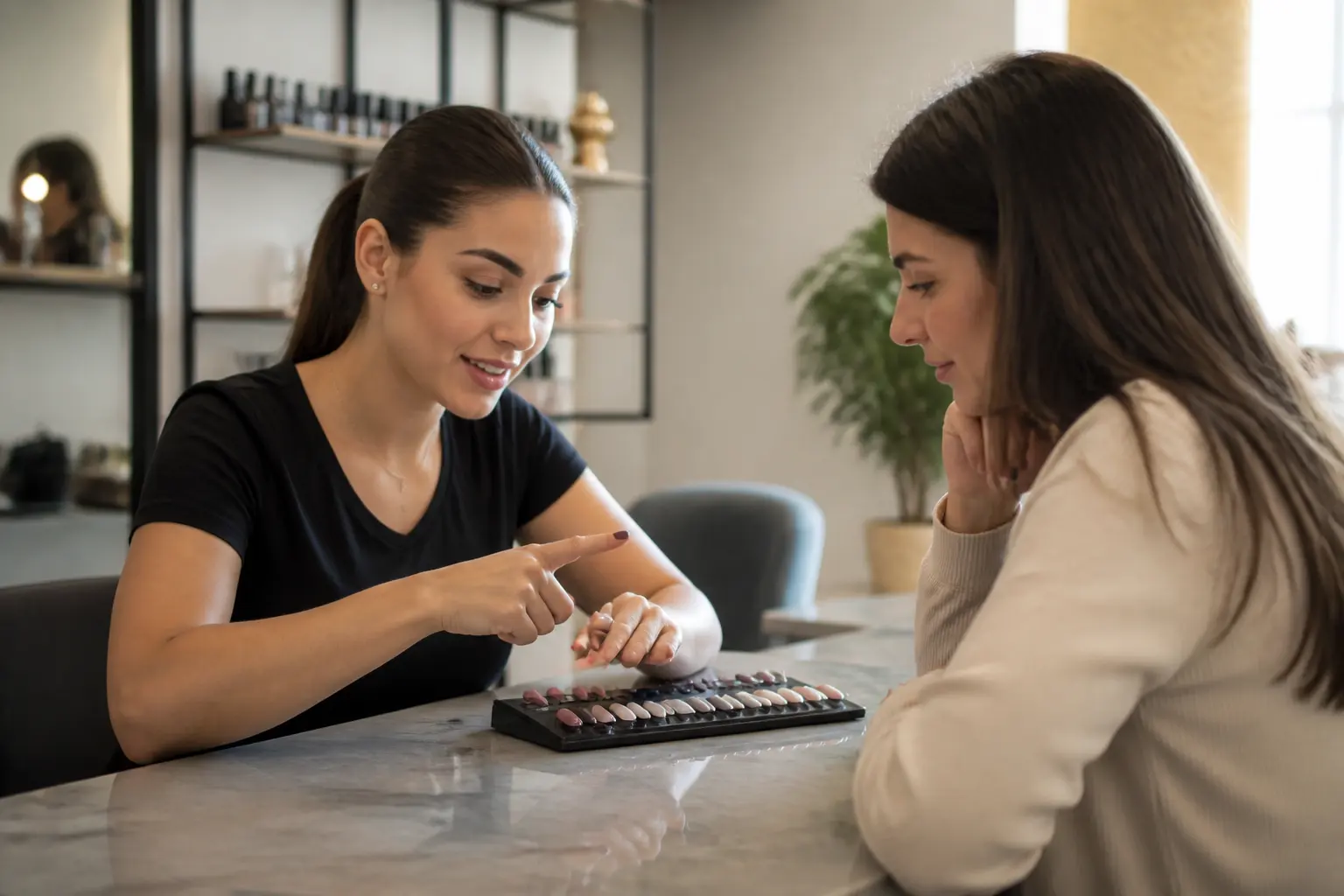
Choosing a nail shape can feel surprisingly personal. The right finish can complement your natural nails, feel comfortable in everyday life and make a simple manicure look more intentional. Yet there is no single shape that suits everyone. Square, oval and almond nails each create a different visual effect, and the best choice depends on your natural nail bed, preferred length, work, hobbies and the amount of maintenance you want.
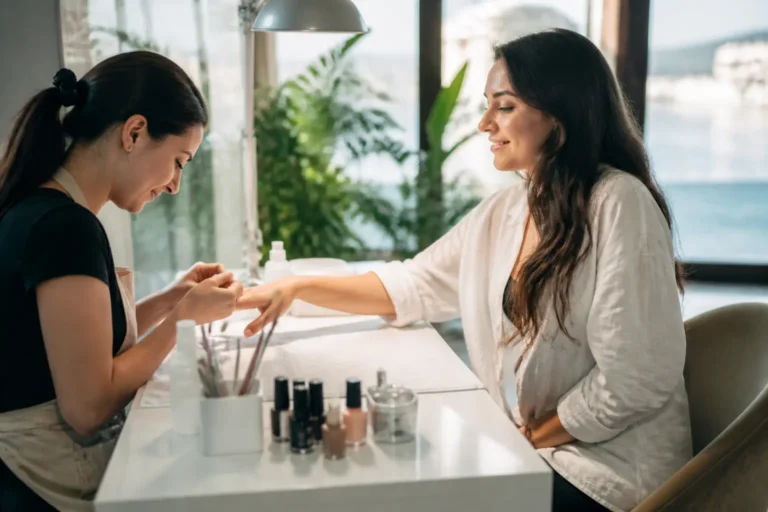
At a professional manicure appointment, nail shape is not just a finishing detail chosen after the colour. It is part of the service planning. A nail technician can look at your current nail length, the condition of the free edge and your preferred style before shaping each nail consistently. Whether you prefer a neat, short square manicure or a softer almond finish, the aim is a result that feels like you.
Why nail shape matters
Nail shape changes the outline of the hand. It can make fingers appear more streamlined, give short nails a tidy structure or soften the look of a wider nail bed. It also affects practicality. Sharper corners may catch more easily, while rounded edges can be easier to wear if you use your hands constantly.
Shape should work alongside the length and product you choose. For example, a classic manicure, gel polish or rubber base service may each influence what feels realistic for your current natural nails. Your technician can also adjust the shape slightly to work with uneven growth, minor differences in nail width or a nail that has recently broken.
The goal is not to force every nail into an identical template. Natural hands are not perfectly symmetrical. A considered manicure creates balance across both hands while respecting the natural structure of each nail.
The main nail shapes explained
Square nails
Square nails have straight sidewalls and a relatively flat free edge, with defined corners. They are clean, modern and especially popular at short to medium lengths. A square shape can make a manicure look polished even with a sheer neutral shade, a bold colour or a classic French tip.
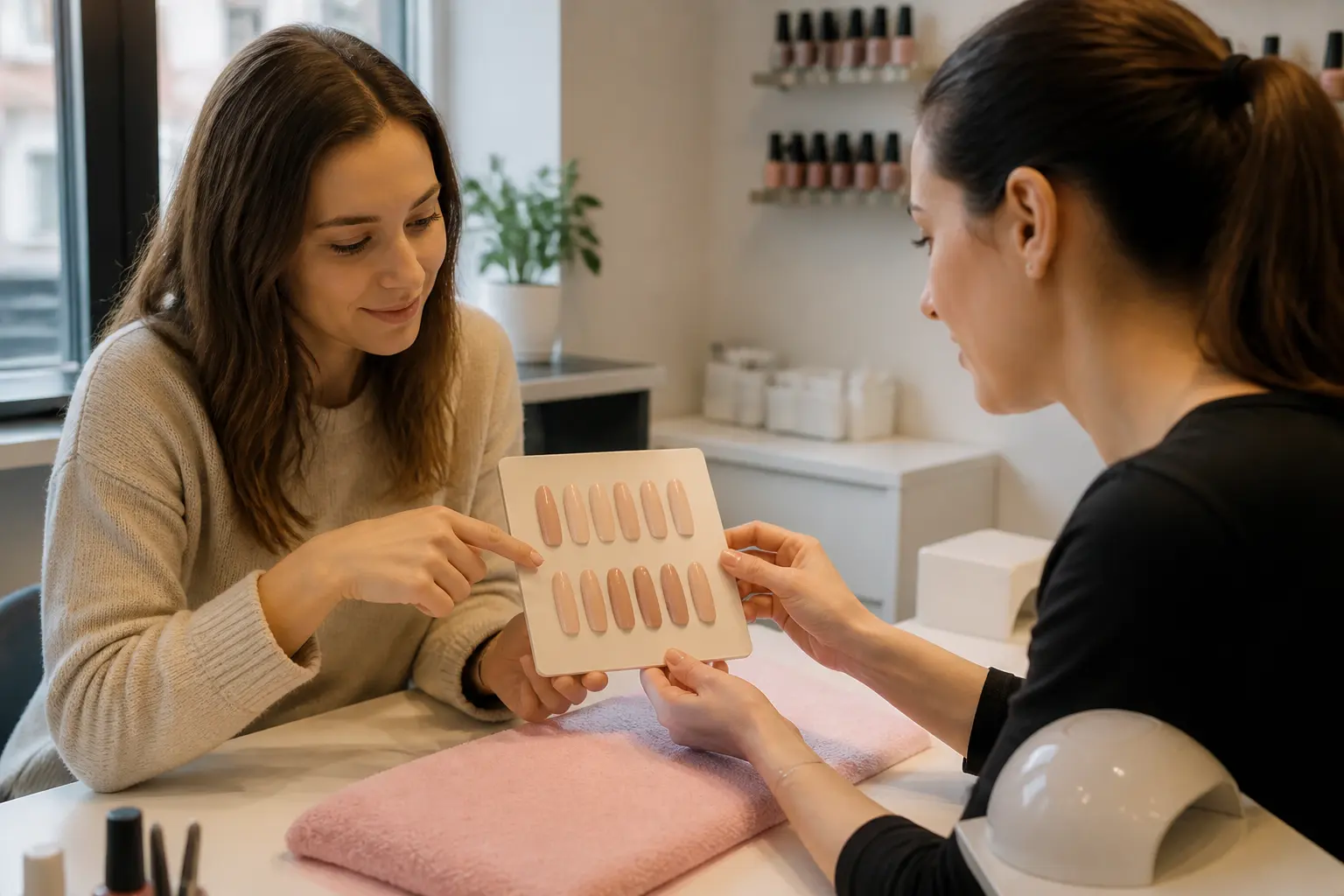
This shape often works well for people who enjoy a structured, graphic finish. If your nails naturally grow fairly straight at the sides, maintaining a square outline may feel straightforward. It can also suit those who prefer a shorter length for typing, work or daily tasks.
The main consideration is the corners. On very short nails, or when the corners are especially sharp, they can be more likely to catch on fabrics or hair. A technician can soften them slightly while keeping the overall square appearance.
Squoval nails
Squoval is a blend of square and oval. The nail keeps the straighter edge of a square shape, but the corners are gently rounded. It is one of the most versatile options because it offers a neat outline without the sharpness of a full square.
If you like the look of square nails but want something a little softer and easier to wear, squoval is often a practical choice. It can work beautifully on short nails and is a reliable option for everyday manicures, including gel polish finishes.
Oval nails
Oval nails follow the natural curve of the fingertip, with gently rounded sidewalls and a smooth curved tip. This shape is elegant without being overly dramatic. It can create the impression of a longer, softer nail, particularly when there is enough length beyond the fingertip to show the curve clearly.
Oval nails are often chosen by clients who want a refined look that still feels wearable. They pair well with glossy nudes, deep seasonal colours, delicate nail art and minimalist designs. Because there are no sharp corners, the shape may also feel comfortable for people who regularly work with their hands.
For wider nail beds, an oval outline can visually soften the width. For narrow nail beds, it can create a gentle, balanced finish without making the nail look too pointed.
Almond nails
Almond nails are tapered at the sides and rounded at the tip, resembling the outline of an almond. They are softer than a pointed shape and usually need a little more length than square or oval nails to look balanced.
This is a popular choice for anyone who wants a more elongated, feminine silhouette. The taper can make the nail and fingers appear longer, especially when paired with a neutral or tonal polish. Almond nails can look striking with a French manicure, chrome effect, ombré finish or a simple block colour.
Because the sides are filed inwards, almond nails need enough free edge to preserve strength and proportion. They may not be the most practical choice if your natural nails are currently very short, peeling or prone to splitting. In that situation, a softer oval or squoval shape may be a more comfortable starting point while you build length gradually.
Round nails
Round nails are kept short and shaped to follow the natural curve of the fingertip. They are uncomplicated, low-maintenance and ideal for a subtle manicure. The effect is understated, especially with clear polish, a natural shade or a soft pink.
This shape is a useful option if you are growing out damaged edges, prefer a very short length or simply want a manicure that fits a busy routine. It is also a sensible choice for toenails, where a straighter but gently softened edge is generally preferred to avoid digging into the surrounding skin.
Coffin and stiletto shapes
Coffin, also called ballerina, and stiletto shapes are more dramatic options. Coffin nails taper towards a flat tip, while stiletto nails taper to a pronounced point. Both styles generally require greater length to achieve the intended outline.
These shapes can be expressive and fashion-led, but they are not automatically suitable for every natural nail. They may be more vulnerable to catching or breaking when there is limited length or insufficient support. If you are considering a bolder shape, talk through your routine and current nail condition with your technician first.
How to choose a nail shape for your hands
Rather than looking for rules about what you should wear, use a few practical observations to narrow the options. The most flattering shape is often the one that balances your natural nail bed and feels right when you look down at your hands.
Consider the width of your nail bed
If your nail beds are wider, oval and almond shapes can create a more elongated visual line because they soften and taper the sides. This does not mean square nails are off limits. A short square or squoval can look crisp and stylish on wider nails, particularly if that is the finish you enjoy most.
If your nail beds are naturally narrow, square, squoval and oval shapes can all work well. The choice is more about whether you like a straight, rounded or gently tapered edge.
Think about your current nail length
Short nails tend to suit round, squoval and square shapes well. These outlines make the most of limited free edge and can look deliberately neat rather than unfinished. Oval nails can also work at a short length when there is enough room to create a gentle curve.
Medium to longer nails give more space for oval and almond shaping. Almond needs enough length for a smooth taper. If the nail is too short, narrowing the sides too much can make the shape feel unbalanced and may leave less support at the edge.
Match the shape to your daily routine
Your manicure should fit into your life. If you type frequently, care for children, work in a hands-on role, play sport or wear gloves often, a shorter round, squoval or oval shape may be more convenient. If you enjoy longer nails and your routine allows for them, almond or coffin shapes can offer more visual impact.
There is no need to commit to one shape forever. Many clients choose a practical short shape most of the time and go longer or more sculpted for holidays, celebrations or special occasions.
Use colour and design to support the shape
Colour can emphasise the outline you choose. A French tip draws attention to the free edge, so the line can look especially sharp on square nails and elegantly curved on oval or almond nails. A single dark shade can make short squoval nails look sophisticated, while sheer or milky tones can highlight the softness of an oval shape.
If you are trying a new shape for the first time, a simple colour can help you decide whether you love the silhouette before adding detailed nail art.
Square, oval or almond: a quick comparison
| Shape | Overall look | Works well at | Practical consideration |
|---|---|---|---|
| Square | Clean, structured and modern | Short to medium lengths | Defined corners may catch more easily |
| Squoval | Neat, soft and versatile | Short to medium lengths | A practical everyday choice |
| Oval | Classic, soft and balanced | Short to longer lengths | Needs even filing to maintain the curve |
| Almond | Elongated and more defined | Medium to longer lengths | Needs enough length for a balanced taper |
| Round | Natural and low-maintenance | Very short to short lengths | Ideal for a subtle everyday finish |
How a professional manicure creates an even shape
At home, it is easy to file one nail slightly differently from the next, particularly on your non-dominant hand. A professional manicure focuses on consistency across the whole set. The technician begins by assessing each nail, then works towards a shape that looks balanced from hand to hand.
That can include gently refining uneven edges, deciding where the sidewalls should sit and checking the length before applying colour. If you have one or two shorter nails, the technician may recommend a shape that helps them blend in rather than making the difference more noticeable.
Preparation matters too. Cuticle care, careful filing and a finish suited to your nails all contribute to a polished result. If you have weak or peeling nails, it is worth mentioning this before the service so the appointment can be tailored appropriately.
Tips for maintaining your chosen nail shape
- Book before your nails become too uneven. Regular maintenance makes it easier to preserve a consistent outline.
- Use your fingertips with care. Avoid using nails as tools to open packaging, scrape labels or lift hard surfaces.
- Keep nails and cuticles hydrated. A nourishing hand and cuticle routine supports a tidy appearance between appointments.
- File small snags gently. If an edge catches, smooth it in one direction rather than aggressively filing back and forth.
- Choose a realistic length. A shape that works with your routine is more likely to stay comfortable and look good for longer.
- Tell your technician what has changed. A break, peeling, a new job or an upcoming event may mean a different shape is better for your next appointment.
Frequently asked questions
Which nail shape makes fingers look longer?
Oval and almond shapes often create a longer visual line because of their curved or tapered outline. The effect varies with nail length, hand shape and colour, so it is best treated as a style preference rather than a fixed rule.
What is the best nail shape for short nails?
Round, squoval and square shapes are often practical for short nails. They can look neat without requiring extra length. A technician can help you choose the option that works best with your natural nail edge.
Are almond nails suitable for natural nails?
They can be, provided there is sufficient healthy length to create the taper. If your nails are very short or prone to peeling, an oval or squoval shape may be more suitable while you keep the length manageable.
Is square or oval better for everyday wear?
Both can work well. Square nails offer a sharper, more structured look, while oval nails have a softer edge. Squoval is a popular middle ground for clients who want a practical, polished shape with fewer sharp corners.
Can I change my nail shape at every appointment?
Yes, within the limits of your current length and nail condition. Moving from square to oval is usually straightforward. Moving from a short square shape to almond may require more length so the taper remains balanced.
Should all my nails be exactly the same shape?
They should look harmonious across both hands, but natural nails can vary slightly in width, growth direction and length. A professional technician adjusts the filing so the finished manicure appears balanced rather than forcing every nail into an identical outline.
Find the shape that feels right for you
Square, oval, almond and squoval nails can all look beautiful when they are chosen with your natural nails and daily life in mind. Start with the finish that feels most comfortable, then use colour, length and design to make it your own. If you are unsure where to begin, bring a few inspiration images to your appointment and explain what you like, as well as what you need your hands to do each day.
For a considered manicure or pedicure in Malta, you can book a nail appointment at Becammo in Sliema and discuss the shape, length and finish that best suit your routine.