Can You Have Microblading Over Old Faded Pigment?
Brenda Cammo Team
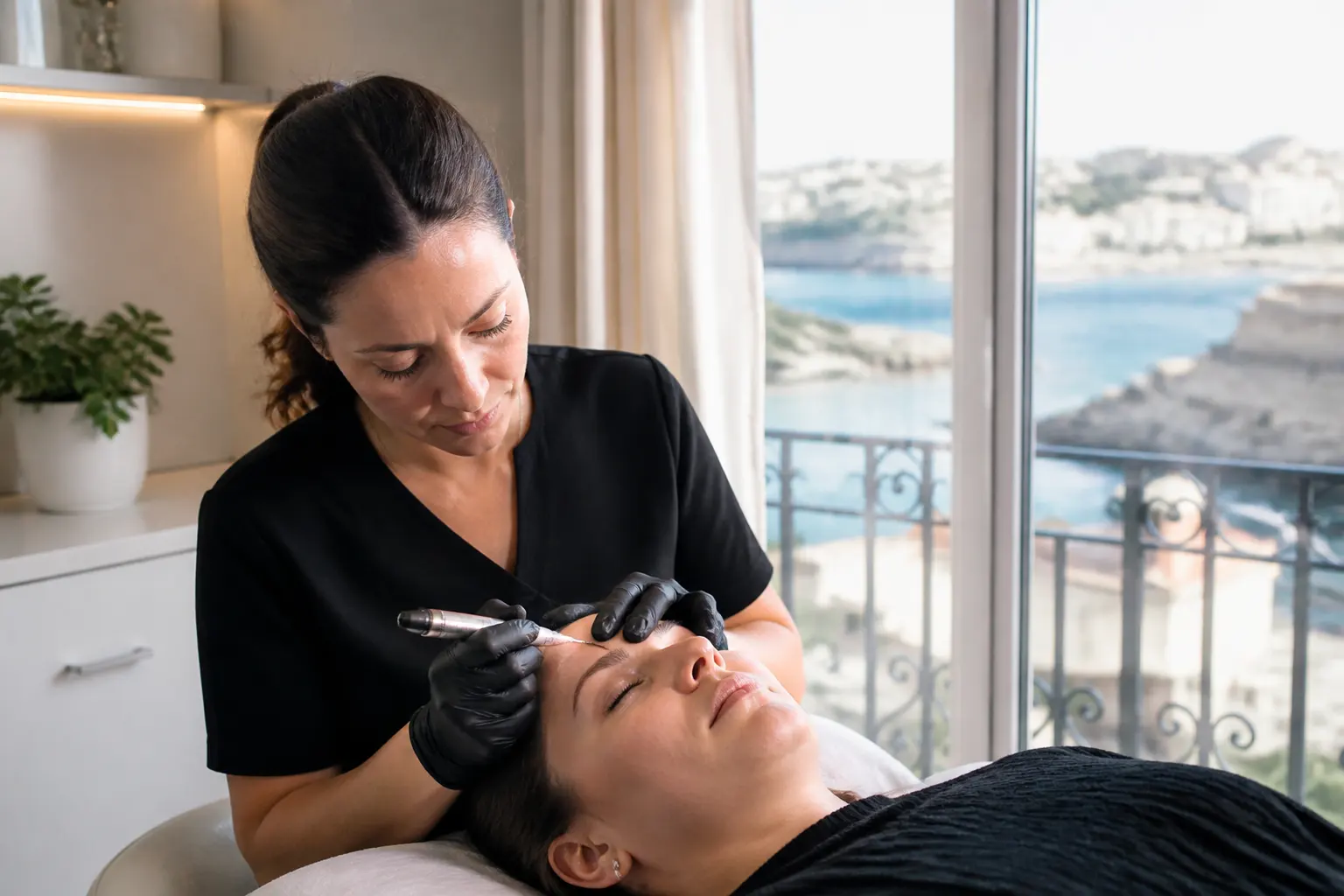
Old eyebrow pigment can leave you in an awkward in-between stage. Your previous microblading may have faded enough that you no longer enjoy the colour or shape, yet it may still be visible enough to affect what can be done next. If you are considering fresh hair strokes, the key question is not simply whether the old work looks light. It is whether there is enough visual space and skin clarity to create a new result that looks balanced rather than crowded.
In some cases, microblading over old faded pigment is possible. In others, a different semi-permanent technique, a colour adjustment plan or laser removal should be considered first. The answer depends on the individual brow, which is why a professional consultation matters before booking a new procedure.
At a professional studio, the aim is not to cover old pigment at any cost. It is to assess what is already present, understand what you would like to change and choose the most responsible route for your skin, natural brow hair and long-term appearance.
What does it mean to work over faded eyebrow pigment?
Working over old pigment means planning a new semi-permanent eyebrow procedure where previous microblading, microshading or another form of brow tattoo remains visible in the skin. The existing pigment may be very soft, patchy, warm, cool or unevenly faded. It may also sit inside or outside the shape you would now choose.
Fresh microblading uses fine strokes designed to resemble brow hairs. Those strokes need enough clear space around them to remain readable. If there is too much old colour underneath, new strokes can lose their crispness visually, even when the technique itself is carefully performed.
This is why faded does not always mean ready for new microblading. A brow can look pale in daylight yet still have enough residual pigment to influence the final design. A close consultation, good lighting and clear photographs are useful starting points for deciding what is realistic.
When new microblading may be possible
New microblading may be an option when the previous pigment has faded softly, the remaining colour is not visually dominant and the old shape gives enough room for a new design. The natural brow hair pattern, skin condition and desired result also need to support the plan.
The old pigment is light and unobtrusive
When remaining pigment is soft and close to the intended new shape, it may act more like a subtle background than a strong outline. This can give the artist more flexibility to place new strokes in a way that complements the natural brow hairs.
The old and new shapes are broadly compatible
It is easier to refresh or refine brows when the previous work does not extend far beyond the proportions you want now. Small adjustments may be possible, but a major move in height, arch position, length or thickness can be limited by the old outline still visible in the skin.
There is room for strokes to be seen
Microblading is about the illusion of individual hairs. If the canvas is too saturated, new strokes may not create the soft, hair-like effect you expect. Where there is sufficient space and contrast, a tailored stroke pattern may be more achievable.
Your expectations suit the existing starting point
The best plan may not be a complete reinvention. Sometimes the most natural-looking result comes from enhancing the brow shape you already have, balancing areas that have faded unevenly and working with your natural hair growth rather than trying to disguise every trace of the past.
When fresh microblading may not be the right first step
A responsible assessment should also make space for a clear no, or not yet. This is not a setback. It can prevent you from investing in a result that becomes too dark, too dense or difficult to refine later.
The pigment is still too strong
Visible, saturated pigment can compete with the fine detail of hair strokes. Adding more strokes over a strong background may create a textured effect that does not read as natural hair. In this situation, more fading time, an alternative semi-permanent approach or removal may be discussed instead.
The colour has changed noticeably
Old pigment can fade in different ways. If the remaining tone is clearly different from the soft brow colour you now want, simply placing new pigment over it may not produce a predictable-looking blend. A professional needs to see the colour in person and consider how it may affect the overall result.
The old shape sits outside your preferred design
New microblading cannot truly erase an old tail, arch or outline that lies beyond the new brow shape. Trying to cover a misplaced shape by making the brow larger can lead to a result that feels heavier than intended. Where the old work is significantly outside the desired design, laser removal may be worth exploring before a new brow procedure.
The skin needs more time or specialist advice
Skin should be calm and intact before any semi-permanent procedure is considered. If the area is irritated, healing from a recent procedure or affected by an active skin concern, the appointment should be postponed and appropriate medical advice sought where needed. Semi-permanent makeup involves placing pigment in the skin, so hygiene, a careful consultation and candid discussion of your history are essential. Malta regulates semi-permanent tattooing services under its tattooing framework, with published standards covering public health and safety expectations for studios.
For wider consumer safety context, the Government of Malta tattoo and body piercing standards and the FDA guidance on tattoos and permanent makeup both underline the importance of sanitary practice and informed decision-making.
What a professional assessment should look at
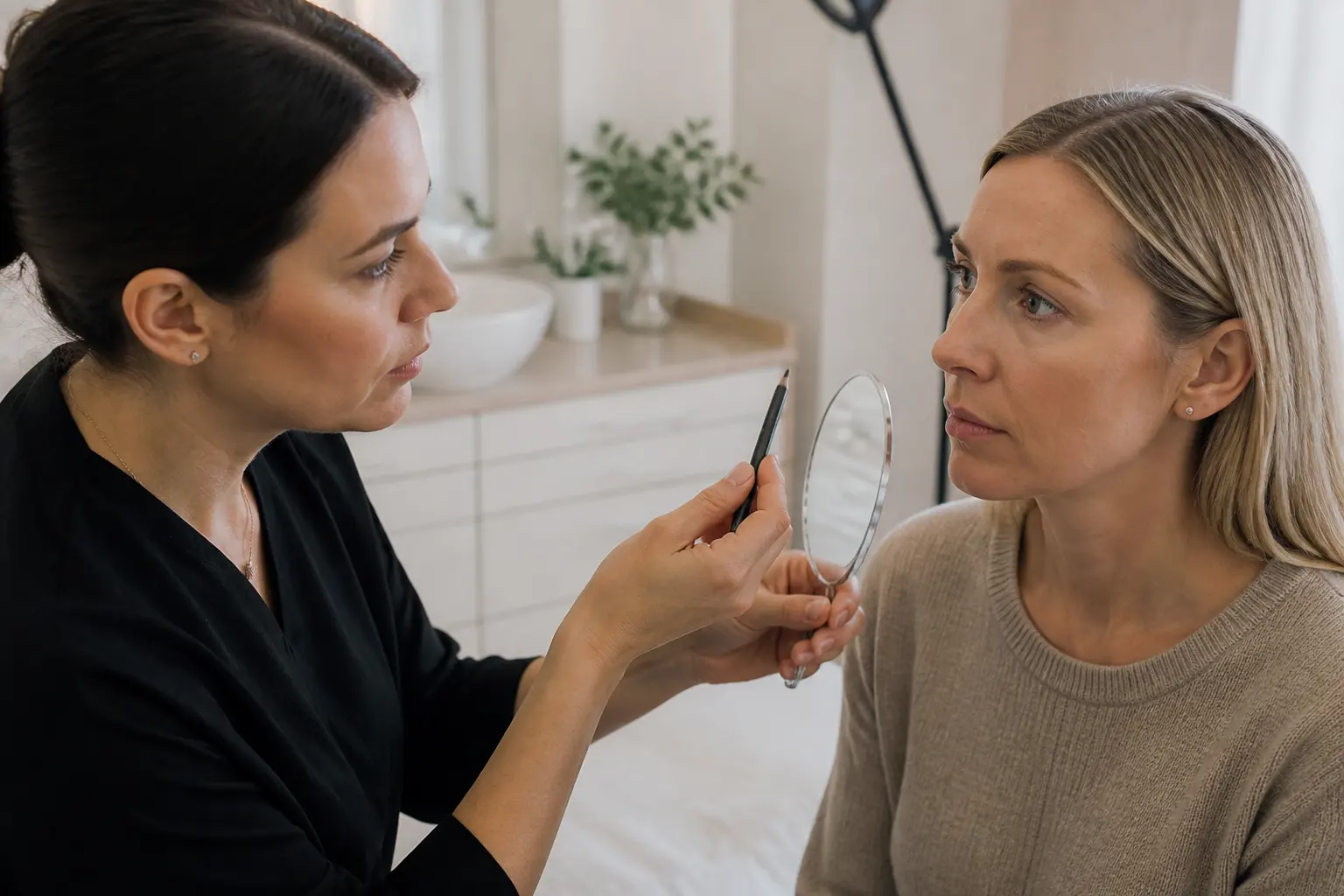
A consultation for old brow pigment is more than choosing a new colour from a chart. It is a planning session that looks at what has already been done and what can sensibly be achieved next.
- Residual pigment: how much remains, where it sits and how clearly it shows.
- Colour appearance: whether the faded tone can sit harmoniously with a new brow plan.
- Previous shape: the position of the fronts, arches, tails and any pigment outside the preferred design.
- Natural brow hair: density, direction and the areas where your own hairs can support a realistic result.
- Skin condition: whether the skin appears ready for a procedure and whether individual factors need further consideration.
- Your goal: whether you want fine strokes, a softer shaded effect, more definition or a gradual correction plan.
Bring any useful information about your previous procedure, including when it was done, the technique used if you know it and photographs from before and shortly after the appointment. This will not replace an in-person assessment, but it can help create a clearer picture.
Microblading, microshading or removal: the possible routes
There is no single answer for every faded brow. The right route should be based on the old pigment and the result you want, rather than on a trend or a one-size-fits-all plan.
1. Fresh microblading
When there is enough clear space and the old colour is suitably soft, fresh hair strokes may be considered. The design should be mapped around your face, natural brow direction and existing pigment. The aim is refined definition, not a heavier version of the old brow.
2. Microshading or a softer pixel effect
Where individual strokes are unlikely to show clearly over residual pigment, a softly shaded technique may sometimes offer a more cohesive visual result. This does not mean that shading is automatically the answer. It simply creates a different finish, one that can be better suited to some brow backgrounds and personal preferences.
3. A staged plan
Some brows benefit from patience. You may be advised to allow more natural fading before reassessment, particularly if the old pigment is still prominent but not necessarily ready for removal. A staged approach can give you more options than rushing into a cover-up.
4. Laser removal before a new brow procedure
If old pigment is dark, strongly discoloured or well outside the shape you now want, laser removal may be the clearest way to create more room for a future design. Removal is a separate process and the number of sessions varies according to the pigment and the individual. It should never be presented as an instant reset.
At Becammo, laser removal of old microblading is available in Sliema. A separate assessment is needed to establish whether it is an appropriate route for you. If removal is chosen, the timing of any new semi-permanent brow work should be planned carefully after the skin has had suitable time to settle.
Questions to ask before booking new brows
Whether your previous brows were done in Malta or elsewhere, asking direct questions helps you make a more confident decision.
- Can you see enough old pigment that it may affect the new result?
- Is my preferred shape compatible with what remains?
- Would fine hair strokes be visible, or would another finish make more sense?
- Do I need to wait, consider fading or explore removal first?
- What preparation and aftercare will be expected if I proceed?
- What should I do if I notice irritation or have concerns after the procedure?
A trustworthy consultation should leave you with realistic options, not pressure to choose the quickest one. It is entirely reasonable to take time before deciding.
How to prepare for your consultation
Arrive with clean brows where possible and avoid trying to reshape them immediately before your appointment. Your natural hair growth gives valuable information for mapping a balanced design. Avoid using make-up to hide the old pigment if you can, as the assessment is most useful when the brow area can be seen clearly.
Be open about previous semi-permanent makeup, laser sessions, allergies, sensitivities and any relevant changes to your skin. If you are unsure whether a product or health matter may affect your appointment, ask before booking the procedure. A consultation is the right place to discuss it properly.
A better result starts with the right plan
Old faded pigment does not automatically rule out new microblading. It does, however, change the planning process. The lightness, colour and placement of the previous work all matter, as do your natural brows and the style you hope to achieve.
The most helpful next step is an honest in-person assessment rather than relying on a photograph or assuming that every faded brow can be covered with fresh strokes. If you are considering a new semi-permanent brow look in Malta, book a consultation with the Becammo team in Sliema or Swieqi. You can discuss your old pigment, ask practical questions and decide whether microblading, another approach or a staged plan is the best fit for your brows.
Frequently asked questions
Can microblading cover old tattooed eyebrows?
Sometimes, but only when the remaining pigment is light enough and the old shape works with the new design. Strong colour or an outline outside your preferred brow shape can make a direct cover-up unsuitable.
How faded should old microblading be before having it redone?
There is no universal point at which every brow is ready. What matters is the visible pigment, its colour, its placement and whether there is enough room for the intended technique. An in-person consultation is the safest way to assess this.
Will new microblading remove the old pigment?
No. New microblading adds pigment. It does not remove or erase what is already in the skin. If old pigment needs reducing, laser removal may be discussed as a separate option.
Can I change the shape of old microblading?
Small refinements may be possible when the remaining pigment is subtle. Major changes can be limited if the old shape is still visible, particularly at the arch or tail. Your artist should explain what can realistically be adjusted.
Is a consultation necessary if my old pigment is very light?
Yes. Even very light pigment can influence colour choice, stroke placement and the final shape. A consultation helps avoid unnecessary layering and supports a more personalised plan.