Microblading Myths: Tattoos, Scarring and Other Worries Explained
Brenda Cammo Team

Microblading can feel like a big decision, especially when you are looking at your face every day. It is completely reasonable to have questions about whether it is a tattoo, whether it can leave scars, how natural it looks and what happens if you later change your mind.
Online advice often makes the choice harder. One post may promise effortless brows forever, while another may suggest that every microblading appointment leads to damage. Neither extreme is helpful. Microblading is a form of semi-permanent cosmetic pigmentation, so it deserves careful thought, a professional approach and honest expectations.
Here, we explain the most common microblading myths in clear terms. The aim is not to pressure you into a booking, but to help you understand the procedure well enough to decide whether a personal consultation is the right next step.
First, what is microblading?
Microblading is a semi-permanent eyebrow procedure in which fine, hair-inspired strokes are created and pigment is placed within the skin. The intended effect is to add the impression of brow hairs in areas that look sparse, uneven or less defined.
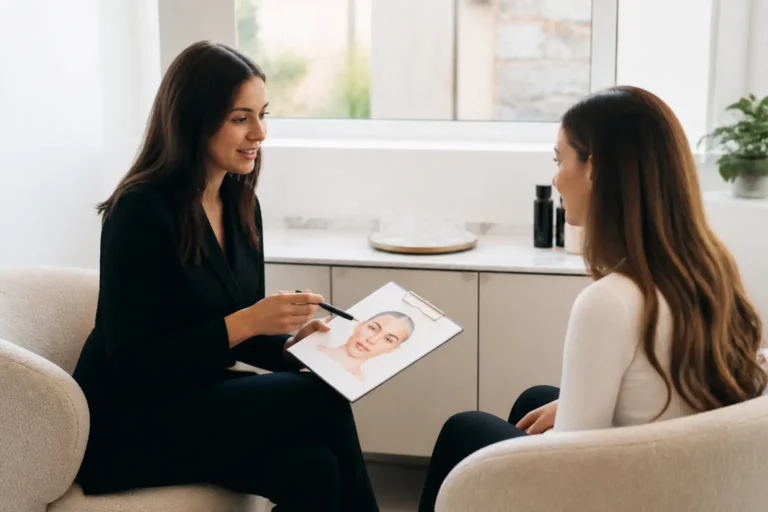
At a professional studio, the process should begin with a conversation about your brow goals, your natural hair pattern and the style that feels like you. Brow design is not about applying one fashionable shape to everyone. Facial proportions, existing brow density, skin characteristics and your preferred level of definition all matter.
Microblading can be especially appealing to people who are tired of filling their brows in each morning. However, it is not a substitute for an individual assessment. Results, pigment retention and the most suitable technique vary from person to person.
Myth 1: “Microblading is not a tattoo at all”
The reality: Microblading is commonly classed as cosmetic tattooing or permanent make-up because pigment is introduced into the skin. In that sense, it is related to tattooing. The distinction is in the purpose, placement, technique and expected visual effect, rather than in a claim that it has nothing in common with a tattoo.
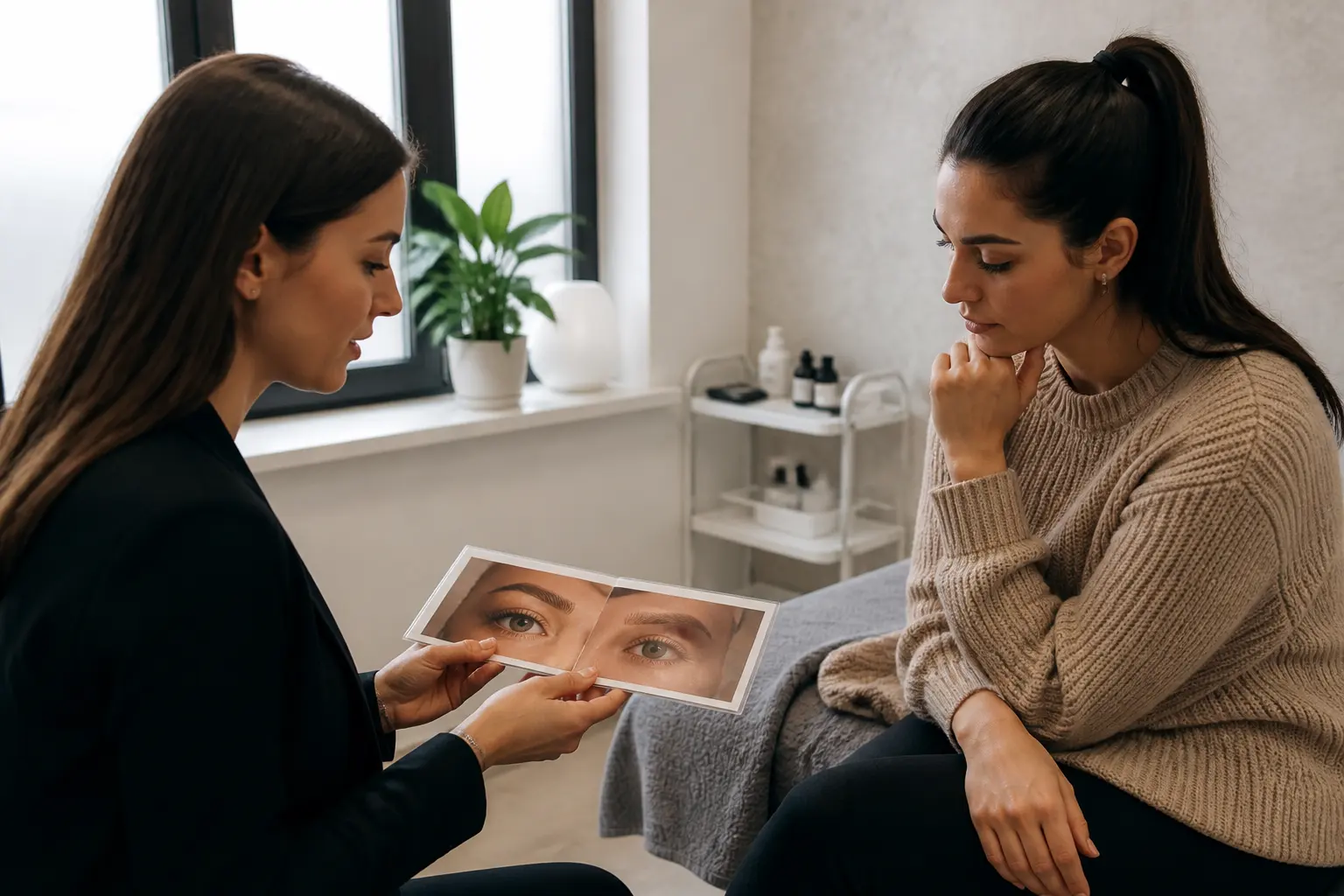
A traditional body tattoo is often designed for strong, lasting colour and may use very different styles, areas of the body and artistic intentions. Microblading is designed specifically for eyebrows, using fine strokes intended to blend visually with natural brow hair. It is still a procedure that breaks the skin barrier, which is why hygiene, training, suitable products and aftercare matter so much.
The US Food and Drug Administration explains that permanent make-up falls within intradermal tattooing and notes potential concerns including infection, allergic reactions and difficulties with removal. This does not mean that a problem is expected at every appointment. It does mean the decision should be made thoughtfully, with no casual shortcuts. FDA guidance on tattoos and permanent make-up provides useful background for anyone researching cosmetic pigmentation.
Myth 2: “Microblading looks like a block of drawn-on colour”
The reality: A good result should be planned around the individual, not copied from a template. Microblading uses fine strokes to create a hair-inspired effect, but “natural” means different things for different people. Someone with full, dark brows may want only subtle filling at the tails. Someone with sparse brows may prefer more structure while still keeping the overall look soft.
The technician’s design choices matter. Stroke direction should respect the way your own hairs grow. The brow should sit comfortably with your facial features, rather than being forced into an overly high arch or a heavy, uniform shape. Colour selection should also be discussed carefully, because brow pigment needs to complement your colouring and the look you want to wear day to day.
It is also important to understand that freshly completed brows can look more defined than the healed result. Healing is part of the process. Judging the final appearance too early can create unnecessary worry, so follow the aftercare guidance you receive and allow time for the area to settle.
Myth 3: “Microblading always causes scarring”
The reality: Scarring is a concern worth discussing, but it is not an inevitable outcome of microblading. Any procedure that breaks the skin can carry risks. Those risks can be affected by technique, hygiene, how the skin responds, individual healing and whether suitable aftercare is followed.
There are also people who may be more prone to problematic scarring. If you have a history of raised scars or keloids, or if you have a skin concern in the eyebrow area, do not treat this as a minor detail. Raise it before booking and consider seeking advice from an appropriate healthcare professional. The American Academy of Dermatology advises people with a tendency to develop keloids to rethink tattooing because skin trauma can trigger this type of scar. Read the Academy’s guidance on tattoo-related skin reactions.
A responsible studio should never promise that every client will heal in exactly the same way. Instead, it should assess suitability, work carefully and explain what you should watch for during healing. At Becammo, appointments are supported by documented hygiene, consultation and aftercare protocols, helping clients approach the procedure with clear information rather than guesswork.
Myth 4: “If it is semi-permanent, it disappears quickly and completely”
The reality: “Semi-permanent” should not be understood as temporary make-up that simply washes away. Pigment can soften and fade over time, but the timeline and appearance vary. Skin type, lifestyle, sun exposure, skincare routines, pigment choice, the technique used and individual retention can all influence how the brows evolve.
For that reason, it is better to think in terms of change rather than a fixed expiry date. Some clients may later consider a refresh appointment to restore definition. Others may prefer a softer look as their existing pigment fades. A refresh should be assessed in the context of the brows as they are at that time, not treated as an automatic repeat of the original procedure.
It is also wise to avoid choosing a brow style purely because it is trending now. A shape that feels balanced, wearable and recognisably yours is usually easier to live with than a dramatic fashion-led look.
Myth 5: “You can remove or correct it easily if you do not like it”
The reality: Changes and removal may be possible in some situations, but they are not simple undo buttons. Tattoo and permanent make-up removal can take time, may require more than one session and can involve its own considerations. The FDA specifically notes that complete tattoo removal without scarring may not always be possible.
That is why the best time to prevent regret is before the first procedure. Take time to discuss your brow goals. Be open about previous brow tattooing or pigment, even if it has faded. Ask how the proposed design will work with your natural brows. If you like very soft make-up, say so. If you normally wear a stronger brow, share that too.
Choosing cautiously is not indecision. It is a sensible part of a cosmetic procedure that can stay visible for a long time.
Myth 6: “Pain is either unbearable or completely absent”
The reality: Sensation varies widely. Some people describe microblading as uncomfortable, while others find it manageable. Your sensitivity can be influenced by factors such as your personal pain threshold, stress levels and how your skin feels on the day.
No responsible practitioner should tell you that the procedure is completely painless. Equally, dramatic stories online do not predict your own experience. The most useful approach is to ask what the appointment involves, share any concerns you have and make sure you understand how comfort will be managed within the studio’s protocol.
Myth 7: “Any brow artist can create the same result”
The reality: The quality of a microblading experience depends on more than a before-and-after photograph. Professional standards include suitability screening, hygiene, design planning, technical skill, clear communication and realistic aftercare guidance.
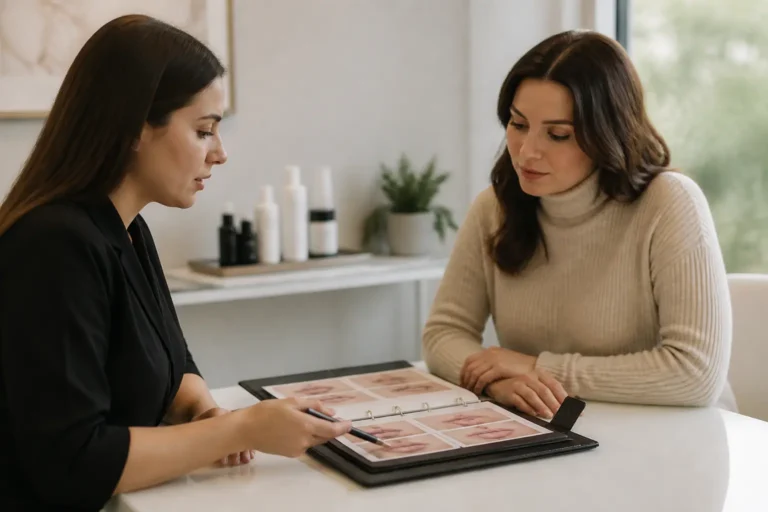
Before making a booking, look for a studio that is willing to answer questions rather than rushing you into a decision. You should be able to ask about the brow design process, the practitioner’s experience, the products and equipment used, healing expectations and what support is available if you have concerns afterwards.
At Becammo, the broader eyebrow expertise behind the service is important. The studio works with a wide variety of brow types and personal styles, including clients from European, American, Canadian, African, Arab and Latin backgrounds. The focus is not on making every client look the same. It is on creating a considered design that respects the individual brow and face.
What safe, informed decision-making looks like
Microblading is not something to choose from one filtered image or a last-minute holiday impulse. A more confident decision starts with honest answers.
- Choose a professional setting that takes hygiene and client information seriously.
- Discuss any previous cosmetic brow pigment before planning a new procedure.
- Share a history of raised scars, allergies, skin concerns or relevant health considerations.
- Be clear about whether you want a subtle enhancement or a more defined finish.
- Ask what healing may look like and what aftercare you will be expected to follow.
- Understand that retention and healed appearance can differ from one person to another.
- Do not proceed if you feel rushed, uncertain or unable to get clear answers.
If you are unsure whether microblading, microshading or another semi-permanent brow option suits your goals, a proper consultation is more useful than trying to diagnose your needs from social media. It gives you space to discuss your existing brows, ask practical questions and make a choice at your own pace.
Conclusion
The biggest microblading myth is that it is either effortless and risk-free or automatically damaging. The truth sits in the middle. It is a cosmetic pigmentation procedure that can create a refined, hair-inspired brow effect when it is thoughtfully planned, professionally performed and approached with realistic expectations.
Questions about tattoos, scarring, healing and long-term change are not obstacles to ignore. They are exactly the questions that should shape your decision. If you are considering microblading in Malta, book a conversation with a qualified professional at Becammo in Sliema or Swieqi, explain what you want from your brows and ask every question you need before proceeding.
Frequently asked questions
Is microblading considered a tattoo?
Microblading is generally considered a form of semi-permanent cosmetic tattooing or permanent make-up because pigment is introduced into the skin. Its purpose and visual style are different from a traditional body tattoo, but it should still be approached carefully.
Can microblading cause scars?
Scarring is not an expected outcome, but any procedure that breaks the skin carries risks. Tell your practitioner if you have previously developed raised scars or keloids, or if you have a skin concern around the brows. Individual suitability matters.
Does microblading look natural after healing?
It can look soft and hair-inspired when the design, stroke direction and colour are chosen for the individual. The healed result may look different from the fresh appearance, and each person’s skin retains pigment differently.
Can old microblading be covered with new strokes?
Sometimes it may be possible, but the right approach depends on the old pigment’s colour, saturation, shape and position. An assessment is essential before planning a cover-up or refresh.
What should I ask before booking microblading?
Ask about your suitability, design planning, hygiene standards, healing expectations, aftercare and how any previous brow pigment will affect the plan. You should also discuss the style of brow you want to achieve.
What if I am worried that microblading is not right for me?
Do not feel pressured to proceed. A consultation can help you understand your options and decide whether microblading, another semi-permanent technique or a non-pigment brow service better matches your preferences.