Lash Extensions With Glasses or Contact Lenses: Practical Guidance
Brenda Cammo Team
Wearing glasses or contact lenses does not automatically rule out lash extensions. The key is planning around how you see, how your eyes feel and the way you use your eyewear every day. A well-considered lash set should complement your routine, not make it more complicated.
If you rely on glasses for work, driving or reading, the most important practical question is simple: will the extensions touch your lenses? If you wear contact lenses, the focus shifts to comfort during the appointment, careful hygiene and knowing when an irritated eye needs professional advice. At a professional studio, these details should be part of the consultation before the first lash is applied.
Can you have lash extensions if you wear glasses?
Yes, many people wear lash extensions and glasses comfortably. The main consideration is clearance between the finished lashes and the inside of your spectacle lenses. Lashes that are too long for your frame or too dramatically curled may brush against the lenses when you blink. That can feel distracting, leave marks on the glass and affect how the set wears over time.
This does not mean glasses wearers must choose an understated result. It means the design needs to be tailored. An experienced lash artist can look at your natural lash direction, the position of your eyes and the type of frame you use most often, then select a length and curl that gives definition without creating unnecessary contact with the lenses.
Bring your glasses to the appointment
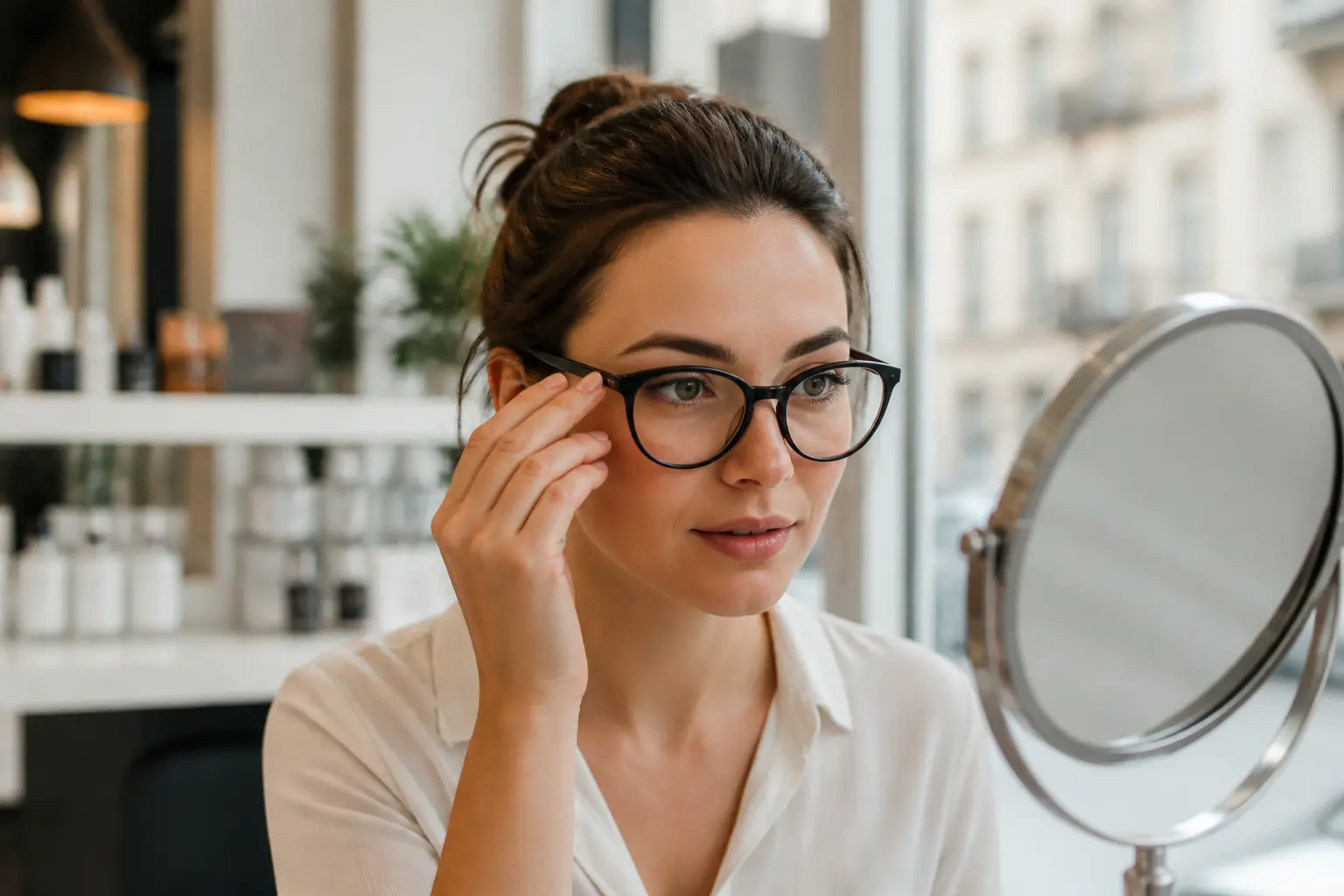
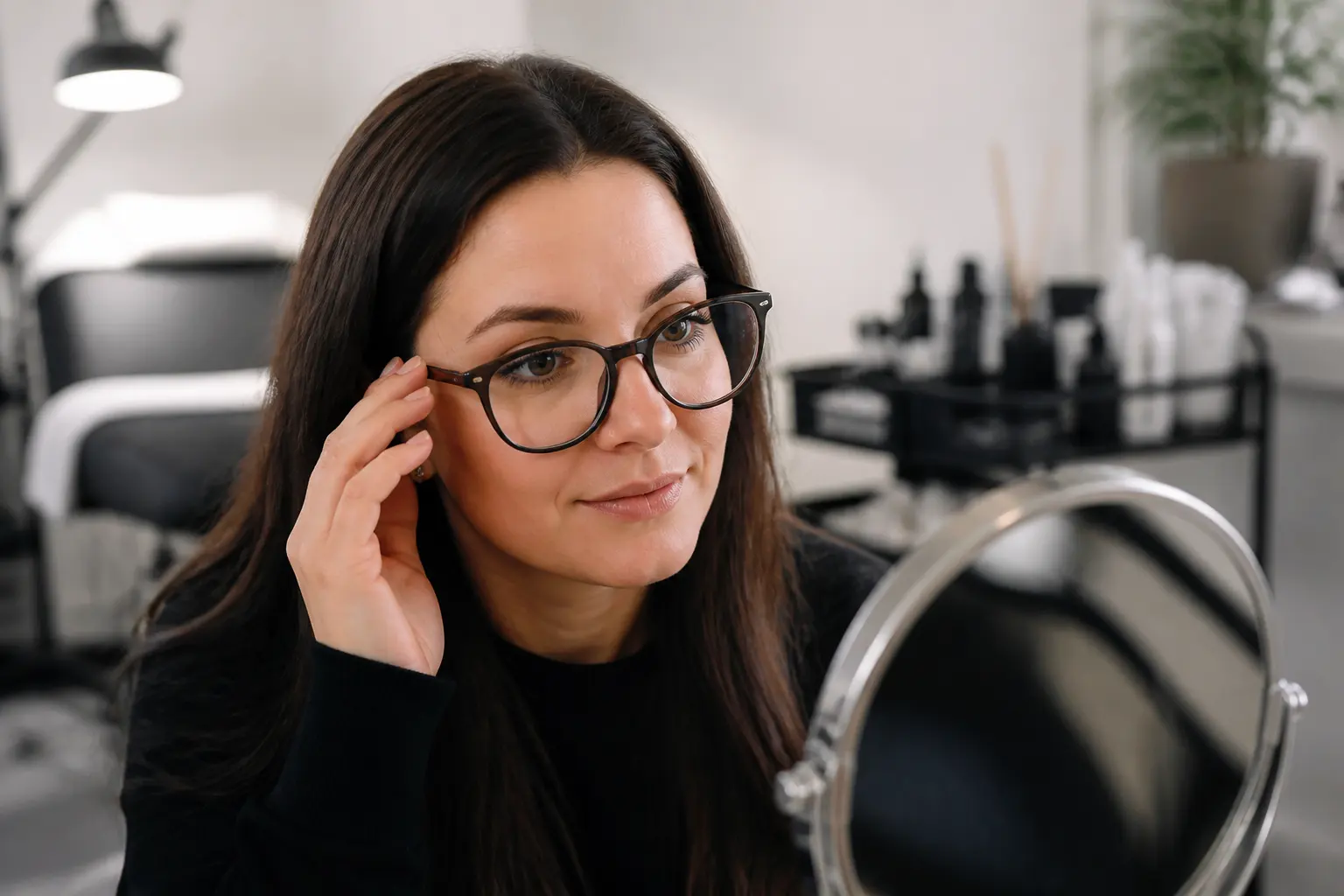
If you wear glasses regularly, take your everyday pair with you to your lash appointment. This is one of the easiest ways to make the service more personalised. Your lash artist can use them as a practical reference when discussing the intended finish.
Frames sit at different distances from the eyes. Slim metal frames, deep acetate frames, oversized sunglasses and close-fitting reading glasses can all create different amounts of space. There is no universal lash length that works for every glasses wearer, so a quick real-life check is more useful than choosing a style from a picture alone.
Length matters more than trend-led drama
A longer lash is not always a better lash, especially when it repeatedly meets the lens. A balanced set can still look polished and noticeable while staying within a length that suits your frame. Your natural lashes also need to support the extension choice comfortably, so the final styling should take their condition into account as well.
Rather than asking only for the longest possible result, explain the look you want. For example, you may want your eyes to appear more open behind your glasses, a soft everyday definition, or a fuller finish for evenings without heavy eye make-up. This gives the lash artist a clearer starting point for a design that works with your lifestyle.
How to choose lash extensions that work with glasses
The best choice is personal, but a few principles help glasses wearers make a confident decision.
- Prioritise lens clearance. The finished lashes should ideally sit clear of the lenses during normal blinking.
- Consider curl as well as length. A curl can change how far the tips project forward, so it should be selected with the frame in mind.
- Match the set to your natural lashes. A design should respect the direction, density and strength of your own lashes.
- Think about your usual make-up. If glasses magnify the eye area or you prefer little make-up, a carefully placed set may provide the definition you want without adding mascara.
- Tell your artist if you alternate between glasses and lenses. Your everyday routine can influence the most practical styling choice.
At Becammo, lash extensions are approached as a customised service rather than a one-size-fits-all look. A good consultation is the time to mention frames, lenses, sensitivity, work habits and anything that affects your comfort around the eyes.
What happens at a lash extension appointment if you wear contact lenses?
It is sensible to remove contact lenses before a lash extension appointment unless your eye-care professional has given you different advice. During the service, your eyes remain closed while the natural lashes are isolated and extensions are applied. Removing lenses helps avoid the added discomfort of dry or sensitive eyes during a longer appointment and means you do not need to handle lenses immediately after being around lash adhesive.
Contact lens wearers should arrive with clean eyes and lashes, without mascara, eyeliner or oily eye products. This gives the lash artist a clean surface to work with and reduces the need for extra cleansing around the lash line.
Contact lenses are medical devices and should be fitted and used according to your own optometrist’s guidance. The American Optometric Association’s contact lens care guidance also advises keeping false-eyelash cement away from lenses and removing lenses before taking off eye make-up. (aoa.org)
A simple appointment-day routine
- Wash your hands thoroughly before removing your contact lenses.
- Store them in fresh solution in their proper case, following your usual lens-care instructions.
- Arrive with clean lashes and no eye make-up.
- Tell your lash artist if your eyes feel dry, itchy, sore or unusually sensitive that day.
- Put your lenses back in only when your eyes feel comfortable and you can do so with clean hands.
If you wear rigid gas-permeable lenses, scleral lenses or lenses for a specific eye condition, it is particularly important to follow the advice of the practitioner who manages your lenses. The same applies if you use prescribed eye drops or have recently had an eye procedure.
Daily life with lash extensions and contact lenses
Once your extensions are in place, contact lenses can still be part of your normal routine. The difference is that you need to be more deliberate when touching the eye area. Pulling at the lids, rubbing tired eyes or using oily products near the lash line can affect both lash retention and eye comfort.
Put lenses in and take them out gently
Always wash and dry your hands before handling lenses. When inserting or removing them, try to avoid dragging the upper lid or catching the extensions. If you usually pull the lid upwards, ask your lash artist to show you a gentler approach that keeps pressure away from the extensions.
Never use the lash extensions as something to hold or move. They are attached to natural lashes, not designed to take the pressure involved in rubbing or pulling the eyelid.
Be thoughtful with eye drops and products
Use only eye drops recommended by your eye-care professional. If you need lubricating drops because of lens dryness, apply them carefully and avoid soaking the lash line unnecessarily. Oil-based products around the eyes may affect lash adhesive, so check your aftercare advice before changing your routine.
For make-up, keep products away from the inner rim of the eyelid. The American Optometric Association notes that eyeliner applied along the inner eyelid rim can move into the tear film, which may be especially unwelcome for contact lens wearers. (aoa.org)
Cleaning lash extensions when you wear glasses or lenses
Clean lashes matter for every extension wearer. Glasses can collect skin oils and make-up around the bridge and nose pads, while contact lens users may be more aware of the need to keep hands and the eye area clean. These habits can work well together if you keep each task separate and gentle.
Use a suitable lash cleanser as recommended by your studio, cleanse around the lash line with light movements, rinse as directed and pat dry rather than rubbing. A clean lash brush can help separate the extensions once they are dry. Do not use cotton pads that shed fibres around the extensions, and do not pick at lashes that have twisted or are ready to shed.
Clean your glasses regularly too. Smudged lenses can make it tempting to push frames upwards repeatedly or touch the eye area more often. Keeping the frame clean and correctly adjusted can make your lashes feel less noticeable throughout the day.
When glasses or contact lenses may signal that a different plan is better
Lash extensions are a cosmetic service, so it is reasonable to postpone an appointment when your eyes are not settled. Let the studio know if you have active redness, swelling, discharge, significant itchiness, a recent eye infection, a known adhesive sensitivity or an eye condition that is currently causing discomfort. A responsible appointment can be rescheduled when appropriate rather than proceeding through irritation.
For contact lens wearers, red or painful eyes, blurred vision or discomfort that continues after removing lenses should not be ignored. The NHS guidance on red eye advises contact lens wearers with a red eye to seek advice from an optician or GP, and to stop wearing lenses while the eye is affected. (nhs.uk)
Similarly, eye symptoms that begin after a lash appointment deserve attention rather than guesswork. Lash extensions have been associated with eye and eyelid irritation in some cases, which is why hygiene, careful application and a clear response to symptoms matter. The American Academy of Ophthalmology’s EyeWiki overview lists redness, itching, tearing, eyelid swelling, pain and a foreign-body sensation among symptoms that may require assessment. (eyewiki.aao.org)
Practical tips for a comfortable result
- Bring your everyday glasses to a first appointment or style change.
- Remove contact lenses before the appointment unless your eye-care practitioner advises otherwise.
- Arrive with clean, make-up-free lashes.
- Be open about dry eyes, allergies, eye sensitivity and your usual lens routine.
- Choose a design based on your natural lashes and glasses clearance, not only a reference photo.
- Keep hands clean before touching lenses or the eye area.
- Clean extensions gently and avoid rubbing your eyes.
- Book infills before the set becomes sparse or uneven, following the schedule advised by your lash artist.
Conclusion
You can enjoy lash extensions whether you wear glasses, contact lenses or both. What makes the biggest difference is a design that accounts for your frames, a clean appointment-day routine and honest communication about eye comfort. A softer customised set can be just as effective as a more dramatic style when it fits naturally into your day.
If you are considering lash extensions in Malta, book with the Becammo team and mention that you wear glasses or contact lenses when discussing your preferred look. That small detail helps create a more comfortable, considered result from the start.
Frequently asked questions
Will lash extensions scratch my glasses?
Well-chosen extensions should not repeatedly touch your lenses during normal blinking. Bringing your glasses to the appointment helps your lash artist assess clearance and adapt the length or curl where needed.
Should I wear contact lenses during my lash extension appointment?
It is generally sensible to remove them before the appointment and store them safely in their case. If you wear specialist lenses or have individual eye-care instructions, follow the guidance of your own optometrist or ophthalmologist.
Can I wear glasses straight after lash extensions?
Usually, glasses can be worn as normal as long as the frames do not press on the lashes. Avoid adjusting them by rubbing close to the lash line, especially soon after the service.
Do lash extensions make contact lenses uncomfortable?
Not necessarily. Comfort depends on your eyes, lens routine, sensitivity and lash aftercare. If your eyes feel persistently dry, red, sore or your vision changes, remove your lenses and seek advice from an eye-care professional.
Which lash style is best for glasses wearers?
The best style depends on your frame shape, how close your lenses sit to your eyes and the condition of your natural lashes. A personalised consultation is more reliable than choosing a style by name alone.