Facial Laser Hair Removal for Women: Chin, Cheeks and Sideburns
Brenda Cammo Team
Facial hair is personal. Some women are happy to leave it alone, while others would prefer a lower-maintenance alternative to frequent shaving, waxing, threading or plucking. If chin, cheek or sideburn hair is part of your regular routine, facial laser hair removal can be worth exploring with a professional assessment and realistic expectations.
At Becammo in Malta, laser hair removal for women can be planned around the areas you want to address, including the chin, cheeks and sideburns. The purpose is not to create one fixed idea of a “perfect” face. It is to help you make an informed decision about a service that may fit your skin, hair pattern and everyday routine.
Because the face is exposed to sunlight, make-up, skincare products and close-up social occasions, a thoughtful approach matters. This guide explains how facial laser sessions work, what makes these areas different, how to prepare, and the questions to ask before booking.
What is facial laser hair removal?
Laser hair removal uses focused light that is absorbed by pigment in the hair. The energy targets the hair follicle, with the aim of reducing future growth over a course of sessions. Hair grows in cycles, and the laser is most useful when hairs are in an active growth phase. That is why one appointment is rarely the full story.
The response varies from person to person. Hair colour and thickness, skin tone, the area being treated, previous hair-removal habits and the hair-growth cycle can all affect a plan. The American Academy of Dermatology notes that a series of treatments is commonly needed, while future maintenance may also be appropriate for some people.
It is especially important to set expectations carefully for women’s facial hair. Hormonal changes can influence growth patterns on the chin, jawline and sideburn area, so the face may require an individual approach over time. Laser hair removal is not a promise that every hair will disappear permanently. It is a professional hair-reduction option that should be reviewed according to your response and goals.
Why women choose laser for the chin, cheeks and sideburns
These three areas can be small, but they often take up a surprising amount of time in a weekly beauty routine. The reasons for booking differ widely.
- Chin hair: Often chosen by clients who are tired of checking or removing coarse, visible hairs between appointments.
- Cheek hair: May be considered where hair growth creates a fuller facial outline or where regular removal feels inconvenient.
- Sideburn hair: Can be useful for clients who want to soften or refine the transition between the hairline and cheek area, without changing the overall character of their face.
Professional planning is particularly helpful because facial hair does not always grow evenly. One sideburn may have a different density from the other, and chin hairs can be sparse but more noticeable. Rather than treating the entire face by default, a consultation can clarify the exact area, the boundary you would like to keep, and whether the hair characteristics are likely to respond well.
How a professional facial laser session works
A facial laser appointment should begin with clear communication. Explain which areas bother you, how you currently remove hair, whether you have had laser before, and what result would feel natural to you. You should also mention recent sun exposure, skin sensitivity, medication and any relevant changes in your health or skincare routine.
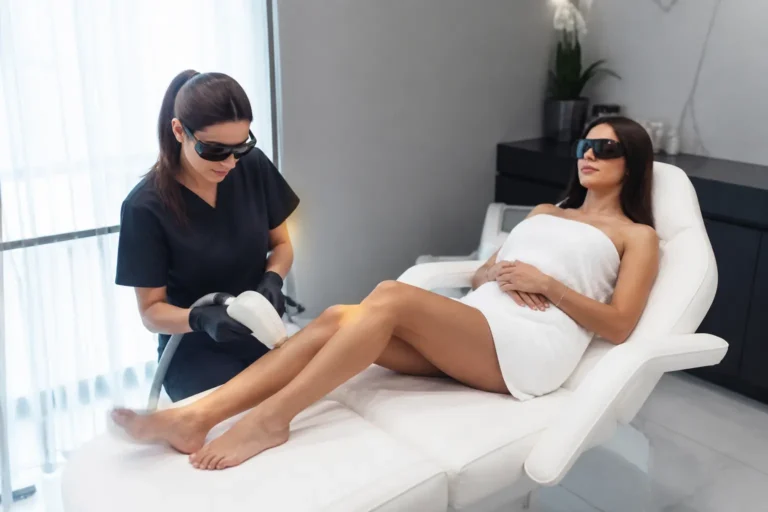
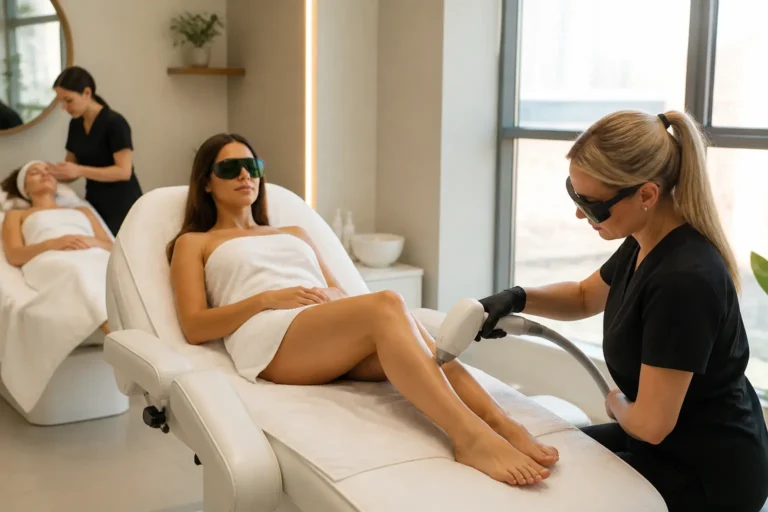
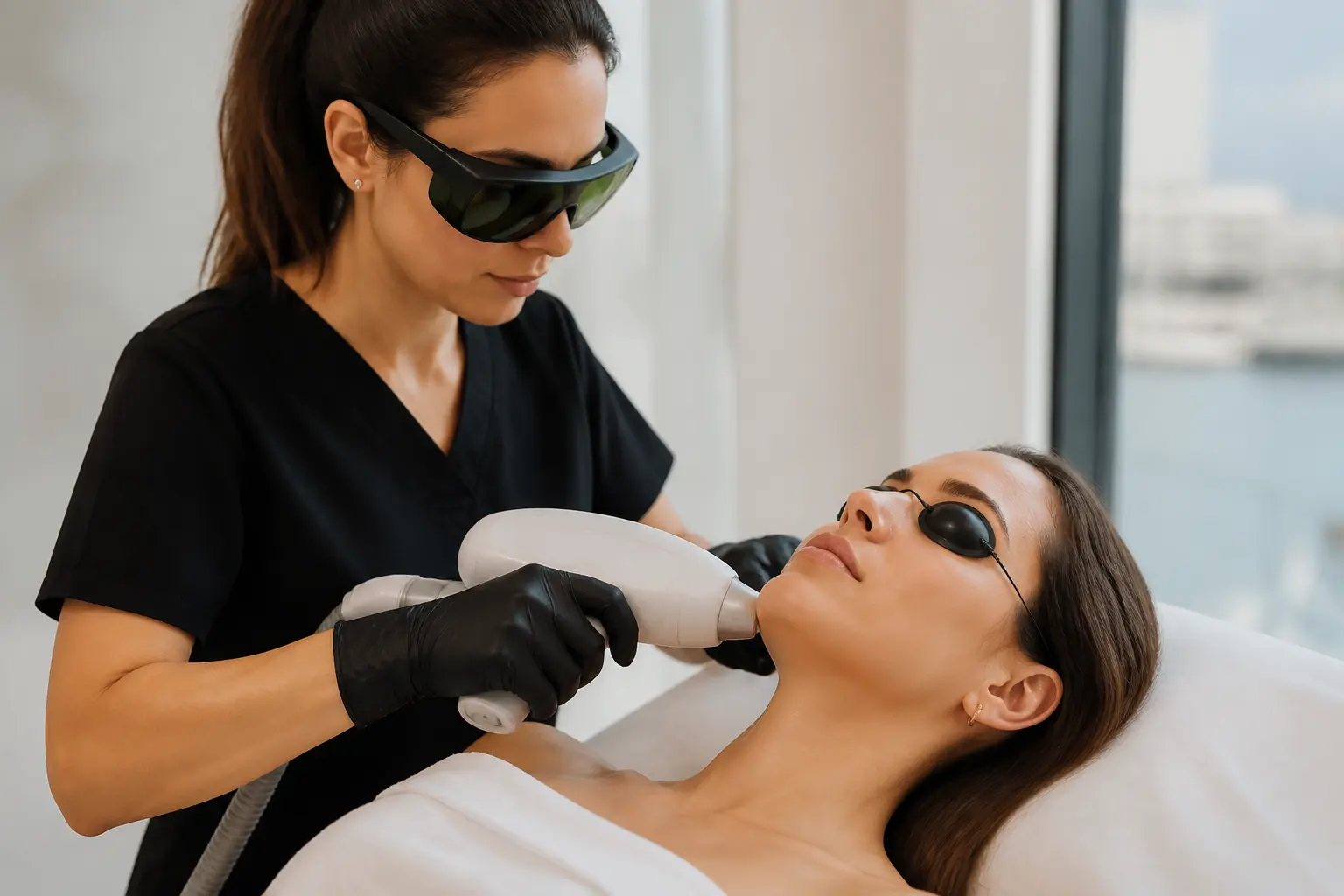
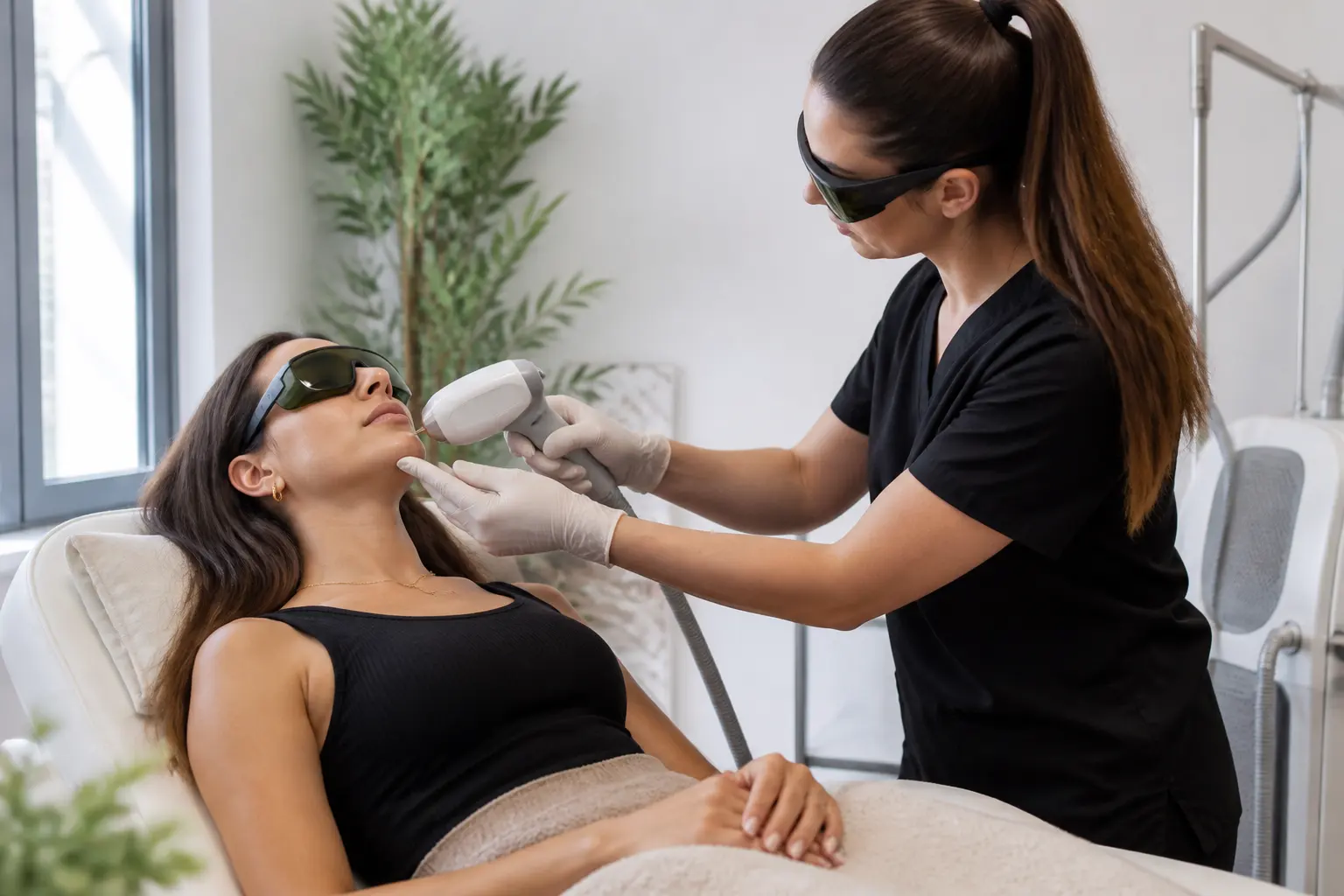
During a session, the treatment area is prepared and protective eyewear is used. The practitioner works methodically across the agreed zone, keeping the treatment focused on the hair-bearing skin rather than expanding the area unnecessarily. The sensation is often described as a brief heat or snapping feeling. Comfort varies by person and by area, and the chin can feel different from the cheeks.
The length of the appointment depends on the areas selected and the individual plan. Chin, cheeks and sideburns are more contained than legs or a full body service, but facial work still benefits from careful positioning and accurate boundaries.
It is reasonable to ask how the studio approaches skin tone, hair texture and facial contours. A personalised conversation is not an extra. It is part of making a responsible choice for a visible area of skin.
What affects suitability and results?
The laser responds to pigment in the hair, which is why hair colour and coarseness matter. Darker, thicker hairs are often easier for laser technology to identify than very light, grey, white, red or fine fluffy hairs. This does not mean you should rule yourself out based on a quick online checklist. It means the assessment should be honest about what can and cannot be expected.
Skin tone also matters when choosing settings and planning treatment safely. Modern laser practice can serve a broad range of skin tones, but it must be approached with appropriate care and experience. The American Academy of Dermatology’s guidance on unwanted hair removal highlights the importance of choosing an experienced professional, particularly when considering your individual skin tone and hair type.
Fine cheek hair needs an especially careful conversation
Fine, soft facial hair is common, and it is not always a strong candidate for laser hair removal. The answer depends on the hair itself, not simply on the fact that it is on the cheek. At your consultation, be specific about whether the hairs are dark and coarse, fine and pale, or a mixture. This helps avoid a treatment plan that does not match the likely response.
Facial hair can change over time
It is common for hair patterns to shift with age and life changes. If you have noticed new, rapidly increasing or unusually coarse facial hair, especially alongside changes such as irregular periods, it is sensible to speak with a GP before treating it as a beauty concern alone. The NHS information on hirsutism explains when facial hair growth may deserve medical advice. This is not a diagnosis from a beauty appointment, but it is an important reason to share the full picture and seek appropriate healthcare advice where needed.
How to prepare for chin, cheek and sideburn laser
Preparation supports both safety and a smoother appointment. Your provider’s own instructions should always come first, as they will be based on the device, your skin and the area being treated. These steps are useful questions and habits to consider before your booking.
- Avoid tanning and strong sun exposure. Facial skin is regularly exposed in Malta, particularly through warmer months. Tell the studio if you have recently sunbathed, used a sunbed or applied tanning products. The AAD advises avoiding tanning and protecting skin from the sun before laser hair removal.
- Pause hair removal that pulls hair from the root if instructed. Waxing, threading, epilating and plucking may interfere with the hair the laser needs to target. Ask exactly when you should stop these methods before your session.
- Arrive with clean skin where possible. Make-up, heavy moisturisers, facial oils and SPF may need to be removed before treatment. Ask the studio what to use, or avoid, on the day.
- Share products and medication. Mention prescription medicines, recent skincare changes, retinoids, exfoliating acids and any history of skin reactions. Do not stop prescribed medication without advice from the clinician who prescribed it.
- Do not hide recent changes. Tell the practitioner about irritation, active breakouts, cold sores, sunburn or any skin concern in the proposed treatment zone. It may be safer to postpone than to push ahead with reactive skin.
It can also help to take a moment before your first appointment to define your aim. For example, do you want to reduce a small group of chin hairs, tidy a narrow sideburn line, or address more visible cheek growth? A clear goal makes it easier to plan a conservative, natural-looking area.
Aftercare for facial laser hair removal
After a facial laser session, the treated skin may look or feel temporarily warm, red or slightly swollen around the follicles. This can resemble mild sun exposure and often settles, but your aftercare should be guided by the studio’s instructions and by how your skin feels.
In the first days, think gentle rather than active. Avoid rubbing, picking or scrubbing the area. Give your skin a break from harsh exfoliants, fragranced products and strong actives unless your provider tells you otherwise. If you use make-up, ask when it is suitable to reintroduce it and apply it with clean tools and a light touch.
Sun protection is particularly important for facial areas. The NHS guidance on sunscreen and sun safety recommends protecting exposed skin with suitable sunscreen and reapplying it as directed. For a laser course, follow the more specific advice provided by your practitioner, especially if you spend time outdoors in Malta.
Contact the studio for advice if you have a reaction that concerns you. Blistering, scabbing or persistent discomfort should not be ignored. Your safety and skin recovery come before staying on a timetable.
Laser, threading or shaving: which is right for facial hair?
There is no single right method for every area or every person. The best choice depends on the kind of hair you have, how quickly it grows, your desired level of maintenance and your comfort with a course of appointments.
| Method | May suit you if | Key consideration |
|---|---|---|
| Laser hair removal | You have hair that is suitable for laser and want to reduce regular removal over time. | Requires a course of sessions and results vary with hair, skin and hormonal factors. |
| Threading | You want precise, immediate removal for small facial areas such as the upper lip, brows or selected hairs. | Hair returns as it grows, so maintenance appointments are needed. |
| Shaving or trimming | You prefer a quick at-home method between professional appointments. | It is temporary and technique matters to reduce irritation. |
| Waxing or plucking | You prefer hair removal from the root for a short-term result. | These methods may need to be paused when preparing for a laser course. |
For some clients, a combination approach makes sense. You might use laser for chin or sideburn hair while keeping eyebrow shaping separate with threading. The important point is not to mix methods without checking the timing, particularly when your next laser session is due.
Questions to ask before booking
A good appointment starts before you arrive. These questions can help you book with confidence:
- Are my chin, cheek or sideburn hairs likely to be suitable for laser?
- What should I stop using or doing before the appointment?
- How should I manage sun exposure before and after each session?
- What sensation and short-term skin response should I expect?
- How will the treatment boundary be agreed for my cheeks or sideburns?
- When should I contact the studio rather than wait for my next session?
- How will we review whether the plan is working for me?
These are useful questions because they centre your own needs, rather than trying to copy someone else’s schedule or result. A professional plan should leave room to adjust based on your skin and hair response.
Conclusion
Facial laser hair removal for women can be a practical option for chin, cheek and sideburn hair when the treatment area, hair characteristics and aftercare are considered carefully. The most useful first step is a conversation that is specific to you, including your skin, your hair pattern and the result you would like to work towards.
If you are in Malta and considering laser for facial hair, book with Becammo and choose the Sliema or Swieqi location that suits you. Bring your questions, mention any recent sun exposure or skincare changes, and the team can help you understand whether a personalised laser plan is appropriate.
Frequently asked questions
Can laser hair removal be used on women’s chin hair?
Yes, chin hair is a common facial area to discuss for laser hair removal. Suitability depends on factors including hair colour, thickness, skin tone and your individual hair-growth pattern. A professional assessment is the right place to begin.
Does laser hair removal work on cheek hair?
It can be considered for cheek hair, but fine, light or fluffy hair may respond differently from darker, coarser hair. A consultation helps define whether laser is a sensible option for the specific cheek area you want to treat.
How many facial laser sessions will I need?
There is no universal number. Laser hair removal is usually planned as a course because hair grows in cycles, and the right spacing and number of sessions depend on your response. Facial hair may also be influenced by hormonal changes, so maintenance can be part of an individual plan.
Can I thread or pluck between facial laser appointments?
Ask your practitioner before doing so. Methods that remove hair from the root may affect preparation for your next laser session. Your provider can tell you which temporary hair-removal options are suitable between appointments.
Can I wear make-up after facial laser hair removal?
Your provider should give you specific aftercare guidance. As facial skin can be temporarily sensitive, it is often wise to keep products gentle, avoid friction and wait until you have been advised it is appropriate to reapply make-up.
Should I book laser if facial hair has suddenly become much thicker?
It is sensible to speak with a GP first, especially if the change is sudden or comes with other symptoms such as irregular periods. A beauty consultation can discuss hair removal, but a healthcare professional can assess possible underlying causes.