Does Laser Hair Removal Hurt for Men? An Honest Pain Guide
Brenda Cammo Team
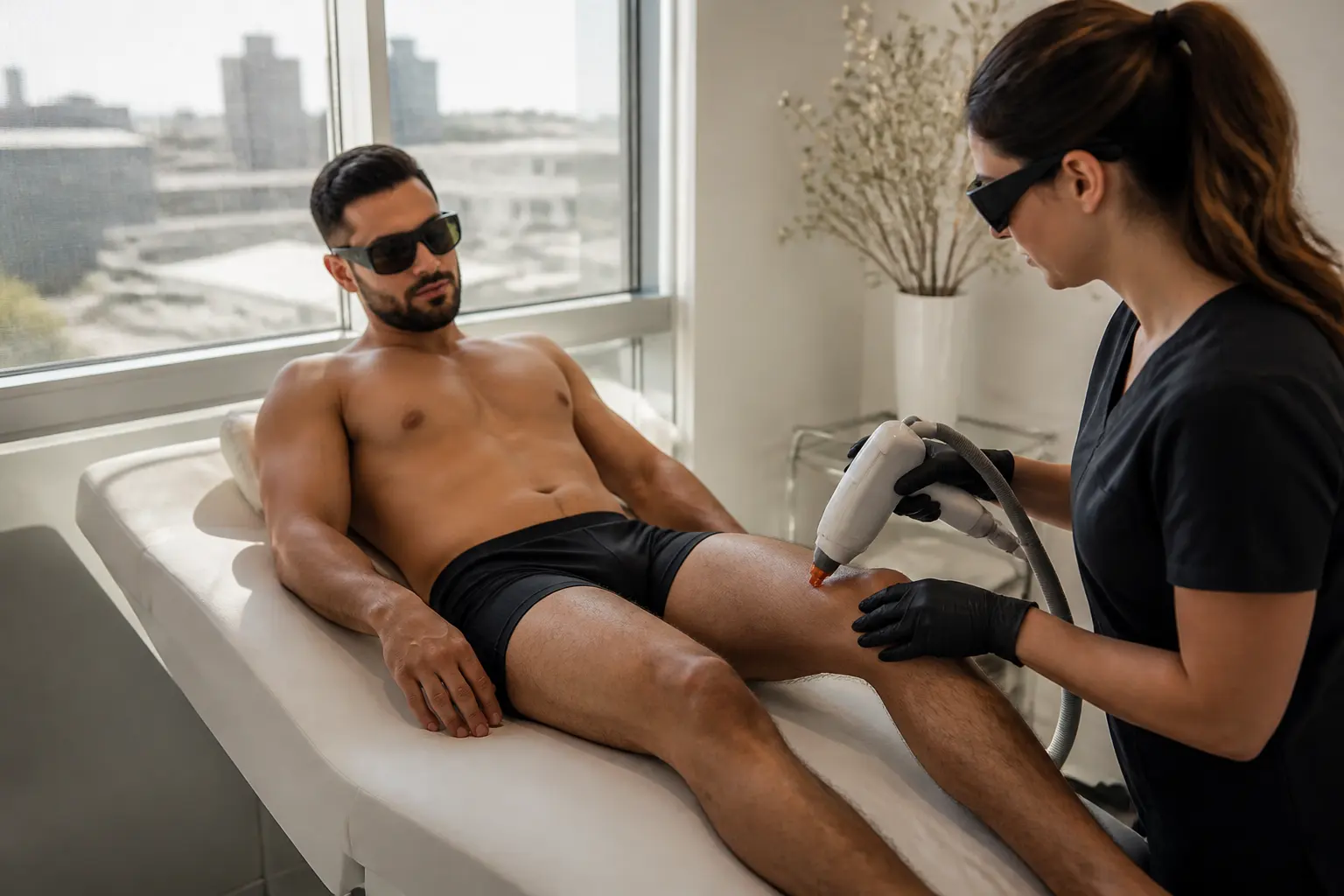
If you are considering laser hair removal but hesitating because of pain, you are not alone. It is one of the most common questions men ask before booking, especially for areas with dense, coarse hair such as the beard, chest, back or intimate area.
The honest answer is that laser hair removal can be uncomfortable, but it is not experienced in exactly the same way by everyone. The feeling changes according to the area being treated, the density and thickness of the hair, your own sensitivity on the day, and the settings selected after a professional assessment. It is more useful to think of comfort as a conversation than to expect one fixed pain score.
At a professional studio, the aim is not to dismiss your concerns or tell you to simply tolerate the session. It is to explain what you may feel, check relevant information before starting, work carefully and give you clear aftercare guidance. Knowing what to expect often makes a first laser appointment feel far more manageable.
What does laser hair removal feel like?
Many people describe each laser pulse as a quick snap against the skin, sometimes followed by a brief feeling of warmth. The American Academy of Dermatology similarly describes the sensation as warm pinpricks or the snap of a rubber band. That description is useful, but it is still only a reference point. A quick pulse on the forearm will not feel the same as a pulse along a beard line or across a dense patch of chest hair.
It is also important to separate the moment of the pulse from lasting pain. For many clients, the sensation is short and localised. Some areas may feel tender or warm afterwards, and temporary redness or slight swelling can occur. These are points to discuss with the professional carrying out your session, particularly if anything feels stronger than expected or does not settle as advised.
Laser hair removal is not a “no sensation” service, and it would not be honest to present it that way. Equally, discomfort does not automatically mean a session will be overwhelming. A well-planned appointment is paced around the treatment area and your individual response.
Why the pain scale is different for every man
Online pain scales can be tempting because they seem simple: beard equals a certain number, back equals another. In reality, they can create unrealistic expectations. One man may find underarms straightforward and beard work intense, while another experiences the reverse.
Hair thickness and density
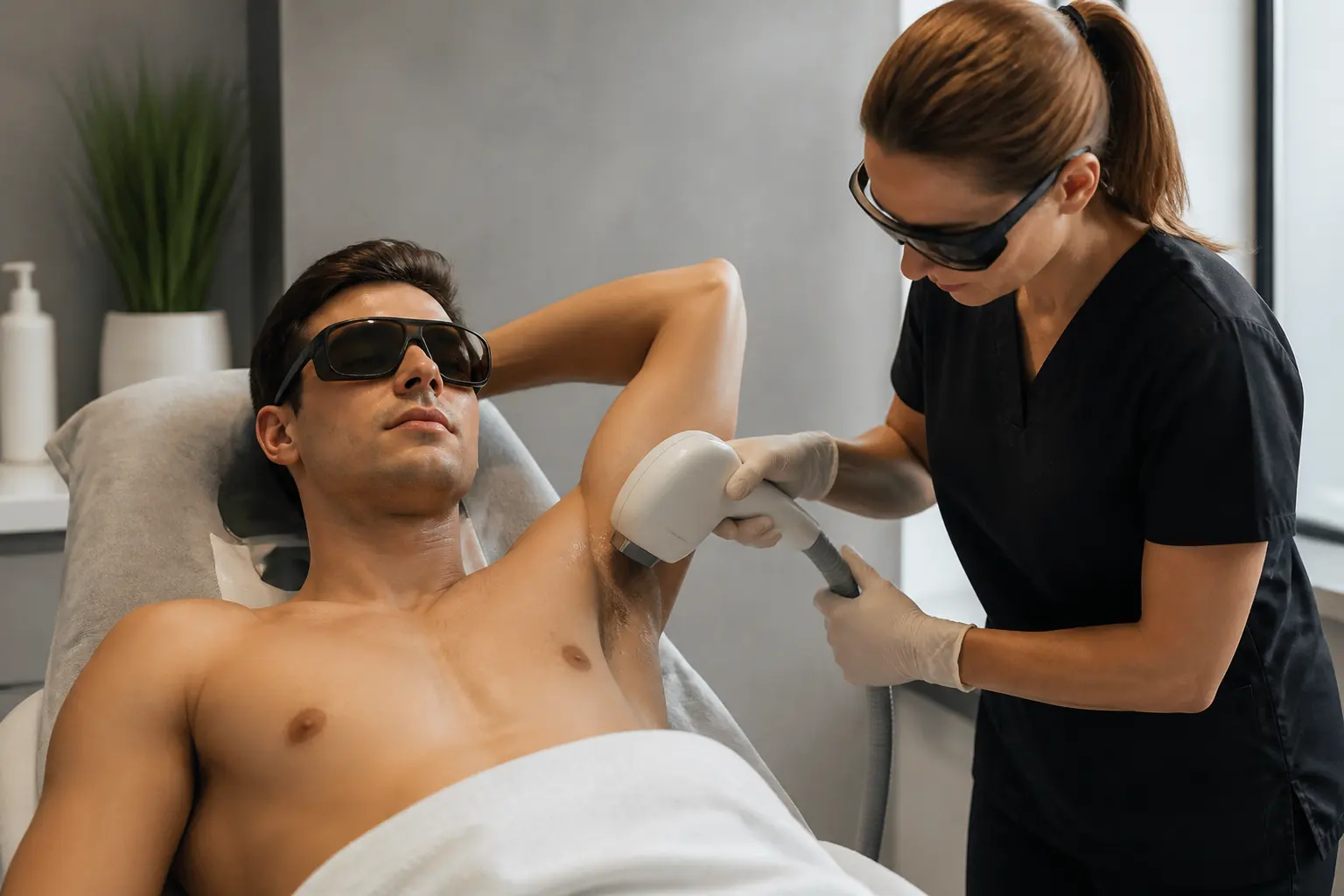
Laser hair removal works by directing light energy towards pigment in the hair. Coarse, dark hair can create a more noticeable sensation because there is more substantial hair to target. Men often have denser hair growth on the beard, chest, abdomen, shoulders and back, so these areas can feel more present during treatment than finer hair.
That does not mean every coarse-haired area will be difficult. It means the practitioner needs to consider the hair and skin rather than treat every body part with a one-size-fits-all approach.
The body area being treated
Skin sensitivity varies around the body. Areas that are bony, thin-skinned, frequently shaved or rich in nerve endings may feel sharper than areas with more cushioning. Facial zones also feel different because the treatment is close to areas you use and touch throughout the day, such as the upper lip, jaw and neck.
Your skin on that particular day
Your experience can change from one appointment to the next. Lack of sleep, stress, dehydration, friction from exercise clothing, recent shaving irritation and sun exposure may all affect how your skin feels. This is why it is worth mentioning anything unusual before the session instead of assuming it is irrelevant.
Individual sensitivity
There is no prize for having a high pain threshold, and no reason to feel embarrassed about being sensitive. Some clients prefer a brief check-in before a new area begins. Others are comfortable continuing once they understand the rhythm of the pulses. Clear communication helps the session remain practical and calm.
A realistic comfort guide by treatment area
The following guide is not a promise or a medical pain scale. It is a practical way to understand why some areas are commonly described as easier or more intense. Your own experience may differ.
| Area | How it may feel | Why comfort can vary |
|---|---|---|
| Back and shoulders | Often described as manageable, with brief pulses across a larger area. | Hair density can be high, while the skin may be less sensitive than the face. |
| Chest and abdomen | Usually a noticeable snapping or warming sensation, especially where hair is coarse. | Density, hair thickness and individual sensitivity vary widely across the torso. |
| Underarms | Short but potentially sharper pulses in a compact area. | The skin is sensitive and the hair may be dense. |
| Beard and neckline | Commonly one of the more noticeable areas for men. | Facial hair is often thick, and the jaw, upper lip and neck can be sensitive. |
| Legs | Can feel repetitive over a larger surface, rather than intense in one small point. | Comfort differs between the thigh, shin and areas close to the knee or ankle. |
| Intimate area | Often requires an especially open conversation about comfort and sensitivity. | Skin sensitivity, hair density and personal boundaries all matter. |
Rather than deciding against laser because one area may be more sensitive, consider your actual goal. A man looking to tidy a beard neckline may be willing to manage a more noticeable sensation in exchange for less frequent shaving. Someone treating the back may find the larger area very manageable. Your reasons for booking matter as much as the location on the body.
Beard laser comfort: why the face can feel more intense
Beard laser hair removal deserves its own mention because it is one of the most asked-about services for men. The beard area often combines thick hair with regular shaving, facial sensitivity and contours around the jaw and neck. That can make each pulse feel more distinct than it would on the back.
It is also an area where preparation matters. Turning up with irritated skin from a close shave, an active breakout or recent sun exposure may make the appointment less comfortable and may affect whether treatment should go ahead. Be upfront about your skin, any products you are using and relevant health information. A professional should be able to guide you on the correct next step rather than rushing through an unsuitable session.
For some men, the practical appeal of beard laser is creating a cleaner neckline or reducing the routine of shaving selected areas. It is not about forcing a completely hair-free look. The treatment plan should reflect the result you want and the areas you choose to address.
How to make your appointment more comfortable
Good preparation is not about trying to “beat” the pain. It is about arriving with skin that is ready for a safe, properly assessed session.
- Follow the studio’s preparation instructions. Ask what to do with hair in the treatment area before your appointment. Do not rely on generic advice from social media when you can receive guidance for your planned service.
- Avoid recent tanning and disclose sun exposure. The American Academy of Dermatology’s preparation guidance highlights the importance of discussing a recent tan and protecting skin from the sun. In Malta, this is particularly relevant throughout the brighter months.
- Arrive with clean, product-free skin where advised. Fragrance, heavy creams and other products may not be appropriate on the area being treated. Confirm the studio’s instructions in advance.
- Wear comfortable clothing. Choose loose, breathable clothing for body areas that may feel warm or slightly tender afterwards. This is especially useful before chest, back, legs or underarm appointments.
- Say if you are nervous. There is no need to act relaxed if you are worried. Tell the practitioner it is your first session, or that you are concerned about a particular area. A clear explanation before the first pulse can make a major difference.
- Share relevant information honestly. Mention recent skin changes, medication, a history of scarring, cold sores where relevant, or anything else the consultation asks about. Do not treat the consultation as a formality.
Do not self-prescribe numbing products or pain relief solely because of something you saw online. Ask the studio or an appropriate healthcare professional first, particularly if you take medication or have a skin condition. Professional guidance is more useful than guesswork.
What happens if the sensation feels too strong?
You should speak up immediately. A professional session should never depend on you silently enduring a level of discomfort that concerns you. The practitioner can pause, reassess the skin, check how you are feeling and decide the appropriate way to proceed.
It is helpful to use specific language. Instead of saying “it hurts”, try explaining whether the feeling is a brief sharp snap, a lingering burn-like feeling, increasing tenderness or discomfort in one precise spot. This gives the professional clearer information to respond to.
Also remember that stronger sensation is not a measure of better results. The goal is an appropriate treatment plan for your skin and hair, not the highest possible level of discomfort. Results and the number of sessions required vary according to factors such as the area, hair growth cycle, hair characteristics and individual skin profile.
After the session: what is normal, and when to ask for advice
After laser hair removal, the treated skin may look red or feel warm. Mild swelling around individual follicles can also occur. The American Academy of Dermatology notes that redness and swelling are common short-term effects, and advises following post-treatment instructions and protecting treated skin from direct sun exposure.
Your studio should provide aftercare that fits the area treated. In general, be gentle with the skin, avoid friction and heat if advised, and do not introduce harsh exfoliating products without checking first. If you have a question after your appointment, asking early is sensible. It is better to clarify an aftercare step than to rely on assumptions.
Seek timely professional or medical advice if you notice a reaction that worries you, such as blistering, marked swelling, increasing pain or a change that does not fit the aftercare information you were given. Laser hair removal is a cosmetic procedure, but it still deserves careful screening, trained application and responsible aftercare.
Choosing a studio when comfort matters
Comfort is not only about the moment the laser fires. It is also about whether you feel informed, heard and treated as an individual. Before booking, look for a studio that makes space for questions about your skin, hair and desired outcome.
Useful questions include:
- Which area is most suitable to begin with?
- What should I do before the appointment?
- How should I care for the treated area afterwards?
- What factors could affect the number of sessions I may need?
- What should I mention during the consultation?
- Who should I contact if I have an aftercare question?
For men in Malta, this is especially valuable when balancing laser appointments with beach days, outdoor work, training or travel. A short, honest conversation before booking can help you choose suitable timing and arrive prepared.
Conclusion
So, does laser hair removal hurt for men? It can be uncomfortable, particularly in dense or sensitive areas, but the sensation is usually brief and highly individual. The most reliable way to understand your likely experience is through a professional assessment, realistic preparation and open communication throughout the session.
If you are considering laser for the beard, chest, back, shoulders, underarms, legs or another area, book a consultation or ask the Becammo team about the right service for your goals. Choosing the Sliema or Swieqi location that suits your routine is a practical first step towards making an informed decision.
Frequently asked questions
Is laser hair removal more painful for men?
Not automatically, but men often treat areas with thicker and denser hair, such as the beard, chest and back. That can make the pulses feel more noticeable. Individual skin sensitivity and the body area are equally important.
What is the most painful area for men’s laser hair removal?
There is no universal answer. Many men find the beard line, upper lip, neck, underarms and intimate area more sensitive than broader areas such as the back. Your own response may be different.
Can I ask for a pause during laser hair removal?
Yes. You should always say if you need a pause or if a sensation concerns you. Clear communication allows the practitioner to check the area and guide the session appropriately.
Should I shave before a laser hair removal appointment?
Follow the preparation instructions given for your appointment. Requirements can depend on the area and the service, so it is best to confirm directly with the studio rather than use general online advice.
Will every session feel the same?
Not necessarily. Hair growth, skin condition, recent sun exposure, shaving irritation and your general sensitivity can change from one visit to another. Tell the practitioner about anything relevant before the session begins.
Can laser hair removal be done on all hair colours?
Suitability depends on the contrast between hair and skin, as well as the hair’s colour and thickness. Very light, grey, white or red hair may respond differently. A consultation is the best time to discuss whether laser is suitable for your hair and skin profile.