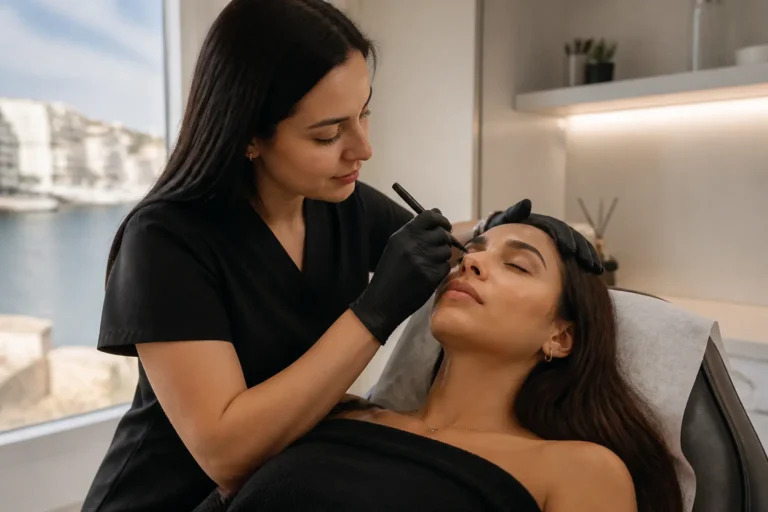
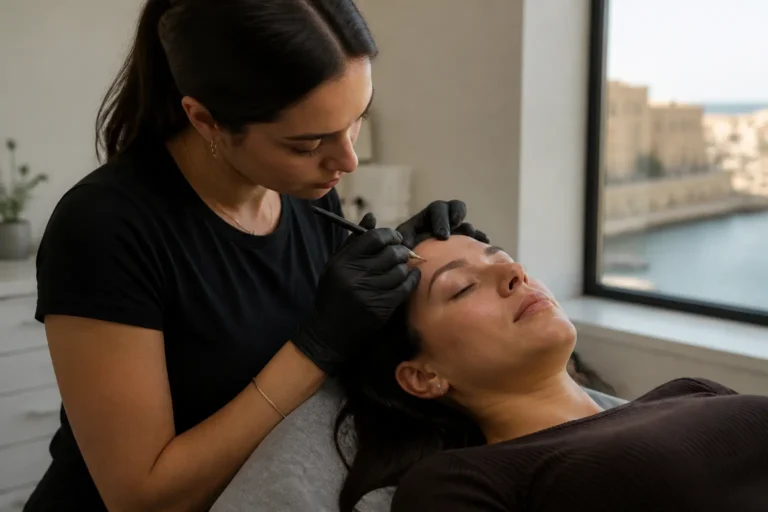
Brazilian vs European Microblading: What Really Shapes Results?
Brenda Cammo Team
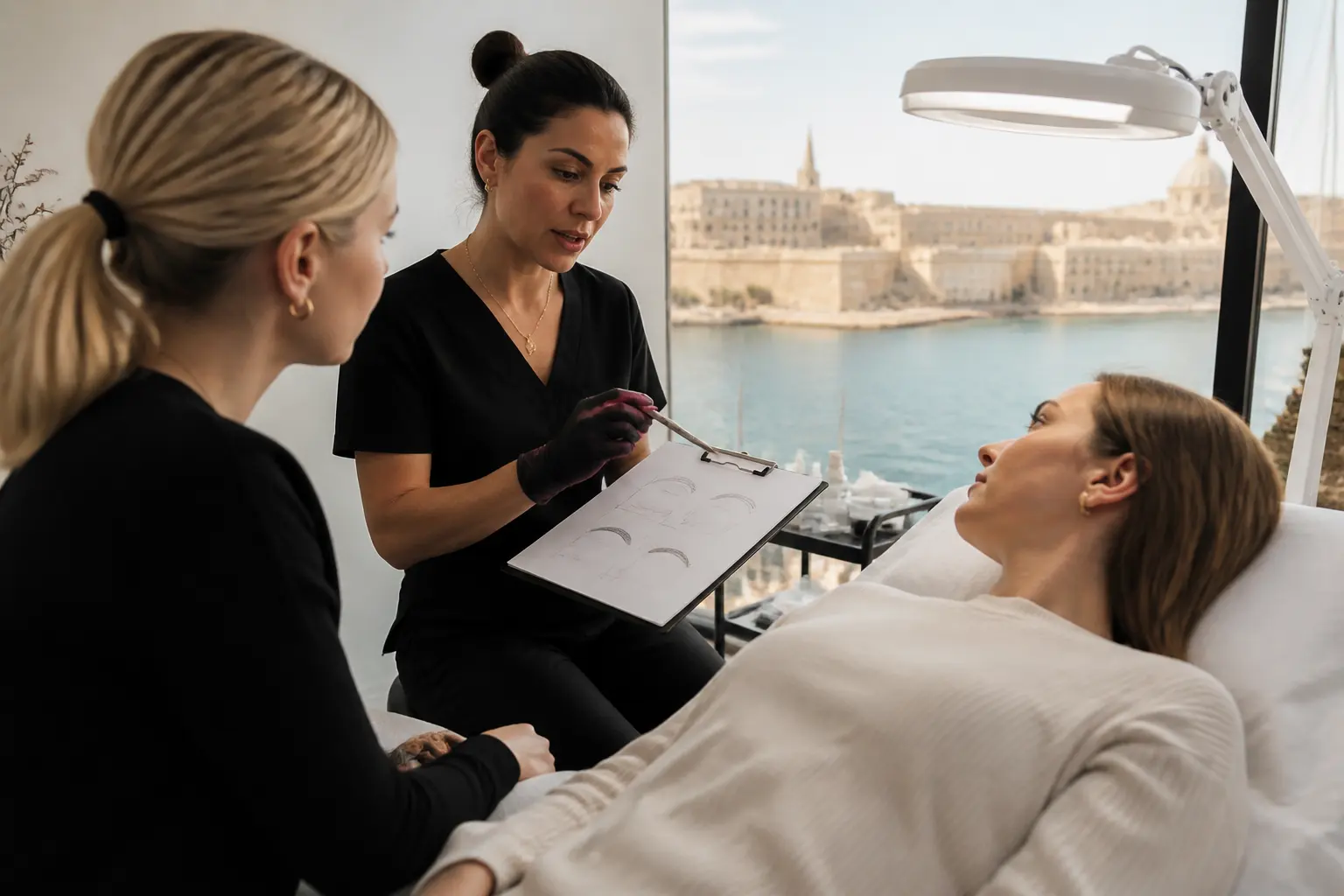
If you are comparing Brazilian vs European microblading, you may be hoping for a simple answer: which one produces the better brows? In practice, there is no universal winner. These labels can describe influences in training, visual preferences and the artist’s background, but they do not guarantee a particular method, level of hygiene or finished result.
For a client booking in Malta, the most useful question is not whether an artist trained in Brazil or Europe. It is whether their approach suits your natural brow pattern, skin, lifestyle and preference for softness or definition. Microblading is a form of semi-permanent makeup, so the decision deserves an individual consultation rather than a choice based on a label alone.
Brazilian vs European microblading: the short answer
“Brazilian microblading” and “European microblading” are not fixed technical standards with one official curriculum, tool or final look. Schools, academies and individual artists within both regions can teach very different approaches. A strong result depends on the practitioner’s ability to observe the natural hair direction, map the brow thoughtfully, choose a suitable pigment approach, work with care and explain realistic aftercare and maintenance.
That said, clients often notice broad style differences in the work they see online. Brazilian-inspired brow artistry is frequently associated with visible structure, detailed hair-stroke work and careful attention to a polished yet natural frame for the face. European portfolios can often lean towards restrained colour, softness and a result designed to settle subtly into the existing features. These are tendencies, not rules. An artist in Malta may combine influences from several schools while adapting the work to each individual.
The right microblading style should support your own brow character, not make every client’s brows look the same.
Why a regional label cannot predict your result
Microblading is highly personal. Two clients can ask for the same reference image and need different plans because their starting brows, skin characteristics and day-to-day routines are different. A regional label does not answer the practical questions that matter most at an appointment.
- How much natural brow hair do you have, and where are the sparse areas?
- Which direction do your existing hairs grow?
- How defined or understated would you like the result to appear?
- How does your skin behave over time, including oiliness and sensitivity?
- What colour and depth will complement your hair, skin tone and natural brow hair?
- Is a hair-stroke technique the most appropriate option for your goals?
For this reason, it is sensible to see Brazilian and European influences as possible visual languages rather than competing quality levels. The consultation should translate your preferences into a plan that is realistic for you.
Philosophy: different starting points, not opposing camps
A Brazilian-inspired philosophy: detail, mapping and brow presence
Brazilian brow culture is widely recognised for treating brows as an important part of facial balance. In a Brazilian-inspired microblading approach, the artist may place strong emphasis on mapping, symmetry as far as natural features allow, individual hair direction and the visual effect of each stroke. The aim is often to create definition without losing the impression of real brow hairs.
That does not mean every Brazilian-trained artist creates bold brows. A well-considered Brazilian microblading result can be very soft. The key point is intentionality. The shape, arch, beginning of the brow and stroke pattern are usually treated as connected design choices rather than separate details.
At Becammo, Brazilian Microblading is approached with this attention to individual hair flow and personalised design. The goal is not to copy a template. It is to create a considered enhancement that works with the face and the natural brows already present.
A European-inspired philosophy: restraint and long-term subtlety
European-inspired work is often described through a preference for subtlety. In many portfolios, the artist may prioritise a lighter visual effect, understated colour and a design that blends quietly with natural hairs. This can appeal to clients who want their brows to look more even and complete without appearing obviously styled from a distance.
However, subtle does not mean vague or less technical. Creating a light-looking result still requires clear placement, balanced mapping and appropriate stroke spacing. If strokes are too crowded, too uniform or poorly aligned with the natural hair direction, a soft intention may not translate into a harmonious healed appearance.
What both approaches should have in common
The most responsible schools of thought, wherever they began, share essential principles: careful assessment, clean working practices, informed consent, personalised mapping, suitable materials and honest aftercare guidance. In the European Union, permanent makeup and microblading fall within rules on substances used in tattoo inks and permanent makeup. This makes pigment information and professional standards particularly relevant when choosing a practitioner in Malta. You can read the legal framework in Commission Regulation (EU) 2020/2081.
A regional aesthetic may influence the artwork, but it should never replace these fundamentals.
How results can look different
When clients say they prefer Brazilian or European microblading, they are often responding to one or more visual elements below. Discussing them directly is more useful than relying on a broad regional description.
| Design element | A more defined preference | A softer preference |
|---|---|---|
| Shape | A clearer outline and more noticeable structure | A gentler outline that follows the existing brow closely |
| Hair strokes | More visible individual strokes and intentional variation | Fine, airy strokes with a lower-contrast overall effect |
| Density | Additional visual fullness in sparse sections | Selective enhancement, leaving more space between details |
| Colour impression | A little more depth while remaining appropriate to the client | A lighter, quieter appearance designed to blend in |
| Overall effect | Brows that frame the face with more presence | Brows that look refined and discreet |
Neither column is automatically better. Someone with very sparse brows may want more visible structure, while someone with naturally full brows may prefer only delicate refinement. Your skin and the way you wear makeup can also influence the direction you choose.
The technical detail behind natural-looking strokes
Natural-looking microblading is not achieved simply by making strokes thin. The artist needs to study the brow’s growth pattern. Hair at the front may rise more vertically, while the body and tail can angle differently. The stroke pattern needs to make sense alongside the hairs that are already there.
Spacing matters too. Adding too many strokes in a small area can make a brow look heavier than intended. Too little structure may fail to improve the sparse sections that prompted the appointment. A professional design balances the desire for fullness with the need for visual breathing room.
Mapping is equally important. Faces are naturally asymmetrical, and brows do not need to be identical to look balanced. The purpose of mapping is to create an intentional shape that respects your facial proportions and existing brow position, rather than forcing both sides into an artificial match.
Skin, lifestyle and expectations matter as much as style
Your preferred aesthetic is only one part of the conversation. Microblading involves pigment placement in the skin, so individual factors affect planning and how the result may settle over time. A consultation is the right time to disclose relevant information, discuss previous brow work and ask whether a hair-stroke technique fits your goals.
For example, a client who regularly wears strong brow makeup may like a more defined design. A client who rarely wears makeup may prefer a quieter effect. Someone who spends a great deal of time in the sun, exercises frequently or has a skincare routine with active products should discuss this openly, because preparation and aftercare matter.
It is also important to be realistic about reference photographs. Images can be taken immediately after an appointment, in particular lighting or with makeup and styling. They show an aesthetic direction, not a promise that every person will have the same outcome. Ask to see work that resembles your natural brow density, colouring and desired finish where possible.
How to compare microblading schools and artists properly
Instead of asking only, “Is this Brazilian or European?”, use these questions to make a more confident decision.
- How is the design personalised? Ask how the artist assesses your existing brow hair, face and preferred level of definition.
- What is the plan for the consultation? A good conversation should allow room for your questions, previous work and desired result.
- Can the artist explain the technique clearly? You should understand whether the proposed approach is hair-stroke focused and why it suits your aims.
- How are hygiene and materials handled? Professional standards and clear information matter. Do not feel rushed when asking about the products and process used.
- What does the portfolio show? Look beyond one dramatic style. Seek variety in age, natural brow density, skin tone and final aesthetic.
- Is aftercare explained without unrealistic promises? The artist should set out the practical care steps and the role of the perfecting appointment where applicable.
Choosing an approach in Malta
Malta’s international community brings together many brow types, beauty references and personal preferences. A style that feels natural to one person may feel too light or too defined to another. This is why an artist’s experience with diverse brow patterns matters more than a generalised idea of what Brazilian or European brows should be.
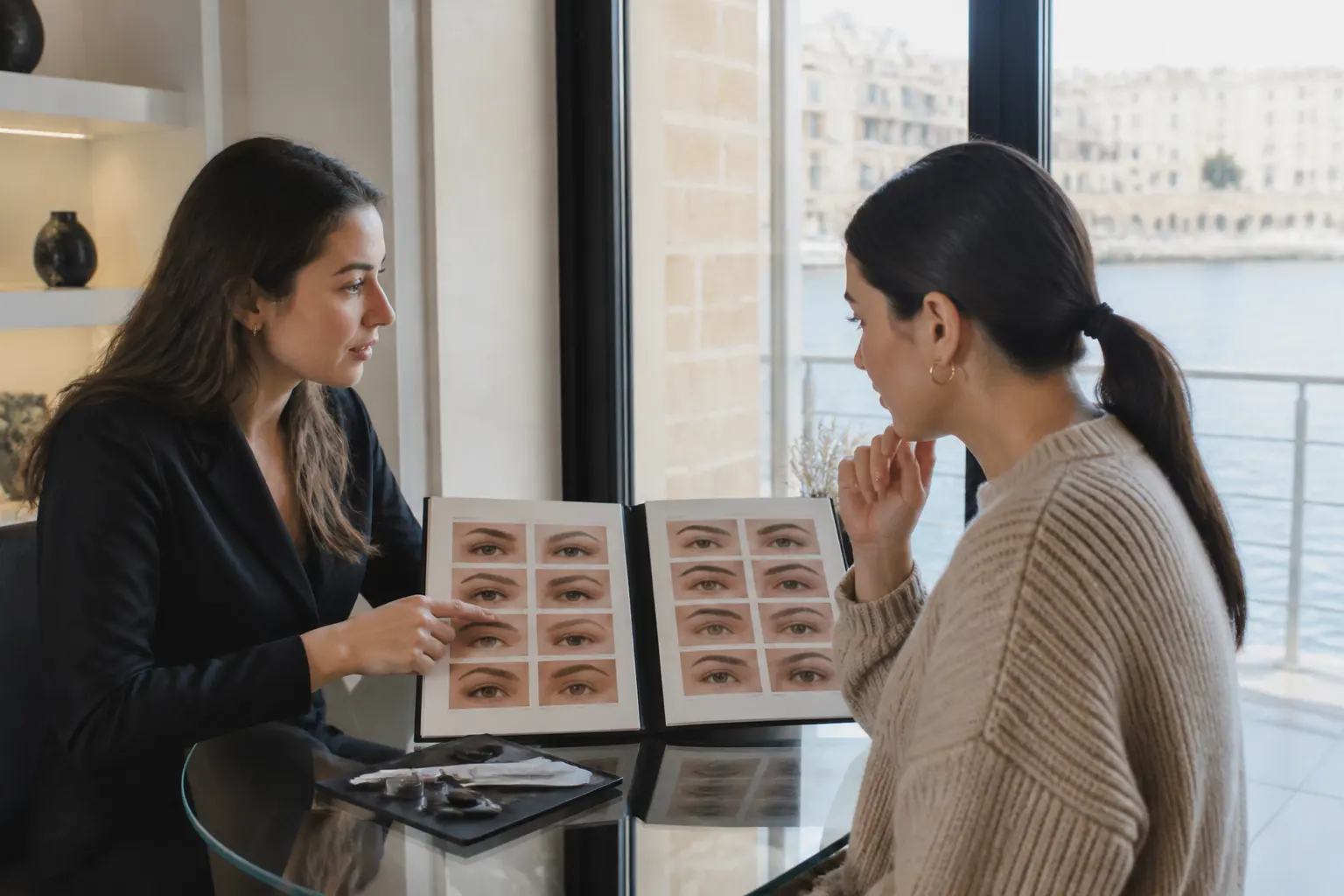
At a professional studio, your appointment should begin with listening. You may bring inspiration images, but it helps to explain what you like about them. Is it the fuller tail, the softer front, the visible hair strokes or the overall balance? This gives the artist something specific to assess alongside your natural brows.
At Becammo, clients can book a semi-permanent consultation before deciding on Brazilian Microblading, Brazilian Microshading or another brow option. It is a practical opportunity to discuss your desired look, review the procedure and decide on the most suitable direction without assuming that one regional school is right for everyone.
Conclusion
Brazilian vs European microblading is best understood as a comparison of possible design influences, not a contest with one correct winner. Brazilian-inspired work may appeal if you value precise mapping, detailed hair direction and a polished frame. European-inspired work may appeal if you are drawn to softness and visual restraint. Yet either approach can look natural or defined when it is planned well.
The best result begins with a professional assessment of your own brows, skin and expectations. If you are deciding which semi-permanent brow style may suit you, book a consultation at Becammo in Sliema or Swieqi and bring the questions, reference images and preferences that matter to you.
Frequently asked questions
Is Brazilian microblading more dramatic than European microblading?
Not necessarily. Some Brazilian-inspired designs are softly detailed, while some European-inspired designs can be more structured. The final effect depends on the artist’s technique, your natural brows and the level of definition agreed during consultation.
Does European microblading mean a more natural result?
No regional label guarantees a natural result. Natural-looking work comes from appropriate shape, stroke direction, spacing, colour choices and a design that complements your existing features.
Can I ask for a mix of Brazilian and European brow styles?
Yes. It is often more helpful to describe the features you want, such as a soft front, fuller sparse areas or fine visible strokes. Your artist can then advise whether the combination is suitable for your brows.
What should I bring to a microblading consultation?
Bring reference images that show the style you like, ideally including both close-up and full-face views. Be ready to discuss previous brow procedures, your usual makeup routine and any questions about preparation or aftercare.
How do I know whether microblading is the right brow option for me?
A consultation is the most reliable starting point. It allows the artist to assess your brow goals and explain the available semi-permanent options, including whether a hair-stroke approach is appropriate for the result you want.