Brazilian Microblading Pigments for Warm, Cool and Neutral Undertones
Brenda Cammo Team
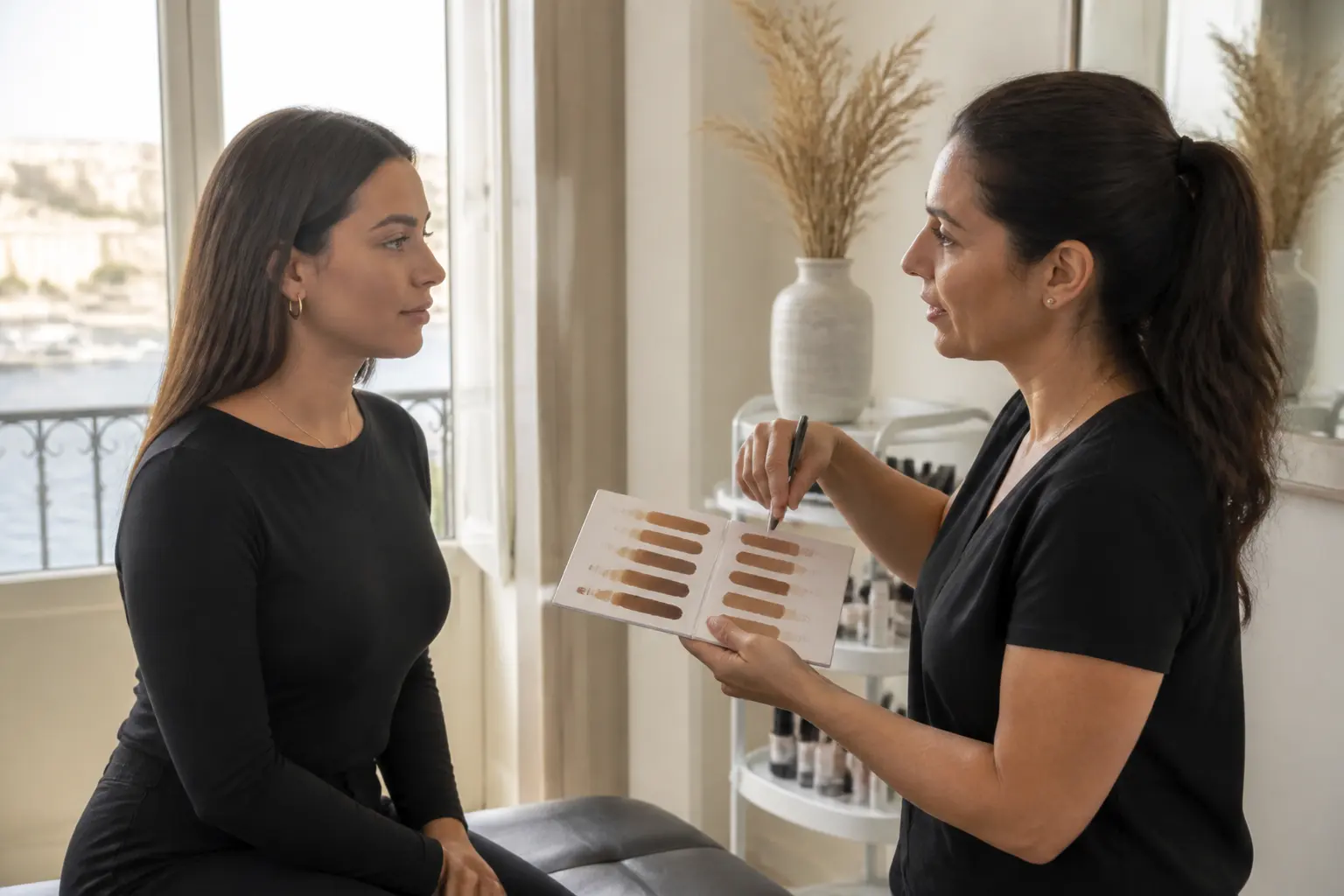
Choosing a brow colour is one of the most important parts of Brazilian microblading. It is not simply a matter of selecting light, medium or dark brown. A well-considered pigment choice takes account of your skin undertone, natural brow hair, complexion, existing brow colour and the soft, believable result you want once the area has healed.
Warm, cool and neutral are useful starting points, but they are not fixed labels that decide your brow colour on their own. In a professional appointment, pigment selection is a personalised process. The aim is to create hair-like strokes that sit naturally with your features rather than looking too ashy, too orange, too dark or disconnected from your natural colouring.
For clients in Malta, where the Becammo community includes many skin tones, ethnic backgrounds and hair colours, this individual approach matters. Brazilian microblading is designed around fine, hair-inspired strokes and a tailored brow plan, not a one-colour approach for every face.
What are skin undertones?
Your undertone is the subtle colour that appears beneath the surface of your skin. It is different from skin depth or surface tone, which can look lighter or deeper depending on sun exposure, skincare, redness and the season. Undertones are commonly described as warm, cool or neutral.
- Warm undertones may show golden, peach, yellow or olive notes.
- Cool undertones may show rosy, pink, bluish or red notes.
- Neutral undertones often show a balanced mix, without one family appearing clearly dominant.
These descriptions are helpful, but real skin is more nuanced. Two people who both identify as warm may have very different hair colours, skin depths and brow density. A client can also have surface redness while their underlying colour balance is warm or neutral. This is why an in-person assessment is more reliable than choosing a pigment from a photograph, a social-media filter or a single vein-colour test.
Why undertones matter in Brazilian microblading
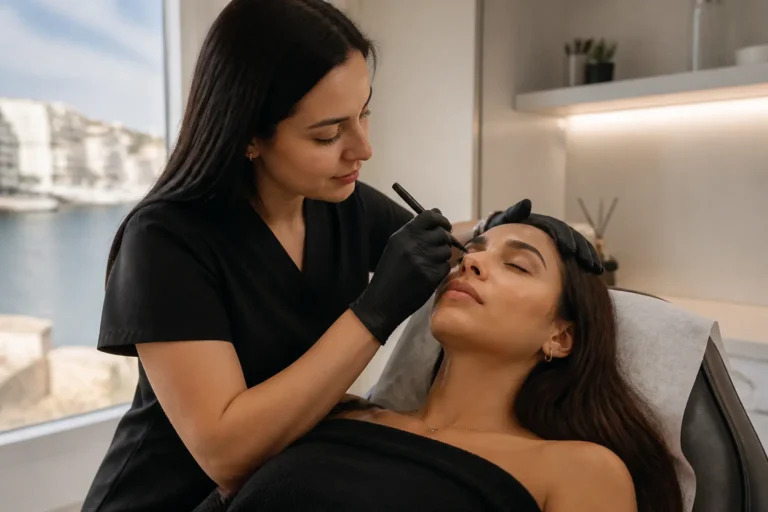
Brazilian microblading places fine pigment strokes in the brow area to complement the direction and appearance of natural hair. Because the result is intended to look subtle, colour harmony is essential. The visible result is influenced by more than the pigment colour seen in the bottle. It is also shaped by the skin, the placement of the strokes, natural hair around them and the normal healing process.
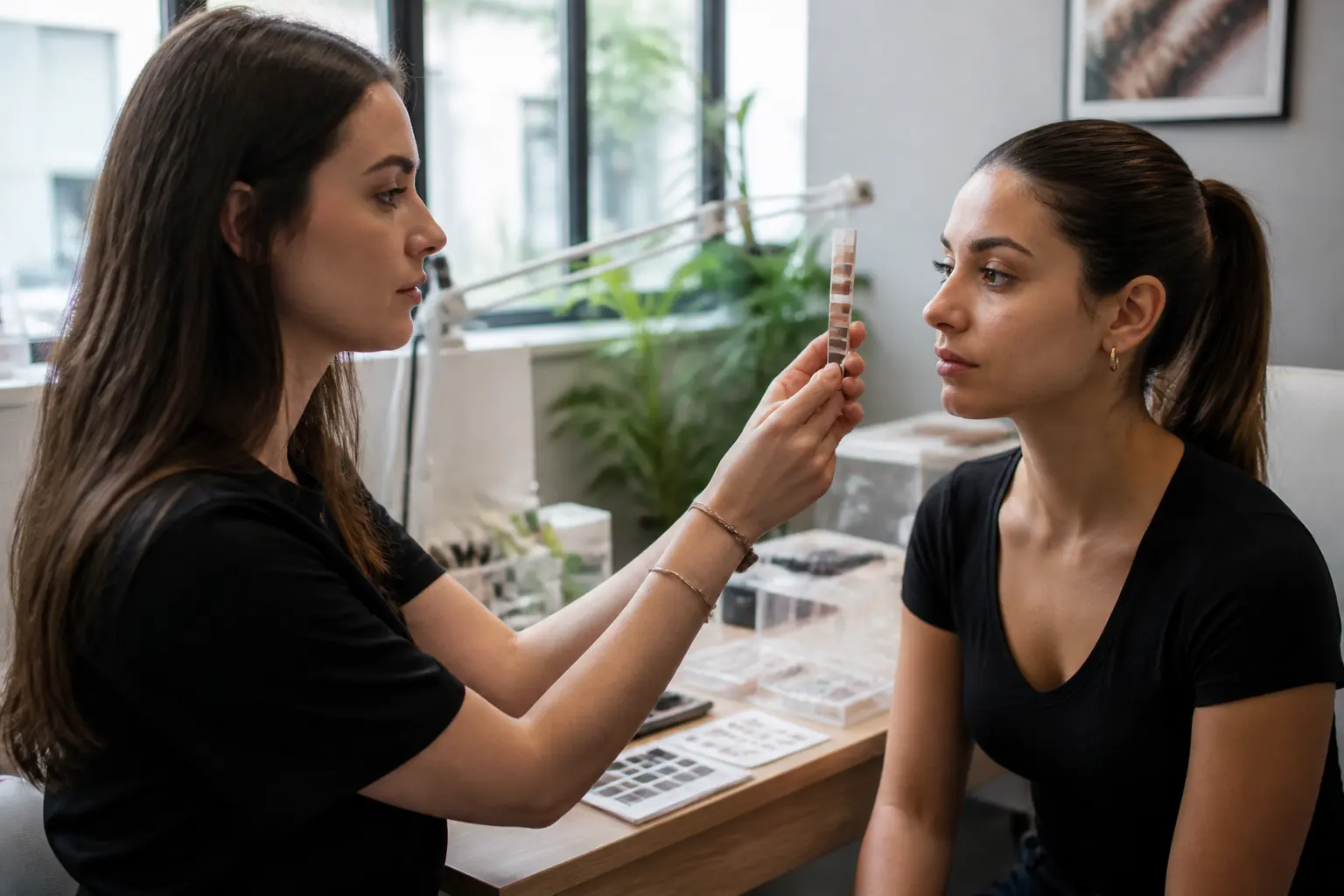
A pigment that appears beautifully balanced on one client may look too warm or too cool beside another client’s skin and hair. This does not mean one pigment family is better than another. It means the artist needs to consider whether the selected shade will support a natural-looking brow for that particular person.
Permanent make-up and microblading use colour-containing inks inserted into the skin, so they deserve a careful, informed approach. The European Union has specific REACH restrictions covering substances in tattoo inks and permanent make-up, while the ingredients and product information should be handled responsibly by suppliers and professionals. European Commission Regulation (EU) 2020/2081 sets out these restrictions for tattoo inks and permanent make-up. (eur-lex.europa.eu)
Warm undertones and pigment balance
Clients with warm undertones may have skin that reads golden, peachy, olive or yellow-toned. Their natural brow hair might range from soft blonde and caramel brown to deep brown or black. The professional question is not, “Should warm skin always receive a warm brow?” It is, “Which brown will work naturally with this client’s skin, hair and intended brow definition?”
In practice, an artist may look for enough warmth to prevent the brow from appearing flat or overly grey against the complexion. However, too much visible warmth can feel out of place if the client’s natural brow hair is ashier, their overall hair colour is cool-toned, or they prefer a restrained finish.
What is assessed for warm undertones?
- The amount of golden, olive or peach colour visible in the skin.
- The colour and density of the client’s existing brow hair.
- Natural hair colour, including whether it is coloured or likely to change soon.
- The desired result, from very soft enhancement to a more defined brow.
- Any previous semi-permanent brow work that may affect the new colour plan.
For example, a client with olive-toned skin and dark brown brow hair may need a very different approach from a fair client with golden skin and light, warm blonde hair. Both may sit within a warm family, but their brows should not automatically receive the same pigment depth or colour balance.
Cool undertones and avoiding an overly ashy look
Cool undertones can show pink, rosy, red or blue-leaning notes. Some clients with cool undertones worry that all brown pigments will turn warm on their skin. Others assume that a grey or very cool shade will always look most natural. Neither assumption gives the full picture.
Cooler brown families can be useful where they complement the client’s natural brow hair and complexion. Yet a pigment should not be selected solely because a client has pinkness or redness at the skin surface. Temporary irritation, skincare, weather, exercise and sensitivity can make the skin look redder at one appointment than it normally does.
Professional assessment separates the immediate appearance of the skin from the wider colour picture. It also considers that brow hair may be neutral, warm or cool even when the skin looks distinctly cool.
A practical example
Imagine a client with fair skin, a rosy complexion and naturally medium ash-brown brow hair. A gentle, balanced brown may suit the overall look better than a strongly warm brown. On the other hand, going too cool or too dark could make fine microblading strokes appear heavier than intended. The goal is balance, not an extreme response to one colour cue.
Neutral undertones offer flexibility, not a shortcut
Neutral undertones often sit between warm and cool. This can provide more flexibility during pigment selection, but it does not remove the need for detailed planning. Natural brow hair still plays a major role, as do skin depth, facial contrast and the client’s preferred finish.
A neutral client with pale skin and light brown hair may want a softer, lighter result than a neutral client with a deep complexion and naturally full dark brows. In both cases, the artist should avoid treating “neutral” as a standard medium-brown formula.
Instead, neutral undertones invite a balanced colour conversation. The artist may assess whether a brow needs a touch more warmth, a quieter ash balance or a true neutral brown to sit comfortably beside the client’s natural hair.
Undertone is only one part of pigment selection
It is helpful to think of undertone as one chapter of the consultation, not the whole story. A responsible Brazilian microblading plan also considers the following.
Natural brow hair
Existing hairs are an important visual guide. Their colour, thickness, direction and density influence how visible the microblading strokes will be. A shade that blends well with your hair generally looks more harmonious than a shade selected only to match a complexion category.
Skin characteristics
Skin varies in texture, oiliness, sensitivity and how it presents on the day. These factors can influence the suitability of a technique and the way the brow area is approached. An honest consultation should include a skin assessment and a conversation about your expectations, rather than a promise of an identical result to someone else’s brows.
Previous brow work
Old microblading, powder brows, tint, henna or colour correction can change the starting point. If there is existing semi-permanent pigment, it must be assessed before planning additional work. Covering previous work is not simply a matter of applying a new shade over the top.
Desired brow definition
Some clients want to fill small sparse areas and retain a barely-there effect. Others would like clearer structure, especially if daily brow makeup is part of their routine. The more definition desired, the more important it becomes to choose a colour that remains believable against the natural brow hair and skin.
How a professional pigment consultation should work
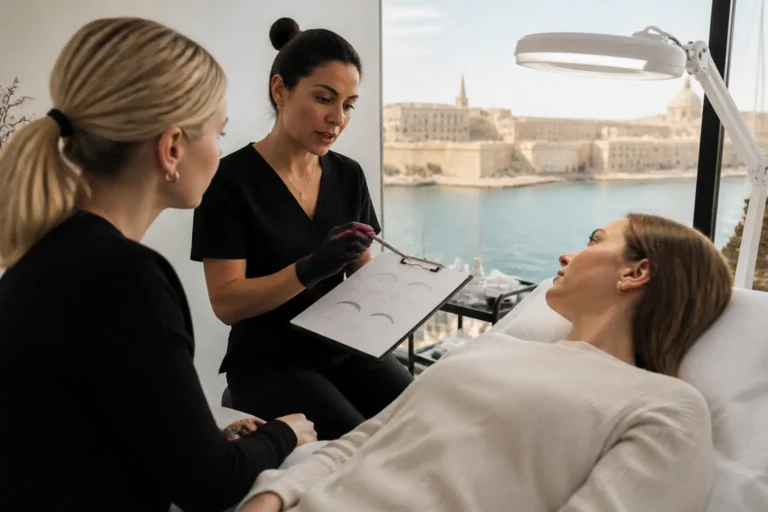
A thoughtful consultation is the right place to discuss undertones, but it should feel practical rather than overwhelming. You do not need to arrive knowing whether you are warm, cool or neutral. Bring your questions, explain how you normally wear your brows and be open about any previous procedures or relevant skin concerns.
- Discuss your brow goal. Explain whether you want to create density, refine shape, balance sparse areas or reduce the time spent filling brows with makeup.
- Review your natural colouring. The artist assesses your brow hairs, hair colour, complexion and the overall contrast of your face.
- Assess the brow area. Skin condition and any previous brow pigment are considered before the procedure is planned.
- Map the shape. Brow mapping provides a tailored framework that respects facial proportions and the natural brow pattern. Perfectly identical brows are not the aim.
- Discuss pigment direction. Your artist explains the colour family proposed and why it suits your individual starting point.
- Set realistic expectations. Healing, colour retention and the eventual appearance vary between clients, so no professional should present a single outcome as certain.
At Becammo, this personalised approach is particularly important because brows are not one-size-fits-all. The studio works with clients from varied ethnic backgrounds and adapts brow design to natural features rather than imposing one beauty standard.
Questions worth asking before booking
Asking clear questions helps you make a confident decision. You may wish to ask:
- How will my natural brow hair influence the pigment choice?
- Does my previous brow work need an assessment before booking Brazilian microblading?
- What result is realistic for my skin and brow starting point?
- How will we decide between a softer or more defined effect?
- What aftercare guidance will I receive?
- Is a consultation the best first step for me?
It is also reasonable to ask about hygiene standards and the products used. The FDA notes that permanent make-up carries risks including infection and allergic reactions, and stresses the importance of clean, sanitary equipment. FDA guidance on tattoos and permanent make-up provides a useful general overview of these considerations. (fda.gov)
Why online colour matching has limits
Online inspiration can help you describe the brow style you like, but it cannot replace an assessment. Phone cameras, indoor lighting, makeup, tanning products and image editing can all change how skin and hair colour appear. Even an unedited photograph can flatten the subtle differences an artist sees in person.
Use reference images to communicate shape and softness, not to request an identical shade. The most successful outcome is usually one that looks natural on you, in your everyday light, with your own skin and brow hair.
Conclusion: choose a brow colour plan, not a colour label
Warm, cool and neutral undertones are valuable tools in Brazilian microblading pigment selection, but they are never the complete answer. A professional brow plan looks at your undertone alongside your natural hair, skin characteristics, previous work, facial balance and personal style.
If you are considering Brazilian microblading in Malta, book a consultation or appointment with enough time to discuss your desired result properly. A personalised assessment gives you the clearest route to a brow colour that feels considered, balanced and true to you.
Frequently asked questions
Can I choose my own microblading pigment colour?
You can share your preferences and reference images, but the final pigment direction should be discussed with your artist. A professional recommendation takes account of your natural brow hair, skin undertone, complexion and the type of result you want.
Does warm skin always need a warm brown pigment?
No. Warm skin can work with different brown balances depending on the client’s natural brow hair and desired look. Undertone is an important guide, but it is not the only factor in pigment selection.
Can surface redness mean I have cool undertones?
Not necessarily. Redness can be temporary and may be influenced by sensitivity, weather, activity or skincare. Your artist should assess the wider colour balance of the skin rather than rely on redness alone.
Will the pigment look exactly the same after healing?
Healing is part of the process, and the appearance can change as the brow area settles. Individual skin and aftercare can affect how colour is retained, so a precise final result cannot be promised in advance.
Do existing brow hairs affect the colour choice?
Yes. Their colour, density and growth pattern help guide a natural-looking pigment plan. Microblading strokes should complement the brow hair you have rather than compete with it.
Should I book a consultation before Brazilian microblading?
A consultation is especially helpful if you have previous semi-permanent brow work, are unsure about technique or colour, have questions about your suitability, or want to discuss expectations before deciding.